REVIEW · KATHMANDU
Annapurna Circuit Trek
Book on Viator →Operated by Ace the Himalaya · Bookable on Viator
At 4 a.m., the mountains start talking. This Annapurna Circuit trek strings together big altitude moments with real Nepalese culture in Kathmandu and Pokhara, and it’s paced in a way that makes the high pass feel less random. I like the practical small-group setup (max 15) and the included Tatopani hot springs reset. One thing to watch: the Thorong La crossing depends on weather and can be cold and windy, so your schedule has to stay flexible.
What really elevates the experience is the human support. In the feedback I saw, guides such as Ganesh Khanal and Nimesh were praised for calm professionalism on the pass day, plus porters like Ajeet, Ramesh, and Sumon who helped make the trekking days feel manageable. You’re also not traveling light on logistics: permits, guide, transfers, and key gear are covered.
A possible drawback is accommodation style. During the trek you’ll sleep in a mix of twin-share and dormitory rooms, which is fine if you’re adaptable, but it’s not a private-vacation vibe. Still, you get three-star hotel comfort in Kathmandu and Pokhara to balance out the guesthouse reality.
In This Review
- Key things I’d circle before you go
- Annapurna Circuit trek value: what $2,240 buys you (and what it doesn’t)
- Kathmandu and Pokhara first: culture warm-up before the climb
- From Kathmandu to Besisahar: the travel day that sets your pace
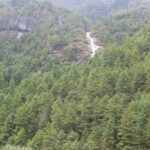
- Into the Marsyangdi River days: waterfalls, villages, and steady hiking
- Upper Pisang to Manang: higher trails and better acclimatization odds
- Yak Kharka and Thorong Phedi: the climb to 4,450 m
- Thorong La Pass to Muktinath: cold, early starts, and a real reward
- Kali Gandaki to Jomsom and Tatopani: the desert feel and the hot-springs recovery
- Ghorepani and Poon Hill: a sunrise hike that feels worth it
- Pokhara sightseeing days: caves, falls, river gorge, and a craft camp
- Transport, rooms, meals, and gear: how it actually feels on the ground
- Guides and porters: why the people matter as much as the pass
- Price and logistics: the hidden cost you’re avoiding
- Who this Annapurna Circuit trek fits best
- Should you book this Annapurna Circuit trek with Ace the Himalaya?
- FAQ
- What time does the trip start in Kathmandu?
- Is airport pickup included?
- How many days is the Annapurna Circuit trek portion, and what’s the total duration?
- What kind of rooms will I stay in during the trek and in cities?
- What permits and trekking paperwork are included?
- Does the tour include trekking gear?
- Are meals included throughout the trip?
- Can I cancel and get a full refund?
Key things I’d circle before you go
- Max 15-person group keeps the pace human and the guide reachable.
- Tatopani hot springs gives you a true recovery day after the long descent.
- Thorong La plan includes an early start and built-in guidance for altitude.
- Permits (ACAP and TIMS) plus a licensed English-speaking guide remove major friction.
- Down jacket and sleeping bag included (returned at the end) lowers your packing stress.
- Kathmandu and Pokhara sightseeing means you get culture and scenery, not just a trek loop.
Annapurna Circuit trek value: what $2,240 buys you (and what it doesn’t)
At $2,240 per person, this isn’t a bargain trek, but it’s also not “only pay for a route.” You’re paying for the parts that usually slow people down: a licensed trekking guide, permits, transport between key towns, hotel and guesthouse planning, and a porter (1 porter for two clients). For many travelers, that’s the real value—less time negotiating chaos, more time walking, eating, and adjusting to altitude.
The price also covers a lot of the day-to-day costs. You get breakfast for 21 days, lunch for 16 days, and dinner for 17 days. In Kathmandu and Pokhara, lunch and dinner aren’t included, so you’ll still have to budget for some meals on your own. Alcohol and soft drinks aren’t included either, so plan on paying for that bucket of beer after you’ve earned it.
What’s not included is important: travel insurance that covers emergency high-altitude rescue/evac won’t be there, and international airfare plus the Nepal entry visa are on you. If you’re tempted to “save” there, don’t. Altitude and weather are part of this route.
You can also read our reviews of more tours and experiences in Kathmandu.
Kathmandu and Pokhara first: culture warm-up before the climb
Your trip doesn’t drop you straight into trekking socks. You start in Kathmandu, where the focus is on iconic spiritual sites and a sense of Nepal that isn’t limited to mountain views.
You’ll visit Pashupatinath Temple on the Bagmati River, then Boudhanath Stupa, where prayer wheels spin and Tibetan Buddhist pilgrim life is easy to spot from the right vantage point. From there you’ll also stop at Bhaktapur Durbar Square, with its palatial complex and standout pagoda-style structures. Even if temples aren’t your main hobby, this part helps you understand the rhythm of daily life—religion isn’t a side attraction here, it’s a daily thread.
Then you head to Pokhara, a lakeside base that feels like a decompression zone after trekking. You’ll get a temple stop at Shree Bindhyabasini, plus iconic natural features like Devi’s Fall and Gupteshwor Mahadev Cave (a cave where you may need to crawl in passages). You also visit the Tibetan Refugee Camp (Tashi Ling), known for woolen carpet and handicraft production. It’s a good balance: sights, short walks, and time to reset your body.
From Kathmandu to Besisahar: the travel day that sets your pace
A big part of trekking sanity is the first 24 hours. After meeting your airport representative at Tribhuvan, you’re taken to a hotel in a private tourist vehicle. You’ll also have a pre-trek meeting (Day 1 or Day 2) in the office, where you meet your trek leader/guide and handle remaining payment if due.
You should bring your passport, three passport-size photos, and a readable copy of your travel insurance policy. This isn’t busywork; it’s tied to how the trek gets organized.
The next shift is transport: you take a public bus from Kathmandu to Besisahar (about 6 hours), then a shared 4WD from Besisahar to Syange (about 2 hours). This is part of the deal on the Annapurna Circuit—expect some bumpy stretches and scenery that’s more “river valleys and waterfalls” than “Instagram-flat roads.”
Into the Marsyangdi River days: waterfalls, villages, and steady hiking
Once you start walking, the route follows the Marsyangdi River for a while, and that matters. Rivers create a natural corridor for trails and give you frequent scenery changes without requiring constant elevation spikes.
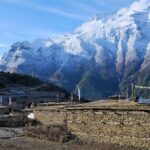
You’ll start with a gradual climb, moving through spots like Tal, where you stay after a walk with waterfalls along the way. From there you continue toward Danakyu, with views of mountains like Annapurna II and the chance to spot Pisang Peak in the bigger panorama. The villages here feel lived-in rather than staged for tourists, and you’ll get enough mountain glimpses to keep motivation high even on longer walking days.
Then you move on to Chame, the headquarter town of Manang. It’s more developed than earlier villages, so it’s where you’ll start feeling like you’re entering the real trek zone—more guesthouse options, more supplies, and a different energy in the air.
Upper Pisang to Manang: higher trails and better acclimatization odds
This part is where the Annapurna Circuit starts feeling like a serious mountain route. After Upper Pisang, you’ll walk through dense forest and alongside the river, and you’ll also get your first clear “wow” moments—like the curved bowl-shaped rock face called Paungda Dada.
Then you head to Ngawal, a slight elevation push that’s worth it for the views and for spotting higher-altitude flora and fauna. You’re not just chasing photos here; you’re also teaching your body how to handle altitude a little at a time.
The big decision point comes when you reach Manang. You get an acclimatization day there, including a walk to a monastery and a trek toward Gangapurna Glacier Lake before returning to stay overnight. That extra day is a big deal. It helps your body adjust before the route turns toward the real height.
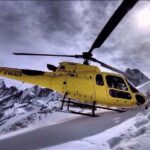
Yak Kharka and Thorong Phedi: the climb to 4,450 m
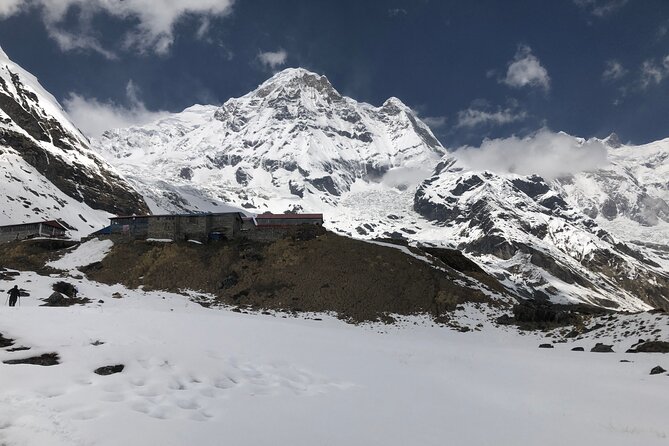
After Manang, the trail starts doing the classic “gain and settle” rhythm. You trek toward Yak Kharka (around 4,000 m), ascending about 500 m. Herds of yaks show up and vegetation thins out—less green, more high-altitude grit. It can feel harsher even when the walking is steady, because the air has less give.
Then comes Thorong Phedi at about 4,450 m. There’s a crossing day rhythm here too: you rise, then descend to cross a river around 4,310 m, and then climb back up to decent guesthouse options at Thorong Phedi. This is where your gear and your calm pacing matter. If you rush, altitude punishes you.
One thing to note from the way the route is described: on the highest day, strong winds and snow can complicate the crossing. That’s why this trek includes guidance and timing, not just a line on a map.
Thorong La Pass to Muktinath: cold, early starts, and a real reward
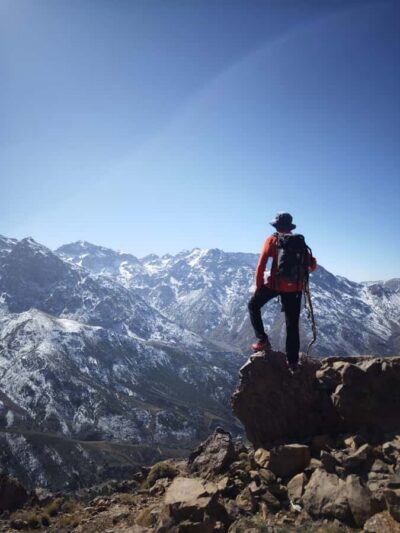
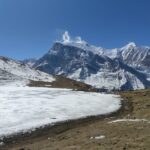
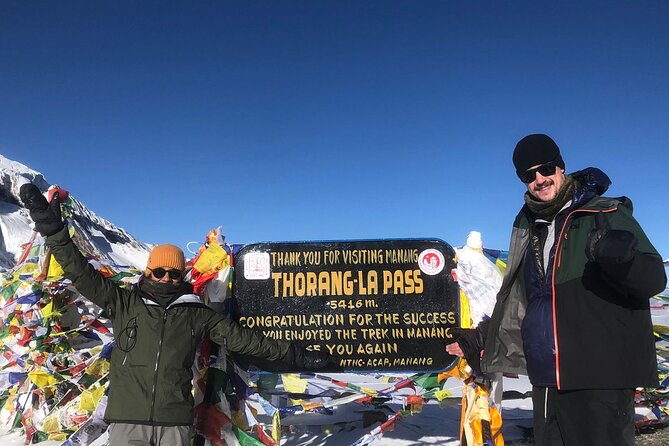
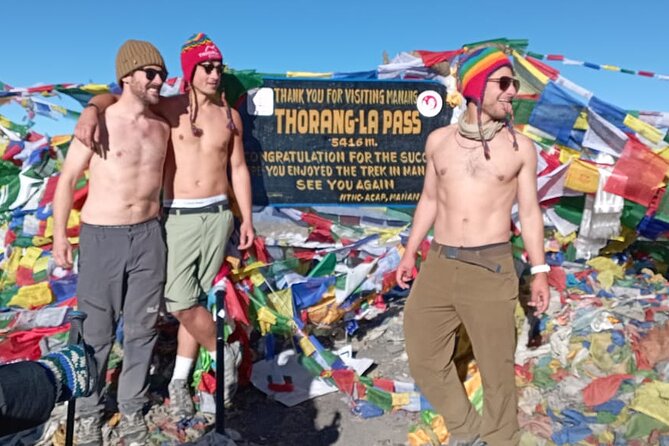
Thorong La is the marquee moment: you’ll start before sunrise, around 4:00 a.m., aiming to reach the pass by roughly 9–10 a.m. Strong winds can make it feel brutal, and snow can create trouble if heavy. This is the day where you really want your team’s experience.
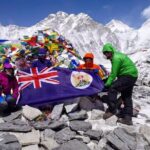
Once you reach the pass marked with chortens and prayer flags, you get stunning views from the top. Then you continue walking to Muktinath, a holy town where the name means place of nirvana. It’s one of those stops that feels bigger than the walking effort, because the spiritual setting is part of the atmosphere, not an added feature.
Also, this is a “don’t treat it like a casual hike” section. You’ll be at high elevation; you’ll feel the air. Go slow, drink water regularly, and keep your body focused on the next step, not the whole wall of distance ahead.
Kali Gandaki to Jomsom and Tatopani: the desert feel and the hot-springs recovery
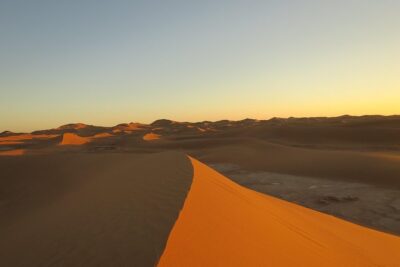
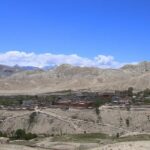
After the pass, the terrain shifts. You head toward Jomsom, and the land becomes drier—almost desert-like in how it looks. The trail follows the Kali Gandaki River at times, and you’ll notice a different kind of beauty: dry hillsides, river gorges, and a sense of crossing into another world.
Jomsom is also a hub town with facilities and the headquarters vibe for Mustang district government offices. Then you keep descending toward Tatopani, a place famous for natural hot springs.
Tatopani is where the trek stops being only about endurance. You’ll rest and relax here—take a shower, dip into the springs, and enjoy local food. Having that hot-springs break right after big altitude work is smart planning. It gives your muscles a reset and gives your mind a breather.
Ghorepani and Poon Hill: a sunrise hike that feels worth it
Your next big chunk takes you from Tatopani to Ghorepani with an ascent of around 1,620 m over about 7 hours. You’ll pass Magar and Gurung villages along the way, and once you’re in Ghorepani, the views can include Annapurna South, Himchuli, and Tukuche Himal.
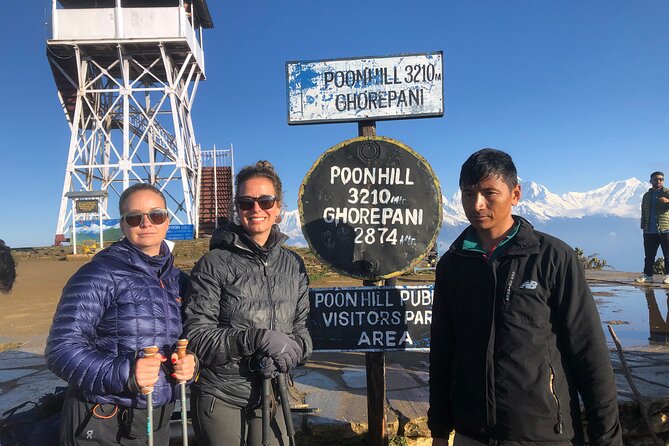
Then comes the morning hike to Poon Hill at 3,210 m. You’ll hike for about an hour to reach the viewpoint, then stay there for around an hour to catch sunrise over the Himalayas if weather allows. It’s a short effort compared to Thorong La, but it often hits people harder emotionally, because you get that clear “day beginning” mountain light.
Afterward, you return to Ghorepani for a hot breakfast and then trek down toward Tikhedunga along ridges and through rhododendron forests before reaching Nayapul and driving onward to Pokhara.
Pokhara sightseeing days: caves, falls, river gorge, and a craft camp
Once in Pokhara, the schedule turns lighter and more varied. You’ll see Devi’s Fall, locally known as Patale Chhango, where water drops down into a deep gorge. You’ll also visit Gupteshwor Mahadev Cave, a cave system roughly 3 km long with larger hall-sized rooms and tighter crawling passages. It’s sacred to Hindus because a phallic symbol of Lord Shiva is preserved there.
Then you’ll head to Seti River Gorge, carved by the Seti Gandaki River, with viewpoints from bridges like K.I. Singh bridge and others listed on the route plan. There’s also the Tibetan Refugee Camp, Tashi Ling, known for woolen carpets and handicrafts, tied to Tibetan settlers who migrated to Nepal in the 1950s.
This is a good day-to-day contrast after long walking. You get movement, but you’re not fighting altitude.
Transport, rooms, meals, and gear: how it actually feels on the ground
This trek is guided and organized, but you’ll still experience Nepal’s real movement patterns. You’ll use a public bus and shared 4WD for key legs, plus tourist vehicle and tourist bus transfers at other points.
Accommodation is also a mix:
- Kathmandu: three-star hotel for 3 nights
- Pokhara: three-star hotel for 2 nights
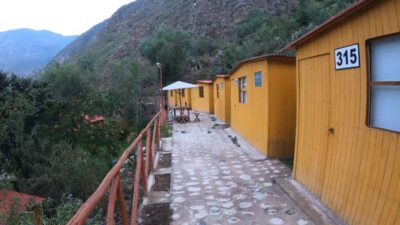
- Trek: 16 nights in guesthouses with twin-share and dormitory rooms
You’re also equipped. The trip includes a down jacket and sleeping bag for the trek, and you return them at the end. You also get free Ace the Himalaya duffel/kit bag and a sun hat. That’s practical for people traveling light.
Meals are included often enough to keep costs predictable, but not so much that you never make your own choice. Lunch and dinner in Kathmandu and Pokhara are not included, so you’ll want to plan for at least some spending there. Alcohol and drinks aren’t included either, so keep that in mind for your budget.
Guides and porters: why the people matter as much as the pass
In mountains, the guide’s job isn’t just pointing at trails. It’s managing timing, handling risk, and keeping your day from turning into a bad story.
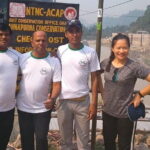
The feedback tied to Ace the Himalaya repeatedly emphasizes that the guide and porter team supports acclimatization and the hardest parts of the hike. Names like Aamod, Madan, Ram, Janu (Janardthan), Ganesh Khanal, and Nimesh show up in strong accounts, and porters like Aashis, Ajeet, Amish, Anish, Kalish, Ramesh, and Sumon are also credited. Even if you don’t get the exact same team, the consistency of that praise tells you what they prioritize: getting you to the key days safely and with enough comfort that you can focus.
There’s also a porter setup of 1 porter for every two clients, which helps your load and saves your legs from extra punishment.
Price and logistics: the hidden cost you’re avoiding
A lot of travelers underestimate the “paper cuts” of an Annapurna trek: permits, local transport coordination, guesthouse arrangements, and making sure you’re on the right track for altitude. This trip tackles that directly with:
- ACAP and TIMS permits included
- a licensed English-speaking trekking guide
- multiple transport legs handled by the operator
- guided sightseeing in Kathmandu and Pokhara
- government taxes and official service charges covered
What you still manage yourself:
- your personal trekking equipment
- tips for trekking staff and drivers (tipping is expected)
- lunches/dinners in Kathmandu and Pokhara
- travel insurance for emergency high-altitude rescue/evacuation
- international airfare and the Nepal entry visa
From a value angle, the $2,240 price makes more sense if you want fewer moving parts. If you love DIY travel and already have Nepal trekking logistics handled, you might compare costs elsewhere. But if you want the route run like a plan, this is set up for that.
Who this Annapurna Circuit trek fits best
This trek is listed for moderate physical fitness, and the route includes both longer walking days and altitude challenges. If you:
- like structured days with a clear plan,
- don’t want to manage permits and transport yourself,
- and can handle early starts and cold mornings,
you’ll likely enjoy it.
You might rethink it if you’re not comfortable with:
- high elevation and a potentially weather-dependent pass crossing,
- early starts on key days,
- dormitory-style sleeping for part of the trek,
- or long travel segments (bus and 4WD).
That said, the pacing includes an acclimatization day in Manang and a hot springs rest in Tatopani, which are two of the smartest “body-saving” elements on the whole program.
Should you book this Annapurna Circuit trek with Ace the Himalaya?
I’d book if you want a guided Annapurna Circuit that handles the annoying parts and gives you real recovery time. The mix of Kathmandu and Pokhara sightseeing with the trek is efficient, and the combination of acclimatization in Manang plus a Tatopani hot springs break makes the route feel more doable than “just climb until you collapse.”
I’d think twice if your trip depends on strict timing or warm-weather consistency. This is a high-mountain route that requires good weather, and Thorong La can get harsh.
If you’re ready for altitude, want solid support from the guide/porter team, and value having permits and transport sorted, this is a strong match.
FAQ
What time does the trip start in Kathmandu?
The start time is 8:00 am at Tribhuvan International Airport, Kathmandu. An airport representative meets you there and transfers you to your hotel.
Is airport pickup included?
Yes. You get airport transfers, and the airport representative meets you at Tribhuvan International Airport and drops you at the airport again at the end.
How many days is the Annapurna Circuit trek portion, and what’s the total duration?
The full experience is 22 days (approx.), including trek days plus Kathmandu and Pokhara sightseeing and transfers.
What kind of rooms will I stay in during the trek and in cities?
In Kathmandu you stay in a three-star hotel for 3 nights, and in Pokhara you stay for 2 nights. During the trek you stay in guesthouses for 16 nights in twin-share and dormitory rooms.
What permits and trekking paperwork are included?
The trek includes ACAP and TIMS permits. During the pre-trek meeting you’ll also need your passport, three copies of passport-size photos, and a readable copy of your travel insurance policy.
Does the tour include trekking gear?
Yes. You receive a down jacket and sleeping bag for the trek, and you return them afterward.
Are meals included throughout the trip?
Breakfast is included for 21 days, lunch for 16 days, and dinner for 17 days. Lunch and dinner in Kathmandu and Pokhara are not included.
Can I cancel and get a full refund?
You can cancel up to 3 days in advance of the experience for a full refund. If you cancel less than 3 days before the start time, you won’t get a refund.