REVIEW · KATHMANDU
Annapurna Circuit Trek with Tilicho Lake
Book on Viator →Operated by Discovery World Trekking · Bookable on Viator
Tilicho Lake makes the circuit feel bigger. This 16-day Annapurna Circuit trek adds a high-altitude detour to Tilicho Lake, plus hot springs and classic mountain passes in one plan. I really like that the trek is guided by a government-licensed team, and I also like that your permits and day-to-day logistics are handled for you.
One thing to weigh: this is still a serious mountain trek. You’ll deal with steep days, cold/dry air as you climb, and an early wake-up for Thorong La day—so you should show up fit and ready.
In This Review
- Key highlights you’ll feel on this trek
- Tilicho Lake: the detour that changes the whole mood
- Price and value: what $1,093 really buys you
- Your safety net: guide, permits, and not having to navigate
- Day-by-day: what each stop is really about
- Day 1: Kathmandu drive to the start area and a gompa stop
- Day 2: Suspension bridge energy, then uphill into the Manang region
- Day 3: Chame and forest walking with big views in the distance
- Day 4: Paungda Danda rock face and first sharp peak geometry
- Day 5: Upper trail through upper Pisang, with cold air setting in
- Day 6: Acclimatize with Gangapurna Lake, then roam Manang
- Day 7: Easier day flavor toward Khangsar
- Day 8: Tilicho base camp approach through landslide country
- Day 9: Tilicho Lake day, early start to beat the wind
- Day 10: Back down from Tilicho, past Tare gumba monastery
- Day 11: Thorong Phedi views and getting ready for the pass
- Day 12: Cross Thorong La, highest point day
- Day 13: Muktinath and Tatopani hot springs recovery
- Day 14: Up toward Ghorepani through Thakali villages and rhododendron forests
- Day 15: Poon Hill sunrise over Annapurna and Dhaulagiri
- Day 16: Return to Kathmandu by tourist bus (flight option not included)
- Where this trek fits best (and where it doesn’t)
- Tips for getting the most out of it
- Should you book this trek?
- FAQ
- How long is the Annapurna Circuit trek with Tilicho Lake?
- Where does the trip start, and how do you get there?
- What’s included in the price?
- Does this tour include meals during the trek?
- Is a guide included?
- Is Tilicho Lake part of the itinerary?
- Is crossing Thorong La included?
- What about hot springs?
- What fitness level do I need?
- What if weather is bad or the minimum group size isn’t met?
- Is the experience refundable if I cancel?
Key highlights you’ll feel on this trek
- Tilicho Lake detour: a big altitude payoff with an early-start strategy to beat wind
- Guided safety: a licensed trek leader and a small-group setup to keep you on track
- ACAP + TIMS sorted: permits are included, so you’re not hunting paperwork in the middle of planning
- Hot springs recovery: Tatopani gives you a real reset after the pass
- Poon Hill sunrise views: a top-end viewpoint before the trip winds down
Tilicho Lake: the detour that changes the whole mood
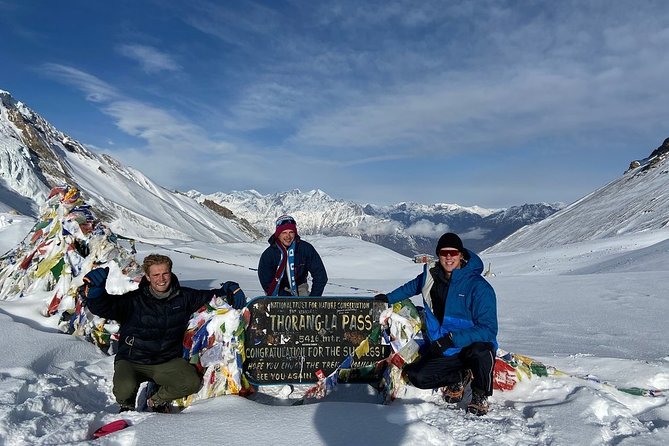
The Annapurna Circuit is already a long string of valleys, villages, and high views. What changes the vibe here is the Tilicho Lake add-on. Instead of just following the main circuit rhythm, you climb toward a remote, cold, high world—then you return and keep moving. That extra effort is why this trek feels like a “real expedition” rather than just a scenic hike.
Tilicho Lake is the star. On the itinerary, you’ll start early to avoid afternoon wind, then push up for the climb to the water. It’s described as the highest lake in the world and also called the Great Ice Lake. Even if you’ve seen glacier lakes before, this one tends to land differently because it’s so high, so exposed, and so stark.
And the rest of the trek supports that peak moment. You don’t just race to a viewpoint and go home. You’ll get a sequence of villages, monasteries, and changing trail types that keep your senses busy—forest paths, rocky climbs, river crossings, and then the big pass day.
You can also read our reviews of more tours and experiences in Kathmandu.
Price and value: what $1,093 really buys you
At $1,093 for about 16 days, the headline value is not just the distance. It’s the bundle: meals, permits, permits paperwork handled, guide and porter support, and included transportation links.
Here’s what stands out as practical value:
- Tea house/lodge accommodation with breakfast, lunch, and dinner during the trek days
- Annapurna Conservation Area Permit (ACAP) and TIMS card fee included
- Guide/porter coverage (their meals, insurance, salary, lodging, and transport are covered)
- Pokhara to Kathmandu by tourist bus, plus included overland links around the trekking region
- A Pokhara hotel night with breakfast before the trek ends, plus a farewell dinner
You’re also getting a small group max of 15 travelers, pickup offered, and a mobile ticket. Those sound minor until you’ve dealt with trip chaos before. Then you start caring.
What’s not included matters too. The package does not list your personal spending (snacks, hot drinks beyond what’s built into meal stops, extra gear, phone charging, etc.). And flights are optional at the end—there’s a choice to return by flight, but it’s not part of the package cost.
Your safety net: guide, permits, and not having to navigate
This trek is challenging, and altitude adds pressure. The comfort here is that you’re not doing this as a “map-and-hope” mission. The operator uses a government license holder trek leader, and the plan is designed so you follow a set route while still being able to enjoy the stops.
In past experiences shared about this company, the guidance names that come up include people like Hari Gurung and Suresh, with porters such as Damar, Sangkar, Asis, and Monis. Multiple notes highlight friendly, energetic guidance and the feeling that you’re looked after from the start. That doesn’t eliminate risks on mountains, but it does reduce the stress of decision-making when your legs are tired.
Also, permits are included (ACAP + TIMS). That’s important because missing a permit can turn a good day into a bureaucratic headache.
Day-by-day: what each stop is really about
Below is the flow I’d use to plan your expectations. Some days are more about scenery, others are about getting your body ready for the next climb.
Day 1: Kathmandu drive to the start area and a gompa stop
You leave Kathmandu and drive about 6–7 hours (roughly 190 km) to the Besishar area, with views of farms, rivers, and mountain ranges along the way. It’s a long travel day, but it also helps you ease in—your first “Nepal win” is just seeing how fast the terrain shifts from city edges into real countryside.
You also stop at Sandup Choeding Gompa. Gompas like this are less about ticking a box and more about grounding the trip in the culture around the trail.
Day 2: Suspension bridge energy, then uphill into the Manang region
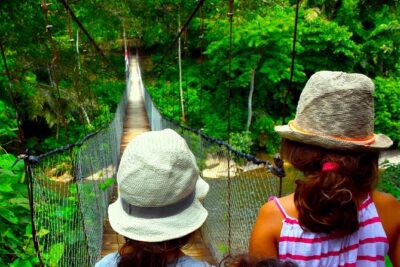
After breakfast you cross a suspension bridge, then handle a steep climb before entering the Manang-region village named tal. Expect waterfalls and a river formed by sandy beaches as the trail threads through this zone.
This is a good day to notice your pacing. Suspension bridges can feel exciting, but the steep climb right after is where you’ll either settle into a rhythm or spend the day burning matches.
Day 3: Chame and forest walking with big views in the distance
You trek through forest—pine, fir, oak, and maple—following a river to reach Chame, Manang district headquarters. The forest walking here is a nice contrast to the higher, colder days ahead. It’s also where you get used to “walk low, look high.”
The itinerary hints at mountain views (like Lamjung Himal). Even when the peaks aren’t fully framed, the feel of the valley matters—this is the start of the Annapurna Circuit’s stacked, layered mountain character.
Day 4: Paungda Danda rock face and first sharp peak geometry
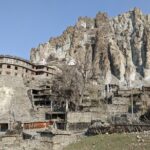
Today you walk a steep, narrow valley to get your first clear look at Paungda Danda, a curved rock face rising about 1500 meters from the river. From here, the route offers views toward Annapurna II (south) and Pisang Peak (north east).
This is a “scenery with consequences” day. Narrow valley means less escape if you’re underprepared mentally or physically. On the flip side, your reward is that first strong, high-altitude visual.
Day 5: Upper trail through upper Pisang, with cold air setting in
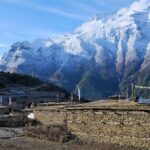
You go via upper Pisang through Geru, and the itinerary specifically calls out outstanding views of north faces of Annapurna II, III, IV, plus Gangapurna, Tilicho, and Pisang Peak. As you ascend, the air turns colder, drier, and harsher.
You’re not just climbing. You’re changing climates. If you’ve ever underpacked for dry cold, this is the day that reminds you.
Day 6: Acclimatize with Gangapurna Lake, then roam Manang
This day is built for acclimatization. You hike early to Gangapurna Lake and base camp, then spend time admiring peaks like Annapurna III, Tilicho, Pisang, and Chulu. You also roam Manang village and monasteries.
For your body, the key is that you’re moving but not trying to “prove” fitness. The goal is to adapt—slow steps, steady breathing, and a calm mindset.
Day 7: Easier day flavor toward Khangsar
The trail is described as a little easier. You take an upper route that follows a path down to a river, cross it, then walk through conifer forests. After about three hours you reach Khangsar, a Tibetan settlement, then continue for another hour.
This is a useful reset day before the more exposed Tilicho-focused days. It’s also where cultural rhythm matters: settlements like Khangsar help you feel less like you’re walking through a science textbook.
Day 8: Tilicho base camp approach through landslide country
Today you walk an easier path through a landslide area with impressive rock formations. You trek up toward Tilicho base camp, aiming for views of Tilicho Peak and surrounding snow-covered mountains.
Landslide terrain can look dramatic and feel unstable. The bigger point for you is to keep your footing careful and your expectations realistic. This is where “slow and sure” becomes a survival skill, even when the day is labeled easier.
Day 9: Tilicho Lake day, early start to beat the wind
Start early to avoid afternoon wind. You climb a steep but consistent route for about 2–3 hours to reach Tilicho Lake, also called the Great Ice Lake.
This is likely the emotional high point for the trip: cold air, the silence of a high basin, and water that looks almost unreal for how far up it sits. Give yourself time to just sit and watch the light change—don’t treat it like a quick photo stop.
Day 10: Back down from Tilicho, past Tare gumba monastery
You descend to the uninhabited Khangsar village, pass Tare gumba, described as a thousand-year-old monastery, then follow a route descending into the Thorong Khola valley. You cross a river, hike up to a plateau, and continue toward the next stop.
The monastery stop is more than scenic. It’s a reminder that even remote trails sit inside a lived spiritual landscape—people have been moving through these areas for a long time.
Day 11: Thorong Phedi views and getting ready for the pass
You walk uphill to Thorong Phedi, described as a small busy settlement with amazing mountain views. On the way, you get views of Mt. Gundang, Mt. Syagang, Thorung Peak, and Mt. Khatungkan.
This is a logistics day for your body. You want calm energy, early sleep, and no big experiments with food or drinks. When you’re close to a major pass, stability beats bravado.
Day 12: Cross Thorong La, highest point day
You wake up around 3 in the morning to cross Thorong La. The itinerary frames this as the most challenging part of the trip and the highest point on the route. You’ll push through the steepness and altitude, but the plan is set up to make it a single, focused target day.
This is where the earlier acclimatization days pay off. Still, go easy with pace. The fastest walkers aren’t always the best finishers at altitude.
Day 13: Muktinath and Tatopani hot springs recovery
You visit Muktinath Temple, then transfer by car to Tatopani. Tatopani is famous for natural hot springs, and the whole point here is recovery: soak, loosen up, and let your legs come back online.
Muktinath adds cultural texture to a very physical day. Hot springs let you turn that effort into something you actually feel.
Day 14: Up toward Ghorepani through Thakali villages and rhododendron forests
You ascend toward Ghorepani through Sikha and Chitre villages. The itinerary notes these as villages of ethnic Thakali people. You pass terraced farmland, then forests with rhododendron, birch, and magnolia. You stop at Ghorepani community hospital.
The biggest practical win of this day is emotional. After the pass and the hot springs, the terrain can feel less intense, and you get to enjoy moving through forests again. It’s also a good day to hydrate properly, because tomorrow includes a sunrise climb.
Day 15: Poon Hill sunrise over Annapurna and Dhaulagiri
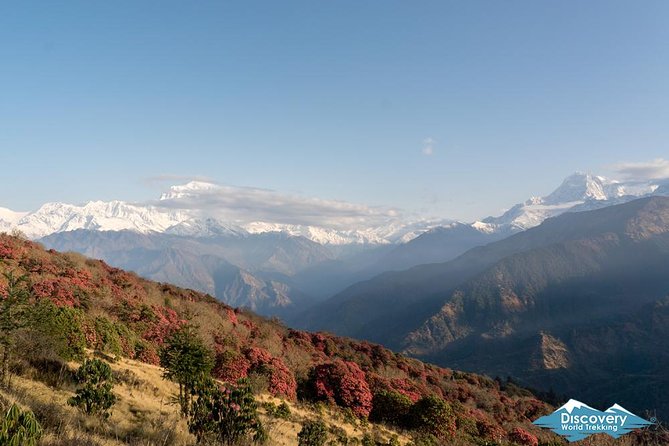
Early morning you climb Poon Hill (3,210 m) for sunrise over a wide mountain view: the whole Annapurna, Dhaulagiri massif, Machhapuchhre (Fishtail), Manaslu, and surrounding rice terraces. Poon Hill is described as a favorite spot for photographers.
This is not a technical climb. It’s mostly about getting yourself awake and warm enough. Once the light hits, it turns into a nice “final bow” for the trip.
Day 16: Return to Kathmandu by tourist bus (flight option not included)
After breakfast, you drive back to Kathmandu on a tourist bus. You can also choose to return by a flight of about 225 minutes, but that option is not included in the package.
If you still feel sore on day 16, that’s normal. Treat today as a travel day, not a sightseeing marathon.
Where this trek fits best (and where it doesn’t)
This experience is best suited for active people who can handle a challenging mountain trek and are comfortable with early starts. The operator specifically says moderate physical fitness is required, and the trek has a max group size of 15.
You’ll likely love it if:
- You want a guided route so you’re not managing permits and navigation yourself
- You want the circuit AND the Tilicho Lake detour, even if that adds effort
- You like the rhythm of tea house trekking with full board meals during the trek days
- You want real recovery built in through Tatopani hot springs
You might want to think twice if:
- You dread high passes and early wake-ups (Thorong La day starts around 3)
- You’re not ready for colder, drier air as you climb higher
- You prefer a slower pace with more rest days between climbs
Tips for getting the most out of it
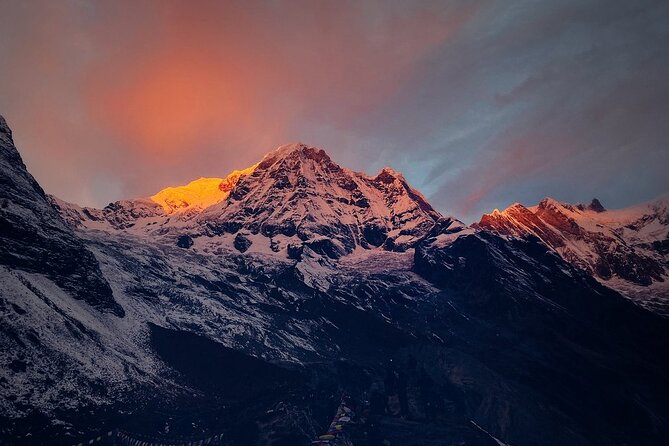
A few practical pointers that match the way this trip is structured:
- Pace yourself on the early uphill days. Days 3–6 set up your comfort for later.
- Keep layers in play. The itinerary explicitly notes air shifts to cold and dry as you ascend.
- Treat Tilicho Lake day like a marathon, not a sprint. You’re going early, and the climb is described as steep and consistent.
- On Thorong La day, don’t chase speed. Getting steady breathing matters more than moving fast.
Should you book this trek?
If you want an Annapurna Circuit that feels intentional—guided safety, included permits, and a Tilicho Lake day that adds real altitude drama—this is a strong fit. The pricing looks reasonable because you’re getting a full package: meals, permits, guiding, porters, lodging during the trek, and the key transport links.
Book it if you’re active, altitude-minded, and you like having the planning handled so you can focus on walking and taking in the mountains. Skip it (or choose a simpler route) if you’re not ready for the hard day that centers around Thorong La.
FAQ
How long is the Annapurna Circuit trek with Tilicho Lake?
It runs about 16 days.
Where does the trip start, and how do you get there?
You start in Kathmandu. The tour includes an air-conditioned vehicle and a drive from Kathmandu to the starting trekking area (listed as Syange), and then you continue with local transportation during the trek.
What’s included in the price?
Accommodation, meals, and permits are included. The package also includes local overland transport, a Pokhara hotel night with breakfast, tea house/lodge meals during the trek, and coverage for the guide and porters (including their meals, insurance, salary, lodging, and transportation), plus ACAP and TIMS fees.
Does this tour include meals during the trek?
Yes. The itinerary includes tea house/lodge accommodation with breakfast, lunch, and dinner during the trekking days.
Is a guide included?
Yes. The trek leader is a government license holder and the tour is guided with support from guides and porters.
Is Tilicho Lake part of the itinerary?
Yes. The itinerary includes a dedicated day for Tilicho Lake after an early start.
Is crossing Thorong La included?
Yes. The itinerary includes crossing Thorong La pass, with an early wake-up mentioned.
What about hot springs?
The itinerary includes Tatopani, which is famous for natural hot springs, so you can soak after the pass.
What fitness level do I need?
The tour states travelers should have a moderate physical fitness level, since this is a challenging mountain trek.
What if weather is bad or the minimum group size isn’t met?
The experience requires good weather. If canceled due to poor weather, you’ll be offered a different date or a full refund. If it’s canceled because the minimum number of travelers isn’t met, you’ll be offered a different date/experience or a full refund.
Is the experience refundable if I cancel?
No. The experience is non-refundable and cannot be changed for any reason.