REVIEW · KATHMANDU
Manaslu, Nar Phu and Annapurna Three Passes Trek
Book on Viator →Operated by Touch The Himalaya Treks & Expedition · Bookable on Viator
Three high passes and two rarely seen valleys.
This trek stacks Tsum Valley’s Tibetan Buddhist culture with Nar Phu’s quieter terrain, then keeps going across three major altitude passes. I also like the way the plan mixes big mountain scenery with real village days: gompas, mani walls, prayer wheels, and river valleys that feel more local than touristy. One drawback to plan for: this is a long, altitude-heavy trek, so you need solid fitness and a calm attitude toward weather delays and cold nights.
I’m also impressed by how much is handled for you from the start: airport pickup, a proper Kathmandu trek briefing, and the permits for restricted areas like Tsum Valley, Manaslu, and Naar Phu. The other thing I’d flag is value vs. inclusions: the package clearly includes trekking permits and guiding, but meals and mountain accommodation can be arranged per agreement, so it’s smart to confirm what’s covered in your final quote.
In This Review
- Key highlights you’ll feel fast
- Manaslu-Nar Phu plus Annapurna Three Passes: what you’re signing up for
- Price and value: what $2,426.67 covers (and what to confirm)
- Kathmandu warm-up: from trek briefing to Durbar Square and Monkey Temple
- From Kathmandu to Arughat: the road that teaches you the river-trail rhythm
- Into Tsum Valley: Philim, Lokpa, Chumling, and those gompa days
- Returning west: Chumling to Deng, then Namrung with big mountain views
- Samagaon and Samdo: acclimatization that actually helps
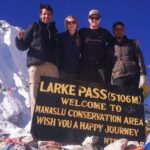
- Larkya La (5,160m): the pass day that turns the trek into a mountain journey
- Koto and Meta: pine forests, a waterfall stop, and shifting regions
- Nar Phu and Phu: chortens, mani wheels, and a calmer kind of awe
- Kang La (5,306m): the pass that helps connect the Nar Phu feeling to Annapurna
- Tilicho Lake: the high-lake day and why early starts matter
- Thorung La (5,416m) to Muktinath, then down to Jomsom and Pokhara
- Comfort, food, and the guide team: how this trek actually feels day to day
- Should you book this Manaslu–Nar Phu–Annapurna Three Passes trek?
- FAQ
- How long is the Manaslu, Nar Phu and Annapurna Three Passes trek?
- Where does the trek start and where does it end?
- Is airport pickup included?
- Are permits included?
- Do I need good fitness?
- Which high passes are crossed on this route?
- Are meals included throughout the trek?
- Are hotel nights included in Kathmandu?
- How do porters and guides work on the trek?
- What is the cancellation policy?
Key highlights you’ll feel fast

- Tsum Valley culture: gompas, mani walls, prayer wheels, and Milarepa Cave visits.
- Restricted Nar Phu route: Phu’s spiritual feel and the Nar Khola corridor before Kang La.
- Three passes, three personalities: Larkya La (5,160m), Kang La (5,306m), Thorung La (5,416m).
- Tilicho Lake side of the story: a sunrise-start day option, targeting one of Nepal’s highest lakes.
- Permits handled: TIMS plus ACAP/MCAP and restricted-area permits are included.
- Guide and porter structure: each two clients get a porter, with an assistance guide for every five trekkers.
Manaslu-Nar Phu plus Annapurna Three Passes: what you’re signing up for

This trek is for people who want the full Nepal “long trek” experience: days that start early, slow uphill climbs that turn into jaw-dropping views, and village nights where you actually meet the places you’re walking through. You’re not just doing one classic trail loop. You’re connecting Manaslu, Tsum Valley, Nar Phu, and then finishing in the Annapurna Three Passes flow with Thorung La.
The best part is how the trek changes as you go. Early on, you’re in the lower river country, gradually building altitude and learning the trail rhythm. Then you move into the Tsum Valley world—Tibetan in culture, prayer-wood loud in design (mani walls and wheels everywhere), and often quieter than the main trekking hubs. Later, Nar Phu adds a feeling of isolation, and the passes bring wide-open high-country days where the mountains can dominate your thoughts.
If you like variety, this plan delivers. If you hate cold mornings and long walks, you’ll feel those tradeoffs quickly.
You can also read our reviews of more tours and experiences in Kathmandu.
Price and value: what $2,426.67 covers (and what to confirm)

At $2,426.67 per person for about 34 days, the cost sits in the “serious long trek” category. The value isn’t just the route. It’s the fact that the package includes the paperwork that usually makes restricted treks hard to DIY.
Look closely at what’s explicitly included:
- Airport pick up and drop off in Kathmandu
- Two nights in Kathmandu (tourist standard hotel, twin share)
- Transfers to and from the trekking region by bus/jeep as described
- Permits: TIMS, ACAP/MCAP, plus Tsum Valley, Manaslu, and Naar Phu restricted special permits
- An expert local Manaslu guide, plus structured staffing (porters and an assistance guide)
- Rescue arrangements and a basic first-aid kit carried by the trekking guide
- Some Kathmandu and trekking-day meals: the included list states breakfast (2), while mountain meals and accommodation are indicated as “provided if required” with additional cost possible
So here’s the practical advice: before you pay the final balance, confirm your exact “mountain board” setup—what meals and what kind of overnight lodging are included in the mountains for your specific package agreement. The itinerary wording strongly suggests daily dinners and overnight stays, but the inclusions section gives you a check-list item to clarify.
Also confirm whether you want hot shower, extra charging, and drink costs handled by your budget. Drinks and charging are listed as not included.
Kathmandu warm-up: from trek briefing to Durbar Square and Monkey Temple

Your trip starts gently, which matters on a long trek. After landing at Tribhuvan International Airport, you’re greeted and transferred to a Kathmandu hotel. Then you get a day that balances rest with orientation.
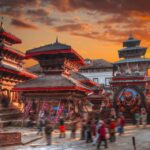
One of my favorite parts of the Kathmandu setup here is that you don’t go straight to hiking. You get a trek briefing at the office where you can ask real questions, then you get guided sightseeing in the afternoon. The plan includes Kathmandu Durbar Square (UNESCO) and Swayambhunath Stupa, known as the Monkey Temple. Those are more than box-ticking stops. They help you read the city’s layers of temples and courtyards before you switch into rural trail life.
If you’re arriving from a long flight, this pacing is smart. You’re not trying to solve jet lag and gear confusion at the same time.
From Kathmandu to Arughat: the road that teaches you the river-trail rhythm

On trekking day-one proper, you start with breakfast, check out, and head to the bus park. You travel by bus to Arughat, the main trekking starting point for the Manaslu section. This isn’t just transport. It’s a first taste of Nepal outside Kathmandu: terraced fields, rolling hills, and villages along the way.
Then you switch from bus to local vehicle for the early trail access. The trek begins at or near Sotikhola. From there, you follow the river corridor to Machhakhola, then onward to Jagat. The itinerary notes that weather can give you early views of Ganesh Himal on these early days, plus you might see waterfalls and monkeys from the road.
Why I like this “intro” period: it keeps your body learning the trail without forcing a big altitude wall on day two. You’re walking long enough to feel the rhythm, but you’re not immediately at pass altitude. It’s a good place to set your pace and your water routine.
Into Tsum Valley: Philim, Lokpa, Chumling, and those gompa days

This portion is where the trek identity shifts. After crossing a suspension bridge over the Bhudi Gandaki and passing through Philim village, the route climbs toward Ekle Bhatti and then into the Tsum Valley area. The itinerary explicitly calls out the Tsum Valley as hidden and famous for Tibetan culture.
Days around Lokpa and Chumling are loaded with cultural stops:
- You pass mani walls and small settlements that feel carved into the mountain’s edges.
- At Chumling, you get a hike uphill toward the village with time to visit the gompas.
- The itinerary highlights prayer wheels and the view lines toward Ganesh Himal and Shingri Himal.
There’s also a choice on one day: camp at Chumling or head back to Lokpa for overnight. If you like flexible adventure, that’s a nice option. If you dislike uncertainty, you can still plan to follow the group’s standard overnight.
Then comes Mu Gompa. The schedule includes a move north toward Mu Gompa through rustic villages and mani walls. At Mu Gompa, you’re set up for more than photo ops: there’s mention of Buddhist ceremonies, choterns, and a visit to the Milarepa Cave. That’s the kind of stop that makes Tsum feel less like a waypoint and more like a story you can walk into.
Returning west: Chumling to Deng, then Namrung with big mountain views

After Mu Gompa, you retrace back toward Chumling, then continue through Philim and onward toward Ghap and Deng village. This retracing phase matters. It’s often the practical part of a long trek where the route finds its logic through valleys.
When you reach Namrung, the itinerary notes clear views of Ganesh, Shingri, and Kutang Himal. This is a good example of how the trek pairs culture with mountain payoffs. You’re not just walking through villages; you’re getting the reward lines that make those walks worth it.
If you’re sensitive to energy dips, this middle section can help because many days are described as 5-ish hours with steady movement. You’re building toward the higher zone without constant max-effort.
Samagaon and Samdo: acclimatization that actually helps

You reach the Lho area and then head into Sama (Samagaon), with the schedule including a short trek and a stop at Shyala for a 360-degree Himalayan view. The plan then gives you an acclimatization day at Sama/Ryo.
This is important on a trek that later features high passes. You get two optional acclimatization hikes:
- A hike around Birendra Lake and Manaslu Base Camp
- Or a hike up to Pungen Gumpa
Then you move to Samdo, described as a Tibetan refugee camp. You go slowly because of elevation, and you can also hike up to Samdo Peak if you want the extra challenge. The key idea: you’re giving your body time to adjust before the pass section.
Why this is good value even if you’re not a “hike more” person: acclimatization days reduce the odds you’ll feel crushed later. You might not feel the altitude yet, but your lungs and sleep will care when you get higher.
Larkya La (5,160m): the pass day that turns the trek into a mountain journey

One day leads you toward Dharmasala, the foot of the Larkya La (also known as Larkya Phedi). Then comes an early, gradual climb to the pass.
At Larkya La (5,160m), you stop to take in views and then descend to Bhimtang. The itinerary notes seeing Cheo Himal, Gyaji Kung, Kang Guru, and Annapurna II in the view lines. That’s a strong “high pass” visual hit, not just a “we crossed it” moment.
Then the plan continues downhill toward Gho and Dharapani. It even includes a tip: if you wake early, you can enjoy a sunrise view from the teahouse. Small details like that matter on pass treks because mornings are when the light makes the mountains feel unreal.
Koto and Meta: pine forests, a waterfall stop, and shifting regions
As you move into Annapurna region country, the trek includes a westward route via Chame and through pine forests and small villages to Koto. This is where the trek blends Manaslu’s feel with Annapurna’s terrain cues.
Koto is described as the last place to restock on goods, so it’s a smart day for snacks, water planning, and simple supplies. There’s also a mention of gray Langur monkeys in the forests. You might catch them if you walk slow and look up.
Then you move north along the Nar Khola (river), reaching Meta after passing a big waterfall at Singenge Dharmasla and continuing to Meta village. It’s a day that sounds active but not punishing, and the river setting often makes navigation straightforward.
Nar Phu and Phu: chortens, mani wheels, and a calmer kind of awe
Then you enter the Nar Phu world. You trek further north to Phu with a fork at Nar Phedi where you take the left trail heading north.
Phu is described as a spiritual place filled with chortens, mani prayer wheels, and an 18th-century stupa. That combination is the real draw. You don’t just pass buildings. You walk into a religious landscape shaped by old stone and ongoing faith.
There’s also an acclimatization option here. After settling in Phu, the plan includes a hike east to Himlung Base Camp, then returning to Phu. The schedule also notes that this region can be good for bird watching, and there’s mention of a possible snow leopard along blue sheep herds. That last part is not guaranteed of course, but it tells you the area has the kind of wildlife context you hope for on long treks.
Then you retrace toward Nar Phedi and head west to Naar.
Kang La (5,306m): the pass that helps connect the Nar Phu feeling to Annapurna
After Naar, you move toward Ngawal via Kang Phedi, climbing up toward Kang La—the highest point of the trek—then descending to Nawal (Ngawal).
The pass day includes a climb, a crossing, then a steep descent. This is one of those days where trekking poles and a steady rhythm can make the difference between sore knees for two days and sore knees for two weeks. I’d treat descents as the real workout, not the climb.
Then you roll into Khangsar with a descent to Braga, a passage through Manang, and onward to Khangsar village. Manang is described as a bigger town and a possible resupply stop. This matters when you’re crossing remote restricted areas earlier; a town stop can reset your energy.
Tilicho Lake: the high-lake day and why early starts matter
Next comes one of the big “wow” detours: Tilicho Lake. The trail leads west along a large gumpa and follows the Marshyangdi River until reaching Tilicho Base Camp. Then you get an early morning start around 6am to hike gradually uphill to Tilicho Lake.
Tilicho is described as the highest lake in Nepal, and even the highest lake in the world in the provided notes. Either way, your day is about altitude, cold air, and that sense of being far above the usual trekking world.
After visiting the lake, you head back to base camp and then take a northern trail to Siri Kharka for overnight. The next day is described as relatively short, moving to Yak Kharka.
There’s a practical tip in the schedule: there is a safe drinking water station at Yak Kharka. On long pass treks, water becomes a mental game. If you can reliably refill there, your stress level drops.
Thorung La (5,416m) to Muktinath, then down to Jomsom and Pokhara
Your final pass sequence starts with a move to Thorung High Camp. You climb along the east bank of the Kone Khola river, reach Thorung Phedi, and then continue to Thorung High Camp for dinner and overnight.
The schedule calls out likely blue sheep and a possible snow leopard sighting. More importantly, it reminds you that the next morning brings Thorung La (5,416m), so you get an early, good night’s sleep.
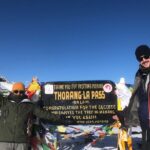
The crossing day starts extremely early: breakfast at about 4 to 4:30am. After crossing Thorung La, you head down through barren lands to Muktinath for dinner and overnight. Muktinath is named after a Hindu god of salvation, and the temple has 180 healing and purifying water taps. Horse riding can also be organized from there. Even if you don’t ride, those water taps make Muktinath a memorable cultural stop.
Then you move down to Jomsom. The plan mentions taking a jeep or following a pitch road, reaching Kagbeni on the Kali Gandaki River bank, then continuing to Jomsom. This area is known for apple orchards and photo opportunities, which is a nice contrast after barren high passes.
To finish, you go to Pokhara either by flight (about 25 minutes) or drive (about half a day). Pokhara is described as magical, and the flight gives you time to explore on your arrival day. Finally, you transfer back to Kathmandu by scenic drive, check into a hotel, and keep the rest of the day free.
Comfort, food, and the guide team: how this trek actually feels day to day
A long trek lives or dies on pacing. This itinerary is built on 5-6 hour trekking days most of the time, with deliberate acclimatization days at Sama/Samagaon and Phu, plus gradual build-ups before each high pass. That’s what lets you keep moving without burning out before the big crossings.
Staffing is another quiet strength. The plan includes an expert Manaslu local guide and a support structure where each two clients get a porter and each five trekkers get an assistance guide. You still carry your own daypack, but the heavy stuff gets handled. You also get rescue arrangements if necessary and a basic first-aid kit carried by the trekking guide.
What you should be ready for:
- Cold mornings on pass days (you’re rising early repeatedly)
- Basic mountain facilities compared with Kathmandu comfort
- Additional costs for drinks and extras in the mountains
- The need to confirm exactly which mountain meals and accommodation are covered in your final package agreement
One more detail I like: the itinerary includes airport and city logistics plus transfers into the trekking starting point. That reduces the “endless coordination” feeling that can hit independent treks.
Should you book this Manaslu–Nar Phu–Annapurna Three Passes trek?
Book it if you want a long Nepal trek that blends cultures, remote villages, and real pass country—without stripping out the human details like gompas and mani walls. It’s a strong fit if you’re comfortable with altitude and you like the idea of multiple acclimatization pauses, not just one.
Think twice if you’re not confident with steep ascents and high-altitude cold, because this trek includes Larkya La (5,160m), Kang La (5,306m), and Thorung La (5,416m), plus Tilicho Lake at altitude. Also check your final quote carefully for what’s included in mountain meals and lodging, since the inclusions list suggests that part can vary by agreement.
If you want a well-run plan and you like the idea of restricted-area permits handled for you, this route is hard to beat.
FAQ
How long is the Manaslu, Nar Phu and Annapurna Three Passes trek?
It’s listed as about 34 days.
Where does the trek start and where does it end?
It starts in the Manaslu region from the area around Arughat (trek starting point reached by bus), and it ends back in Kathmandu after driving from Pokhara.
Is airport pickup included?
Yes. Airport pick up and drop off in Kathmandu is included.
Are permits included?
Yes. The package includes TIMS and ACAP/MCAP permits, plus restricted special permits for Tsum Valley, Manaslu, and Naar Phu.
Do I need good fitness?
Yes. The trek is described as requiring good fitness because you cross three high altitude passes.
Which high passes are crossed on this route?
The schedule lists Larkya La (5,160m), Kang La (5,306m), and Thorung La (5,416m).
Are meals included throughout the trek?
The inclusions list specifies breakfast (2) and says meal and accommodation in the mountains will be provided if required (cost may be added additionally). Confirm what’s included in your final package.
Are hotel nights included in Kathmandu?
Yes. You get the beginning two nights in Kathmandu in a tourist standard hotel on a twin share basis.
How do porters and guides work on the trek?
The plan states that each two clients get one porter, and each five trekkers have one assistance guide, along with an expert local Manaslu guide.
What is the cancellation policy?
Free cancellation is offered up to 24 hours in advance for a full refund. The experience also notes that if it’s canceled due to poor weather, you’ll be offered a different date or a full refund.