REVIEW · MONTREUX
Montreux: Snowshoe Trek with Fondue and Wine
Book on GetYourGuide →Operated by Oul Adventure · Bookable on GetYourGuide
Snowshoes and fondue above Lake Geneva is a treat. This Montreux outing takes you through snowy forests and sunlit ridges high above Lake Geneva, then ends with a warm, cozy meal. You can go at sunset, under moonlight, or in full daylight.
I love the way the hike plays with light. One moment you’re walking in a quiet white forest, the next you’re on brighter ridgelines looking out over the water below. I also like the simple warmth of the fondue and local wine stop, which breaks up the effort without turning it into a long sit-down dinner.
One consideration: you’re outside for about 3–4 hours, and snowshoe balance takes a minute. If your footing is shaky, plan for a few slips and laughs before you get steady.
In This Review
- Key highlights you’ll actually feel
- Why this Montreux snowshoe trek feels special fast
- Choose sunset, moonlight, or midday for a totally different vibe
- Getting up from P+R Gare Montreux: a simple rail-and-walk rhythm
- The snowshoe trek itself: forest quiet, ridge views, and smart pacing
- What you’ll notice on the ground
- If weather shifts, the tour can shift with it
- Ridge moments are short on time, long on payoff
- Fondue, wine, and hot tea: the warming stop that actually works
- What’s included: equipment that lowers the learning curve
- What you still need to bring
- First-timer reality check
- Timing, price, and value: what $213 buys you
- Who should book (and who might rethink it)
- You’ll likely love this if…
- You might hesitate if…
- Should you book this Montreux snowshoe trek with fondue and wine?
- FAQ
- How long is the snowshoe trek?
- Where do I meet for the activity?
- What is included in the $213 per person price?
- Do I need to bring my own snowshoes?
- Are there different departure times like sunset or moonlight?
- Is this tour suitable for people with mobility impairments?
Key highlights you’ll actually feel
- Forest + ridge walking above Lake Geneva: quiet snow scenes paired with wide-open viewpoints
- Time-of-day options (sunset, moonlight, midday): same route feel, different light and mood
- A real fondue and wine stop: hot tea too, so you warm up properly
- Gear included: snowshoes, poles (telescopic), and everything you need to get moving
- Guide adapts to the group: including first-timers who need a bit more support
Why this Montreux snowshoe trek feels special fast
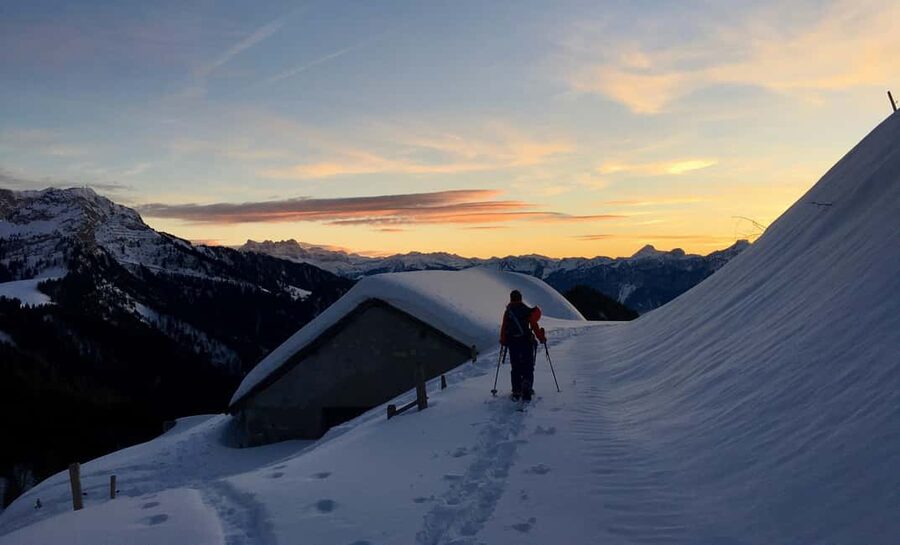
If your idea of winter in Switzerland is mostly trains and postcards, this flips the script. You start in Montreux, ride up into the heights, and then slow down in the snow—moving at walking pace, with the kind of silence that makes sounds stand out. The view is the payoff, but the feeling is the main event.
What makes it different is the mix of terrain. You’re not just “walking in snow.” You go through snow-covered forests that feel sheltered, then you reach sunny ridges where the light hits hard and the panorama opens up over Lake Geneva. It’s a good combo for photos, yes, but also for morale. Forest sections give you a break from the open cold air, and ridge sections feel like you earned every bit of sky.
The other thing I’d underline: the food moment isn’t tacked on as an afterthought. Fondue and a glass of local wine come after the trek with breaks built in, so you warm up at a natural point instead of trying to refuel while still fully cold and exerted.
Choose sunset, moonlight, or midday for a totally different vibe
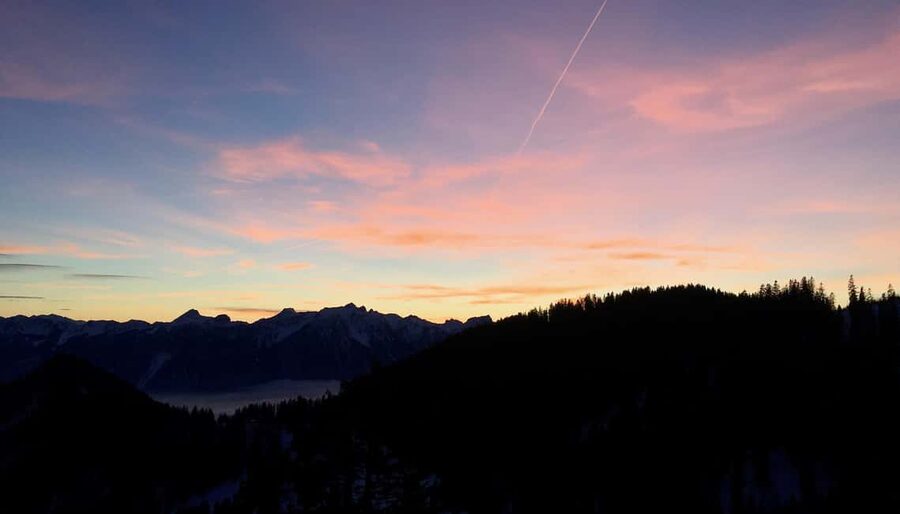
This is one of those tours where the time you pick changes the whole emotional tone. You can book the hike for sunset, go under moonlight, or do it in the midday sun. Same general concept, different light, and that matters a lot on a snowy day.
- Sunset tends to soften contrast. Snow looks brighter but not harsh, and ridges can look almost golden depending on cloud cover.
- Moonlight adds a different kind of quiet. Even if the air is the same cold, the visual calm feels sharper—more like a winter scene than a daytime walk.
- Midday sun is best if you want easier visibility for your first snowshoe steps. You’ll see footing clearly and feel less “surprise cold.”
Here’s a practical tip: if you’re new to snowshoes, I’d lean toward midday. A first-time fall is a normal part of learning, and clearer light makes it easier to correct your stride.
Getting up from P+R Gare Montreux: a simple rail-and-walk rhythm
You meet at the rack railway departure from track 8, and the plan uses trains to get you into the right zone above Montreux. Your day runs on a straightforward rhythm: a train ride up, the snowshoe hiking portion, and then a return ride back to P+R Gare Montreux.
That train segment is more than convenience. It helps you do the thing you came for—walking in the heights—without turning the experience into a full day of transit. It also means you start the trek already positioned with views, rather than climbing from town on your own.
The itinerary-style flow looks like this:
- Start at P+R Gare Montreux
- Take the train (about 30 minutes) up toward the hiking area
- Do the snowshoe hike in the heights above Montreux (with breaks and the warm meal stop)
- Return by train (about 30 minutes) and get back to P+R
If you’re planning your day around this, treat the 3.5-hour duration as the working timeframe. The actual hiking portion is built to include breaks and your dinner aperitif, so you’re not constantly moving nonstop.
The snowshoe trek itself: forest quiet, ridge views, and smart pacing
This is a guided snowshoe outing through snowy forests and across sunny ridges above Lake Geneva. The route is in the highlands around Montreux, and that altitude and openness are what give you the big panoramic effect.
The walking portion typically lasts about 3 hours, but what matters is the structure. Breaks are included, and there’s a warm food stop during the outing. That’s a huge deal on snowy days because your comfort doesn’t come only from weather—it comes from timing.
What you’ll notice on the ground
Snowshoes change how snow feels underfoot. Instead of sinking and slipping the way boots can, snowshoes distribute your weight. Still, you’re learning a new movement pattern. In one case I saw firsthand in the feedback, someone fell more times than they’d planned. The good news: the guide was supportive and helped the group keep going in a way that felt manageable.
If weather shifts, the tour can shift with it
One strong detail from real experiences: when conditions weren’t ideal, the guide offered a more wild, forest-focused route. That kind of flexibility is what you want in winter. You’re not stuck forcing a set plan that makes footing worse or views less safe. You’ll still get the winter magic—just with a slightly different path through the trees.
Ridge moments are short on time, long on payoff
On sunny ridges, you’ll get the panorama over Lake Geneva. These moments are usually brief compared to the total trek, but they’re the parts you’ll remember. The open air makes views feel bigger, and the ridgeline light can look dramatic in late-day or nighttime departures.
Fondue, wine, and hot tea: the warming stop that actually works
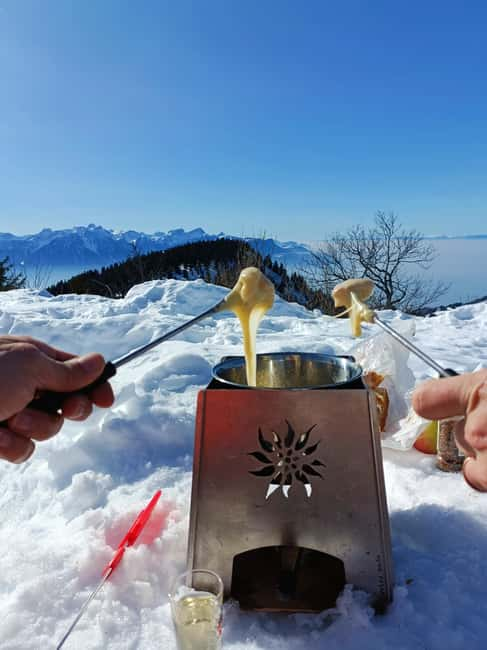
After time in the cold, your body wants warmth and comfort. This tour delivers that with a cozy fondue stop and a glass of local wine, plus hot tea. The key is that it’s integrated into the trek timeframe—not a separate long detour.
In one experience, the fondue was made in a very small snow-covered cabin in the middle of the forest. That kind of setting matters more than fancy plating. You’ll feel like you’ve stepped into a winter storybook scene, but the practical part is even better: you get heat and a pause right when you likely need it.
Another point: it’s not just food. You’re still on the “highlands above Montreux” vibe. You’re not being pulled back into a restaurant environment. You stay in the context of the walk, which keeps the day feeling cohesive.
If you’re the type who dislikes long meal schedules, you should appreciate this: it’s positioned as a dinner aperitif tied to the trek, with time to keep moving at a comfortable pace afterward.
What’s included: equipment that lowers the learning curve
This is a big value point: you get the key gear. Included are snowshoeing equipment, poles (telescopic), and hot tea. You also get the fondue meal and a glass of local wine as part of the experience.
That means you don’t need to source snowshoes or guess what kind of poles fit your height. For many people, that’s the difference between doing the activity and skipping it.
What you still need to bring
The activity has clear clothing guidance. Bring:
- Warm clothing
- Hiking shoes
- Winter sports gear
My practical advice: wear layers you can adjust while walking. Snowshoe hiking can warm you up faster than you expect, especially if you’re working through soft snow. Also, choose footwear that holds grip and keeps water out. You don’t need fancy mountaineering boots, but you do need shoes that feel secure in winter conditions.
First-timer reality check
If it’s your first time with snowshoes, expect a learning curve. One booking included a snowball fight moment and some sliding down small slopes at the top—so yes, it can be fun right away—but the first steps may involve a few wobbles. The guide experience helps smooth that out.
Timing, price, and value: what $213 buys you
The price is $213 per person for a 3.5-hour experience. On paper, that number looks “tour price,” but it makes more sense when you list what’s included.
You’re paying for:
- A guided snowshoe trek with winter timing options
- Snowshoe equipment
- Poles and hot tea
- Fondue and a glass of local wine
- A live guide in English, French, or Spanish
- The structure that includes breaks so the day feels doable
What’s not included is your transportation to the starting point. That’s fair and typical for activities based at a specific rail departure.
To judge value, ask yourself one question: would you pay separately for a guide, winter equipment, and a warm meal stop? If the answer is yes, the bundled nature here is the value. If you were planning to do only a scenic hike with no guide and bring your own gear, then it may feel pricier. But for most people, the convenience and included warmth justify it.
Also, there’s an added human value element. One set of experiences highlighted that the guide can tailor the hike to abilities. If you’re nervous about pace or balance, that kind of adjustment is worth a lot.
Who should book (and who might rethink it)
This snowshoe trek is best for people who enjoy winter walks and don’t mind being outside for several hours. You’ll want comfortable winter layering, solid winter footwear, and a positive attitude toward learning a new walking pattern.
It’s not suitable for people with mobility impairments. If that applies to you, you’ll likely have an easier time finding a different winter activity with the right physical demands.
You’ll likely love this if…
- You want Lake Geneva views from above, not from inside town
- You’re okay spending time outdoors in cold weather
- You want a guided experience that includes gear and a warm food stop
- You like day-to-day variety: forest quiet, ridge panoramas, then fondue warmth
You might hesitate if…
- You have difficulty with balance and uneven snowy ground
- You’d rather avoid a winter learning curve, even if the guide adapts
- You’re looking for something shorter than 3–4 hours outdoors
Should you book this Montreux snowshoe trek with fondue and wine?
I think you should book if you want a winter experience with three ingredients that work together: guidance, real snowy scenery, and warmth that feels like it belongs to the day. The trek isn’t just movement—it’s the combination of forest silence, ridge views above Lake Geneva, and the comfort of fondue with local wine.
If you’re new to snowshoes, don’t assume you need to be confident on day one. The feedback includes stories of first-timers who fell a few times and still ended up having a great time, with a guide who was flexible and friendly. If you can handle that learning moment (and bring warm layers), this is a strong choice.
One final deciding tip: choose the time of day based on your priorities. Want the easiest start and best visibility? Pick midday. Want the most atmospheric scenes? Pick sunset or moonlight.
FAQ
How long is the snowshoe trek?
The experience lasts about 3.5 hours, and the snowshoeing portion typically runs 3 to 4 hours total when including breaks and the dinner aperitif.
Where do I meet for the activity?
You’ll meet at the rack railway departure from track 8.
What is included in the $213 per person price?
Snowshoeing equipment, poles, hot tea, fondue meal, and a glass of local wine are included.
Do I need to bring my own snowshoes?
No. Snowshoeing equipment is provided as part of the activity.
Are there different departure times like sunset or moonlight?
Yes. You can choose to hike at sunset, under moonlight, or in the midday sun.
Is this tour suitable for people with mobility impairments?
No. The activity is not suitable for people with mobility impairments.