REVIEW · KATHMANDU
Tsum Valley and Manaslu Trek
Book on Viator →Operated by Accessible Adventure Pvt. Ltd · Bookable on Viator
Tsum Valley is a different kind of Himalaya. You get Tibetan Buddhist villages, ancient gompas, and the kind of quiet that makes mountains feel close. This trek also plugs into the classic Manaslu circuit, so you’ll see big summit drama without spending the whole time in crowds.
I like two things most. First, the route feels genuinely remote, from restricted Tsum access to high passes like Larkya La. Second, the support is organized and hands-on, with a guide/porter setup that keeps the hardest days feeling doable.
My main caution is simple: this is a serious mountain trek with long walking days and chilly nights, so you’ll want moderate fitness and a willingness to move at a trekking pace.
In This Review
- Key highlights to know before you go
- Why Tsum Valley + Manaslu feels special, not just scenic
- Price and value: what $1,495 really covers
- Kathmandu days 1–2: Thamel, temples, and permit prep
- From Kathmandu to the first trail gorge: Phedi Khola area
- Hot springs, suspension bridges, and the Jagat check point
- Entering restricted Tsum: Salleri, Philim, and Lokpa
- Chumling and the Tibetan-feeling rhythm of village life
- Nile day: flat trail comfort and stopovers like Rachen Gompa
- Mu Gompa: highest point monastery energy
- Rachen Gompa and the nunnery: Bursi and reflection time
- Turning back in Tsum: Chumling again and Ganesh Himal on the horizon
- Leaving Tsum at Deng: joining the Manaslu circuit
- Namrung to Samagaon: mani walls, forests, and big peak sightings
- A rest day in Sama: Sherpa culture plus Pungyen Gompa
- Samdo: edging toward the Tibetan border
- Larkya La run-up: Larkya Phedi and serious glacier context
- Summit day to Bimthang: sliding risk, prayer flags, and the Manaslu close-up
- Karcha La and the final leg to Tilje
- Back to Kathmandu: end of trail and time to decompress
- What you can count on from the guide and porter system
- Who this trek suits (and who should think twice)
- Should you book this Tsum Valley and Manaslu trek?
- FAQ
- What’s the meeting time for this trek?
- Does the price include airport transfers and transport?
- Are trekking permits included?
- Do I get trekking gear like a sleeping bag or jacket?
- Will I have hot showers during the trek?
- Are meals included?
- What fitness level do I need?
- Can I cancel for a full refund?
Key highlights to know before you go

- Restricted Tsum access keeps the valley quieter and more Tibetan-feeling than Nepal’s main trekking hubs
- Gompas, nunnery stays, and caves give you more than views; you get the lived religion of the region
- Larkya La is the big payoff, with Mt. Manaslu looking close enough to touch (when the weather cooperates)
- Hot springs at Tatopani and varied valley stages help you reset your legs before tougher climbs
- Guide and porter support is a real difference-maker, especially on pass days
- Permits and fees included mean you’re not scrambling in Kathmandu right before the trail
Why Tsum Valley + Manaslu feels special, not just scenic

If you’ve done the standard Nepal trekking routes, Tsum Valley can feel like a side door into another world. The region sits north of Manaslu near the Nepal–Tibet border, and it used to be restricted until 2008. Even now, it stays relatively under the radar, so you won’t be constantly dodging other groups on the trail.
What makes it memorable is the culture on the ground. Tsum is described as having a mostly Tibetan population with strong Buddhist influence, plus a family life that can surprise outsiders. I love the way this trek doesn’t treat culture as a sightseeing stop. You walk through hamlets, see monasteries and mani walls, and spend nights where people’s daily rhythm is the point.
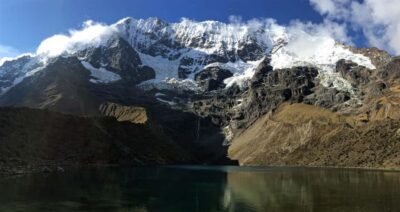
Then comes the Manaslu circuit portion, which adds classic high-mountain drama: deep gorges, steep climbs, and villages that gradually trade forest and terracing for stonier, higher terrain. You don’t just collect photos. You feel the trek change under your boots.
You can also read our reviews of more tours and experiences in Kathmandu.
Price and value: what $1,495 really covers

At $1,495 per person for an approximately 21-day trek, the price is aiming at full service, not just “a route with a map.” Here’s the value angle that matters for you:
- Permits and key conservation fees are included for both Tsum Valley and Manaslu, plus Annapurna and Manaslu conservation fees. On trekking days, paperwork friction is the last thing you need.
- Airport transfers and ground transport are handled by private vehicle, including the Kathmandu pickup/drop-off plan. That reduces stress when you’re arriving jet-lagged or leaving exhausted.
- Your overnight trekking gear includes a down jacket and sleeping bag use, plus a duffle bag. That can save you real money if you’d otherwise rent or buy cold-weather gear.
- You get guide + porter support, with one porter for every two people, and their food, accommodation, salary, equipment, and accidental insurance covered.
- Kathmandu hotel nights are included (three nights) with breakfast in a 3-star category hotel in Thamel.
What you should double-check: meals. The itinerary includes breakfast and says lunch and dinner are not included in the provided meal inclusions details. So your day-to-day food budget will depend on what’s arranged on the trail and in lodge stops.
This trek is also limited to a maximum of 15 travelers, which usually helps with logistics and makes the group feel like real people, not a moving bus.
Kathmandu days 1–2: Thamel, temples, and permit prep
Your trek starts with an easy first hit: land in Kathmandu, get picked up, and drive about 5 km to Thamel. You’ll stay near the action but still get the comfort of a proper base—especially helpful before you start climbing.
Day 1 is about breathing. There’s time to walk lively streets, eat Nepali food, and reset for the paperwork and trail prep ahead. If you like comfort after a flight, this start is friendly.
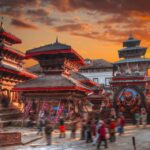
Day 2 is the smart “get ready” day. You meet the team, then sort your trek permits and documents before you explore. You’ll visit Kathmandu Durbar Square (Basantapur, also linked with the Freak Street area), then drive toward Swayambhunath stupa for panoramic city views. The day also includes Pashupatinath Temple in the outskirts on the northern side—famous for Lord Shiva worship.
Why this matters: when trekking starts, you’ll want permits already handled, not delayed. This setup usually makes the first trekking day feel cleaner.
From Kathmandu to the first trail gorge: Phedi Khola area

Day 3 shifts you into motion. You drive to the trail zone by going toward Macha Khola, with paved roads for the first section to Dhading Besi (1050 m), then rougher driving as you continue.
This day isn’t about big altitude gains from foot travel—it’s about getting used to the slower rhythm. The longer the drive, the more you’ll appreciate the porters and lodge planning that come later.
Hot springs, suspension bridges, and the Jagat check point

Day 4 is where the trek becomes real in a good way: river gorges, switchbacks, bridges, and small communities.
You follow the gorge along the river, hopping across Tharo Khola, reaching Khorlabesi, then walking on to Tatopani, famous here for a natural hot spring. After a long day, it’s a practical reward. Your legs will be grateful.
From there, you cross a suspension bridge to Dobhan, then another suspension bridge over the Yaru Khola. You’ll climb stone steps toward Tharo Bharyang, pass Gurung villages, and you might even spot Langur monkeys jumping around.
Then you reach Jagat, where you’ll need to show your trekking permits at a check post because the area beyond Jagat is restricted. This is a pattern you’ll see again in Tsum Valley: check points are part of the route, not a surprise.
Entering restricted Tsum: Salleri, Philim, and Lokpa

Day 5 is the threshold day into Tsum Valley itself. The trek starts with crossing the Dudh Pokhari Khola, moving through villages like Salleri and Siridibas, and then descending toward a bridge over the Budhi Gandaki River.
Soon you’ll pass through a village called Philim, and then you’ll hit another checkpoint to enter Tsum Valley, where you show permits. The practical takeaway: plan to keep your documents handy and easy to access.
From the checkpoint, the route continues to Lokpa, described as sitting between Budhi Gandaki and Siyar Khola. This is one of those stop-and-stare places where you can feel the isolation. Even a short interaction with locals here can set the tone for the whole valley experience.
Chumling and the Tibetan-feeling rhythm of village life

Day 6 climbs gradually toward Chumling village. You trek to the south bank of the Siyar Kola, follow paths through a forest, cross Lungwaa and Sarli Khola, then take the north bank and ascend.
Chumling is where the cultural side becomes less abstract. You’ll see Tibetan Buddhist communities and get views toward the Ganesh Himal range in the east. The point isn’t to “check off” a monastery. It’s to notice how village life is arranged around faith, seasons, and mountain geography.
Day 7 is listed with an overnight in Chumling again. Practically, that suggests a slower, steady segment that gives you time with people and routines rather than sprinting forward every single day.
Nile day: flat trail comfort and stopovers like Rachen Gompa

Day 8 gives you a break from constant uphill. The early miles are a relaxing flat trail along the north of the Siyar Khola. You pass through several secluded villages—Lamagaun, Bursi, Lar, Phurbey, Chhule, and Pungdun—and you can stop at Rachen Gompa and Milerapa Cave along the way.
Then you reach Nile for the night after the trail elevates slightly. Nights in places like Nile are often where you appreciate your sleeping bag and jacket plan, because cold can settle in fast once you’re higher and away from valley heat.
Mu Gompa: highest point monastery energy
Day 9 is a big spiritual-feeling day. After breakfast you ascend toward Mu Gompa, described as both a monastery and the highest point in the valley.
Mu Gompa is noted as being established by Drupa Rinpoche, a Bhutanese lama who meditated in nearby caves. The itinerary mentions monks meditating and praying there, and you’ll also get very clear mountain views from the higher elevation.
Even if you’re not a dedicated monastery person, this is a powerful stop because the location itself explains why it became sacred. High, quiet, and oriented toward mountains.
Rachen Gompa and the nunnery: Bursi and reflection time
Day 10 moves further up the valley to Bursi, passing villages like Kalung and Bhajyo. You’ll visit Rachen Gompa, which is described as one of the oldest monasteries in the area. There’s also a nunnery with nuns living there, plus lodging for travelers.
It’s one of those situations where you can eat local food and watch daily life without it feeling like a staged show. If you pay attention, you’ll notice how community religion shapes schedules, paths, and conversation.
Turning back in Tsum: Chumling again and Ganesh Himal on the horizon
Day 11 retraces the trail down to Chumling and notes it should feel relatively easier since you’re back on a familiar route. As you descend, the itinerary specifically calls out Ganesh Himal views on the horizon.
This is good trekking strategy. It gives you a chance to reduce strain after a denser cultural sequence.
Leaving Tsum at Deng: joining the Manaslu circuit
Day 12 is the handoff day. You leave Chumling, descend to Deng, and on the way you cross the bridge over the Budhi Gandaki River. Then you join the Manaslu circuit.
The trek passes Buddhist stone arches, which are a neat visual bridge between the Tsum spiritual feel and the larger Manaslu route’s geography and trekking rhythm.
Namrung to Samagaon: mani walls, forests, and big peak sightings
Day 13 starts by crossing Budhi Gandaki via bridge to Bihi Phedi, passing a large waterfall and a wooden bridge out of the canyon. Then you drop into the Shringi Khola valley and head west through forested stretches and quieter villages.
You’ll arrive at Ghap, noted for mani walls on the southern side of the river, then continue along a trail through rhododendron and fir to Namrung.
Day 14 is a classic big-view day. You climb through forests toward Lihi—stupas and barley terraces are part of the vibe. Then you pass Sho and Lho, explore Shyala, and reach Sama.
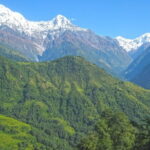
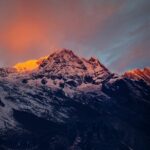
The itinerary highlights nearby Ribung Gompa and evening exploration around Sama village. The snow-capped Manaslu glacier sits straight ahead, and you’ll also get wide angles on peaks like Himal Chuli and Ganesh Himal depending on weather.
A rest day in Sama: Sherpa culture plus Pungyen Gompa
Day 15 is a real gift: a rest day in Sama village with late breakfast. You’ll interact with Sherpas and see long mani walls with Buddhist texts.
You can also visit Pungyen Gompa, described as ancient and sacred locally, with amazing glacier views. This is where a rest day earns its keep. You’re not wasting time; you’re absorbing the trek, taking photos with less fatigue, and letting your body store energy for the pass run.
Samdo: edging toward the Tibetan border
Day 16 drops to the Budhi Gandaki River, crosses a bridge, and continues toward the Tibetan border trail. You’ll pass mani walls in villages along the way, then follow juniper and birch forest to Kermo Kharka.
From there, you ascend to a wooden bridge, reach a vantage point, and continue to Samdo in about 4 hours as described by the itinerary. The mood often becomes more severe at this stage—colder, quieter, and more open.
Larkya La run-up: Larkya Phedi and serious glacier context
Day 17 climbs to Larkya La pass via Larkya Phedi. The approach includes descending through terraced fields first, passing older mani walls and stone arches, and then entering juniper forest areas.
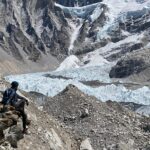
You’ll see the Larkya Glacier from the Manaslu region, then face a steep path near a gorge as you push upward. It’s not just a scenic day; it’s a legs-and-breath day designed to set you up for summit effort tomorrow. Reaching Larkya Phedi with a small lodge and few settlements means you’ll likely feel the remoteness.
Summit day to Bimthang: sliding risk, prayer flags, and the Manaslu close-up
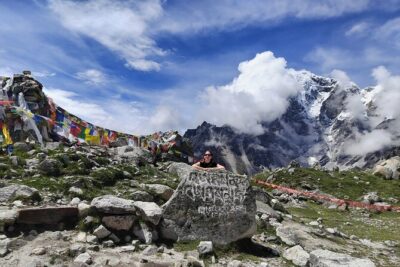
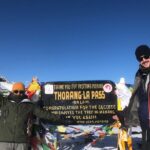
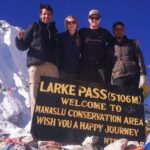
Day 18 is the big mountaineering day: you follow a moraine to a small lake, then the path turns challenging as it stays on the moraine ridge. Eventually you see prayer flags at Larkya La Pass.
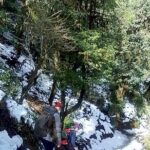
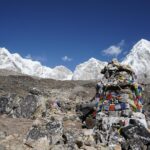
The trail includes tricky sections on slippery ground and gray slopes where you may find rustic villages and glacier lakes, plus wildlife in the area. Then you reach the summit of Larkya La. The itinerary calls it one of the best views of the entire trek, with Mt. Manaslu up close and clear.
You’ll descend to a grassy moraine, reach a meadow and spring, and continue to Bimthang for the night. If you’re the type who worries about footing, this is the day to slow down and treat every step like it matters.
Karcha La and the final leg to Tilje
Day 19 heads toward Karcha La pass. The day starts with a gentle climb through paddy fields, then the trail descends through fig trees and rhododendron forests to Tilje for the night.
This is a nice transition. After a pass summit day, it helps to have forested scenery and less intense gradient, even if you still work for your miles.
Back to Kathmandu: end of trail and time to decompress
Day 20 marks the end of your stay in Nepal, with a farewell to the team and drop-off to the airport via representatives. You’ll likely have a moment of quiet thinking about the secluded Tsum Valley and the bigger Manaslu circuit you just walked through.
Day 21 continues the end-of-stay theme and references Tribhuvan Park, again with airport drop-off mentioned.
Because the itinerary doesn’t spell out flight timing or transfer method between Tilje and Kathmandu, I suggest planning a little buffer in your schedule and keeping a flexible mindset about travel days after the trek.
What you can count on from the guide and porter system
One of the most praised parts of this trekking style is the human support that makes the route feel smooth. Guides described as capable and conscientious, plus attentive porters, tend to reduce stress exactly where it hurts: navigation, pacing, and making sure you don’t lose time to tiny problems.
For this operator, guides have been named as Mahendra and Kisna, and a porter named Ratskumar has been described as providing excellent support. The important practical idea: you’ll have one highly experienced guide, plus a porter for every two people, and their accidental insurance and equipment planning are covered.
You still have to walk. But you don’t feel alone in the process.
Who this trek suits (and who should think twice)
This is best for you if:
- You want real village stays and religious sites beyond quick photo stops.
- You’re happy with a long trek rhythm and want the payoff of Larkya La views.
- You prefer smaller groups (up to 15) and structured planning.
Think twice if:
- You hate cold nights and can’t handle basic lodge conditions.
- You need a lot of included meals and don’t want to budget for lunch/dinner while trekking.
- You’re looking for an easy walk. This is not that.
Should you book this Tsum Valley and Manaslu trek?
Yes, if your idea of a great trekking holiday includes quiet remoteness, Tibetan Buddhist culture in daily context, and one big pass day that delivers. The included permits, conservation fees, private transport, and cold-weather gear use add up to real value, especially if you’d otherwise rent equipment or pay for paperwork.
Also, if you’re the type who appreciates good logistics, this format sounds built for you. The support story here is consistent: guide capability plus porter care, with arrangements running smoothly.
If you’re still deciding, do one self-check: are you comfortable hiking for long days over changing terrain, and can you keep a steady pace even when the path gets slippery near the passes? If yes, this is a trek you’ll remember long after the views fade.
FAQ
What’s the meeting time for this trek?
The start time is 7:00 am.
Does the price include airport transfers and transport?
Yes. The package includes all ground transportation by private vehicle, including airport transfers.
Are trekking permits included?
Yes. Manaslu and Tsum valley special trekking permits, plus Annapurna and Manaslu conservation fees, are included.
Do I get trekking gear like a sleeping bag or jacket?
Yes. Down jacket and sleeping bag use during the trek are included, along with a duffle bag.
Will I have hot showers during the trek?
Hot shower is not included during the trek.
Are meals included?
Breakfast is included. Lunch and dinner are not included based on the meal inclusion details provided.
What fitness level do I need?
The tour says you should have a moderate physical fitness level.
Can I cancel for a full refund?
Yes, with free cancellation. You can cancel up to 24 hours in advance for a full refund. If you cancel less than 24 hours before the start time, the amount you paid is not refunded.