REVIEW · KATHMANDU
Everest Base Camp Trekking
Book on Viator →Operated by Green Valley Nepal Treks & Research Hub Pvt Ltd · Bookable on Viator
Altitude teaches manners fast. This 14-day Everest Base Camp trek is built around a guide and a tight max 10-person group, which helps you stay on route and makes the whole thing feel more like a planned journey than a scavenger hunt in the mountains. I like that the focus stays on walking, breathing, and taking in big Himalayan views, instead of wrestling logistics.
I also like the way teahouse accommodation and meals are handled, so you’re not constantly budgeting and hunting for food. The Lukla flight with early light over snowy peaks is another real highlight, and it sets the tone for the climb. The one drawback to consider: this is an active trek that expects strong physical fitness, plus you’ll be doing early starts and walking on steep, rocky sections in changeable mountain weather.
In This Review
- Key things that make this Everest Base Camp trek worth your attention
- Guided Everest Base Camp: why the small-group style matters
- Kathmandu arrival: the helpful buffer before the trek
- Lukla flights: the sunrise show and the reality check
- Trek into Sagarmatha National Park: pine forests, river crossings, and park-entry checks
- Namche Bazaar acclimatization: the rest day that still moves
- From Namche to Phorse: Mugla Pass views and the day you earn Ama Dablam hints
- Dingboche and the monastery stop: learning the culture while you gain altitude
- Duglha, Khumbu Khola valley, and the 1953 expedition camp reference
- Chupki Lhara and the glacier terminal moraine: prayer flags, boulders, and focus
- Thangma Riju: the 360-degree panorama day (and why Everest might be missing)
- The final push: early-morning Everest glimpse and Kala Patthar sunrise
- Coming down: terminal moraine returns, Pheriche and Pangboche exploration
- The steep down day and the Dudh Koshi suspension bridge
- Lukla back to Kathmandu: celebrate, then enjoy real city time
- Price and value: what $1,350 buys you in real-life terms
- Weather, fitness, and the one habit that keeps you comfortable
- Who should book this Everest Base Camp trek (and who should pause)
- Should you book Green Valley’s Everest Base Camp experience?
- FAQ
- What is the duration of this Everest Base Camp trek?
- Where does the tour start?
- What is the total price per person?
- How large is the group?
- What’s included in the trek package?
- Do you get a guide to help with route safety?
- What should I bring or prepare for weather and altitude?
- What documents do I need?
Key things that make this Everest Base Camp trek worth your attention
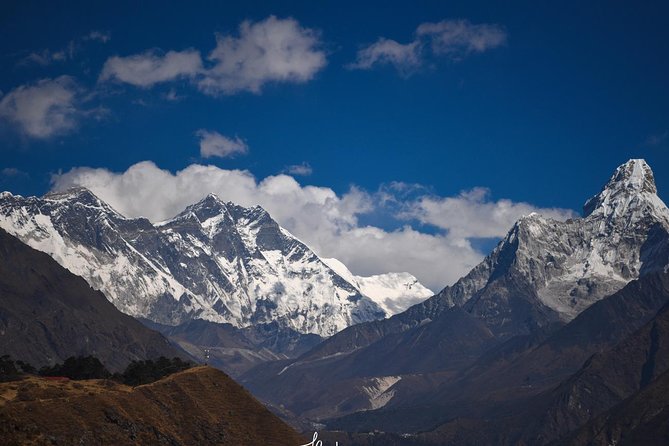
- Max 10 group size means more personal attention on the trail, and less crowding in tight moments
- Guide-led pacing helps you avoid getting lost and keeps acclimatization in mind
- Teahouse stay + meals included removes a big chunk of daily decision-making
- Lukla flight both ways adds drama (and views) while keeping the logistics simpler
- Kala Patthar sunrise timing is built in for the classic Everest-photo payoff
Guided Everest Base Camp: why the small-group style matters
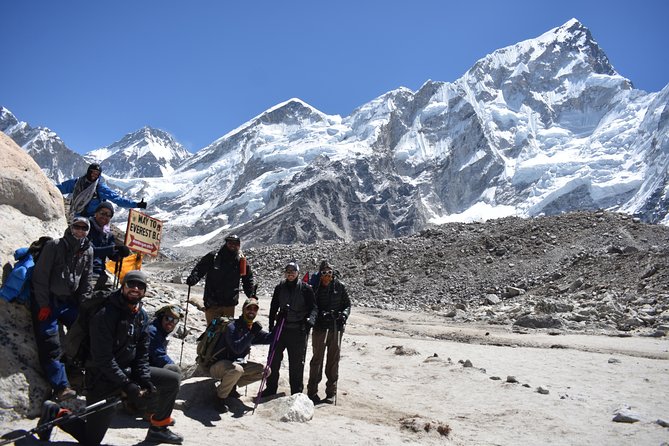
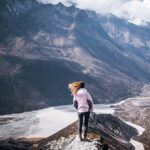
Everest Base Camp sounds famous enough to be chaotic. But a guided, small-group trek can feel almost the opposite: clear rhythms, fewer surprises, and less mental load. When your day-to-day route is set, you can focus on the parts you actually came for—walking steadily, watching weather shift across ridgelines, and learning the human side of the Khumbu.
A group capped at 10 also changes how the trek feels. You’re less likely to lose each other in busier stretches. You get more back-and-forth time with your guide when altitude questions pop up (and they will). And if conditions turn weird—snow, wind, low visibility—you’re not trying to interpret it alone.
The tour’s promise is simple: you go with a guide so you don’t have to plan logistics in real time. That’s a big deal on the Everest Base Camp route, where small errors waste energy, not just time.
You can also read our reviews of more tours and experiences in Kathmandu.
Kathmandu arrival: the helpful buffer before the trek
Most people underestimate how important Kathmandu is on a trek like this. You’re landing, dealing with jet lag, sorting paperwork, then leaving the next morning for a domestic flight. The smoother you can make that first day, the more your body is spared.
Here, an airport representative meets you at Tribhuvan International Airport and arranges a drop to your hotel by private tourist vehicle. That’s not glamorous, but it’s practical. After a long travel day, you want one less thing to figure out.
You’ll also be asked for passport details for all participants when booking (name, number, expiry, country). That’s worth treating seriously. Get your passport info copied correctly ahead of time so you’re not scrambling later, especially if you’re traveling close to your departure.
Lukla flights: the sunrise show and the reality check
Flying into Lukla is one of those travel moments that feels like a movie scene—snow peaks, early light, and the sense that you’ve crossed into a different world. The schedule includes an early-morning drive to the domestic airport after breakfast, then a flight to Lukla. You land at Tenzing-Hillary Airport, and the whole day’s mood swings from airport mode to mountain mode quickly.
You’re also doing a return mountain flight from Lukla to Kathmandu near the end. That’s a value point because it shortens the back-and-forth travel compared with options that require longer overland segments.
Reality check: flight days can make or break your energy levels. You’ll want to sleep well the night before, keep your mornings calm, and treat any change in weather as normal mountain variability. The tour operates in all weather conditions, so dressing appropriately isn’t optional—it’s part of staying comfortable and safe.
Trek into Sagarmatha National Park: pine forests, river crossings, and park-entry checks
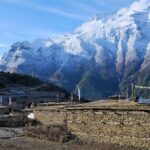
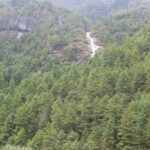
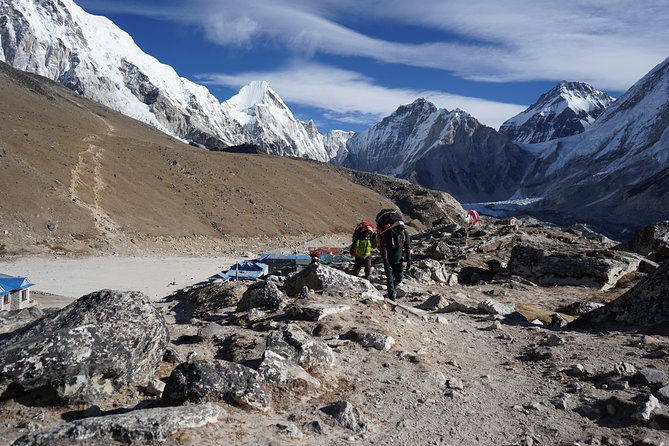
Once you leave Kathmandu, the trek route starts building character fast. One early path heads through pine forests and passes the Dudh Koshi River, with views of peaks like Thamserku along the way. You’ll also go by settlements and reach a check post where you enter Sagarmatha National Park.
This matters more than it sounds. Park entry is one of those “small admin moments” that gives structure to the journey. It also reminds you that this isn’t just hiking in the mountains—it’s hiking in a protected high-altitude region with rules and permits.
Another point to note for your planning: the route includes river crossings (like crossing the Dudh Koshi on later days). That means you’ll want shoes with solid grip and hiking socks you trust. Wet stones happen.
Namche Bazaar acclimatization: the rest day that still moves
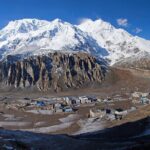
Namche Bazaar is the biggest settlement in the Khumbu region, and it’s set up for trekkers—ATMs, internet cafes, restaurants, and bakeries. That’s a nice mental break. You can buy small comforts, send a message home, and reset before the higher sections.
But this trek doesn’t treat Namche as a full stop. It’s listed as a rest day for acclimatization, and you still go for a short hike to a nearby viewpoint. That’s a smart choice. You get gentle altitude exposure without exhausting yourself.
Think of it like training wheels for altitude. You’re practicing moving higher while keeping your effort controlled. If you’ve ever had altitude anxiety, this kind of day can feel reassuring because it’s structured and guided.
From Namche to Phorse: Mugla Pass views and the day you earn Ama Dablam hints
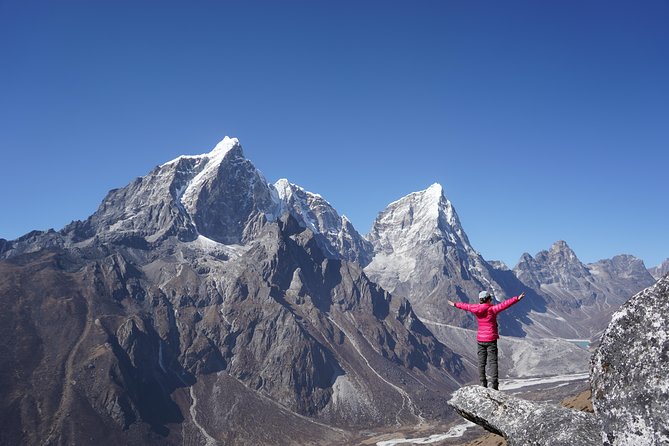
After breakfast in Namche, the trek heads toward Phorse. You reach Mugla Pass and are rewarded with glimpses of Mount Ama Dablam, Mount Khumbu, and Mount Thamserku. Then you descend toward the Dudh Koshi and cross it again.
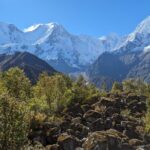
This is one of those stretches where “achievement” and “endurance” overlap. The pass area gives you that wide-angle feeling—mountains layering behind mountains. But your body still has to do the work. The key is pacing. You don’t want to sprint to viewpoints, because you’ll pay later.
Also, don’t assume you’ll see everything perfectly from every day. On EBC treks, visibility changes with weather and light. What you’re really chasing is a series of clear moments, not one single miracle view.
Dingboche and the monastery stop: learning the culture while you gain altitude
The route from Phorse continues toward Dingboche, with visits that add cultural texture rather than just scenery. You’ll start with a visit to the biggest Buddhist monastery in the region, then travel through alpine forests and villages like upper Pangboche and other nearby settlements.
Why does that matter? Because at higher altitude, your mind needs variety. You’re climbing in a place shaped by people—not only by rocks and snow. Stops like a monastery break up the monotony of walking and give you something to observe besides breath and legs.
Dingboche itself is part of why EBC works as a trek rather than just a grind. This region supports acclimatization cycles, and your schedule is built so you’re not jumping straight from lower elevations into the highest camps without time to adjust.
Duglha, Khumbu Khola valley, and the 1953 expedition camp reference
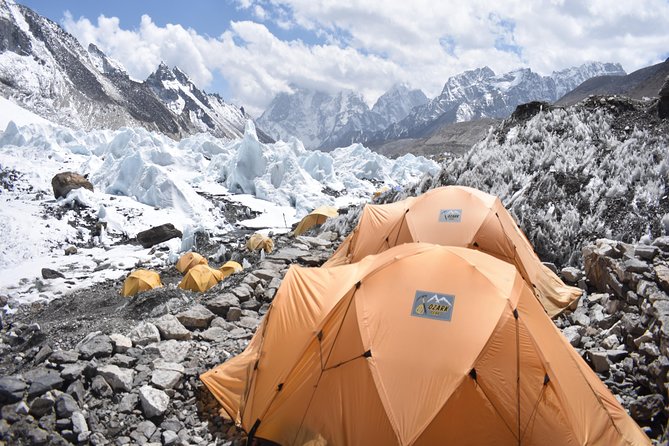
One of the more meaningful sections begins with a climb from Dughla through the Khumbu Khola valley. On the way, you pass Dusa, a yak herders place, and Phulong Karp, described as the camp of the first successful Everest Expedition in 1953.
That’s the sort of detail that makes your steps feel connected to history. You’re still hiking, still dealing with altitude, but now you’re walking through places loaded with meaning.
You’ll also see Chola Lake mentioned on this section. Lakes at altitude often become emotional waypoints—quiet, reflective, and cold enough to remind you you’re far from home.
Chupki Lhara and the glacier terminal moraine: prayer flags, boulders, and focus
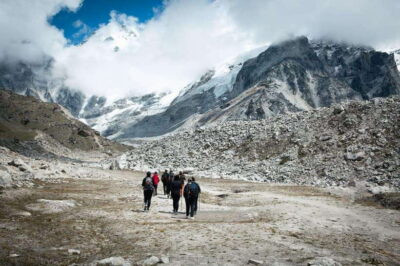
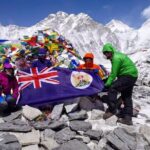
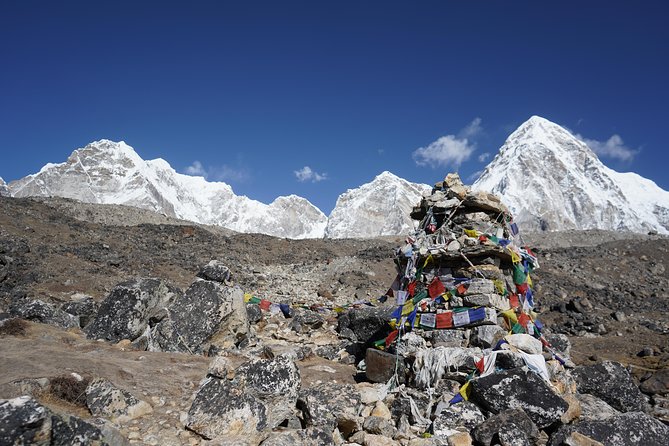
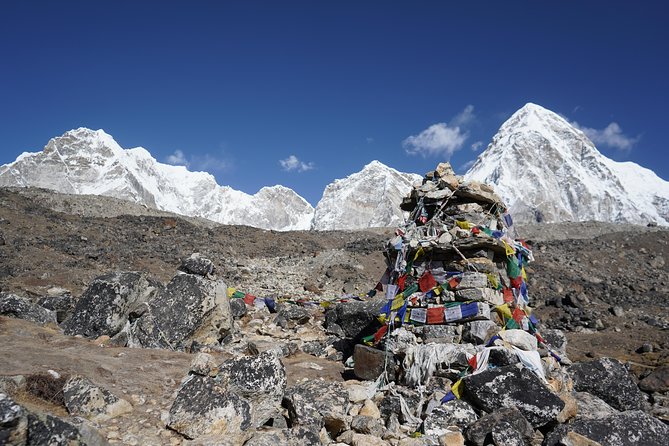
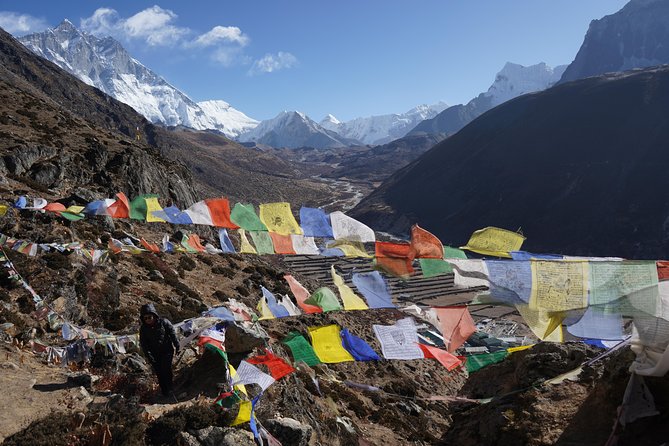
On another stretch, the route climbs steeply toward a terminal moraine of the Khumbu glacier before ascending to Chupki Lhara. The route notes slopes with boulders and encounters with prayer flags and stone collections.
This is where the trek shifts from “picturesque hiking” into “serious mountain walking.” Boulders slow you down. Prayer flags and mani stone stacks help you accept the pace shift instead of fighting it.
If you take one practical lesson from this part, it’s this: keep your movements deliberate. On uneven ground, small slips cost big energy and peace of mind.
Thangma Riju: the 360-degree panorama day (and why Everest might be missing)
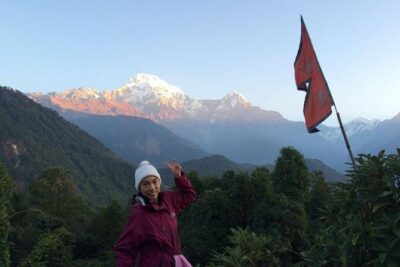
Thangma Riju is flagged as one of the most important days on the route, with a 360-degree panoramic view of snowcapped mountains. And here’s an important nuance: Mount Everest is not seen from here.
That’s not a disappointment trap—it’s normal high-mountain geometry. If you’re expecting Everest to appear every day like a postcard, you’ll miss the point. This day is about the full ring of views and the way mountains stack around you.
A guide becomes useful here because you’ll understand what you’re looking at and why the sightlines change. It’s also a psychological win: you get a big day without needing to force Everest visibility.
The final push: early-morning Everest glimpse and Kala Patthar sunrise
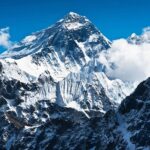
As the trek nears its climax, the schedule emphasizes early starts so you can catch Everest’s light change—when dusk turns to bright morning. This part is described as the moment you can witness a glimpse of Mount Everest when the light shifts.
Then comes Kala Patthar for the classic sunrise view. The route notes about a 30-minute window and that admission ticket is free. Kala Patthar is a name you’ll hear everywhere for good reason, and your timing here is built around that payoff.
What you should take into this experience is not just the photo. It’s the feeling of being on high ground as the world wakes up. When you’re bundled up against cold air and wind, the sky doesn’t care about your schedule—so being ready, moving carefully, and trusting the plan pays off.
Coming down: terminal moraine returns, Pheriche and Pangboche exploration
After the EBC highlight, the descent begins along the Jame route back to the terminal moraine at Dughla. You pass through places like Pheriche and Orsho, then continue toward Pangboche, where you can explore an older area in the village.
Descent is where you test your legs more than your lungs. Even if you feel stronger on the way down, you still need balance and control. The tour’s focus on controlled walking shows up again later on steep sections.
One thing I appreciate about a guided small-group here: it reduces decision fatigue. You don’t have to guess which turn is right while your knees are negotiating every step.
The steep down day and the Dudh Koshi suspension bridge
The last trekking day includes a steep downward trail. The route specifically warns you to walk slowly and in a controlled, balanced manner on steep rocky terrain until you reach a suspension bridge over the Dudh Koshi, then you continue onward.
That’s a perfect example of why I like guide-led treks: you’re not just moving between sights. You’re moving between changing terrain. Rocky descents can be deceptively hard, especially when you’re tired and your attention drifts.
When you hit the suspension bridge, you get a psychological reset. You’re not in the middle of nowhere anymore—you’re crossing into the final stretch that leads back to Lukla.
Lukla back to Kathmandu: celebrate, then enjoy real city time
Once you finish the trek, you enjoy the mountain flight from Lukla to Kathmandu again. On arriving in Kathmandu, there’s time for shopping and walking around the city. The evening is described as a celebration of completing the successful trek.
Then your final day in Nepal includes more sightseeing around the cultural Kathmandu Valley before you head to Tribhuvan International Airport for your scheduled flight departure.
This is a nice arc: mountain effort, then city normal life. And because Kathmandu is close to public transportation, you can explore without everything feeling too locked down.
Price and value: what $1,350 buys you in real-life terms
$1,350 per person is a serious chunk of money, but Everest Base Camp isn’t cheap by nature. The value here is in what’s included and what it saves you from doing yourself.
This experience includes:
- Pickup offered in Kathmandu and arranged airport-to-hotel transport
- Teahouse accommodation and meals
- Local transportation tied to the trek route
- A guide-led small-group format (max 10)
- Mobile ticket support
Those inclusions matter because EBC costs aren’t only about beds and food. They’re about coordination: permits/processes, route planning, timing for acclimatization, and having someone responsible for keeping you from drifting off the safe track.
On top of that, your group size and guide support can reduce stress. Stress is expensive too. If you’ve ever had a trip go sideways because you didn’t understand a route or timing, you know what I mean.
The fact that it’s commonly booked about 56 days in advance also hints at demand—so booking ahead is usually smart if you want the dates to match your schedule.
Weather, fitness, and the one habit that keeps you comfortable
The tour runs in all weather conditions, so dressing appropriately is a key instruction. That doesn’t mean you’ll be miserable—it means you should plan for layers, gloves, and rain/snow-ready gear.
You also need strong physical fitness. Everest Base Camp is not a “walk when you feel like it” kind of trip. It’s a steady effort with altitude pressure.
A habit that helps: keep your pace slightly slower than you think you need, especially early in the trek. When you get to higher elevations, your body will ask for a calmer rhythm whether you’re ready or not.
Who should book this Everest Base Camp trek (and who should pause)
You’ll likely love this trek if you:
- Want a guided experience to reduce the risk of getting lost or confused on route
- Prefer small-group attention (max 10)
- Are active and moderately fit and comfortable with long walking days
- Like the idea of prioritizing mountain views rather than planning logistics
You should pause if:
- You’re not confident about strong fitness for altitude trekking
- You want a trip with lots of downtime and minimal walking
- You hate early starts, because this route includes early-morning flights and morning summit-style timing
Should you book Green Valley’s Everest Base Camp experience?
If you want Everest Base Camp with structure, this is a strong option. The mix of guided navigation, small-group size, and included teahouse meals and lodging is exactly what makes EBC feel manageable. The Kala Patthar sunrise timing is also the kind of detail that turns the trek from good into unforgettable.
One last practical thought: your success on this trek will mostly come from consistency—walking steadily, respecting your acclimatization rhythm, and dressing for cold and weather changes. If you show up ready for that, this trip’s design helps you focus on the mountains instead of the map.
FAQ
What is the duration of this Everest Base Camp trek?
It’s listed as 14 days approximately.
Where does the tour start?
The meeting point is Tribhuvan International Airport.
What is the total price per person?
The price is $1,350.00 per person.
How large is the group?
The trek has a maximum of 10 travelers.
What’s included in the trek package?
The experience includes pickup offered, teahouse accommodation, meals, and local transportation.
Do you get a guide to help with route safety?
Yes. The experience is described as a guided small-group trek to help you avoid getting lost.
What should I bring or prepare for weather and altitude?
The tour operates in all weather conditions, so you should dress appropriately. It also notes travelers should have strong physical fitness.
What documents do I need?
A current valid passport is required, and your passport details are needed at time of booking for all participants.