REVIEW · KATHMANDU
10 Days Nepal Trip – Heritage Kathmandu – Natural Pokhara and Poon Hill Trek
Book on Viator →Operated by Couch Adventure Nepal (CAN) · Bookable on Viator
Kathmandu, Pokhara, and Poon Hill in one trip sounds busy. But it actually flows well, and the Poon Hill sunrise moment alone makes the whole route worth it. I like how this itinerary stitches together heritage temples in Kathmandu, a relaxed Pokhara break, and a trek you can pace yourself through.
I especially like that the logistics are handled: airport pickup in a private car, tourist bus legs between cities, and a guide who stays with you through both the trek and the city days. One practical plus is that you’re not expected to figure out permits, either—your TIMS and trekking permit are included.
The one consideration I’d flag is simple: meals aren’t included, and you’ll still walk for several long stretch days. If you’re the type who hates long days without food breaks planned, budget for meals (and snacks) from the start.
In This Review
- Key highlights at a glance
- Why this Nepal route works: Kathmandu heritage, Pokhara calm, and Poon Hill
- Getting in and out smoothly: airport pickup, tourist bus, and private transfers
- Kathmandu’s heritage day: Pashupatinath, Boudhanath, Swayambhunath, and Durbar Square
- Pashupatinath Temple
- Boudhanath Temple
- Swayambhunath (Monkey Temple)
- Kathmandu Durbar Square
- The Pokhara transfer day: what the long ride buys you
- Trek Days 3–6: Ulleri, Ghorepani, Poon Hill sunrise, and Ghandruk
- Day 3: From the road to Ulleri
- Day 4: Ulleri to Ghorepani
- Day 5: Poon Hill at sunrise, then down toward Tadapani
- Day 6: Ghandruk village, then down by jeep to Nayapul and back to Pokhara
- Where you sleep during the trek
- Permits and guide support
- Pokhara sightseeing day 7: Devi’s Fall, caves, World Peace Stupa, Sarangkot, and the lakes
- Day 8 and Day 10: back to Kathmandu, then airport drop
- Price and value: what $480 covers, and what to budget beyond it
- What to expect day-to-day: the pace, the group, and the fitness fit
- Should you book this 10-day Kathmandu–Pokhara–Poon Hill trip?
- FAQ
- What is the total price for the trip?
- How long is the experience?
- Where do you start and where do you end?
- What type of accommodation is included?
- Are meals included in the package?
- What trekking documentation is included?
- Is there pickup and transportation included?
Key highlights at a glance

- Poon Hill sunrise with an Annapurna view: an early start that pays off with big morning scenery.
- A balanced route: heritage Kathmandu, Pokhara lakes and viewpoints, then back to Kathmandu for your final sights.
- English-speaking trekking guide + city guide: you get explanation, not just directions.
- Permits handled for you: TIMS and trekking permit are included in the package.
- Comfortable base, then real trekking stays: 2-star hotels in the cities and small basic guest houses during the trek.
- No solo planning stress: pickup, transfers, and key ride segments are arranged.
Why this Nepal route works: Kathmandu heritage, Pokhara calm, and Poon Hill
This is a trip built for a classic Nepal combo: culture plus mountains. You start in Kathmandu, where the big draw is walking into historic religious sites that still feel active and meaningful. Then you shift to Pokhara, where the day-to-day pace slows down around lakes and viewpoints. After that, you step into the hills with the famous Poon Hill sunrise trek—one of those “worth the early alarm” experiences.
What makes it work is sequencing. You do the city heavy lifting twice (early arrival and later full heritage day), then you get a full Pokhara sightseeing day before heading back. That means you’re not trying to cram temples while you’re exhausted from trekking, and you’re not trying to trek right after a long flight day either.
Also, this itinerary has a “guided rhythm” built in. Each trek day ends with an arranged stop and sleep situation, and the ride segments (private car and sharing jeep) handle the annoying gaps between trail sections. It’s not luxury, but it is organized.
You can also read our reviews of more tours and experiences in Kathmandu.



Getting in and out smoothly: airport pickup, tourist bus, and private transfers

The trip starts with a straightforward win: you get pickup in Kathmandu from the airport or your location and transfer to your Kathmandu hotel for the first night. That single step matters when you arrive tired and just want to get settled.
Between Kathmandu and Pokhara, you ride a tourist bus (departure at 6:30am on Day 2, around 7 hours). It’s not the same as door-to-door transport, but it’s a reliable way to cover the distance. Then, on return, you take another tourist bus from Pokhara to Kathmandu starting 7:00am (Day 8).
For the trek’s start and finish, you’re also covered with transport that reduces backtracking. You drive to Nayapul, trek toward Ulleri, and later use a sharing jeep from Kimche to Nayapul, then car transfer back to Pokhara. That’s a practical approach for people who want the trekking experience without turning the trip into a nonstop travel day.
One more detail I appreciate: this is set up as a private trip for your group only. That tends to make timing and instructions feel more personal, especially on trek days when you really want the guide’s attention.
Kathmandu’s heritage day: Pashupatinath, Boudhanath, Swayambhunath, and Durbar Square

Even though Day 1 is mainly arrival and hotel check-in, the real Kathmandu sightseeing comes on Day 9. You’ll cover four major stops that together give you a strong sense of how Kathmandu’s religious life is woven into everyday city scenes.
Pashupatinath Temple
This is one of Nepal’s most famous Hindu pilgrimage sites. Plan to move slowly here and look closely at the atmosphere. You’ll want respectful clothing and a patient pace, because these places are living worship spaces, not just photo sets.
Boudhanath Temple
Then you shift to Buddhism with Boudhanath. The vibe changes from Hindu rituals to Buddhist prayer rhythms. Expect to notice how different the temple design feels, and how that difference shows up in the way people move and gather.




Swayambhunath (Monkey Temple)
Swayambhunath gives you city views plus religious energy. It’s also the kind of stop where you’ll likely see monkeys around, so keep your phone secure and avoid holding out food.
Kathmandu Durbar Square
Finally, you end at Kathmandu Durbar Square, where architecture and heritage tell their own story. It’s a good place to wrap up your Kathmandu day because it feels like a snapshot of older city identity.
Day 10 is simply your departure. You’ll be dropped back to the airport based on your flight schedule, which keeps the final day stress-free.
The Pokhara transfer day: what the long ride buys you
Day 2 is a travel day, with a 6:30am departure from Kathmandu and arrival in Pokhara after about 7 hours. The payoff is that you arrive in Pokhara with enough time to transfer to your hotel and start enjoying the change in pace the same day.
You don’t get stretched into some complicated “connect here, switch there” situation. Instead, you get a single main ride segment, then local transfer to your lodging. That matters because Pokhara days are better when you’re not rushed.
If you’ve never been to Pokhara, the first thing you’ll notice is how quickly you feel the shift from city density to a slower rhythm. Even if you only spend the afternoon settling in, you’ll feel that Pokhara is more about viewpoints, lakes, and relaxed exploration than nonstop heritage hopping.
Trek Days 3–6: Ulleri, Ghorepani, Poon Hill sunrise, and Ghandruk
This is the heart of the trip. You’ll trek across a classic high-hill route with well-known stops: Ulleri, Ghorepani, Poon Hill, and Ghandruk. Each day is timed and paced in a way that suits a moderate fitness level, with guided support and accommodation arranged.
A practical note: the schedule lists trekking days in the 6–7 hour range. That’s not a “quick walk” but it is manageable if you keep a steady pace and don’t try to power through.
Day 3: From the road to Ulleri
You drive about 1.5 hours to Nayapul, then trek to Ulleri for about 6 hours. This day is often where you start feeling the altitude and the uphill rhythm. It’s a good “warm-up trek” day because you’re not starting with the sunrise scramble yet.
Day 4: Ulleri to Ghorepani
You trek to Ghorepani for around 6 hours. Ghorepani is your staging point for the next morning’s highlight. I like this setup because you’re building toward the sunrise moment instead of hopping around randomly.
Day 5: Poon Hill at sunrise, then down toward Tadapani
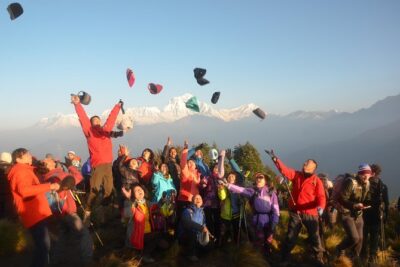
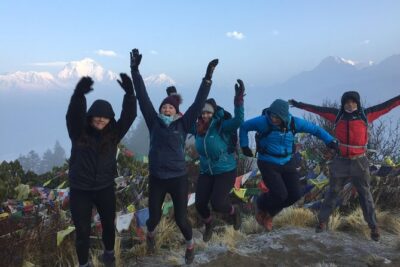
This is the early one. You head out for sunrise at Poon Hill, specifically for the view over Mt. Annapurna, then continue the trek to Tadapani (about 7 hours total). If you’ve never done a sunrise trek, it helps to know what to expect: you’ll wake up early, move in the dark or near-dark, and then the reward comes when the sky clears.
When you finish, you’ll feel it in your legs—but the view is the kind of thing that makes you forget the cold start pretty fast.
Day 6: Ghandruk village, then down by jeep to Nayapul and back to Pokhara
Day 6 includes a switch from trekking to more flexible transport. You trek to Ghandruk, explore the Gurung village area in Ghandruk, then continue down to Kimche. After that, you take a sharing jeep from Kimche to Nayapul, and a car transfer back to Pokhara.
This day is a nice balance between “walk” and “rest.” The village exploration also breaks the monotony. Even if you focus on the scenery, there’s something real about seeing how local communities live in these mountain regions.
Where you sleep during the trek
During the trek, you stay in small basic guest houses. That’s normal for this kind of trek. Don’t expect hotel-style comfort, but do expect it to be functional and close to the trail so you can rest and recover.
Permits and guide support
Your trekking permit and TIMS are included, and you’ll have an English-speaking trekking guide for the trek. That reduces guesswork on what you need and helps you understand what you’re walking through.
Pokhara sightseeing day 7: Devi’s Fall, caves, World Peace Stupa, Sarangkot, and the lakes
After the trek, you get a full sightseeing day in Pokhara. This is where the trip shifts from movement to views and wandering.
Here’s what’s on your list for Day 7:
- Devi’s Fall
- Cave
- Mountain Museum
- World Peace Stupa
- Sarangkot
- Begnas Lake
- Fewa Lake
A smart way to handle a day like this is to expect some stops to feel more like photo moments and others to feel more like short walks. The World Peace Stupa and Sarangkot are the kind of stops that reward patience and taking your time. Meanwhile, Devi’s Fall, the cave, and the museum break up the day with variety.
Also, don’t underestimate the “lake time” part. Even if you’re not doing boating or long hikes, sitting with Fewa Lake and seeing the town from a distance gives you that mental decompression after trekking.
Day 8 and Day 10: back to Kathmandu, then airport drop
Day 8 is a tourist bus ride from Pokhara back to Kathmandu, starting at 7:00am. The goal here is simple: get you back in time to feel like you’re in Kathmandu again, not stuck in transit.
Day 9 handles the heritage day. Day 10 is departure. You’ll get transferred back to the airport based on your flight schedule, with a short travel time listed at about 40 minutes.
That separation—sightseeing on Day 9, travel on Day 10—keeps the ending smooth.
Price and value: what $480 covers, and what to budget beyond it
At $480 per person, the value here comes from the combination of:
- Hotels in Kathmandu and Pokhara (2-star level)
- Trekking permits and TIMS
- English-speaking guide during the trek and city tour
- Key transport: private-car pickup/drop in Kathmandu, tourist buses between cities, and the sharing jeep segment during the trek
- Accommodation during trekking in basic guest houses
What’s not included is equally important. You need to budget for all meals and drinks, since they’re not part of the package. That means if you’re used to having food costs absorbed in the tour price, plan for extra spending.
You’ll also likely want to set aside money for entrance fees during city tour in Kathmandu and Pokhara, since those are listed as not included. Entrance costs vary by site, and Kathmandu is especially site-dense.
If you prefer a “one price covers everything” style trip, this one isn’t built that way. But if you’re comfortable paying for meals and entrances on the ground, the tour price looks fair for the amount of guided and permitted service you get.
What to expect day-to-day: the pace, the group, and the fitness fit
This itinerary is built for moderate physical fitness. That doesn’t mean it’s effortless. Your trek days are listed at 6 to 7 hours, and you’ll do that multiple days in a row.
Your best bet is to think in terms of consistent effort, not athletic days. You’ll walk, you’ll stop, and you’ll have a guide with instructions and timing. The trip doesn’t try to squeeze in a marathon schedule, but it also isn’t a sit-and-smile cultural tour.
Because the trip is a private trip for your group, you’ll generally get more flexible attention than large crowd group tours. That’s a quiet quality-of-life upgrade on the trek days when conditions can change and you might need the guide to adjust pace.
Should you book this 10-day Kathmandu–Pokhara–Poon Hill trip?
Book it if you want one clean plan that covers Kathmandu heritage, Pokhara lakes and viewpoints, and the Poon Hill sunrise trek without building the logistics yourself. The included guides, permits, and most transfers make this feel like a well-managed route rather than a patchwork adventure.
Skip it (or at least reconsider) if you hate long walking days, or if you strongly prefer tours where meals and entrance fees are included. Also, the trekking stays are basic guest houses, so you should be comfortable with simpler accommodations.
If you’re aiming for an honest Nepal sampler—temples, lakes, and mountain mornings—this itinerary is a solid match.
FAQ
What is the total price for the trip?
The price is $480.00 per person.
How long is the experience?
It runs for 10 days (approx.).
Where do you start and where do you end?
You start in Kathmandu with pickup, and you end with a drop-off back to the Kathmandu airport based on your flight schedule.
What type of accommodation is included?
You get 2-star level hotels in Kathmandu and Pokhara, and small basic guest houses during the trek.
Are meals included in the package?
No. All meals and drinks are not included and are available for purchase.
What trekking documentation is included?
Your trekking permit and TIMS are included.
Is there pickup and transportation included?
Yes. You get airport shuttle in a private car, plus pickup and drop-off in private car segments. You also use tourist bus transfers between Kathmandu and Pokhara, and a sharing jeep from Kimche to Nayapul.