REVIEW · KATHMANDU
Gokyo Lake Trek
Book on Viator →Operated by Alliance Adventure Pvt. Ltd · Bookable on Viator
That first morning in Kathmandu sets the tone. This Gokyo Lake trek mixes Everest-area icons with the quieter, bluer payoff of Gokyo Lakes. You’ll also get Gokyo Ri views from about 4,750m, plus a route that takes you through classic Sherpa stops like Namche Bazaar and Khumjung.
What I love most is how the days are built around altitude reality: long enough walks to feel like a real trek, but with moments that help you adjust before going higher. I also like the way the team supports you on logistics and comfort, including a warm down jacket and sleeping bag during the trek, plus a medical kit bag on the ground. One thing to consider: the Lukla flight is weather-dependent, so you’ll want to stay flexible when the sky refuses to cooperate.
In the guide department, the most memorable detail I took from past trip experiences is the care and communication style. Names that came up: Urja and Ashish—and the vibe is clear, responsive, and practical. Still, this is a 15-day trek with real climbing, so if you’re hoping for a gentle stroll, you may be disappointed.
In This Review
- Key points before you commit
- Gokyo Lake Trek: the part of Everest country that feels quieter
- Price and what you’re really buying at $1,785 per person
- The big picture schedule: how 15 days keeps you moving but not reckless
- Kathmandu first: warm welcome, simple briefing, then you’re off
- Lukla and the flight reality check: when weather runs the show
- Namche Bazaar zone: acclimatization with real Everest vibes
- Past Namche: the bridges, rivers, and long uphill days that test your legs
- Gokyo Glacier and Cho Oyu country: where the lakes start to feel unreal
- Gokyo Ri sunrise push: your panoramic reward day
- The return down: retracing steps without losing the magic
- Gear, cold, and charging limits: what you should plan for
- Who this trek is best for (and who should think twice)
- Should you book the Gokyo Lake Trek with Alliance Adventure?
- FAQ
- What’s the duration of the Gokyo Lake Trek?
- Where does the trek start and what time is the start?
- What’s the total price per person?
- Are meals included during the trekking portion?
- Is lodging included in Kathmandu before and after the trek?
- What trekking gear is included?
- What isn’t included in the package?
- What permits are included?
- How do I get a visa for Nepal?
Key points before you commit

- Gokyo Ri at ~4,750m gives you big “Everest region” panorama time without doing Everest Base Camp proper
- Acclimatization built into the route: Namche-area stops, plus a health/sickness briefing in the higher villages
- Comfort support included: warm down jacket, sleeping bag, and trekking poles (returned after)
- Team-led guidance with strong communication (including recognizable guide staff like Urja and Ashish)
- Weather can affect Lukla flights, so your schedule needs a little give
Gokyo Lake Trek: the part of Everest country that feels quieter
The Everest region is famous for drama, but Gokyo Valley adds something different: wide mountain presence paired with lake magic. You’re trekking through Sherpa communities, national park terrain, and glacier country, then pushing up for high viewpoints over Gokyo Lakes and the surrounding peaks.
The route also gives you many of the usual Everest-region “greatest hits.” Expect views tied to peaks listed on your plan such as Mt. Everest, Mt. Lhotse, Mt. Nuptse, Mt. Cho Oyu, Mt. Makalu, Mt. Amadablam, and Mt. Thamserku, among others. On clear days, you’ll feel like you’re walking inside a giant postcard. On less-clear days, you’ll still be moving through a serious mountain environment—just without every peak showing off at once.
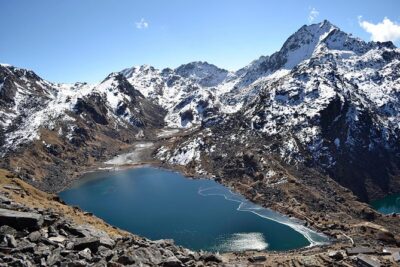
And yes, the lakes matter. Gokyo Lake sits around 4,750m, so it’s high enough to feel consequential, but not so high that every single day is a full-on altitude survival test. That balance is part of why this trek is popular.
You can also read our reviews of more tours and experiences in Kathmandu.



Price and what you’re really buying at $1,785 per person

At $1,785 per person, you’re paying for more than “someone takes you walking.” Your package includes a lot of the stuff that usually turns into annoying extra spending on trekking trips:
- Kathmandu help (including 2 nights hotel with breakfast)
- All transport from arrival to departure
- Permits/TIMS, plus taxes if needed
- Meals on trek days (breakfast, lunch, dinner, plus tea/coffee)
- Support staff: English-speaking guide, helpful potters/porters, and insurance for those staff
- Medical kit bag during the trek
- Trek gear support: a warm down jacket and sleeping bag (plus trekking walking pole—returned after)
- Trek extras: 100% waterproof trekking duffel bag and a company t-shirt
- A welcome and farewell dinner
So what you’re not buying is also important. It does not include cold drinks, phone calls, laundry, and bar bills. It also doesn’t include lunch and dinner in Kathmandu, tips for guide and potters, hot shower, or battery charging along the trek. And you should plan for travel and high altitude sickness insurance not being included.
My practical take: the value is strongest if you don’t want to organize permits, staff, meals, and core gear yourself. If you already have your own high-quality cold-weather setup and you love logistics juggling, you might find cheaper options out there—but this package tries to remove friction.
The big picture schedule: how 15 days keeps you moving but not reckless
This is a trek that mixes steady travel with a few longer walking days. The itinerary timing you’ll face is shaped by altitude and by the fact you’ll be going up and down in the Everest region, which is never flat and never casual.
A typical rhythm goes like this:
- Early start, then a morning hike when your energy is usually best
- Midday breaks for food and rest
- Afternoon walking that often feels slower as altitude and cold stack up
- Nights spent in teahouses/lodges (your plan includes meals and tea/coffee)
Two points matter for your enjoyment:
- Acclimatization days aren’t optional fluff. They’re your chance to reduce the risk of altitude issues later on.
- The trek includes viewpoint pushes, like Gokyo Ri. That’s not just sightseeing—it’s the reward for doing the climb days carefully.
Kathmandu first: warm welcome, simple briefing, then you’re off
You start with a warm welcoming in Kathmandu, plus a briefing about the Gokyo Lake (Gokyo Ri) Trek. It’s “free and easy” time, which I actually like. You’re not dragged around for hours; you get to get your bearings, rest, and sort your gear.
Then there’s a city tour half-day and time to travel to Manthali Airport by private vehicle if your plan involves driving that day. This timing detail matters. If you drive to Manthali on a day before your early flight, you avoid the need to wake up at 2am for some itineraries. In other words: you buy yourself a slightly more humane morning.
One more practical item: you’ll be asked for flight details, plus a passport copy and a passport-size photo for the trekking permit and TIMS card. Nepal visas can be handled on arrival in Kathmandu, with fees listed as USD 25 for 15 days and USD 40 for 30 days. Budget that into your timeline.
Lukla and the flight reality check: when weather runs the show
The plan uses a short flight to Lukla (described as about 15 minutes). The catch is obvious: if weather is friendly and visibility is good, you fly. If it isn’t, you might not.
From previous trip experience tied to this operator, I’ve seen how they respond when flights don’t go as planned. A case came up where poor weather stopped Lukla flights despite two attempts, and the team pivoted. That’s exactly the kind of flexibility you want to see, because altitude treks live or die by early-morning conditions.
What you should do: keep your expectations loose for this stage. When you can’t control the sky, you control your attitude and your planning. Pack patience alongside your snacks.




Namche Bazaar zone: acclimatization with real Everest vibes
Once you’re trekking, the route quickly becomes classic Everest-region. You’ll cross suspension bridges early on, including a very high Hillary suspension bridge if conditions are clear enough for views (your plan ties this to visibility).
Then you’ll reach Namche Bazaar, which is basically the region’s mini hub. It feels busy enough to supply normal life—shopping, coffee bars, bakeries—while still being surrounded by peaks. If you enjoy the “real mountain town” feeling, Namche hits that spot.
A key special day in the Namche area includes time for:
- Trekking toward Sagarmatha National Park
- Stops linked to Everest View Hotel
- Visiting Khumjung Village
- Visiting Hillary School
And importantly, this whole block is also about altitude adjustment. You’re not just sightseeing; you’re testing your body. If you keep your pace sensible and hydrate, you’ll set yourself up better for the higher Gokyo Valley.
Past Namche: the bridges, rivers, and long uphill days that test your legs
After Namche, the trek leans more into steady climbing. Your plan includes a longer walking day where you’ll travel below major peaks like Mt. Everest, and you might even spot Himalayan goats along the trail if you’re lucky.
One day moves from Dole to Machhermo. If the weather cooperates, this is often when the scenery hits hard—snowy mountain views at just the right time to remind you why people do this. Machhermo also includes a useful health moment: a briefing from Himalayan Rescue Association volunteers/doctor about mountain sickness. That’s a practical included benefit, because it gives you clear guidance before you push higher.
Here’s what to watch: the higher you go, the more you’ll need to pace yourself. Your goal isn’t to win every uphill segment. Your goal is to finish the trek feeling like you had control.
Gokyo Glacier and Cho Oyu country: where the lakes start to feel unreal
Then comes the Gokyo Valley core. You’ll walk through Gokyo Glacier country and move toward the region’s central attractions: the Gokyo Lakes and views that include Mt. Cho Oyu.
This is where “scenery” turns into “experience.” The lakes are described as amazing, and after you’ve spent days in stone-and-snow terrain, the change in water and color is exactly the kind of visual payoff you want. It doesn’t just look pretty. It helps you understand the geography of the whole valley—how the ice, the peaks, and the basin work together.
You also get a strong optional feel built into your days. If you don’t feel fully done, there’s a possibility to hike to the 5th Lake. That kind of flexibility is worth having. Some days you’ll be energetic; some days you’ll want to save your legs for the viewpoint.
Gokyo Ri sunrise push: your panoramic reward day
The big viewpoint day is a hike to Gokyo Ri. You leave early and aim for panoramic views of the Himalayan range, including Mt. Everest and Mt. Makalu, with a described 360-degree feel when skies allow.
This is not a leisurely photo walk. It’s a “show up early, keep steady, then enjoy the view” day. The payoff is the wide panorama: you’re not staring at one peak. You’re seeing a whole system of mountains and ridges that makes Everest-region geography click in your head.
Practical tip: bring the gear you were told to bring. In high altitude mornings, wind and cold can drain your motivation fast. Gloves, warm layers, and sun protection matter even when the sun is still low.
The return down: retracing steps without losing the magic
After the high days, the trek starts moving back. You’ll retrace parts of the route, including time for last pictures with the lakes and mountains, then continue down toward your next destinations.
One section includes walking through terrain near peaks and areas such as Thamserku and Kusumkhangaru, with views tied to Ama Dablam. The plan also notes that later you’ll do a final viewpoint-style moment in the Namche Bazaar area and then finish your trekking mission.
Eventually, you celebrate with your guide/potter in Lukla after reaching the successful end. Then you head back via flight to Manthali Airport and drive back to Kathmandu. That “move from mountain fatigue to Kathmandu rest” transition is often a relief—especially if you’ve kept your pace smart.
Gear, cold, and charging limits: what you should plan for
Your packing and comfort will shape how much you enjoy the trek.
You’ll be provided:
- Warm down jacket
- Sleeping bag
- Trekking walking pole (returned after)
But you’re still responsible for your personal items. The plan recommends:
- Windproof outer jacket and warm down-filled jacket if you’re afraid of cold
- Gloves, hat/cap, sun glasses, sun block, lip balm
- Lightweight trekking shoes and warm socks
- Thermal undergarments for nights if needed
- Flashlight and spare batteries
- Training/hiking before you go
One big reality check: hot shower and battery charging are not included along the trekking route. You can still plan for cold nights without it, but don’t assume daily comfort luxuries. Also remember cold eats battery life—so bring spare power or plan around limited charging opportunities.
Who this trek is best for (and who should think twice)
This trek fits you if you:
- Have moderate physical fitness
- Want a high-reward Everest-region trek without going all the way to Everest Base Camp
- Like the mix of trekking + culture stops (Namche, Khumjung, Hillary School)
- Enjoy lake scenery at altitude and viewpoint climbs like Gokyo Ri
- Want a structured package with guide support, meals, permits, and core cold-weather gear
Think twice if you:
- Want a fully relaxed trek with minimal uphill strain
- Don’t handle cold mornings well
- Are counting on frequent hot showers or easy electricity
- Need a plan that never changes when weather hits early flights
Should you book the Gokyo Lake Trek with Alliance Adventure?
If your priority is Gokyo Ri panoramas plus Gokyo Lakes in the Everest region, this is an appealing choice. I like that the included setup reduces decision fatigue: permits handled, meals provided on trek days, and key cold-weather items included. The team support also seems to be a real strength, with guide names like Urja and Ashish showing up in positive feedback, along with clear communication.
I would book it if you can be flexible about the Lukla flight and you’re ready for real trekking days. I would hesitate if you need predictable flight timing, unlimited charging, or a gentle pace.
If that sounds like you, you’ll probably have a great time on this route. It’s the kind of trek where the effort turns into views you can actually remember for years.
FAQ
What’s the duration of the Gokyo Lake Trek?
It’s listed as about 15 days.
Where does the trek start and what time is the start?
It starts in Kathmandu and the start time is listed as 6:00 am.
What’s the total price per person?
The price is listed as $1,785.00 per person.
Are meals included during the trekking portion?
Yes. The package includes breakfast, lunch, dinner and tea/coffee along the trek, plus additional listed meal inclusions.
Is lodging included in Kathmandu before and after the trek?
Yes. It includes 2 nights hotel in Kathmandu with breakfast.
What trekking gear is included?
You’re provided a warm down jacket, a sleeping bag, and trekking walking poles (returned after the trek). You also receive a 100% waterproof trekking duffel bag and a company t-shirt.
What isn’t included in the package?
Cold drinks, phone calls, laundry, bar bills, lunch and dinner in Kathmandu, tips for guide and potters, travel and high altitude sickness insurance, and hot shower and battery charging along the trekking are not included.
What permits are included?
Your plan includes trekking permit and TIMS cards.
How do I get a visa for Nepal?
You can apply on arrival in Kathmandu. The listed fees are USD 25 for 15 days and USD 40 for 30 days.