REVIEW · POKHARA
Pokhara: 7-Day Annapurna Base Camp Trek & Hot Spring
Book on GetYourGuide →Operated by Snow Peak Tours and Travels pvt.ltd. · Bookable on GetYourGuide
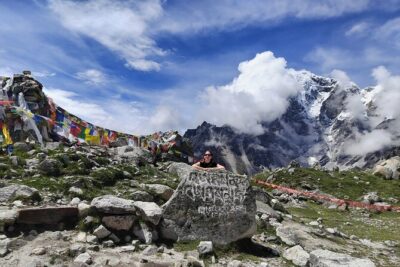
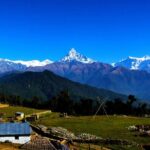
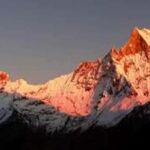
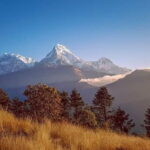
Sunrise on Annapurna feels unreal. This 7-day Pokhara trek is built around that payoff: you hike through rhododendron forests and village trails, reach 4,130m at Annapurna Base Camp, and then watch the Annapurna range light up—especially the views of Annapurna and Machapuchare.
I also love the recovery part. After several long days of climbing and descending, you get Jhinu Danda’s natural hot springs, a real muscle-saver in a place that feels more local than touristy. The one drawback to plan for is logistics clarity—you’ll want to confirm the exact round-trip transport details and what guesthouses include, because extra costs like Wi‑Fi or drinking water can pop up, and return transport may not always match the effort of the outbound route.
In This Review
- Key Highlights at a Glance
- Why Annapurna Base Camp in 7 Days Feels Just Right
- Day-by-Day: From Nayapool to Ghandruk, Then Up to 4,130m
- Day 1: Pokhara to Ghandruk (about 5-6 hours hiking)
- Day 2: Ghandruk to Chomrong
- Day 3: Chomrong to Himalaya
- Day 4: Himalaya to Annapurna Base Camp (4,130m)
- Day 5: Annapurna Base Camp to Bamboo (2,335m)
- Day 6: Bamboo to Jhinu Danda for hot springs (1,610m)
- Day 7: Jhinu Danda to Nayapool, then back to Pokhara
- What 4,130m Really Means for Your Body (and Your Planning)
- Jhinu Danda Hot Springs: Where the Trek Becomes Recovery
- Tea Houses, Meals, and the Cash Reality
- Transportation and Trip Clarity: What to Confirm Before You Hike
- Who This Trek Best Fits (and Who Should Rethink It)
- Price and Value: Does $190 Add Up?
- Should You Book This Annapurna Base Camp Trek?
- FAQ
- What’s the starting point for the trek?
- How many days is the Annapurna Base Camp and hot spring trek?
- What altitude do you reach at Annapurna Base Camp?
- Where are the hot springs, and when do you visit them?
- What kind of accommodation is included?
- Are meals included?
- Is a guide included?
- What’s included in the price?
- What should I bring for the trek?
- Is travel insurance required?
Key Highlights at a Glance

- Annapurna sunrise + the Annapurna and Machapuchare view once you’re up at base camp altitude
- An easy-to-follow 7-day structure with gradual altitude steps up to 4,130m
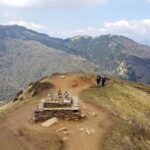
- Rhododendron forests and ethnic villages along the Modi Khola and ridge trails
- Jhinu Danda hot springs right after trekking, when your legs need it most
- Tea house style nights with basic comfort (bring patience and cash for extras)
- Confirm transport and guesthouse inclusions before you start
Why Annapurna Base Camp in 7 Days Feels Just Right

The Annapurna Base Camp trek works because it’s not just a checklist hike. In seven days you get the full rhythm: morning climbing, village lunch breaks, forest stretches, and then a big altitude day where the mountains finally stop being background and start being your whole world.
Your route is also designed with natural altitude pacing. You start at Nayapool (1,940m), then build day by day to higher villages and viewpoints. By the time you reach base camp (4,130m), you’re already used to the pattern of steady effort, rest stops, and breathing at elevation. It’s not a “go fast” trek, and that’s good. The goal is to keep you moving confidently without turning the mountains into a race.
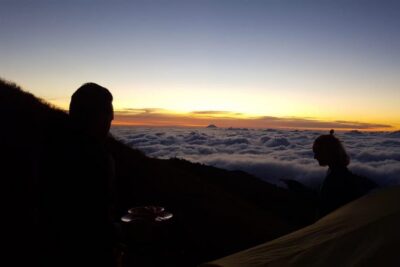
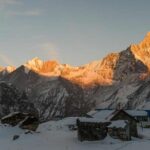
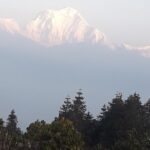
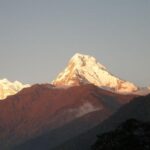
And yes, the sunrise component matters. At base camp altitude, light changes fast. When the sky clears, you can get that classic Annapurna range glow—exactly the kind of moment you’ll remember the rest of your trip.
You can also read our reviews of more tours and experiences in Pokhara.
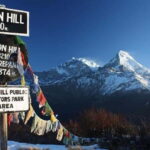
Day-by-Day: From Nayapool to Ghandruk, Then Up to 4,130m

This itinerary is nicely structured, with big days that still leave room to absorb the scenery and culture.
Day 1: Pokhara to Ghandruk (about 5-6 hours hiking)
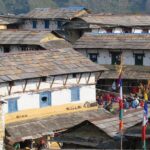
You’ll start with an early ride out of Pokhara—first heading to Nayapool with your guide. From there, you begin hiking along the Modi Khola corridor, which is one of the reasons this trek feels alive. You pass through ethnic villages and forested sections as you work your way to Ghandruk (1,940m to roughly 1,940m region start then higher end).
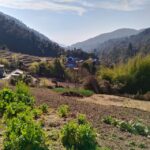
What’s special about this day is that you’re not thrown into thin air immediately. It’s a “find your rhythm” hike with plenty of scenery variety—house clusters on the hills, footpaths cutting through green stretches, and a gradual sense that Annapurna is getting closer.
Day 2: Ghandruk to Chomrong
After breakfast in Ghandruk, you continue up to Chomrong (2,170m). This is another day where the trail mixes settlements and rhododendron forest sections. You’ll also start noticing more defined mountain framing—clearer sightlines for the Annapurna range as you gain elevation.
Chomrong is one of those villages where you can feel the altitude shift in the air and the pace of the day. It’s a good night to slow down, drink water steadily, and keep your legs ready for the higher climb coming next.
Day 3: Chomrong to Himalaya
Today the hike leads you to Himalaya (2,920m). The big theme is altitude plus forest. You’ll pass through rhododendron areas and small village stops, with mountain views appearing more often than in the lower days.
This day is often mentally important because it’s where you start thinking less about the villages and more about the base camp endpoint. I like using this day to focus on breathing control—shorter steps, consistent pace, and frequent rests.
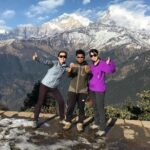
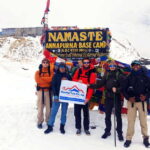
Day 4: Himalaya to Annapurna Base Camp (4,130m)
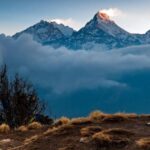
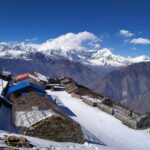
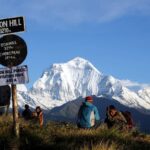
This is the day with the payoff: you reach Annapurna Base Camp (4,130m) and stay overnight. It’s also the day when the Annapurna and Machapuchare views become the main event.
At this height, your body may feel the difference even if your legs are okay. The key is not to panic or overexert. If you feel out of breath, slow down immediately. Think of base camp as a place to arrive, not a place to sprint through.
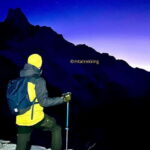
Spending the night at base camp is a major advantage here. It’s what gives you the chance at a sunrise view over the Annapurna range rather than seeing it only through afternoon clouds.
Day 5: Annapurna Base Camp to Bamboo (2,335m)
After base camp, you descend to Bamboo (2,335m). This is not a “free day,” but it’s a relief day. Your body gets a break from the highest altitude pressure, while your legs still feel every step.
The trail returns you through rhododendron forest areas and near water features like springs and waterfalls. If you’ve been holding energy tight up to base camp, day five is where you can start to breathe a bit easier.
Day 6: Bamboo to Jhinu Danda for hot springs (1,610m)
You hike down to Jhinu Danda (hot spring area) (1,610m). Then comes the point you’ve been waiting for: soaking in the natural hot springs to relax tired muscles.
This day works because the hot springs are right after trekking, while your body still feels the workload. It’s also a good mental reset day. After base camp pressure, the lower altitude and the warm soak feel like a full-body exhale.
Day 7: Jhinu Danda to Nayapool, then back to Pokhara
You head back toward Nayapool and then ride to Pokhara. The trek ends after you’re dropped at your Pokhara hotel of choice.
It’s a good final day because the hardest hiking is already done. Still, plan to move slowly and keep hydrated—your legs will feel it even on the shorter final approach.
What 4,130m Really Means for Your Body (and Your Planning)

Reaching Annapurna Base Camp is the goal, but your experience depends on how you handle the last push. The route climbs in stages, which helps. Still, altitude affects people differently.
Here’s what you can do to make the climb smoother using what the trek provides:
- Go slow on ascents. Short steps beat big leaps.
- Dress in layers. Bring warm clothing and a jacket because temperatures can drop fast.
- Keep your eyes on your energy. If you’re feeling unusually tired, that’s your cue to reduce pace.
- Use trekking poles if you have them. The route involves plenty of uneven footing, especially on descents.
You’ll also appreciate having practical gear ready: comfortable shoes, a hat, a flashlight (useful in low-light morning or evening), and a change of clothes. If you’re planning to take photos, pack your camera securely and keep it accessible, because at base camp the light can change quickly.
Also, you’re typically in tea house territory, so you’ll want cash for personal extras and small comforts you didn’t budget for.
Jhinu Danda Hot Springs: Where the Trek Becomes Recovery
The hottest part of the day is the point of the whole trek’s second half. Jhinu Danda’s natural hot springs are a genuine reward, and they hit at the right moment—after you’ve done several days of uneven elevation changes.
This is more than a fun add-on. In real terms, warm water can loosen muscles that have tightened from continuous downhill and uphill work. It also gives you a chance to sit down without feeling like you have to keep moving just to stay warm or comfortable.
I recommend treating the hot springs like part of the itinerary, not like a random detour. Take time to soak, then cool down slowly, and keep your layers ready in case evening air feels chilly.
Tea Houses, Meals, and the Cash Reality

Your nights are in basic tea houses or lodges. That’s not a complaint—it’s part of how this trek stays within reach and stays real. You’re traveling through communities, not a resort bubble.
Meals are included during the trek, but the exact details depend on the option chosen. Expect that you’ll eat simple, filling food meant to keep trekkers going. The big thing to watch: personal purchases can add up. One practical example that’s worth planning for is that guesthouses may charge extra for extras like Wi‑Fi and drinking water.
So, how do you keep this from stressing you out?
- Bring cash for small purchases and any add-ons.
- Keep expectations simple about what’s included in every stop.
- Plan your water strategy. Even if water is available, it may not always be priced the way you assume.
If you’re sensitive to comfort, consider that you’re also carrying the comfort of your sleeping bag (or using trekking gear provided as needed). Warm clothing matters more than you think.
Transportation and Trip Clarity: What to Confirm Before You Hike

The trek starts with transport between your Pokhara hotel, Pokhara International Airport, and the trek starting point. You’re also told there’s private vehicle support depending on the option chosen. That’s helpful, especially at the beginning and end.
But here’s the practical lesson: make your transportation details explicit in writing or in a final message with your guide/agency before you start. A detailed caution from one traveler centered on transport mismatches on the return day—switching plans faster than expected and leaving them without the same type of organized vehicle they used on the way out.
To protect your time and safety, ask these direct questions before Day 1:
- Are all transfers round trip and scheduled the same way as the outbound ride?
- If travel takes multiple legs, what is the exact order and mode of transport on the way back?
- Where exactly will you be dropped in Pokhara at the end?
Also, clarify any guesthouse inclusions that matter to you. If you care about Wi‑Fi or want bottled or treated drinking water, ask what’s typically included versus what’s an extra.
This isn’t about being difficult. It’s about matching the reality of tea house trekking with the plan you think you booked.
Who This Trek Best Fits (and Who Should Rethink It)

This trek suits you if you want a classic Annapurna experience with real village life, solid mountain goals, and a built-in recovery stop.
You’ll likely enjoy it if:
- You like the idea of rhododendron forests and ethnic villages rather than just climbing and camping
- You want the big sight moment at base camp (4,130m) plus a sunrise view
- You want a clear trek rhythm in seven days instead of a longer, slower grind
- You appreciate a guided trek with permits, meals, tea house stays, and first aid support
You might rethink it if you want heavy modern comforts every night. Tea houses are basic. Also, if you’re the type who needs very strict logistics without any variation, confirm transport and guesthouse add-ons in advance.
Good news: the trek is geared for a wide range of trekkers because the day-to-day structure alternates climbing days with recovery/descending days.
Price and Value: Does $190 Add Up?

At around $190 per person, the value depends on what you choose for meals and any option-based inclusions, since meals and some vehicle support can vary by option.
That said, your package typically covers:
- Round-trip transport between your hotel, Pokhara International Airport, and trek starting point
- Permits and trek fees
- Basic tea house or lodge accommodation during the trek
- An experienced, government-registered trekking guide
- Guide and porter support (including food, accommodation, insurance, salary, transportation, and equipment details)
- A first aid kit
- Trekking gear as needed (like a trekking stick or sleeping bag)
When you compare that to booking each piece separately, it can make sense—especially with a guide and porter included. The real value question isn’t only the price. It’s whether you have clean expectations about what’s extra (Wi‑Fi, drinking water, personal spending) and what transport looks like for both directions.
My advice: treat $190 as fair for a guided, structured trek. Just don’t assume everything beyond tea house lodging and included meals is free.
Should You Book This Annapurna Base Camp Trek?

I’d book it if you want a seven-day route that gets you to base camp (4,130m) and gives you the sunrise moment, plus a proper recovery stop in Jhinu Danda hot springs. It’s also a good fit if you’re okay with basic tea houses and you like village trails.
I’d be cautious if you hate uncertainty in transport or if you expect every guesthouse to include extras like Wi‑Fi and drinking water without additional charges. If you go, do the smart prep: confirm the return transport plan, clarify what’s included versus optional at guesthouses, and keep a cash buffer.
If those things are clear, this trek offers exactly the blend most people come to Nepal for: high mountain views, cultural trail days, and a warm soak to finish strong.
FAQ
What’s the starting point for the trek?
You’ll travel from your Pokhara hotel area to the trek starting point at Nayapool, where the hiking begins.
How many days is the Annapurna Base Camp and hot spring trek?
The trek runs for 7 days total.
What altitude do you reach at Annapurna Base Camp?
You reach Annapurna Base Camp at 4,130m.
Where are the hot springs, and when do you visit them?
You visit the natural hot springs at Jhinu Danda on Day 6, after hiking down from Bamboo.
What kind of accommodation is included?
You stay in basic tea houses or lodges during the trek.
Are meals included?
All meals during the trek are included, but the exact meals can depend on the option you choose.
Is a guide included?
Yes. The trek includes an experienced professional trekking guide who is government registered, plus guide and porter support.
What’s included in the price?
The package includes round-trip transportation between your hotel, Pokhara International Airport, and the trek starting point; permits and fees; trek accommodation and meals (depending on option); guide and porter support; first aid kit; and trekking gear as needed.
What should I bring for the trek?
You’ll want comfortable shoes, warm clothing, a jacket, hat, hiking pants, a flashlight, cash, a camera, and trekking gear (sleeping bag or trekking stick as needed). You should also bring passport or ID card, plus a copy accepted, and basic hygiene items like hand sanitizer or tissues.
Is travel insurance required?
Travel insurance is not included, and in an emergency rescue any costs must be covered by your insurance. Make sure your policy includes that coverage before you go.