REVIEW · POKHARA
Kathmandu/Pokhara: 5-Day Annapurna Base Camp (ABC) Trek
Book on GetYourGuide →Operated by Cordial Trek Pvt. Ltd. · Bookable on GetYourGuide
You can feel the Himalaya before you even reach base camp. This 5-day trek from Kathmandu or Pokhara walks you through forests, waterfalls, and village paths before topping out at Annapurna Base Camp (ABC) at 4,130 m. It’s a compact itinerary that still gives you real variety: bamboo-valley hiking, high ridges, and that famous sunrise moment in the Annapurna Sanctuary.
The two things I like most are the way the route layers scenery day by day and the help you get along the way. A good, licensed guide is a big deal here, and you’ll see that style reflected in guides such as Raju and Smile—people focused on safety, meal choices at tea houses, and staying ahead of trouble. I also love the payoff at Jhinu Danda hot springs, because after hard walking your legs get to soften in natural warm water.
One consideration: this is a high-effort hike with basic lodge facilities. Expect tea-house stays and no hot showers, Wi-Fi, or battery charging included, so plan your comfort accordingly (and don’t count on easy mornings in bad weather).
In This Review
- Key things that make this ABC trek work
- From Kathmandu or Pokhara to Simrung: you start with the right momentum
- Simrung to Sinuwa: forests, rivers, and the first night at 2,340 m
- Sinuwa to Deurali: waterfalls and the dense forest zone
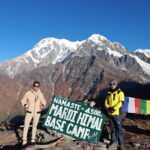
- Deurali to ABC via Machhapuchhre Base Camp: the day you really earn it
- Sunrise at ABC, then the long return: 12–14 km back over Deurali, Himalaya, and Dobhan
- Jhinu Danda hot springs and the final descent to Simrung
- Gear, permits, and guiding style: what the operator covers
- Food and lodge reality: plan for tea-house basics
- Price and value for a 5-day ABC trek at $96
- Best season and temps: what you’ll actually feel
- Who should do this trek, and who should skip it
- Should you book this 5-day Annapurna Base Camp trek?
- FAQ
- What altitude does this trek reach?
- Do I start in Kathmandu or Pokhara?
- How long does the trek day usually take?
- Is Jhinu Danda hot spring included?
- Are meals included?
- Is a guide included?
- What trekking gear is included or available to borrow?
- Are permits and water purification provided?
- Do lodges include hot showers or Wi-Fi?
- What’s the best temperature range by season?
- Is travel insurance recommended?
Key things that make this ABC trek work
- Tight schedule, big altitude goal: ABC at 4,130 m in 3 trekking days, with sunrise on Day 4.
- Machhapuchhre Base Camp valley on the way in: a scenic corridor, not just a straight line to ABC.
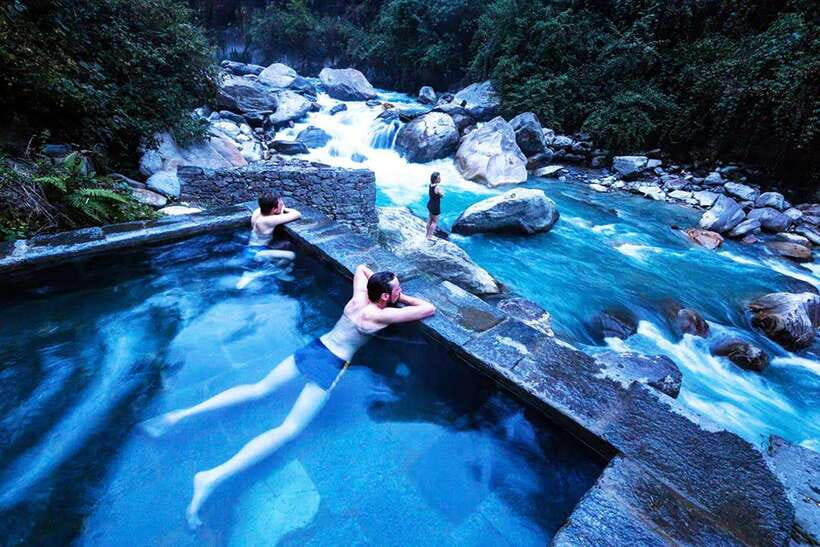
- Jhinu Danda hot springs recovery: the trip closes with a soak after the main climb.
- Licensed guiding plus equipment support: trekking poles, sleeping bag, and down jacket are borrowable.
- Meals and permits handled: permits and water purification tablets are included; food is managed based on your option.
- Kathmandu or Pokhara start: choose the approach that matches your flight timing.
From Kathmandu or Pokhara to Simrung: you start with the right momentum
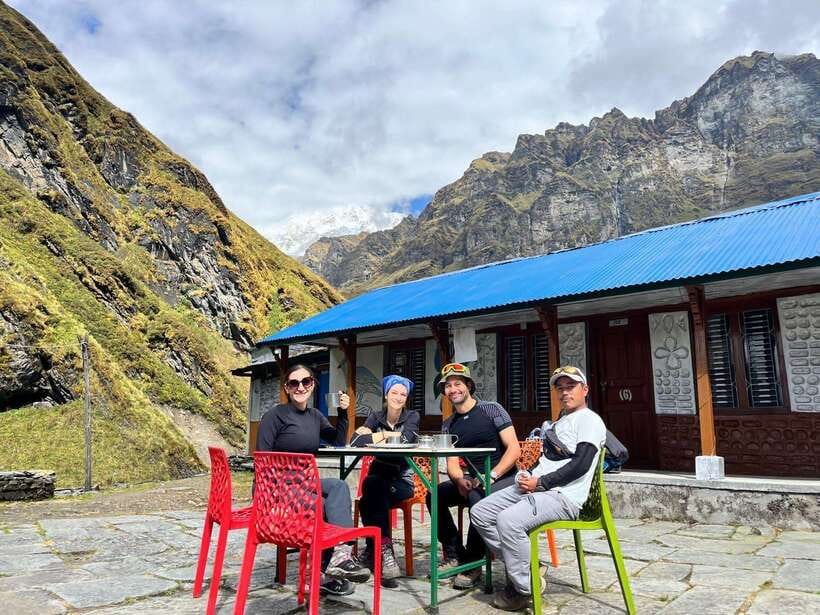
This trek starts with a real logistics jump—getting out of city rhythm and into trail rhythm fast. If you’re coming from Kathmandu, you take a short flight to Pokhara (about 30 minutes), then you’re driven to Simrung via Nayapul for roughly 2–3 hours.
From there, you begin walking toward Sinuwa (about 10–11 km, 5–6 hours). The first day matters because it sets your pace and rhythm before you start gaining real elevation. You’re not just “warming up”—you’re learning the kind of footing tea-house trekking demands: mud in wet seasons, rocky steps, and the steady grind that adds up.
If you’re trying to minimize stress, I like that pickup and drop-off are included in both Pokhara and Kathmandu when flight options are selected. You just show up, get transferred, and walk.
You can also read our reviews of more tours and experiences in Pokhara.
Simrung to Sinuwa: forests, rivers, and the first night at 2,340 m
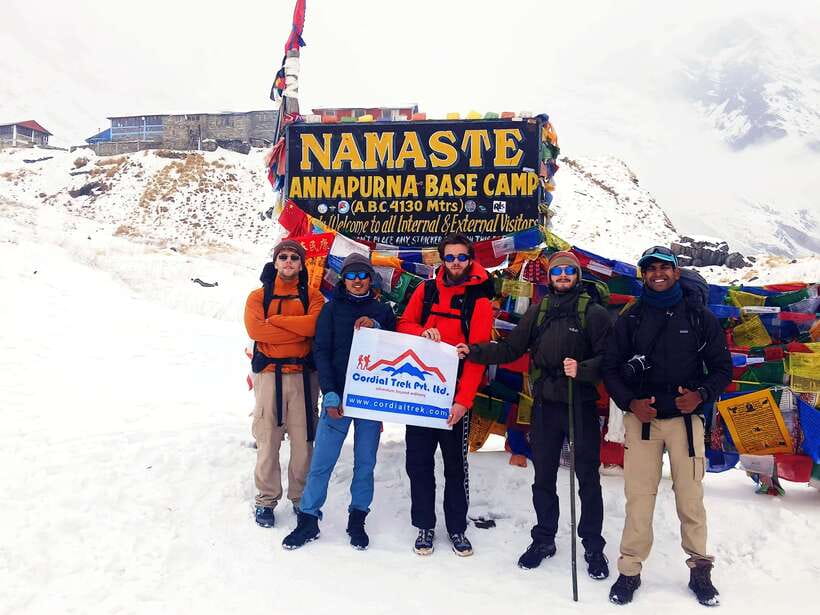
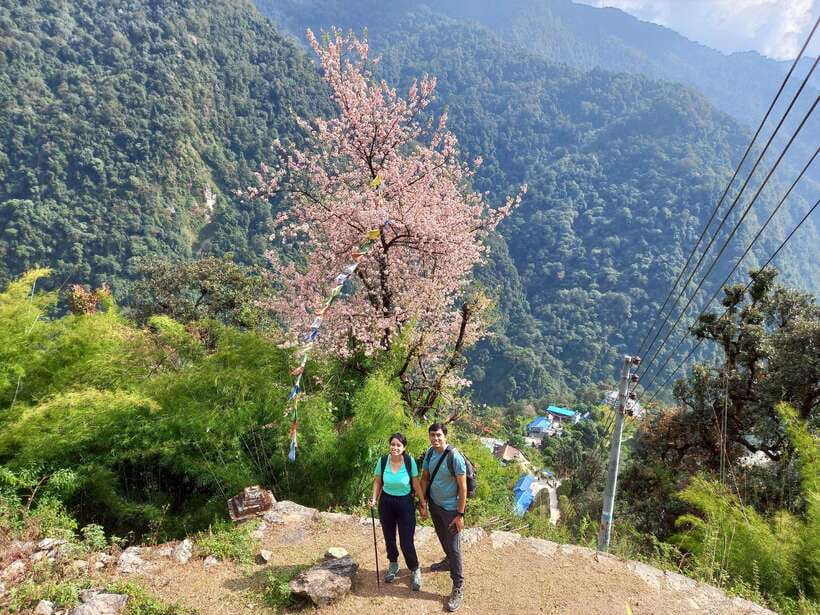
Day 1 is the on-ramp to the Annapurna Base Camp route. You hike from Simrung to Sinuwa (10–11 km, 5–6 hours), maxing out around 2,340 m. You’ll move through forested stretches with the sounds of rivers and waterfalls nearby—often the easiest way to tell you’re in the right altitude zone.
Sinuwa also gives you something practical: a first chance to settle into tea-house life. You’ll be sleeping in mountain guest houses, not hotels, so it’s smart to treat the first night as acclimatization-for-comfort. Bring a warm layer you can actually sleep in, because mornings can be colder than you expect even when the day feels manageable.
The route sets up a pattern for the whole trek: walk hard enough to feel it, stop early enough to rest, then repeat. It’s not a leisurely stroll, but it’s organized.
Sinuwa to Deurali: waterfalls and the dense forest zone
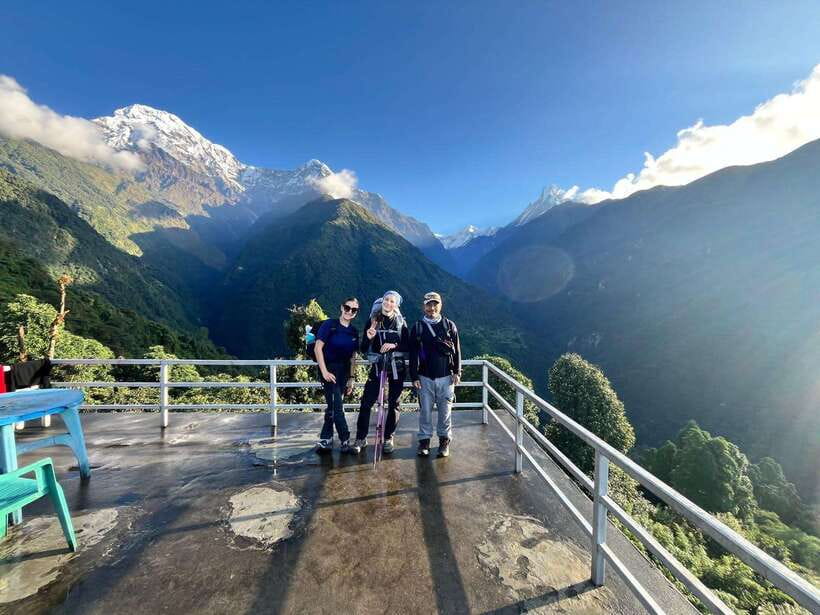
On Day 2 you trek from Sinuwa to Deurali (10–11 km, 5–6 hours) via Himalaya, a small settlement with tea houses. Your max altitude climbs to about 3,230 m.
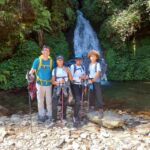
This day tends to be about feeling the mountain vegetation change and moving through denser forest. You’ll also pass multiple waterfalls along the way, which sounds romantic, but it also means you should expect damp trail conditions—especially in monsoon months.
If you’ve never done multi-day trekking, this is where I’d focus on technique. Short steps, steady breathing, and trekking poles if you use them. Deurali as a stop is helpful because it’s a staging point before you head deeper toward the Annapurna Sanctuary and higher ridges. And when you’re already tired, having a planned night stop at a real guest house is one less decision you have to make.
Deurali to ABC via Machhapuchhre Base Camp: the day you really earn it
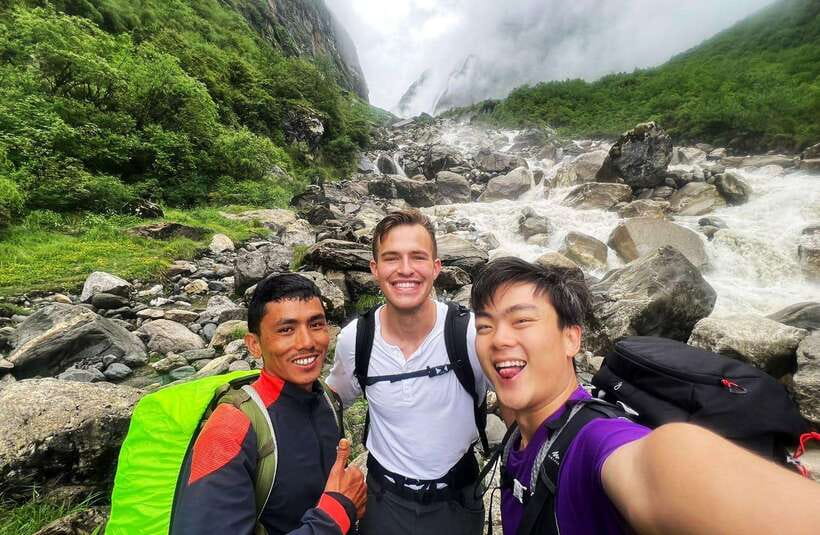
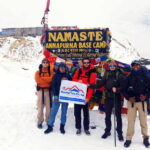
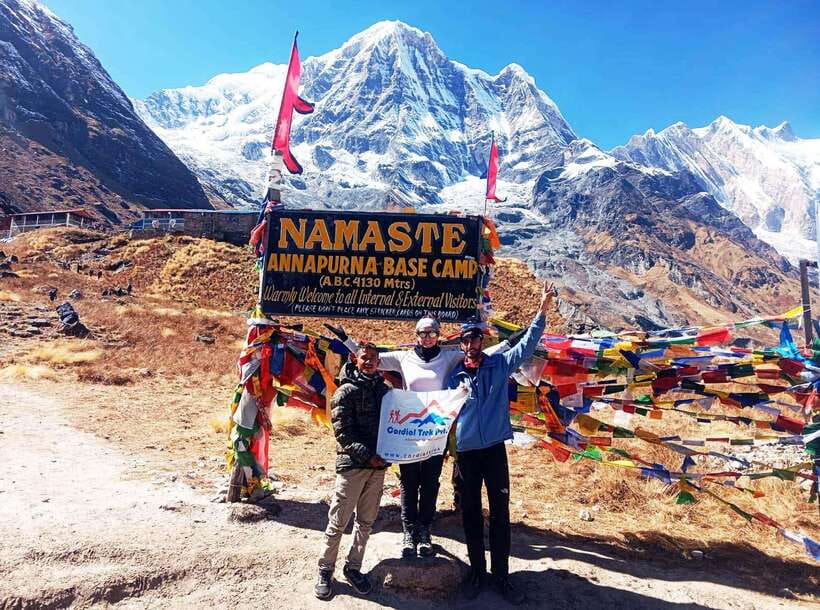
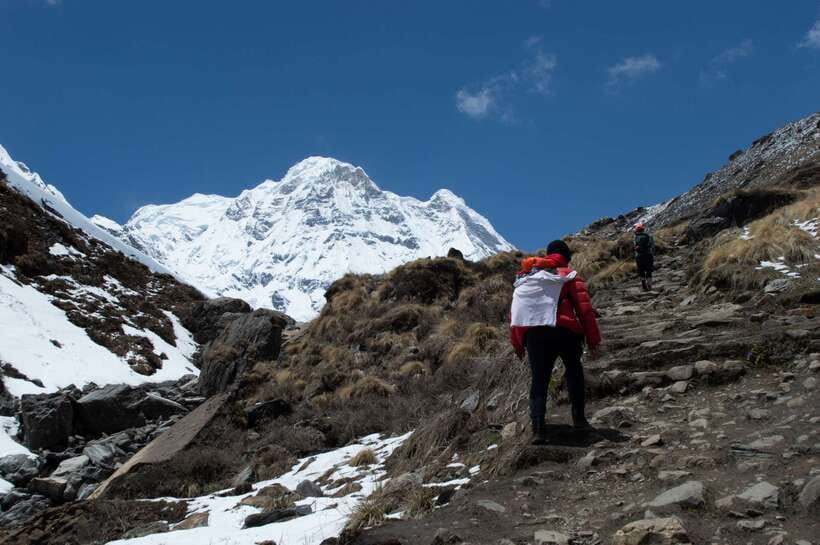
Day 3 is the big thrust: Deurali to Annapurna Base Camp (ABC) (10–11 km, 5–6 hours). You go via Machhapuchhre Base Camp (MBC), passing through the MBC valley before arriving at 4,130 m. After this, your perspective changes. The mountains aren’t just background anymore; they’re the entire frame.
What makes this portion valuable is the variety packed into one pushing day. You’re not only thinking about reaching ABC—you’re moving through a corridor of views and changing terrain textures. The MBC valley section is especially important because it helps you break the hike into smaller mental chunks. You keep topping out on small milestones until the final approach clicks into place.
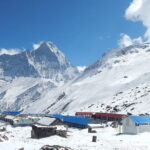
Once you arrive, you’ll be staying at tea houses at ABC. This is also where weather becomes your main character. Even in clear seasons, temps can drop quickly with altitude. In fog, you might get mystery views instead of crisp ones. Either way, it’s still worth it because the effort concentrates everything into one unforgettable moment.
Sunrise at ABC, then the long return: 12–14 km back over Deurali, Himalaya, and Dobhan
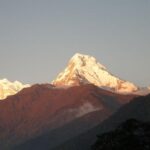
Day 4 is a hybrid day: a morning push for sunrise views, then a long hike back. You hike about 12–14 km in 7–8 hours, returning via Deurali, Himalaya, and Dobhan, with your min altitude around 2,340 m.
This is where I’m glad the schedule includes sunrise. It gives you a clear goal early—something to work toward when you wake up in cold air and feel like you’d rather stay in bed. Sunrise also helps you judge conditions. If clouds move, you still get the benefit of being there at the best moment you can control.
The return hike is longer than Day 3, and it can feel more tiring because you’re carrying the mental weight of already reaching the goal. For your legs, treat this as a careful day. The downhill isn’t always gentle, and in wet weather it can be slippery. Trekking poles can help a lot here, and you’ll likely feel grateful you had them earlier too.
Jhinu Danda hot springs and the final descent to Simrung
Day 5 is the reward day, but not a free day. You hike from ABC down to Simrung via Jhinu Danda for about 7–8 km (4–5 hours), including the hot springs stop, then drive back to Pokhara (about 2–3 hours).
The hot springs at Jhinu Danda are the perfect close because they address the main problem the whole trek created: sore muscles and stiff ankles. It’s not the kind of stop you can rush. Give yourself time to relax and let your body cool down slowly after sitting in warm water.
Then comes the final transfer to Pokhara. The plan is to drop you off at your Pokhara hotel no later than 17:00. If you’re flying back, you’ll be dropped at the Pokhara Airport with time to make your flight, while your Kathmandu drop-off is set for arrival no later than 19:30.
Gear, permits, and guiding style: what the operator covers
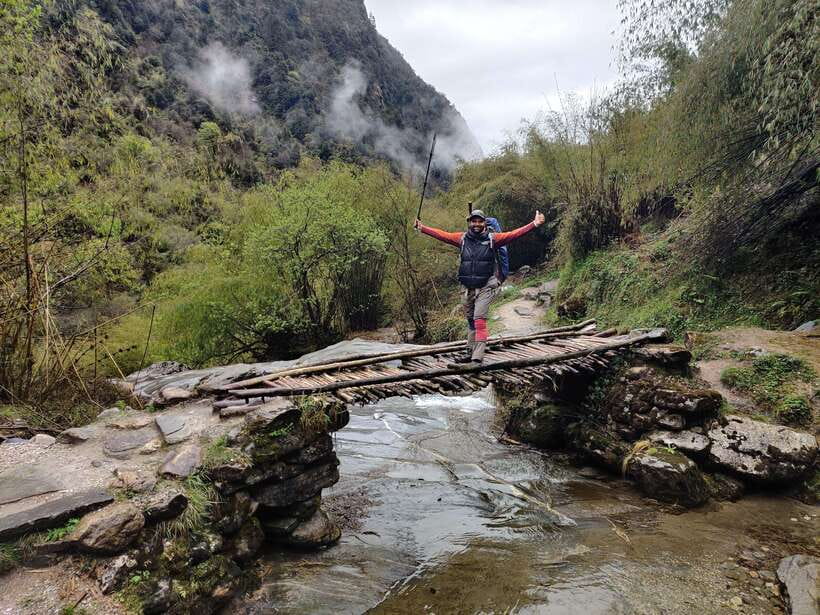
This trek is designed to be worry-reduced in practical ways. Permits are included, and you also get water purification tablets as required. There’s first aid included too, which matters because problems at altitude can get serious quickly.
Gear support is also part of the value. A down jacket, a sleeping bag, and trekking poles are available to borrow at no extra cost (according to the included equipment list). You still need your own core items—especially warm base layers and proper boots. I’d treat this as a chance to pack smarter rather than bringing a full cold-weather kit you might not use again later.
A lot of ABC trekking quality comes down to the guide. Based on the types of support highlighted by people on this route, the better guides do three things well: they keep you moving at a safe pace, they help you choose meals and tea-house options, and they handle small emergencies before they become big problems. Names that show up in that praised support style include Raju, Raj, Smile, Pratip, and Anil Sherpa.
Also pay attention to language. The guide is listed as English and Hindi, which helps if you want clarity about conditions, pacing, or what to expect next.
Food and lodge reality: plan for tea-house basics
You’ll be eating in mountain tea houses during the trek. The menu won’t be a gourmet buffet, but it’s built for high-output walking. The included meals are listed as 4 breakfasts, 5 lunches, and 4 dinners if you choose the all-inclusive option (or an add-on), so confirm what’s covered in your specific package before you go hungry on Day 2.
What’s not included is also important: hot showers, Wi-Fi, and battery charging are not part of the deal. Even in years with decent weather, you’ll likely have limited charging options at best. I recommend you keep your essential photo-taking and navigation use planned, and pack a way to stay warm that doesn’t depend on a charger.
And yes, your feet will get wet in some seasons. One of the most consistent realities of monsoon-era trekking is damp gear that doesn’t dry overnight. Bring enough dry layers so you can rotate without freezing.
Price and value for a 5-day ABC trek at $96
At $96 per person for 5 days, the value comes from the bundle: transport, accommodation for four nights, a licensed guide, necessary trekking permits, and equipment borrowing. That’s not just “a hike with a leader.” It’s a managed plan to move you from city to trail and back with the paperwork and basic logistics already handled.
Where the pricing value can change is your meal choice. Meals are included under the all-inclusive setup, but you may need an add-on if you’re starting from a budget option. If you’re trying to keep costs low, just make sure you’re not surprised by what you’ll pay for lunches or dinners later.
I’d also weigh the hidden cost of doing ABC without this structure. In the mountains, the “small” issues—finding a room, getting permits on time, or handling water safely—can add up fast. For $96, the real win is that you show up ready to walk, and the messy parts are handled.
Best season and temps: what you’ll actually feel
The trek has season-wise temperature guidance that matters for packing. In spring/autumn (Mar–May, Sep–Nov), lows range from about -3°C to 3°C and highs from about 2°C to 20°C. In summer/monsoon (Jun–Aug), lows are about 0°C to 5°C and highs about 5°C to 22°C. In winter (Dec–Feb), lows can drop to -10°C to -2°C and highs can be around -5°C to 15°C.
Even when the day high looks mild on paper, you’ll feel cold at higher elevations—especially mornings and when clouds roll in. If you’re choosing your months, I’d think about more than just clear skies. In monsoon, you’re also buying yourself damp trails and wet clothes that can stay wet longer.
Who should do this trek, and who should skip it
This 5-day ABC trip suits hikers who want a high-reward route without spending weeks in transit. It’s also a good fit if you like structure: guiding, guest-house planning, permits, and equipment borrowing are built in.
It’s not suitable for people with mobility impairments, and it’s not intended for people over 95 years (based on the stated constraints). If you’re brand new to trekking, you can still manage it, but you’ll want to respect the walking time each day and prepare for real stamina demands.
Should you book this 5-day Annapurna Base Camp trek?
I’d book it if you want Annapurna Base Camp in a short, guided format, and you like the idea of finishing with Jhinu Danda hot springs. The itinerary hits the key experiences—dense forests, waterfall country, Machhapuchhre Base Camp valley, ABC at 4,130 m, then sunrise and recovery.
Hold off if you need lots of comfort. You’ll be in tea houses, with limited amenities (no hot showers, Wi-Fi, or charging included). Also, the altitude and daily walking hours are serious enough that you should be honest about your fitness and willingness to walk in wet or cold conditions.
If you’re ready to pack smart, move steadily, and embrace basic mountain living, this is a strong way to experience the central Himalayas—without turning it into a multi-week project.
FAQ
What altitude does this trek reach?
Annapurna Base Camp is at 4,130 m. Your route also lists a maximum altitude of 4,130 m on the approach day, with other daytime max elevations such as 2,340 m and 3,230 m.
Do I start in Kathmandu or Pokhara?
You can start from either. If you choose Kathmandu, you take a flight to Pokhara (about 30 minutes), then drive to Simrung. If you start in Pokhara, you still drive from Pokhara to Simrung before trekking.
How long does the trek day usually take?
Most trekking days are listed as 5–6 hours, with Day 4 longer at 7–8 hours. Day 5 is about 4–5 hours.
Is Jhinu Danda hot spring included?
Yes. On the final trekking day, you hike via Jhinu Danda, and the hot springs are part of that stop.
Are meals included?
Meals are included as 4 breakfasts, 5 lunches, and 4 dinners if the all-inclusive option is selected. If you pick a budget or different flight option, meals may be available as an add-on.
Is a guide included?
Yes. The trek includes a licensed and experienced trekking guide. The guide language listed is English and Hindi.
What trekking gear is included or available to borrow?
You can borrow a down jacket, sleeping bag, and trekking poles at no additional cost (as listed). You’ll still need your own warm clothing, boots, and other essentials from the packing checklist.
Are permits and water purification provided?
Yes. Necessary trekking permits are included, and water purification tablets are included as required.
Do lodges include hot showers or Wi-Fi?
No. Hot showers, Wi-Fi, and battery charging are listed as not included.
What’s the best temperature range by season?
Spring/autumn (Mar–May, Sep–Nov): lows about -3°C to 3°C, highs about 2°C to 20°C. Summer/monsoon (Jun–Aug): lows about 0°C to 5°C, highs about 5°C to 22°C. Winter (Dec–Feb): lows about -10°C to -2°C, highs about -5°C to 15°C.
Is travel insurance recommended?
Yes. Travel insurance is recommended.