REVIEW · POKHARA
Ghorepani Poonhill Trek
Book on Viator →Operated by Outshine Adventure Pvt Ltd · Bookable on Viator
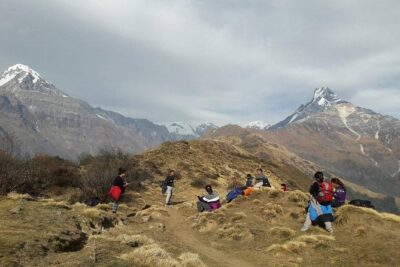
Your first morning climb rewards you fast. This short Annapurna-area trek is built around Poon Hill sunrise and a real mix of forests, villages, and big Himalayan scenery. You also pass through local communities like Magar and Gurung settlements, so the walk feels more human than just a series of steps.
I love that the trip takes care of the key stuff: English-speaking mountain guide support, and the core logistics from Pokhara to the trail and back. You’ll also get standard meals and stay in guest houses/lodges along the route, which makes this feel like an adventure you can actually manage without constant planning.
One thing to think about: you still need moderate physical fitness. There are steep stretches (especially early on) and you’ll do an early-morning hike for the sunrise, even though the overall trek is marketed as short and doable.
In This Review
- Key things worth knowing before you go
- Why this trek fits first-timers and time-crunched hikers
- Price and value: what $490 covers (and what it doesn’t)
- Getting from Pokhara to the trail (without wasting a day)
- Day 1: Birethanti to Ulleri and that first feel of altitude
- Day 2: Ghorepani forest walking with Machhapuchhare in view
- Day 3: Poon Hill sunrise, then down to Tadapani through pine and rhododendron
- Day 4: Tadapani to Ghandruk, plus birds, forests, and Gurung village time
- Day 5: Back toward Pokhara via Kimchi, Seulibazzar, and Birethanti
- Guides, care, and why it matters on a short trek
- Accommodation and meals: the unglamorous part that decides if you enjoy the trek
- Who should book this trek, and who might want a different route
- Should you book this Ghorepani Poonhill Trek with Outshine Adventure?
- FAQ
- How long is the Ghorepani Poonhill Trek?
- What’s included in the $490 per person price?
- What’s not included?
- How big is the group?
- Is pickup from Pokhara included?
- Do I need a passport copy?
- What trekking gear do you provide?
- Can I cancel and get a full refund?
Key things worth knowing before you go
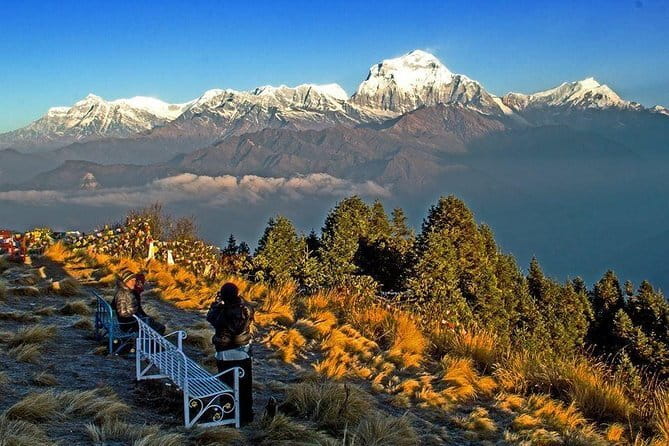
- Poon Hill viewpoint at 3,232m for sunrise over major peaks like Annapurna and Dhaulagiri
- Magar Ulleri (2,070m) plus cultural village time, not just viewpoint chasing
- Forest trekking through rhododendron and pine on the way toward Ghorepani and Tadapani
- All standard meals included during the trek, with lodge-style accommodation
- Permits handled: Annapurna conservation area permits and a TIMS card
- Porter support and shared porter loads (25 kg per porter for two people)
Why this trek fits first-timers and time-crunched hikers
The Ghorepani Poonhill trek is popular for a reason. It hits the classic Annapurna-region feel without demanding a multi-week commitment or advanced high-altitude skills. In a few days you get big views, manageable daily hiking, and enough village life that the days don’t blur into one long trail.
What makes it especially workable is the structure. Day 1 and Day 2 build you gradually with forest walking and gentle-to-moderate climbs, then Day 3 flips into the highlight with an early start. After that, the route shifts to easy descents and community time, which is a nice reward for your legs.
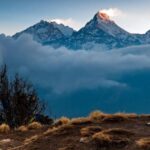
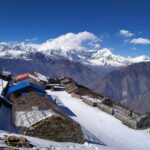
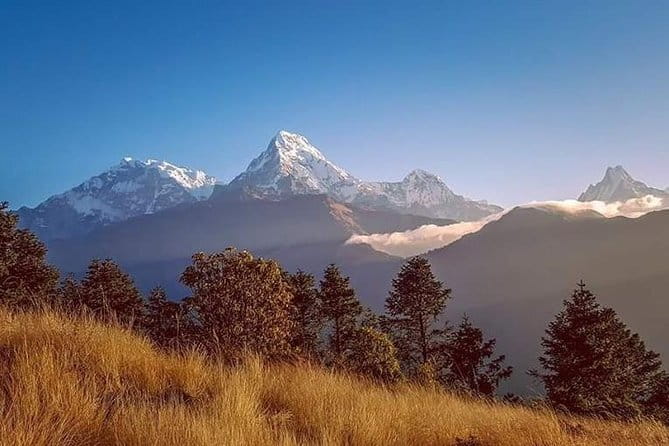
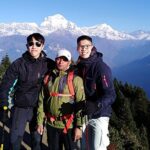
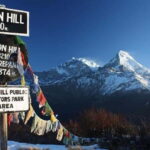
You’ll also get a very specific scenery payoff. The Poon Hill sunrise approach sets you up to see a long list of peaks from one main viewpoint, including Machhapuchhare (Fish Tail), Annapurna ranges, Dhaulagiri, Nilgiri, and several others. It’s not just one mountain photo. It’s a whole wall of snow you can study.
You can also read our reviews of more tours and experiences in Pokhara.
Price and value: what $490 covers (and what it doesn’t)
At $490 per person, this is the kind of trek where you should ask a simple question: how much of the headache are they removing? In this case, a lot.
Your price covers:
- All standard meals during the trek (breakfast, lunch, dinner)
- Guest house/lodge accommodation along the way
- A licensed, English-speaking mountain guide
- Porters for your luggage (sharing setup: one porter for two people, up to 25 kg per porter)
- Private vehicle transfer to and from Pokhara
- Annapurna Conservation Area permits and TIMS card
- Down jacket and sleeping bag provided by Outshine Adventure if needed
- Government taxes and support costs for trekking staff (food, accommodation, salary, insurance, equipment, medicine)
Not included:
- Travel insurance
- Alcohol and other hot/cold drinks and laundry
- Tips (recommended)
- Anything not listed as included
So is it good value? For most people, yes, because you’re paying for coordination plus the stuff that usually costs time and energy to sort out yourself. The porter arrangement also matters. Even if you’re in decent shape, carrying less weight lets you enjoy the trail and the villages instead of managing your pack all day.
Getting from Pokhara to the trail (without wasting a day)
This trek is designed around Pokhara as your base. You get surface transfer by private vehicle from Pokhara, which helps you start hiking with less hassle. You also get pickup offered, so you’re not left improvising how to reach the trailhead.
The rhythm goes like this. You meet once at the Kathmandu office before departure to Pokhara, then you travel to the trekking starting area and begin walking from Birethanti. From there, the trek proper starts with a strong first day of climbing into the hills.
For your planning, think of transfers as part of the real experience. Nepal treks can feel long if you waste time between places. Here, the structure keeps the timeline tight: arrive, meet, drive, start hiking.
Day 1: Birethanti to Ulleri and that first feel of altitude
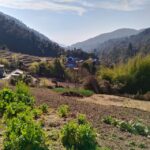
Day 1 begins at Birethanti, a village with shops and teahouses. It’s practical and reassuring because you can settle in, pick up water/snacks if you want, and get your bearings before the climb starts. Then the trek shifts immediately into effort.
You’ll walk for about 5 hours overall, including a steep push for the first two hours. After that, the climb becomes gentler as you reach Ulleri (2,070m), a large Magar village. You’ll spend the night at a guest house.
What I like about this first day is that it’s not random. It gives you a clear sense of what the trek will feel like: work early, ease later. Ulleri also sets a cultural tone. You’re in a Magar community, and that matters because the trip is about more than mountain views.
Possible drawback: if you start too fast on that first steep segment, your legs can feel heavy for the rest of the day. Your best move is simple: steady pace, short breaks, and don’t chase speed. This is the kind of trek where control beats heroics.
Day 2: Ghorepani forest walking with Machhapuchhare in view
Day 2 brings you to Ghorepani, and the route is built around scenery and easy trail rhythm. The hiking is described as quite easy, and you’ll spend time walking through forest and rhododendron trees. That kind of shade and texture changes how the day feels, especially if the light and temperature shift.
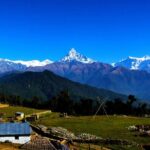
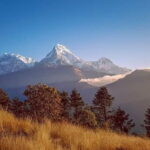
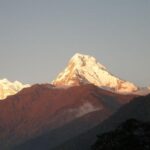
On the way, you get views that are specific and memorable: Machhapuchhare (Fish Tail), Hiunchuli, and Annapurna south. It’s not the final sunrise payoff yet, but it’s the kind of preview that makes you understand why this region matters.
You’ll hike for about 5 hours and end with another guest house night in Ghorepani. If you like mornings that start with anticipation, this is a good day to pace yourself because you’re effectively preparing for Poon Hill.
Tip from a practical mindset: keep your energy for the next morning. Day 3 includes an early hike, and you’ll feel it more if Day 2 turns into an all-out pace.
Day 3: Poon Hill sunrise, then down to Tadapani through pine and rhododendron
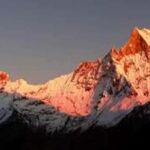
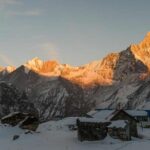
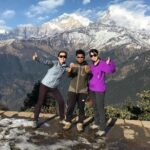
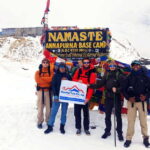
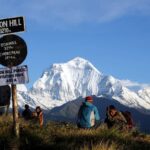
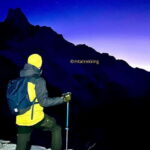
Day 3 is the centerpiece. You start with an early morning hike of about an hour to Poon Hill (3,232m). The reason everyone does this part is the sunrise panorama, which covers a huge range of peaks in one direction.
The peak list you can expect to see includes Dhaulagiri (8167m), Nilgiri (6940m), Annapurna I (8091m), Annapurna South (7219m), Machhapuchhare (6993m), Lamjung Himal, and more. The value here is in variety. You’re not just watching one mountain silhouette grow. You’re watching a whole system of ranges light up.
After you hike down, you return to Ghorepani for hot breakfast at the lodge. That matters more than people think. It’s a straightforward recovery step, and it also makes the early start feel less brutal.
Then you transition to Tadapani (2,650m). Most of the trail is through colorful pine and rhododendron jungle, and the trek continues for about 7 hours total time listed for the day’s segment(s). You’ll sleep again at a guest house.
One consideration: Poon Hill sunrise is an early schedule. If you dislike waking before dawn, this is the day that will test you. The good news is the payoff is immediate and scenic, not vague.
Day 4: Tadapani to Ghandruk, plus birds, forests, and Gurung village time
Day 4 is quieter in effort and richer in atmosphere. The trek descends through dense forest—rhododendron and oak are specifically mentioned—so you’ll spend the day walking with sounds of birds and the feel of a shaded trail.
The route goes from Tadapani to Ghandruk, and the walking time is around 7 hours. This is a day for relaxed trekking. Easy descents can still be tiring, but the pacing tends to be forgiving compared to steeper uphill days.
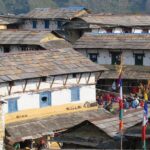
Then you reach Ghandruk, a big Gurung village and a place connected to Gorkha soldiers. The trip also includes time to explore the village, which is where you shift from scenery mode into culture mode. If you like understanding how Nepali communities live in the mountains, Ghandruk is the payoff.
This is also the kind of day bird lovers tend to enjoy because the forest setting is active. Even if you aren’t hunting for bird species, the soundscape makes the walk feel alive.
Day 5: Back toward Pokhara via Kimchi, Seulibazzar, and Birethanti
Day 5 is about getting home without rushing. You trek from Ghandruk and descend through Kimchi, then you cross Seulibazzar via Birethanti before driving back to Pokhara.
The listed hiking segment is about 5 hours, with the final transfer by vehicle. It’s a good closer because it lets you end the trek while still moving. You aren’t stuck with a long, exhausting final day.
Practical takeaway: pack your energy for the first hours of the descent. Descents can feel easier mentally, but they can still wear you down in your knees and calves. Keep your steps short and controlled, especially if the trail is crowded or uneven.
Guides, care, and why it matters on a short trek
On a 5-day trek, the guide affects everything: pacing, safety on early mornings, and how well you enjoy small moments. That’s why I pay attention to guide details.
Past groups for this style of trek have credited guides like Bishnu and Edu for taking great care of them. Another interaction shared a guide named Shiva connected with arranging a Ghorepani to Ghandruk-style trek. Those names are good signals that the provider assigns people who can manage the day-to-day flow and look after the group.
What you should expect, based on the trek setup, is not just directions. It’s also support with timing so you catch sunrise without feeling panicked, plus help managing the practical rhythm of lodges, meals, and trail transitions.
If you want to get more out of the views, ask your guide simple questions during rests: which peaks you’re seeing at Poon Hill, what the village communities are like, and how the route connects to different Annapurna areas. A short trek can feel fast. A good guide slows it down into something you actually notice.
Accommodation and meals: the unglamorous part that decides if you enjoy the trek
This trip includes standard meals—breakfast, lunch, dinner across the days—and you stay in the best available lodge/guesthouse options the route can offer. That’s important because food and rest aren’t extras here. They’re fuel and recovery.
Because meals are included, you don’t have to play a constant guessing game about cost or timing at each lodge. You can focus on hiking, then show up ready for a hot meal and a bed.
Also, being provided a down jacket and sleeping bag if needed can reduce what you have to bring from home. Even if you carry your own gear, it helps to know you can rely on the provider if the temperature surprises you.
Who should book this trek, and who might want a different route
You’ll likely love this trek if:
- you want an easy-to-moderate short trek with a classic sunrise viewpoint
- you care about village culture as much as scenery
- you’d rather have meals, permits, and transfers handled than manage details yourself
- you like the idea of a group size that stays reasonable (max 14 travelers)
You might think twice if:
- you dislike early mornings, since the Poon Hill sunrise involves an early hike
- you aren’t confident with a steep start day, including the uphill effort early on
- you want a longer itinerary with more altitude exposure than a short trek offers
For many people, this is the perfect first Annapurna trek. For others, it’s a sampler. Either way, it’s a clear, focused plan: start in the hills, earn sunrise views, walk through forests and villages, and finish back in Pokhara.
Should you book this Ghorepani Poonhill Trek with Outshine Adventure?
If your main goal is a first Nepal trekking experience with real payoff, I’d say this booking makes sense. The included package is strong: meals, guide, permits, transfers, lodge stays, and porter support are all part of the price. That removes a lot of the friction that can turn a trek stressful.
I’d book it if you want the classic Poon Hill sunrise, you enjoy rhododendron forest walking, and you’re open to village time in places like Ulleri and Ghandruk. Keep your expectations tuned to a short trek: it’s about the right highlights in the right order, not about days of solitude and endless wilderness.
One last practical point: bring your energy budget to the early starts. If you do that, this trek can feel like a really satisfying crash course in the Annapurna region.
FAQ
How long is the Ghorepani Poonhill Trek?
The trek is listed as 5 days (approx.) with an itinerary from Ulleri to Ghorepani, then Poon Hill, Tadapani, and Ghandruk, before returning to Pokhara.
What’s included in the $490 per person price?
It includes all standard meals during the trek, lodge/guesthouse accommodation, a licensed English-speaking guide, private vehicle transfer from and to Pokhara, porters for luggage, TIMS and Annapurna conservation permits, and provided trekking gear like a down jacket and sleeping bag if needed.
What’s not included?
Not included are travel insurance, alcoholic and other hot/cold drinks, laundry, and tips for staff and the driver (tipping is recommended). Any other expenses not listed as included would be on you.
How big is the group?
This experience has a maximum of 14 travelers.
Is pickup from Pokhara included?
Yes, surface transfer from and to Pokhara by private vehicle is included, and pickup is offered.
Do I need a passport copy?
Yes. A passport copy is required for all participants.
What trekking gear do you provide?
The provider includes a down jacket and sleeping bag if needed.
Can I cancel and get a full refund?
Yes. You can cancel for a full refund if you cancel at least 24 hours in advance of the experience start time.