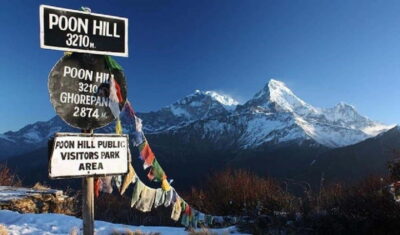
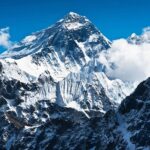
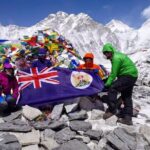
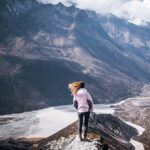
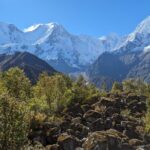
Mountain mornings start with Poon Hill lights.
This Annapurna Base Camp trek mixes big Himalayan views with real village life, plus the classic early start to catch the sunrise over the Annapurna range. You’ll walk through terraced farmlands and forests, pass Gurung and Pun communities, and finish with a well-earned soak at Jhinu Danda.
I like two things a lot here. First, the logistics feel built for real travelers: hotel/port pickup and drop-off, plus the main transfers from Pokhara to Hile and from Jhinu back to Pokhara. Second, the route includes both Poon Hill sunrise and sunrise/sunset at Annapurna Base Camp, so you get multiple sky-and-snow moments instead of just one.
One drawback to plan around: the trek uses basic teahouses where toilets and bathrooms are outside, and the cold can be serious even on a clear day. Also, not every day is a photo day, including a day that mostly follows the Modi River bank with limited mountain views.
In This Review
- Key highlights I’d circle on your calendar
- Annapurna Base Camp: why this trek still feels human
- Kathmandu, Pokhara, and meeting your guide without the usual scramble
- The 9-day walk: day-by-day what you’ll do (and how it feels)
- Teahouses and meals: the comfort level you should expect
- Altitude and weather: pack for cold, not just for rain
- Where the route shines (and where it’s intentionally quiet)
- Price and value: what $835 includes, and what it doesn’t
- Who should choose this Annapurna Base Camp trek
- Should you book it? My practical take
- FAQ
- What’s the duration of the Annapurna Base Camp trek?
- How high do you go on the trek?
- Are hotel pickup and drop-off included?
- Are meals included in the price?
- Does the trip include a guide, and is the guide English-speaking?
- What’s not included in the tour cost?
Key highlights I’d circle on your calendar
- Poon Hill sunrise with a pre-dawn hike and dramatic Annapurna views
- Annapurna Base Camp at 4310m plus sunset and sunrise on back-to-back mornings
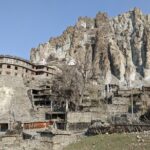
- Gurung and Pun village walking through farmlands, forests, and changing settlement patterns
- Jhinu Danda hot springs after days of altitude and downhills
- English-speaking guide and emergency evacuation support included in the package
- Smooth pre-and-post-trek movement with pickup/drop-off and planned transport segments
Annapurna Base Camp: why this trek still feels human
Annapurna Base Camp isn’t just about reaching a height on the map. The way the trail is paced—climbing gradually, then spending focused time near the basecamp—gives you the chance to notice how life changes as altitude rises. You start in a warmer, more settled rhythm, then forests and terraced fields thin out while the mountains grow larger and closer.
I also like that this version includes the Ghorepani Poon Hill trek. That matters because it adds a second “big-view” day before you ever reach basecamp. The route is set up so you get mountain drama early, then you earn the most dramatic summit-style moments when you’re already acclimated enough to appreciate them.
Finally, it’s a trek that stays social. You’re moving through communities you’ll actually see at work—villages of different ethnic groups, especially Gurung and Pun settlements—plus farmland and forest sections that break up the feeling of walking only in the mountains.
You can also read our reviews of more tours and experiences in Kathmandu.

Kathmandu, Pokhara, and meeting your guide without the usual scramble
This experience is organized so you don’t spend your limited travel time figuring out transport. You get hotel/port pickup and drop-off, and you’re not left to piece together the hardest transfers on your own. The trek itself runs after a short drive/transfer from Pokhara toward the trailhead area, and at the end you return to Pokhara by ride after a short final walk.
You’ll have a professional English-speaking trekking guide, and the guide’s wages, meals, accommodation, insurance, and transportation are covered. That’s one of those “small” details that turns into a big relief when you’re in a new country and want a calm plan.
Also, the trekking company’s team shows up in real feedback as being organized and responsive. In particular, people describe working with Ram, and also mention Dilli and Tupie as part of the team. In practice, that kind of continuity matters when you need day-to-day flexibility or help making sense of schedules in Kathmandu and Pokhara.
The 9-day walk: day-by-day what you’ll do (and how it feels)
Think of this itinerary as two phases: build-up through Ghorepani and Tadapani, then basecamp and the descent with a hot-spring finish.
Day 1: Kathmandu to the Ulleri area (via jeep + walk)
After breakfast, your guide meets you and you head toward Ulleri. The drive starts with a private jeep segment up to Hile, then you switch to walking. Expect a long travel day that still ends at a teahouse check-in, so you can settle in before tomorrow’s hiking starts in earnest.
Day 2: Rhododendron forest to Ghorepani
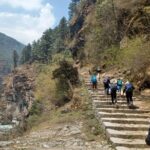
You hike toward Ghorepani, walking through rhododendron forest. If you’re going in springtime, this is the type of detail that can really change the vibe of a trek—blooming rhododendrons add color to what could otherwise be just “up through trees.” You’ll stop for lunch at a local restaurant and spend the night in a lodge in Ghorepani.
Day 3: Poon Hill at sunrise, then on to Tadapani
This is an early morning hike up to Poon Hill for sunrise. After that, you go back down to Ghorepani for breakfast and then continue trekking to Tadapani. What I like about this structure is that you’re not only chasing one view; you’re using it as a turning point—sunrise first, then forward motion while the day is still young.
Day 4: Kimrong Khola down, Chhomrong up, then Sinuwa
This day is about up-and-down hiking. You’ll go down to Kimrong Khola, climb up toward Chhomrong, and continue onward to Sinuwa. It’s not just elevation gain; it’s the step-to-step rhythm of working your legs over uneven terrain, so it’s a good day to pace yourself rather than rushing.
Day 5: Following the Modi River bank toward Deurali
Most of this day is described as walking along the bank of the Modi River, and it’s also the day you won’t necessarily get mountain views. You’ll spend the night at a simple lodge in Deurali. For some people that sounds like a letdown, but it can also feel restful—less “stand and stare at peaks” pressure, more steady walking in a river valley setting.
Day 6: Trek to Annapurna Base Camp (4310m) + sunset
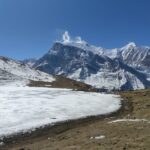
This is your basecamp day. You’ll trek up to Annapurna Base Camp at 4310 meters, then you’re set up for a sunset view with the Annapurna range close around you. Real talk: this is where good pacing matters most. Even if you feel strong, altitude has a way of slowing you down later in the day.
Day 7: Sunrise at basecamp, then descent to Bamboo
You wake for sunrise from Annapurna Base Camp, have breakfast, then trek back down the same route to Bamboo. Then you sleep in a simple lodge. I like that this adds a second morning of basecamp views while still giving you the benefit of descending after the hardest day.
Day 8: Down to Jhinu Danda + natural hot springs
You continue descending toward Jhinu Danda. After check-in at a lodge, you’ll walk down to the Modi River bank for the natural hot spring. After a week of mountain hiking, this is the kind of payoff that makes the “cold and tired” parts feel worth it.
Day 9: Short walk, then ride to Pokhara
You’ll walk for about an hour and then catch your ride to Pokhara. Your guide leaves you at your hotel, and the trek wraps with a farewell.
Teahouses and meals: the comfort level you should expect
This trek uses basic teahouse accommodation during the route. That means rooms are simple, and toilets/bathrooms are outside. In mountain treks, that’s normal, but it’s worth being mentally ready for, especially if you’re used to hotels.
Meals are largely covered: lunch is included on 9 days, breakfast on 8 days, and dinner on 8 days. In other words, you’re not constantly deciding what to eat or worrying about budgeting for meals mid-trek. What isn’t included is beverages—cold drinks, bottled water, tea/coffee—plus any personal snacks or extra purchases.
I’d also plan for the “cold food, warm body” reality. Lodges can be basic, and on many Himalayan treks you’ll want to focus on eating what’s available, staying hydrated, and getting warm early when you stop for the night.
Altitude and weather: pack for cold, not just for rain
This experience operates in all weather conditions, so you should assume you’ll hike with changing skies. Also, it’s stated that it requires good weather—if it’s canceled due to poor weather, you’ll be offered another date or a full refund. Translation: the operation is prepared, but Mother Nature still gets the final vote.
Altitude-wise, your key anchor number is 4310m at basecamp. Your schedule climbs gradually and includes a “big view” day (Poon Hill) before you reach basecamp, which helps a first-timer feel less thrown into the deep end.
Packing is not optional here. Bring warm layers and proper winter gear such as a down jacket, sleeping bag, full-sleeve warm clothes, hat, gloves, warm socks, trekking boots (plus slippers), thermal undergarments, fleece, and a gortex-style shell. A headlight is also listed, which is practical for pre-dawn starts like Poon Hill and basecamp sunrise.
Where the route shines (and where it’s intentionally quiet)
The best parts are the view days, but this trek also gives you quieter stretches that feel more grounded.
- On the way to Ghorepani, the rhododendron forest can change the trek from “just walking uphill” into something more colorful and slower-moving.
- Poon Hill is a classic for a reason: the sunrise timing means you’re watching the mountains emerge, not just staring at them in daylight haze.
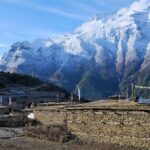
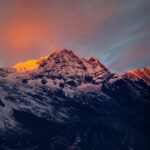
- Annapurna Base Camp gives you both sunset and sunrise. That’s two opportunities for light changes on the ridgelines, plus time to settle into the basecamp area rather than rushing through.
- Day 5 is a reminder that not every day will be a mountain panorama day. Walking along the Modi River bank can be more about rhythm and scenery in the valley than peak photos.
And the final touch is Jhinu Danda hot springs. It’s not a luxury spa stop; it’s a natural soak that hits after real fatigue. That makes it feel earned.
Price and value: what $835 includes, and what it doesn’t
At $835 per person, the value comes from what’s bundled rather than from the headline price alone. You’re getting:
- Guide support (English-speaking) with the guide’s expenses covered
- Basic teahouse accommodation along the trek
- Meals: lunch (9), breakfast (8), dinner (8)
- Key transfers: Pokhara–Hile and Jhinu–Pokhara
- Hotel/port pickup and drop-off
- Emergency rescue service support for evacuation and medication
- Government taxes and service charges, with no hidden-cost approach stated
What you should budget separately: beverages, personal snacks/extra meals, tips (expected), and travel insurance. If you don’t already have insurance, that’s an important piece to handle before you go.
Also note that it’s described as offering group discounts and a private feel (it’s private for your group). If you’re traveling as a small group, this can add up to a better per-person cost while still keeping the experience organized.
Who should choose this Annapurna Base Camp trek
This trek fits best if you want a mix of Himalayan views and village life. You’ll likely enjoy it if you appreciate:
- sunrise and sunset trekking days (Poon Hill and basecamp)
- walking through settlements like Gurung and Pun communities
- a gradual schedule that still takes you to 4310m
- finishing with something physical-recovery related (hot springs)
You might reconsider if you strongly prefer private comforts. Basic teahouses with outside toilets/bathrooms are part of the deal here, and cold weather gear matters. Also, if you need a day with guaranteed mountain panoramas every single time, this route includes at least one day that’s mainly about the Modi River valley.
Should you book it? My practical take
If you want an organized Annapurna Base Camp trek that balances big moments with real trekking days, I think it’s a strong choice—especially for first-timers who want to try altitude without aiming for the extreme heights of the highest routes. The combination of Poon Hill, Annapurna Base Camp at 4310m, and the Jhinu Danda hot springs gives you multiple payoffs.
But commit only if you’re ready for basics: outside toilets, cold nights, and at least one day with limited mountain views. If that sounds fine, book with confidence and focus on walking well, packing warm, and letting the mountains do the talking.
FAQ
What’s the duration of the Annapurna Base Camp trek?
It runs for about 9 days.
How high do you go on the trek?
You reach Annapurna Base Camp at 4310 meters.
Are hotel pickup and drop-off included?
Yes. Hotel/port pickup and drop-off are included.
Are meals included in the price?
Yes. Lunch is included for 9 days, and breakfast and dinner are included for 8 days each.
Does the trip include a guide, and is the guide English-speaking?
Yes. You get a professional and experienced English-speaking trekking guide, and the guide’s expenses are covered.
What’s not included in the tour cost?
Beverages (like bottled mineral water and hot drinks), personal expenses, tips for the guide, and travel insurance are not included.