REVIEW · KATHMANDU
Upper Mustang Trekking
Book on Viator →Operated by Everest Trekking Routes Pvt. Ltd. · Bookable on Viator
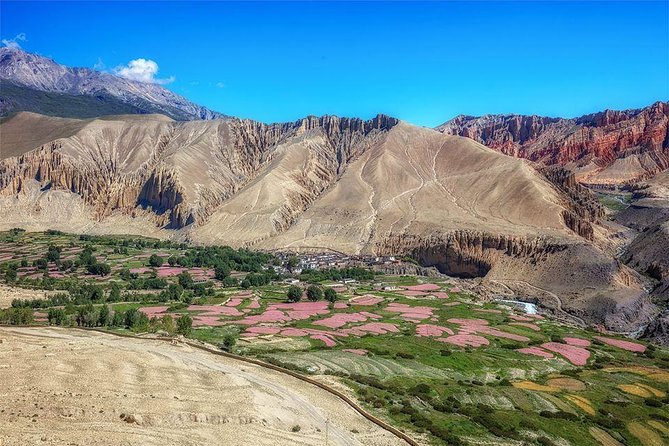
Upper Mustang feels like another planet. It’s remote, dry, and full of Tibetan Buddhist life, with Lo Manthang’s walled streets as the main draw and Special Upper Mustang Permit rules shaping the whole trip.
What I like most is the low-crowd feel paired with big, constant mountain views—especially on the walk toward higher points and the approach days into Lo Manthang. I also really respect the smooth logistics for a trek this far out: you get staged travel (bus to Pokhara, flight to Jomsom), lodge support, and a government-licensed guide with a porter system (1 porter for every 2 people).
One consideration: the area can be windy, and you’ll also deal with dusty trails on many days, so you’ll want good layers and realistic expectations for conditions, not just postcard weather.
In This Review
- Quick hits: what makes this trek tick
- Why Upper Mustang feels different from other treks
- Permits and paperwork: the stuff you’ll want squared away early
- Getting there: Kathmandu to Pokhara to Jomsom (and why it’s staged)
- Trek days into Kagbeni and Chhusang: where the route begins to feel real
- Climb toward Syangboche: the payoff days with Dhaulagiri and Annapurna in view
- Lo Manthang approach: Ghiling, Tsarang, and the walk into the walled city
- Dhakmar and Ghami: gompas, village scale, and everyday Mustang life
- The return: Chhusang down to Kagbeni, then the Jomsom reset
- Pokhara and Kathmandu: bus, flight, and ending at TIA
- Price and value: what $2,400 actually buys you
- Who should choose this trek (and who should skip it)
- Should you book Upper Mustang Trekking?
- FAQ
- How long is the Upper Mustang Trekking tour?
- Where does the trek start and end?
- What permits are required?
- Does the price include meals and lodging?
- How do you travel to Jomsom?
- Is there a guide and porter?
- What is the cancellation refund policy?
Quick hits: what makes this trek tick
- Lo Manthang, inside the walls: monastery visits plus the King Palace area give you more than just scenery.
- A permit-driven route: ACAP and the USD 500 Special Upper Mustang Permit control access and timing.
- Real variety of walking: climbs toward Syangboche, then longer descents down toward Kagbeni and back to Jomsom.
- Staged transport: tourist bus Kathmandu–Pokhara, then a short domestic hop to Jomsom at the start and back at the end.
- Small, private feel: only your group participates, with a licensed guide and porters for practical support.
Why Upper Mustang feels different from other treks
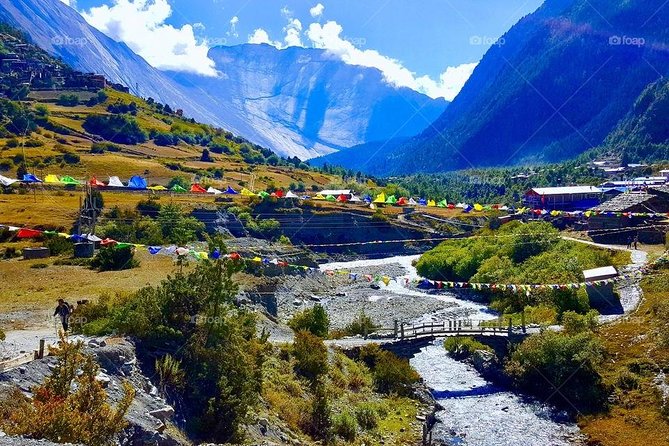
Upper Mustang is special because it feels cut off—still. Instead of the busy trail rhythm you might expect in more famous trekking corridors, you’re walking through a restricted region where villages, monasteries, and daily life keep a strong Tibetan flavor.
You’ll notice it immediately in how the towns look and how people move through them. The trek passes old monasteries, routes tied to Lo Manthang, and the kind of village scenes where life seems to run on routine rather than tourism. When you finally reach Lo Manthang, the walled-city layout adds weight. It’s not just a stop; it’s a place with structure, gates, and a sense of history you can see in the buildings and the monastery complexes.
And because the walking is designed to connect altitude, villages, and accessible routes, you get big views while still keeping the trek within a range that many fit travelers find manageable. One practical benefit: you’re not racing for extreme high-altitude summit goals every day.
You can also read our reviews of more tours and experiences in Kathmandu.



Permits and paperwork: the stuff you’ll want squared away early
This trek is built around access permissions. You’ll need both:
- ACAP (Annapurna Conservation Area Project) permit
- Special Upper Mustang Permit: USD 500 per person for 10 days
The important part for your planning is timing and documents. The trip includes a day in Kathmandu after breakfast to get the Upper Mustang special permit, and the process is tied to using your original passport alongside your Nepal visa. Then, once you’re in the trek region, there’s a checkpoint-style moment when you enter the restricted area via Kagbeni.
What this means for you: don’t treat the permit day like optional sightseeing time. It’s a core piece of the itinerary, and delays there can ripple forward. If you’re the type who likes to keep things flexible, you’ll still want to be organized—passport originals, visa status, and any required details handled on schedule.
Also note that the permit is described as covering 10 days in the restricted area. Your overall trek is longer, but that permit scope is what governs entry. Your operator plans around it, but you’ll still want to confirm your travel dates match the permit window.
Getting there: Kathmandu to Pokhara to Jomsom (and why it’s staged)
The trek doesn’t start with a long hike out of the airport. It starts with getting you positioned for the trekking legs.
Day 1 is straightforward: you arrive at TIA (Tribhuvan International Airport), get picked up by the operator’s representatives, and transfer to your Kathmandu hotel for an overnight stay.
Day 2 balances two tasks. First you can do some Kathmandu Valley sightseeing if you want. Then you get the Upper Mustang special permit during the day, using your passport with your Nepal visa. You’ll stay in Kathmandu again overnight.
Day 3 is travel heavy. You walk about 10 minutes to the tourist bus station and leave on the bus at 7:00 AM, driving via the Prithibi Rajmarg Highway. There’s a breakfast stop after roughly two hours. This road day matters because it gets you far enough toward Pokhara that the flight portion becomes efficient later.
Then comes the big step: Day 4. You transfer to the domestic airport and fly to Jomsom, at 2,715 meters. From there, you trek to Kagbeni in about 4–5 hours. That first walking day is important for two reasons:
- You ease into trail life without jumping straight into a long climb.
- You start absorbing the Mustang look—dry terrain, village walls, and the arid feel around the river systems.
Trek days into Kagbeni and Chhusang: where the route begins to feel real
The early segment has a rhythm: move, walk, settle, repeat. It’s not a “push every day” plan, but it also isn’t a lazy stroll.
On Day 4, the Jomsom-to-Kagbeni trek introduces you to the popular Jomsom–Muktinath corridor vibe—same general style of trekking country—but with the Mustang restriction and culture focus.
Day 5 brings a key shift. You trek to Chhusang, and it’s described as descending to Kagbeni as part of the day’s movement, plus time for checking at the restricted-area entry approach. After that, you enter the Special Upper Mustang area. In plain terms: this day is partly about walking and partly about the administrative reality of access.
You’ll get a more “real” feeling once those checks are behind you. The villages and monastery way of life starts to take over the experience, and the trek becomes less about logistics and more about the place.
Climb toward Syangboche: the payoff days with Dhaulagiri and Annapurna in view
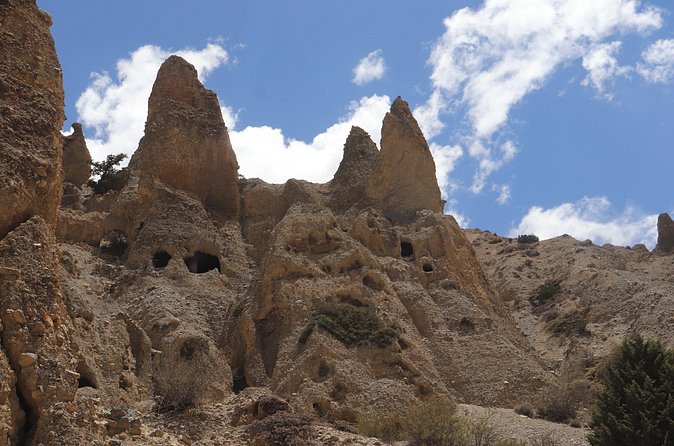
From Chhusang to Somare (Day 6), the trail is described as solidly flat with some steps, followed by a biggest climb up toward Syangboche, passing through places like Chele. Expect your legs to feel it. Even when the walking seems straightforward, the climb is the day’s main event.
Day 7 is the next elevation step, described as mostly uphill toward Syanboche (same area reference), with a lunch stop and rest time once you’ve climbed. This is one of the days where the “why I came” moment shows up.
The itinerary calls out that the scenery includes views of major peaks—Dhaulagiri (8,167m) and Annapurna (8,097m)—when the weather is clear. Even if clouds roll in, this stretch tends to keep you in the mountain atmosphere. You’re walking through a high, exposed kind of terrain where the sky feels close.
Practical tip: if the day is clear, you’ll want to plan for frequent photo breaks. If the day isn’t clear, don’t get discouraged. The trek still works because you’re moving through villages and monastery areas in a living cultural zone, not chasing one day of view.




Lo Manthang approach: Ghiling, Tsarang, and the walk into the walled city
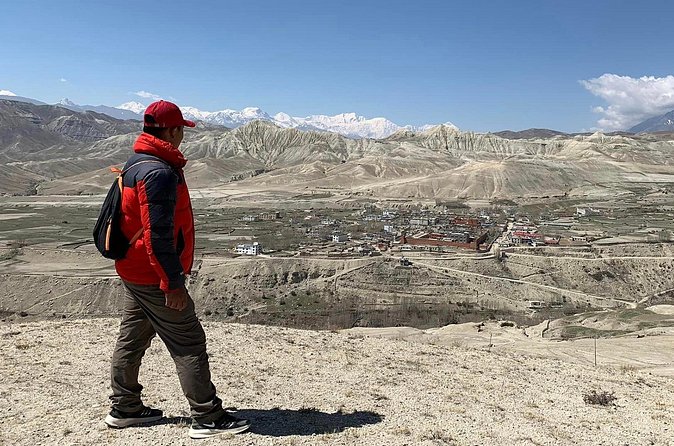
Once you’re out of the mid-trek climb and settle into the Lo Manthang direction, Day 8 sets up the cultural lead-in. You can follow routes toward Lo Manthang, pass Ghiling village (with old monasteries), and then continue toward Tsarang. Clear weather is highlighted here because it can bring more types of scenery and strong visual contrast across farms and village walls.
Day 9 is your crossing day into Lo Manthang itself. The trek to Lo-Manthang takes about 5–6 hours. It includes passing several rivers and bridges, plus stretches described as deserted. That “deserted” feeling can surprise people used to green, busy routes. Here, emptiness is part of the visual language.
Then Day 10 gives you the real centerpiece:
- Visit monasteries
- See the King Palace area
- Walk through a city made of colorful villages and decorative elements
Lo Manthang isn’t just a place to pass through. It’s where you slow down. The monasteries and palace structures give you context for what you’ve been walking toward, and the walled-city layout makes it feel like you’ve stepped inside a distinct world.
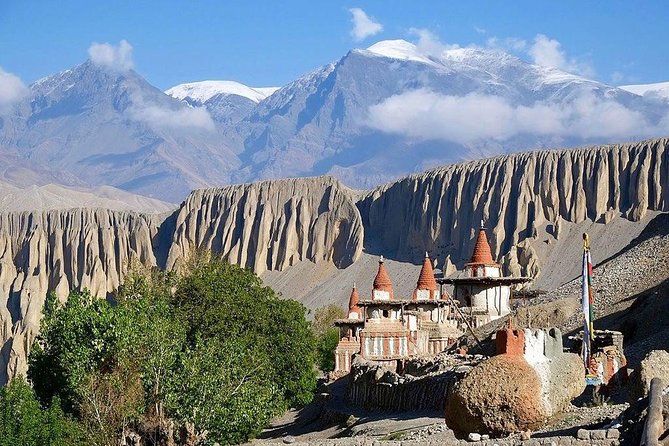
If you like Tibetan Buddhist culture—monastic life, prayer walls, the look of older religious buildings—this is where the trek pays off hard.
Dhakmar and Ghami: gompas, village scale, and everyday Mustang life
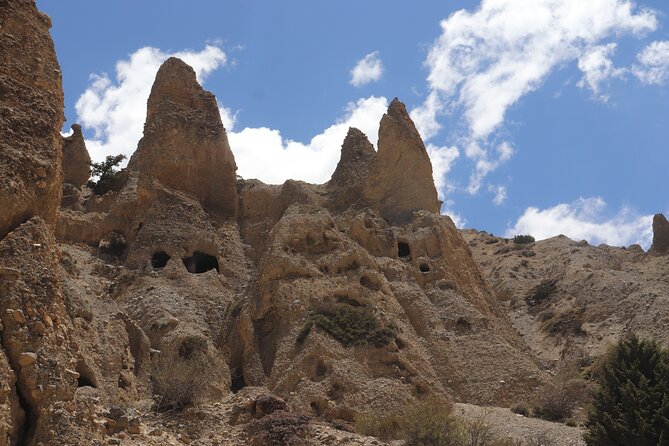
After Lo Manthang, the days shift into exploration of other hubs.
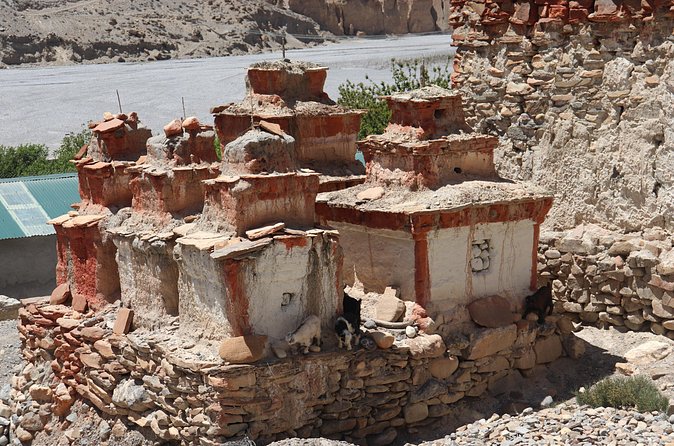
Day 11 takes you toward Dhakmar, with an uphill start to a gompa (described as a key focus point). You’ll also get more of the “history about gompas” along the way—practical because these religious structures are more than scenery. They’re landmarks tied to how people organize the land.
Day 12 walks from Dhakmar to Ghami, described as a major village and monastery route. Ghami is noted as the biggest village on this segment. It’s also where you’ll see farm life that includes apple-related activity and even mention of foreigner farming products. That detail matters because it shows you a living system, not a museum set.
In other words: you’re not only walking through old stone. You’re walking through a place where people still grow food and build routines around the valley.
The return: Chhusang down to Kagbeni, then the Jomsom reset
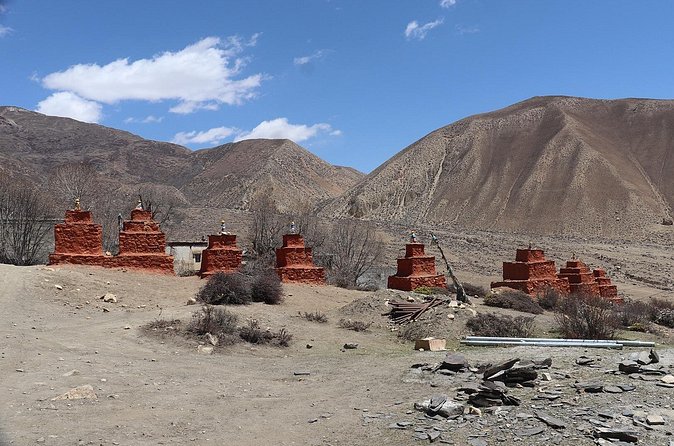
The return isn’t just “going back the way you came.” It’s a different feel.
Day 13 is a long big downhill segment toward Kaligandaki River, dropping about 1,000 meters. The day passes smaller villages like Samar, Bhena, and Chele. It’s also described as windy as you near the Kaligandaki valley boundary, which is something to plan for with layers and a windproof outer shell.
Day 14 focuses on timing. You trek from Chhusang to Kagbeni, and the guidance is to leave a little early. The reason: after 12:00 PM, strong winds can hit until you reach R… (the itinerary text cuts off, but the point is clear). This is one of those trek realities you can’t outsmart with “hope it’s fine.” You adjust your schedule.
Day 15 is an easier finish: a short hike to Jomsom. Once there, you check your flight schedule for the next day. Then there’s time to visit Jomsom city and buy products—apple brandy is specifically mentioned, along with other items from apple makers. This matters because it gives you a real “local goods” moment, not only trekking souvenirs.
Pokhara and Kathmandu: bus, flight, and ending at TIA
Day 16 is flight-dependent. If you have time, you eat breakfast in Jomsom; otherwise, you leave early to report to the airport and wait. Then you fly to Pokhara (about 25 minutes) and transfer to your hotel. The plan also notes leaving your backpack, which is a small detail that can make your last travel day feel less stressful.
Day 17 brings the return road day. You drive from Pokhara tourist bus park to Kathmandu, described as about 7 hours. It’s the same idea as earlier: time on wheels, then you’re back in Kathmandu rhythms.
Day 18 is the finish: a drop-off at TIA for your final departure. The whole experience ends cleanly, without extra overnight twists.
Price and value: what $2,400 actually buys you
At USD $2,400 per person, this isn’t a bargain-basement trek. But it’s also not priced like a random add-on package. The value sits in what’s included.
Included items cover big cost drivers for Upper Mustang:
- Permits: ACAP plus the Special Upper Mustang Permit (USD 500 per person for 10 days)
- Transport: airport/hotel transfers by private vehicle, Kathmandu–Pokhara tourist bus, and domestic flights Pokhara ↔ Jomsom
- Lodging: Kathmandu (3 nights in 3-star accommodation with breakfast), Pokhara (2 nights with breakfast), plus lodge/tea house stays during the trek
- Meals: 16 lunches and dinners and breakfast 17 times
- People support: a government-licensed trekking guide and a porter system (1 porter for 2 people)
- Taxes and service charges
What’s not included is mostly what you’d expect:
- Tips for guide, porters, and driver
- Personal expenses
- Extra hotel nights if your schedule requires them
Here’s how I’d think about it as value: Upper Mustang is permit-heavy and transport-heavy. This itinerary handles both in a single plan, and it gives you the structure to walk for 18 days without having to piece together flights, permits, meals, lodging, and staffing yourself.
If you want a more independent experience, you could build your own trek cheaper on paper. But for most people, the real question is how much time and stress you want to spend solving permits and logistics in a restricted area.
Who should choose this trek (and who should skip it)
This trek fits you best if you:
- Want a Tibetan Buddhist culture focus with actual village structure and monastery stops
- Prefer lower-crowd feeling over classic teahouse trekking crowds
- Like your days to be planned and paced, with a guide who’s handling route flow and logistics
- Are physically ready for multiple days of walking with climbs and at least one major downhill day
You should be cautious if you:
- Hate walking on dusty trails and want perfectly clean air and soft ground every day
- Don’t handle windy conditions well, especially around midday timing rules
- Expect a high-altitude mountain summit style trek (this route centers on the Mustang valleys and cultural corridors)
Also, it’s a private tour/activity where only your group participates. That matters if you want a more controlled pace, rather than sharing decisions with a large multi-group trekking crowd.
Should you book Upper Mustang Trekking?
If you want a trek that mixes Lo Manthang’s walled-city feel with a realistic, guided route and you don’t mind dusty, windy moments, I think this is a strong choice. The cost makes sense because permits and flights are part of the package, and the plan includes a porter setup that keeps you from overloading your back.
Before you hit book, do three simple checks:
- Confirm your passport and Nepal visa details are clean for the permit process tied to Kathmandu.
- Pack for wind and layers, not only for sun.
- Be honest about your leg fitness. You’re walking for many days, with uphill and long downhill segments.
If that sounds like your kind of trip, Upper Mustang is the rare place where the culture and the walking feel tightly linked.
FAQ
How long is the Upper Mustang Trekking tour?
The duration is listed as 18 days (approximately).
Where does the trek start and end?
It starts in Kathmandu (arrival at TIA) and ends with a drop-off to TIA for your final departure.
What permits are required?
You need an ACAP permit (Annapurna Conservation Area of Project) and a Special Upper Mustang Permit, listed as USD 500 per person for 10 days.
Does the price include meals and lodging?
Yes. It includes 16 lunches and dinners, breakfast 17 times, Kathmandu hotel stays (3 nights with breakfast), Pokhara hotel stays (2 nights with breakfast), and lodge/tea house accommodations during the trek.
How do you travel to Jomsom?
The plan includes a domestic flight to Jomsom (and back later). It also includes tourist bus travel between Kathmandu and Pokhara.
Is there a guide and porter?
Yes. You get a government-licensed trekking guide and a porter arrangement of 1 porter for 2 people.
What is the cancellation refund policy?
You can cancel up to 6 days in advance for a full refund. If you cancel 2–6 days before the start time, the refund is 50%. Less than 2 days before does not receive a refund.