REVIEW · MOSHI
Mt Kilimanjaro Trek, 6 Days – Umbwe Route
Book on Viator →Operated by Intrepid Explorer Tanzania · Bookable on Viator
Steep days. Big rewards. The 6-day Kilimanjaro trek on the Umbwe Route is the least crowded line up and down, yet it’s famously tough because you climb fast before you’ve had time to fully adjust to altitude. You’ll also descend on the Mweka Trail, finishing in time for summit certificates and a quick ride back to Moshi.
What I like most is the way the trip is run end-to-end. You get a full team (qualified mountain guide, assistant guides, porters, and a cook), and the operator’s owner, Wence, is noted for tailoring the tour to group preferences. I also really appreciate that the price includes emergency oxygen and basic first-aid gear for emergencies only.
Here’s the one consideration to take seriously: Umbwe’s steep, constant ascent gives you less altitude adjustment time, and the route is described as having a very low success rate. If you’re not comfortable with that kind of pressure, you’ll likely feel it every day.
In This Review
- Key highlights you should care about
- The Umbwe Route Bet: Steep, Quiet, and Fast on Altitude
- Price and value: what $2,260 buys (and what it doesn’t)
- What’s included
- What’s not included
- Moshi logistics: a smoother start before the serious climb
- Day-by-day: from rainforest steps to summit scree
- Day 1: Umbwe Trail (1,660m to 2,850m)
- Day 2: Into open moorland (2,850m to 4,000m)
- Day 3: Barranco to the junction by the Mweka connection (4,000m to 4,050m)
- Day 4: Barafu Camp (4,050m to 4,700m)
- Day 5: The summit push via Stella Point (4,700m to 5,895m, then down to ~3,090m)
- Day 6: Mweka Trail down to the Park Gate and Moshi (3,090m to 1,680m)
- Altitude reality check: why Umbwe is so demanding
- What to expect on the ground: steep terrain, early nights, and weather shifts
- The crew and camp setup: why this tour feels managed
- Who should book the 6-Day Umbwe climb (and who should pause)
- Should you book this Umbwe Route trek?
- FAQ
- Where does the trek start and end?
- How do you get from Moshi to the trailhead?
- What’s the highest elevation on this route?
- Is airport pickup included?
- Is emergency oxygen included?
- What meals are included?
- What do I need for the muddy descent?
Key highlights you should care about
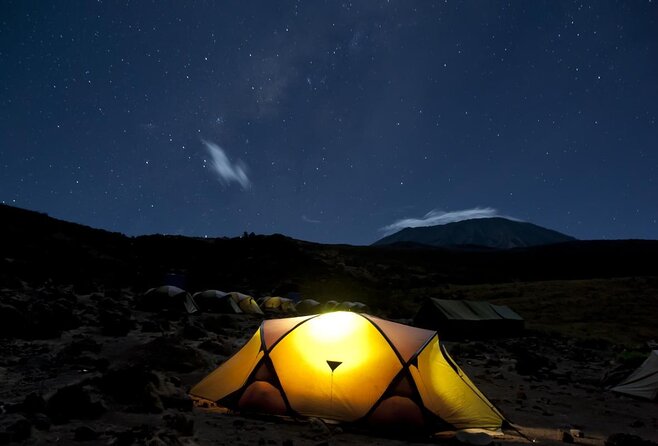
- Quiet camps and fewer people: Umbwe is the least used route, so the hike feels more private.
- A direct, steep grind up: expect a constant climb that doesn’t slow down much for altitude acclimatization.
- Summit night drama (in a good way): you head up around midnight to 2 am toward Stella Point for sunrise.
- Same general area up and down: not as many changing scenery moments as some other routes, but it’s efficient.
- Support that’s built into the price: guides, porters, cook, camping gear, meals, and even emergency oxygen are included.
The Umbwe Route Bet: Steep, Quiet, and Fast on Altitude
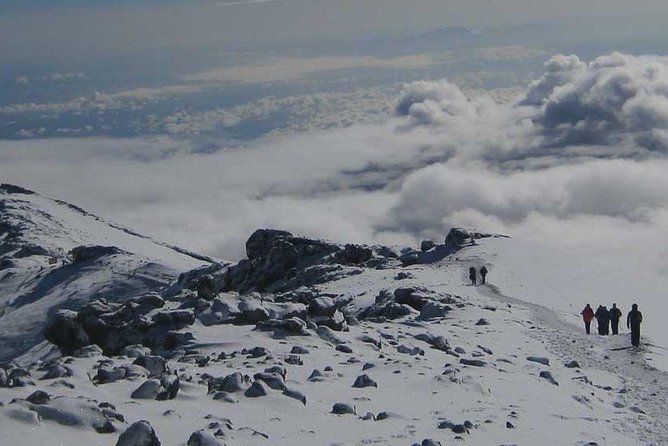
Umbwe is the kind of route you choose on purpose. It’s least used and therefore typically less crowded, but that advantage comes with a price: the hiking profile is steep and direct. The ascent doesn’t give you much time to “settle in” to the altitude. That’s why the route is widely described as the most difficult on Kilimanjaro and why its success rate is said to be very low.
This isn’t a casual walk-up. Day after day, you’re trekking over rugged ground with relatively short segments between big elevation jumps. If you’re the type who stays steady on steep slopes—using a consistent pace even when your legs complain—you’ll probably find Umbwe matches your style.
If you’re chasing a “wow, scenery changes every hour” experience, Umbwe may feel less varied than routes where the path loops farther around the mountain. The paths up and down stay closer to each other, so the views are strong but the scenery doesn’t rotate as much. In plain terms: expect a hard climb that prioritizes progression over variety.
You can also read our reviews of more tours and experiences in Moshi.
Price and value: what $2,260 buys (and what it doesn’t)
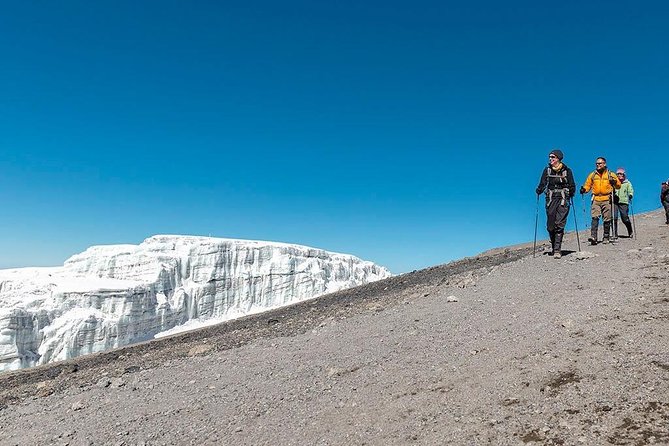
At $2,260 per person, this trek isn’t cheap. But it’s not just a “walk with a guide” deal. A lot of the real costs are built in.
What’s included
You’re covered for major trip basics:
- All fees and taxes
- Return transfers between Moshi and the Kilimanjaro airport
- Hotel the night before and the night after the climb, with dinner and breakfast included
- Qualified mountain guide, assistant guides, porters, and cook
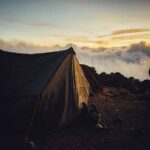
- Camping equipment (tents, camp chairs, tables, sleeping mattresses)
- Fresh water for drinking and for washing up daily (so you’re not relying only on what you carry)
- Meals: breakfast (5), lunch (6), dinner (5)
- Emergency oxygen (strictly for emergencies, not summit strategy)
- Basic first-aid kit
- Crew salaries as required by the park’s guidelines
- Pick-up offered (practical for getting in sync fast)
What’s not included
You’ll still want to budget separately for:
- Visa, travel/health insurance, flights
- Personal gear and items of personal nature
- Gear rentals (available from an equipment store in Tanzania)
- Optional but highly recommended portable toilet
- Snacks, personal medicine, and water purifying tablets
- Meals and drinks not specified
My take on the value: for a route as demanding as Umbwe, you’re paying for a full operating system—guides, porters, cook, camp setup, and safety tools—so you can focus on moving, resting, and managing altitude. If you have to assemble that yourself, the cost quickly goes up.
Moshi logistics: a smoother start before the serious climb
You begin in Moshi, Tanzania, where you’ll be staged for the climb with a hotel night before you head out. There’s also a round-trip connection with the airport included. Once you’re ready, you drive about 1 hour from Moshi to the Umbwe Gate.
That setup matters because Kilimanjaro rewards preparation. The less time you waste on logistics, the sooner you’re walking—slowly, steadily—toward your first elevation milestone.
And you’re not carrying camp setup. Camping equipment and daily water for drinking and basic washing are included, which keeps your load and energy use more predictable.
Day-by-day: from rainforest steps to summit scree
Umbwe is planned as a minimum 6-day route. The guidance also notes 7 days is recommended—and with this itinerary’s steep nature, that extra buffer can be the difference between coping and crashing.
Day 1: Umbwe Trail (1,660m to 2,850m)
You start with the drive to Umbwe Gate and then move into the rain forest. The first hiking day is about reaching 2,850m over roughly 11 km (7 mi), in about 5–6 hours.
This day is your warm-up to the mountain’s rhythm. It’s also when you’ll want to keep your effort controlled. Even if the path feels “manageable,” you’re still gaining elevation fast, and that’s the start of the altitude story Umbwe tells.
Day 2: Into open moorland (2,850m to 4,000m)
After breakfast, you leave the forest and walk along ascending ground across open moorland to Barranco Camp. You’re climbing from about 2,850m to 4,000m over 6 km (4 mi), with 4–5 hours of hiking time.
This is the day where Umbwe becomes unmistakably serious. Open moorland can mean more exposure and less cover, so your pace and hydration habits matter more. You’re also stacking elevation quickly again, so keep your breathing calm and steady.
Day 3: Barranco to the junction by the Mweka connection (4,000m to 4,050m)
Today is shorter on paper: 5 km (3 mi) and about 3–4 hours, from 4,000m to 4,050m. But the schedule still moves you through key terrain—continuing on a steep ridge up the Barranco Wall toward the Karanga Valley, reaching the junction that connects with the Mweka Trail.
What makes this day important is less the distance and more the climbing style. You’ll be on steep terrain at altitude, and your job is to keep your steps efficient rather than heroic.
Day 4: Barafu Camp (4,050m to 4,700m)
You continue upward to Barafu Camp, reaching about 4,700m over 4 km (2 mi) and 3–4 hours. This is a key staging day because you’re basically lining up for the summit push.
You camp at Barafu, rest, and get dinner. Think of this as the day you prepare both your body and your mind. When the next night starts, you’ll be glad you didn’t spend this day rushing.
You’ve also completed a full “South Circuit” style of approach here, with the summit views coming from multiple angles as you progress through the route.
Day 5: The summit push via Stella Point (4,700m to 5,895m, then down to ~3,090m)
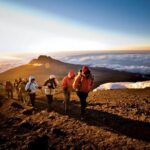
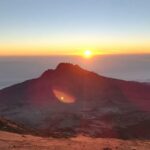
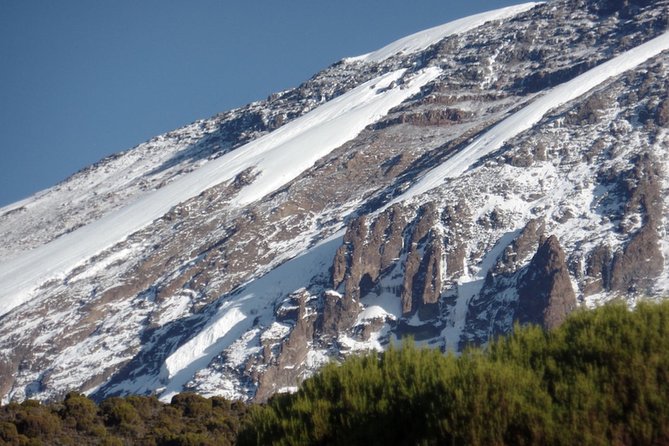
This is the heart of the Umbwe experience—and the toughest day. You leave between midnight and 2 am and head toward the summit between the Rebmann and Ratzel glaciers. You ascend through heavy scree toward Stella Point on the crater rim.
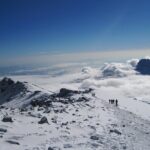
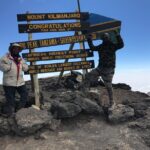
This section is described as the most mentally and physically challenging part of the trek. The reward is sunrise: you stop briefly at Stella Point and then continue on toward the summit, where snow may appear all the way up. The summit day can take around 14 hours total.
When you’re walking in the dark at extreme altitude, the challenge isn’t just legs. It’s decision-making—small, steady choices like keeping your pace slow, not overreaching on “just one more fast section,” and staying focused while your body argues with you.
After the summit, you descend all the way down to camp around 3,090m.
Day 6: Mweka Trail down to the Park Gate and Moshi (3,090m to 1,680m)
After breakfast, you hike down the Mweka Trail to the Mweka Park Gate for summit certificates. It’s about 10 km (6 mi) in 3–4 hours, from 3,090m down to 1,680m.
Lower down, the route can be wet and muddy. That’s why gaiters and trekking poles help, and why you’ll likely be in shorts and a t-shirt at this point. Still, keep rain gear and warmer layers close, because conditions at altitude can change fast.
From the gate, you continue about one more hour to Mweka Village. Then a vehicle meets you and drives you back to your hotel in Moshi—about 30 minutes.
Altitude reality check: why Umbwe is so demanding
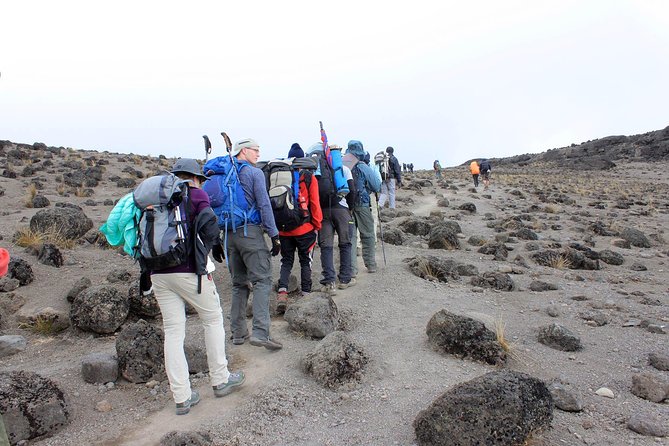
Umbwe’s key problem is timing. The ascent profile doesn’t give much time for altitude adjustment, and that’s why it’s said to have a very low success rate. The route’s difficulty comes from the combination of:
- Steep, constant climbs
- Rapid elevation gain
- A schedule that keeps you moving rather than giving your body long to adapt
So what should you do if you’re considering Umbwe? Be honest about your experience with altitude and steep sustained trekking. This route is described as best for people who are confident in their ability to trek over consistently steep slopes and who are experienced enough to trust their acclimatization skills.
Even if you’re strong, altitude can be unpredictable. The included emergency oxygen is there for emergencies only, not as a guarantee. Your best defense is sensible pacing and treating the trek like a slow build, not a race.
What to expect on the ground: steep terrain, early nights, and weather shifts
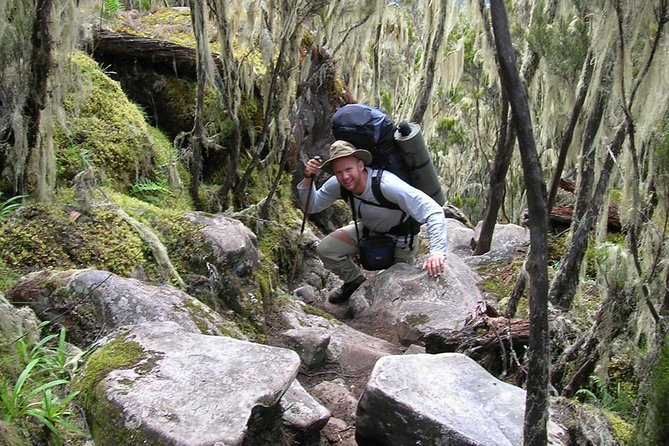
Umbwe isn’t just hard because of height. It’s hard because the mountain keeps asking for effort in the same way over and over.
- Day 1–3: forest to moorland to steep ridges. Expect steady climbing and changing ground cover.
- Day 4: short but serious push to Barafu, where you sleep and prepare for the summit night.
- Day 5: heavy scree and crater-rim navigation toward Stella Point. Sunrise moments come when you’ve already done the hard work.
- Day 6: descent can be wet and muddy. Your quads will still be recovering, and your footing will need help.
Gear-wise, the trek data specifically flags:
- Gaiters and trekking poles for the muddy descent
- Rain gear and warmer clothing kept handy even if daytime temps seem like they’ll be fine on lower sections
Portable toilet is not included, but it’s described as optional yet highly recommended. That’s one of those small comforts that can prevent last-minute stress when you’re tired and far from basic services.
The crew and camp setup: why this tour feels managed
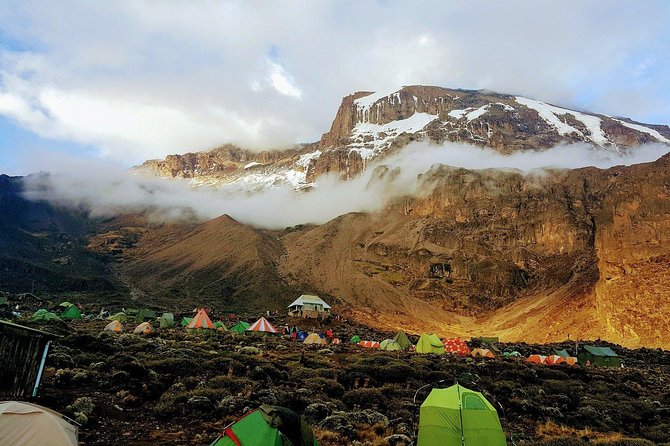
On Kilimanjaro, a smooth operation can be the difference between a rough trip and a frightening one.
This trek includes:
- A qualified mountain guide plus assistant guides
- Porters and a cook
- Camping gear (tents, camp chairs, tables, sleeping mattress)
- Fresh water for drinking and washing up daily
In practice, that means you’re not spending energy on setting up camp or figuring out how to keep everyone fed. Your job is hiking, resting, and following the guidance of your crew.
Also, the owner Wence is referenced as catering the tour to preferences, which is a good sign for how personal the experience can feel—especially on a route where decisions about pace and support matter.
Who should book the 6-Day Umbwe climb (and who should pause)
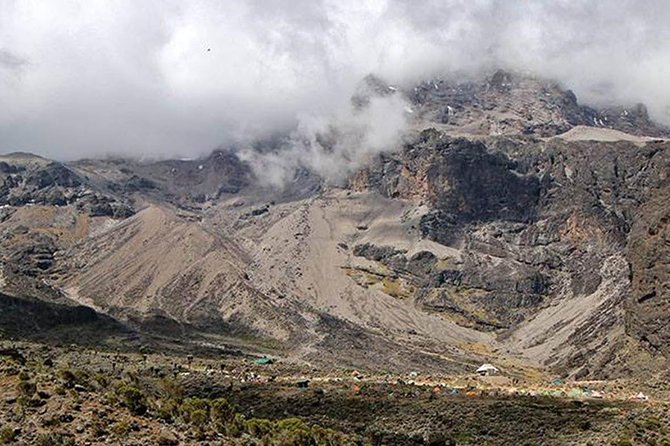
Umbwe is for climbers who want:
- The least crowded Kilimanjaro route
- A secluded feel on the mountain
- A direct, steep ascent pattern
- A challenge that matches consistent trekkers—people who can handle punishing schedule demands
It’s also a smart fit if you’re confident at altitude and can manage your body through the schedule without needing extra time to acclimatize.
Who should think twice? If you’re newer to high-altitude trekking, struggle on steep sustained slopes, or know you need frequent gradual adjustment, the route’s low-success, altitude-timing profile may be too much.
One more reality check: Umbwe isn’t the most scenically varied compared with other routes, because the path up and down stays close. You’re choosing it for quiet and challenge, not for constant “new scenery every hour.”
Should you book this Umbwe Route trek?
I’d book the 6-day Umbwe Route if you meet the hard criteria: you’re fit for steep walking, you’re experienced with altitude, and you want a quieter climb with a tightly run crew and included camp setup.
I’d pause if any of these are shaky for you: your ability to keep a steady slow pace at altitude, comfort with a very demanding summit-night schedule, or your confidence in coping with minimal acclimatization time. In those cases, the itinerary’s stated preference for a longer window (7 days recommended) matters—Umbwe doesn’t forgive hesitation.
If your goal is personal strength-testing on a less crowded mountain, this is a strong match. If your goal is “breezy and scenic,” Umbwe will feel like work.
FAQ
Where does the trek start and end?
The trek starts at the Umbwe Gate area and finishes back at the same meeting point area after descending and returning to Moshi.
How do you get from Moshi to the trailhead?
You drive from Moshi to Umbwe Gate for about 1 hour.
What’s the highest elevation on this route?
The itinerary lists a highest point of about 5,895m.
Is airport pickup included?
Yes. Return transfers between Kilimanjaro airport and Moshi are included, and pickup is offered.
Is emergency oxygen included?
Yes. Emergency oxygen is included for emergencies only, not as summit aid.
What meals are included?
The trek includes breakfast (5), lunch (6), and dinner (5), plus dinner and breakfast are included with the hotel nights before and after the climb.
What do I need for the muddy descent?
The guidance specifically notes that at lower elevations it can be wet and muddy, and that gaiters and trekking poles help. Rain gear and warmer clothing should be kept handy too.