REVIEW · MOSHI
Kilimanjaro Trek 6 Days Marangu Route
Book on Viator →Operated by Kilitwende Adventures · Bookable on Viator
Huts make Kilimanjaro feel more doable. This Marangu Route option keeps you tent-free with shared hut stays along the way, while still pushing you toward Uhuru Peak. You can also add an extra day for acclimatization, which can make a big difference when the altitude starts getting serious.
I like the practical support baked into the plan: expert guides, a cook, and porters handle the heavy lifting and the meals, so you can focus on pacing and breathing. I also appreciate the safety-minded details like an included oxygen tank, plus three meals a day during the climb.
One thing to consider: even with huts and support, the 5-day pacing can feel tight. If you’re worried about feeling rushed by altitude, the optional extra acclimatization day is worth seriously considering.
In This Review
- Key Things That Make This Kilimanjaro Climb Worth Your Attention
- Marangu Route Hut Comfort vs. Tent-Free Kilimanjaro Nights
- Moshi Arrival and the 8:30am Gate Day
- Day 1 in Montane Forest: Marangu Gate to Your First Hut
- Day 2 Past the Maundi Crater Rim to Horombo Moorlands
- Day 3 to the Saddle: Oxygen Thinning and Water Strategy
- Day 4 Midnight Climb to Hans Meyer Cave, Gillman’s Point, Uhuru Peak
- Day 5 Down to Marangu Gate: Certificates and That Hot Shower
- What You Pay For: Guides, Porters, Meals, Fees, and Oxygen
- Budget Reality: Gear Rentals, Tips, and Moshi Costs
- Fitness and Acclimatization: When the Optional Extra Day Helps
- Should You Book This 5-Day (Marangu) Climb with Kilitwende?
- FAQ
- How long is the Kilimanjaro Marangu route trek?
- What route is this climb using?
- Where does the tour start and what time does it begin?
- Are park fees and hut fees included?
- Are meals included during the climb?
- Do you get an oxygen tank on this trek?
- Is hotel accommodation included?
- Do I need my own sleeping bag and hiking boots?
- What summit certificate do you receive?
- Is there free cancellation?
Key Things That Make This Kilimanjaro Climb Worth Your Attention
- Hut sleeping on the Marangu Route: no tents, shared but comfortable shelter
- Useful “camp buys”: mineral water, soft drinks, chocolates, and beer available for purchase at each camp
- Maundi Crater rim photo detour: views toward Kibo’s crater and glaciers on clear days
- Smart water planning on Day 3: the lower Saddle route is easier and passes the last watering point
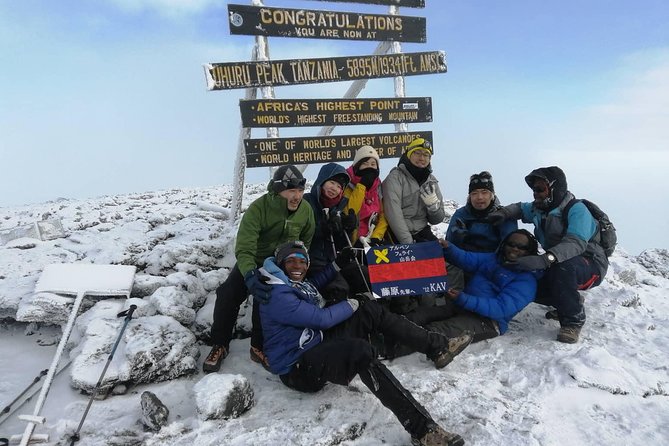
- Midnight push on summit day: Hans Meyer Cave at 5150 m, then Gillman’s Point at 5680 m before Uhuru Peak
- Rescue-ready inclusion: an oxygen tank is included in your package
Marangu Route Hut Comfort vs. Tent-Free Kilimanjaro Nights
Kilimanjaro has a reputation for being rough, and it can be. But the Marangu approach changes your day-to-day vibe. Instead of tent life, you’re sleeping in shared huts along the route. That means you spend less time managing gear in wind and rain and more time moving, eating, and recovering.
I also like that the camp setup feels more “managed” than a self-supported hike. At the camps, you can buy small comforts like mineral water, soft drinks, chocolates, and beer. Nothing here turns the climb into a spa. Still, those little treats help morale when the cold and altitude start doing their thing.
The hut style also means you should accept less privacy than some other routes. If you’re the type who needs quiet space to decompress, plan for that mentally before you go.
You can also read our reviews of more tours and experiences in Moshi.
Moshi Arrival and the 8:30am Gate Day
This climb is based in Moshi, Tanzania, with hotel B/B accommodations included for one night before and one night after. That matters because you’re not just showing up at the mountain gates straight from the airport.
Your day starts with a meeting time of 8:30 am, and you’ll get a briefing before heading to Marangu Gate (about a 45-minute transfer). At the gate, there’s normal registration to climb Kilimanjaro, and you’ll be reminded to pack a small day bag for your on-trail needs like a camera, extra layers, skin oil, and rain gear.
This first day rhythm is important. Kilimanjaro punishes poor planning. Starting with the briefing and transfers takes away a lot of stress—stress that you’d rather save for the steep bits later.
Day 1 in Montane Forest: Marangu Gate to Your First Hut
Day 1 is your warm-up in the best sense. You’re hiking about 5 hours over roughly 12 km, gaining around +720 m through montane forest. This is the part where you set your pace, learn how to regulate effort, and get your body used to walking uphill without sprinting.
You’ll start soon after breakfast, then make the transfer to Marangu Gate. Registration happens there, and you’ll be guided on what to keep with you versus what’s handled by porters. The goal is simple: travel light where it counts. Cameras, rain jackets, extra cloth, and small personal items go in your day pack. Heavy stuff shouldn’t be on your shoulders.
Practical tip: if you want clear photos later in the trip, keep your camera accessible early. The forest can be dim, and you’ll want a quick shot when the trail opens or the light hits the trees.
Day 2 Past the Maundi Crater Rim to Horombo Moorlands
Day 2 ramps up. Expect about 6 hours and around 15 km, with a big climb of +1020 m as you move from forest into moorland. You’ll be heading toward Horombo Hut, with a picnic-style lunch along the way.
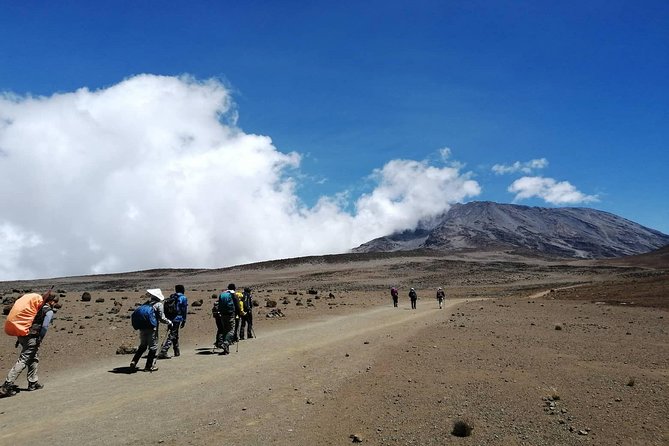
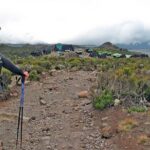
From Mandara Hut, the route briefly returns you to forest trails, then you emerge into moorland and pass around the base of the Maundi Crater. Here’s one of the most rewarding moments of the trek: you’ll have the chance to take a short detour to the crater rim. On a clear day, you can see Kibo Crater and, if conditions are right, the glaciers of Kibo. It’s a small detour with big payoff.
One consideration: moorland can feel cold once you’re higher. Dress in layers so you can adjust as you warm up on climbs and cool down on stretches between views.
Day 3 to the Saddle: Oxygen Thinning and Water Strategy
Day 3 is where Kilimanjaro starts reminding you about altitude. Your hike is again about 6 hours and roughly 15 km, climbing around +980 m through alpine desert. The oxygen is thinner now, so the climb feels harder even if the pace stays the same.
This is also where route choice gets practical. You can take one of two trails toward the Saddle, located between Mawenzi and Kibo. Stick to the lower route if you want it easier—plus it gives you an added benefit: it passes the last watering point.
So plan hydration carefully. The next watering point won’t be until Horombo Hut on your return the night after next. Start Day 3 with enough water, and then drink steadily rather than waiting until you feel thirsty.
My advice: treat this day like a deliberate walk. No heroic strides. Just consistent effort. Altitude punishes bravado.
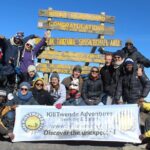
Day 4 Midnight Climb to Hans Meyer Cave, Gillman’s Point, Uhuru Peak
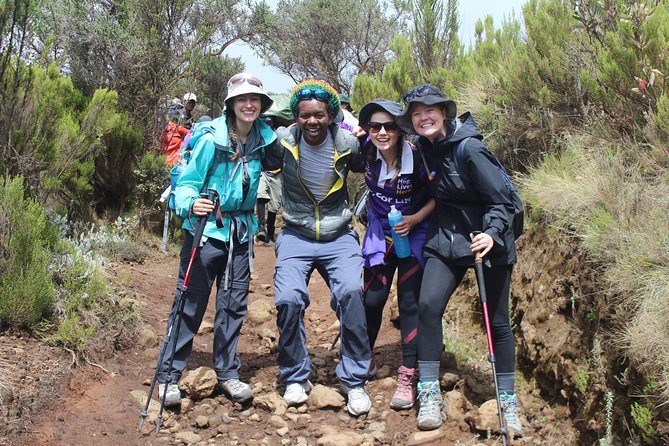
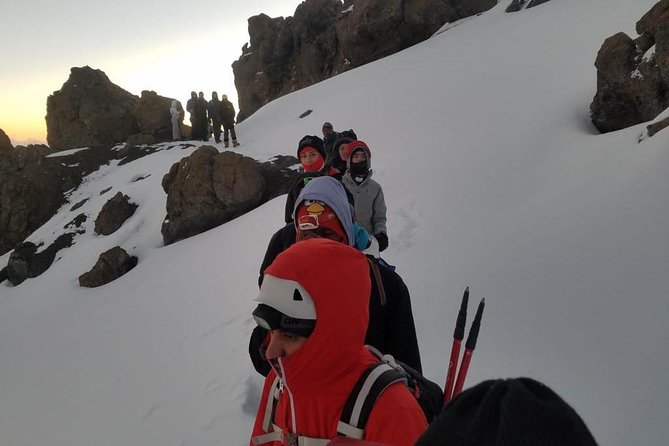
Day 4 is the big one. You’ll be woken just before midnight, then head out in cold night conditions on a rocky path. The total hike is about 10 hours, covering around 27 km, with a stated elevation change of +1195 m, –2175 m.
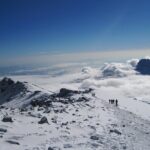
You’ll go to Hans Meyer Cave (5150 m), where you may take a short rest, and then continue to Gillman’s Point (5680 m). This section is described as the most demanding: steep, stony, and requiring careful slow movement.
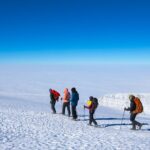
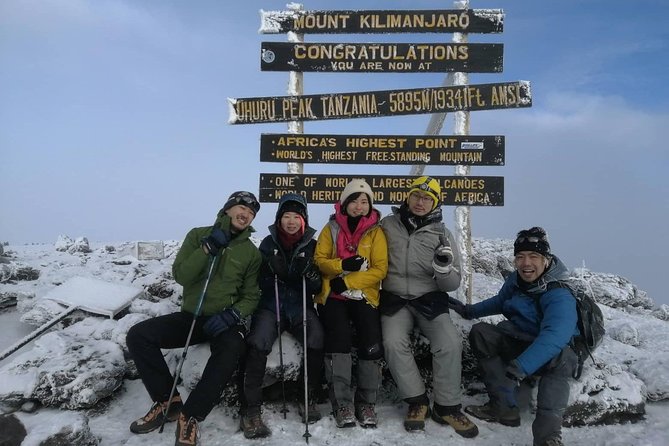
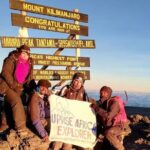
Then comes the part many people remember most: after Gillman’s Point, you’ll likely walk through snow for about two hours, before reaching Uhuru Peak. This isn’t a “light hike.” It’s a commitment.
Two helpful notes for value and safety:
- The climb includes an oxygen tank for emergencies, which is a comfort to know as you climb into the highest elevations.
- Even with support, the success factor is pacing. If you rush, you pay for it in breathlessness and energy loss.
Day 5 Down to Marangu Gate: Certificates and That Hot Shower
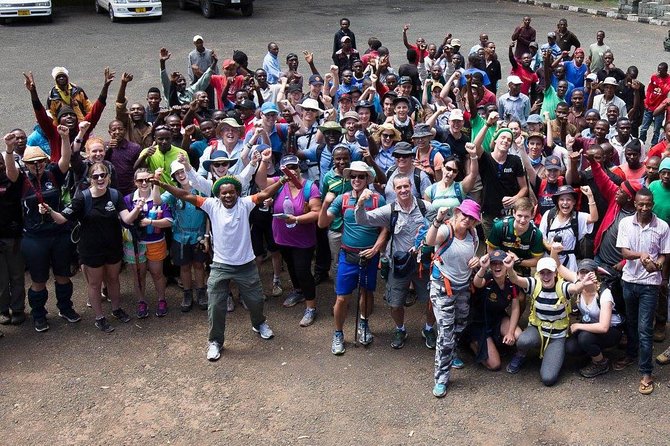
After your summit effort (or turnaround at a key point), Day 5 is a long descent. You’ll hike about 6 hours and cover roughly 27 km, dropping –1740 m through moorland and rain forest.
You’ll pass Mandara Hut on the way down, then continue to Marangu Gate. At the gate, you sign in the register and receive your summit certificate:
- Green certificate if you reached Gillman’s Point
- Gold certificate if you made it to Uhuru Peak
Then you transfer by road back to your hotel. You’ll have earned the basics: a long hot shower, a drink if that’s your thing, and a bed that feels like it was built by someone who understands recovery.
If you’re planning for the day after, keep it simple. Your legs will be tired. Your lungs will be tired. That’s normal.
What You Pay For: Guides, Porters, Meals, Fees, and Oxygen
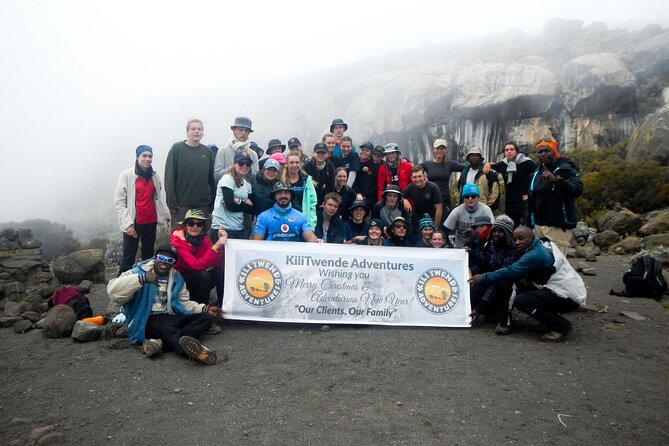
At $1,846.16 per person for this 5-day Marangu climb, the value isn’t just the mountain access. It’s the fact that a lot of the “make-or-break logistics” are included.
Here’s what’s covered:
- Hotel accommodation: one night before and one night after (B/B)
- Expert guides, cook, assistant guides, and porters
- Park entry fees, hut fees, forest fees, and rescue fees, plus 18% VAT on tour fees and services
- Oxygen tank in case of emergency
- Three meals a day during the climb, plus the schedule of dinners and breakfasts while you’re in the included hotel nights
- Transfers to and from the mountain gates
- Bottled water on Day 1 that’s boiled and filtered on the mountain
I like that the package also states fair wages for crew approved by park authorities and associations. Paying for a well-supported team is part of responsible trekking, and it often shows in how smoothly the camp feels.
Even if you don’t think about these details while you’re hiking, you feel the difference later: fewer gaps, fewer surprises, less scrambling for basics.
Budget Reality: Gear Rentals, Tips, and Moshi Costs
This climb includes a lot, but not all of your comfort items. If you don’t have your own gear, you might rent missing equipment in Moshi. The listed rentals include:
- Sleeping bag: $40
- Duffle bag: $35
- Hiking boots: $40
- Walking sticks: $10
- And more items listed as possible rentals
Also remember: tips for porters, guides, and cook are not included. That’s not a “tiny detail.” It’s part of the real budget, especially on a crew-supported trek like this one.
Hotel meals and drinks in Moshi outside the included B/B aren’t covered either. So plan for a few extra costs around your arrival and departure days, not just the mountain days.
Fitness and Acclimatization: When the Optional Extra Day Helps
The trek calls for moderate physical fitness, which is a good fit if you’ve done some hiking before and you can handle uphill days. Still, Kilimanjaro isn’t just about fitness. It’s about acclimatization and pacing.
This package is built as a 5-day climb with an option to add an extra day (a 6-day plan) specifically to improve acclimatization. If you’re the type who tends to get altitude headaches or feels wiped on steep days, that extra time can be the difference between steady progress and a stressed body.
The clearest hard signals show up on Day 3 and Day 4:
- Day 3 climbs in alpine desert with thinning oxygen
- Day 4 includes the midnight start and the long, steep push to very high elevations, including snow conditions for part of the ascent
Train for the hills, sure. But also plan for the mind game. Slow, steady effort beats fast desperation at altitude.
Should You Book This 5-Day (Marangu) Climb with Kilitwende?
If you want Kilimanjaro with a smoother on-the-ground routine, this is a smart option. The Marangu huts reduce tent logistics, the crew support is built in, and you get the structure of transfers, meals, and included park fees. You also have a safety-minded inclusion: oxygen for emergencies.
I’d book it if:
- you value comfort and organization over rugged self-sufficiency
- you want shared hut sleeping rather than tent camping
- you can handle a tough summit day and a long descent
I’d think twice (or go for the extra day) if:
- you want extra breathing room for acclimatization
- you’re sensitive to cold starts and long steep pushes
If your goal is the summit, aim for the climb mindset: take it slow, drink enough, and keep your layers ready. Kilimanjaro rewards patience.
FAQ
How long is the Kilimanjaro Marangu route trek?
It’s listed as 5 days (approx.), and the schedule runs through Day 5 when you descend back to Marangu Gate. There’s also an option to add an extra day for acclimatization.
What route is this climb using?
This trek follows the Marangu Route, which includes shared hut accommodations rather than tents.
Where does the tour start and what time does it begin?
The meeting start time is 8:30 am. After a briefing, you’ll be transferred to Marangu Gate for registration.
Are park fees and hut fees included?
Yes. Park entry fees, Marangu hut fees, forest fees, and rescue fees (with 18% VAT on tour fees and services) are included.
Are meals included during the climb?
Yes. You’ll get three meals a day during the climb. The package also includes specific breakfasts and dinners connected to the included hotel nights.
Do you get an oxygen tank on this trek?
Yes. An oxygen tank is included in case of emergency.
Is hotel accommodation included?
Yes. Hotel accommodation is included for one night before and one night after the trek, with B/B included.
Do I need my own sleeping bag and hiking boots?
You’ll likely need to provide your own gear or rent it in Moshi. Sleeping bag, duffduel bag, hiking boots, and walking sticks are listed as rental options with set prices.
What summit certificate do you receive?
You receive a summit certificate based on your highest point: a green certificate for Gillman’s Point, and a gold certificate for Uhuru Peak.
Is there free cancellation?
Yes, you can cancel for a full refund up to 24 hours in advance of the experience start time. If you cancel less than 24 hours before, the amount paid is not refunded.