REVIEW · MOSHI
Mt Kilimanjaro 360° Trek with Once-in-a-Lifetime Crater Camping
Book on Viator →Operated by PINNACLE ADVENTURES & SAFARIS LTD. · Bookable on Viator
A calm route, a big payoff, and real altitude work. This Mt Kilimanjaro 360° Northern Circuit packs you through rain forest, high plateaus, and lunar-looking desert on the quieter northern slopes, with the big headline being a night of crater camping beneath the glaciers. I like that the plan leans into smart pacing and acclimatization, and I also like the day-to-day support built around qualified guides, porters, and organized camp life (not just “good luck”). One consideration: you’ll be in cold, exposed zones and you do need solid fitness, because even though it’s rated medium, the summit night is a serious push.
Here’s what else makes this trek feel special. I like the way the itinerary builds gradually from lush trails into icy high terrain, then gives you a dedicated acclimatization day so you’re not just grinding uphill day after day. I also like the small but practical details that matter on Kilimanjaro—hot water for wash daily, camp mattresses set up for you, and even emergency oxygen for use in true emergencies. The main drawback is straightforward: the cost is high, so you’ll want to be sure you’re ready to commit to 9–10 days on foot, plus whatever you’ll need to rent or buy (especially your personal gear and medicines).
Key thing to know up front: this is run as a private trek for your group, starting in Moshi and ending back at the meeting point. In the past, guests have praised the professionalism and attentiveness of the Pinnacle team, and have specifically named staff like Gloria, plus guides such as JT and Jobeth, along with Jacob and Kennedy. That’s a nice signal that your guide team isn’t an afterthought.
In This Review
- Key points before you go
- Moshi start: permits, rain forest miles, and first-day mud
- Day 1 to Mti Mkubwa Camp: the slippery warm-up that pays off
- Shira Plateau: Day 2 and Day 3 camps, big views, and real cold
- The acclimatization day: ridges, Lava Tower, and getting set for Barranco
- Northern slopes to Buffalo Camp and Rongai-side caves: your altitude balance shifts
- Summit night and crater camping: the hardest hours, the best reward
- Morning in the crater and descent to Millennium and Mweka Gate
- Price and what $4,211.27 really covers (and what to budget for)
- Who this Kilimanjaro 360° trek fits best
- Should you book this crater-camping Kilimanjaro trek?
- FAQ
- How many days is the Mt Kilimanjaro 360° trek?
- What difficulty level is it?
- Where does the trek start and end?
- Is airport transfer included?
- Do I get a hotel after the climb?
- Is emergency oxygen provided?
- What camping and washing setup is included?
- What are the main highlights during the trek?
- What personal gear should I plan for?
- What is the cancellation window for a full refund?
Key points before you go
- Northern Circuit, low traffic: more of the mountain and fewer crowds on key sections
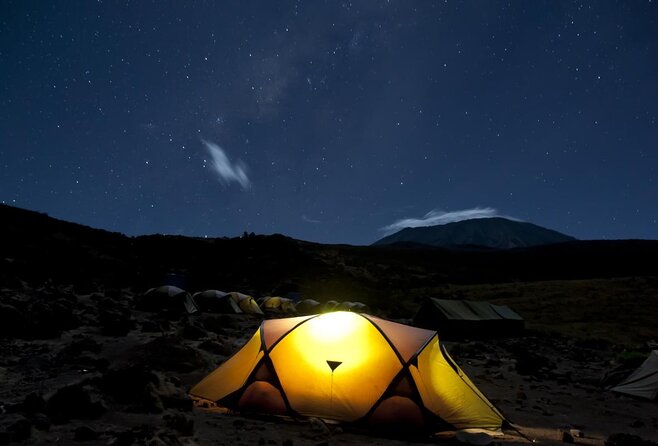
- Crater Camp night under the glaciers: the signature once-in-a-lifetime moment
- Acclimatization built in: a key ridge day helps you adjust before the summit push
- Cold and exposed nights happen: Shira Plateau and higher areas can go below zero
- Camp comfort basics included: tents, camp chairs/tables, sleeping mattresses, and hot water daily
- Real logistics support: pickup/return transfers from Moshi and emergency oxygen for emergencies
Moshi start: permits, rain forest miles, and first-day mud
Your trek begins in Moshi, and you’ll drive about 45 minutes to Kilimanjaro National Park. There’s usually a wait while permits are issued, and that pause is part of the rhythm here—one more reminder that Kilimanjaro is managed tightly, with real operations going on around you. This matters because it sets expectations: you’re stepping into a structured expedition, not a casual hike.
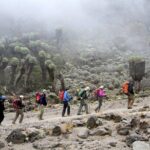
Then you’re off into the rain forest on a lower-elevation day that’s beautiful and also slippery. Lower trails can be muddy, and that first stretch can feel more annoying than hard. The payoff is that your guide gets you oriented with local flora and fauna explanations while you move at a steady pace through the greenery.
Practical tip: bring or rent trekking poles and gaiters for that muddy start. They save your shoes and your patience. Also, if you’re prone to blisters, this is where you want your sock system dialed in early.
You can also read our reviews of more tours and experiences in Moshi.
Day 1 to Mti Mkubwa Camp: the slippery warm-up that pays off
On the first day, you climb from about 2389m/7838ft up to around 2785m/9137ft. That altitude gain is enough to get your legs working, but it’s not meant to smash you. The real mission is learning how your body responds as you leave Moshi’s easier breathing and start climbing in the rain-forest environment.
What I like about this design is that it gives you time to settle: you’re not thrown into high altitude right away. You also get the kind of scenery people remember—dense forest, wet trail, and the feeling that you’re walking through a living ecosystem.
What to watch: that day can be “miles of traction,” not miles of drama. If you try to power up, you’ll be fighting the ground instead of your altitude. Slow down, keep your steps short, and let your guide set a steady tempo.
Shira Plateau: Day 2 and Day 3 camps, big views, and real cold
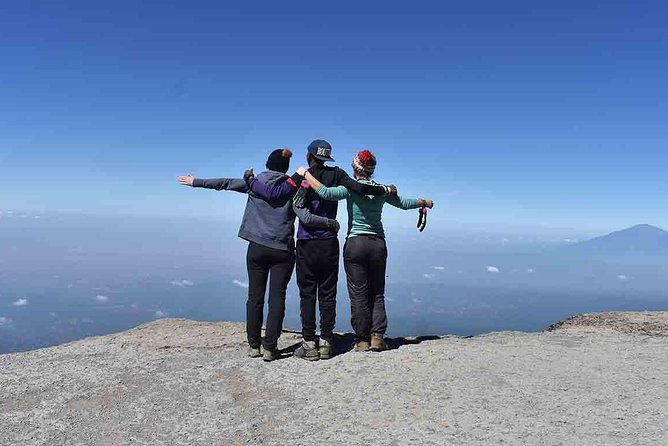
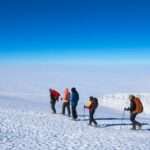
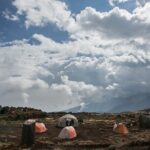
After sleeping at Shira Camp One (around 2785m/9137ft to roughly 3504m/11,496ft), you’ll emerge from the rain forest and climb toward the Shira Plateau. This is where your trek starts switching gears—temperature drops, views open up, and the trail feels less “green tunnel” and more wide sky.
Day 3 takes you from Shira Camp One area up toward Shira Camp Two (around 3504m/11,496ft to about 3895m/12,779ft). This is a plateau crossing through one of the highest high-altitude plateaus on Earth. The plan even builds in a little extra: at Shira II Camp, it’s worth using some energy to go higher on the plateau for a dramatic look across the valley, including the Western Breach area.
This is also where “medium difficulty” stops meaning easy. The plateau is exposed. Expect colder conditions, and temperatures can fall below zero overnight. That’s not a maybe. Plan your clothing strategy as if you’ll wake up in winter gear.
My advice: treat your camp clothing like equipment, not comfort. Bring layers you trust, keep your thermal items accessible, and protect water bottles from freezing where possible. Cold changes how you move and how hungry you feel.
The acclimatization day: ridges, Lava Tower, and getting set for Barranco
A key day in the middle keeps your summit chances realistic. From Shira area around 3895m up to about 3986m/13,077ft (not a huge net gain), you’ll traverse east along a ridge and pass key junctions on the Kibo side. This is where you’ll encounter the Lava Tower nicknamed the Shark’s Tooth at about 4650m/15,250ft, plus the Arrow Glacier direction via another junction.
Even though you end the day closer to where you started, this kind of “move up, come down” acclimatization matters. You’re giving your body altitude signals without exhausting yourself. Then you descend to camp at Barranco Camp.
Why I like this: it turns acclimatization into work you can understand, not a vague instruction to “take it easy.” You’re doing altitude training with a purpose.
Drawback consideration: those ridge and rocky segments can feel mentally tiring even if you’re not gaining much elevation. Focus on steady pacing and don’t chase speed.
Northern slopes to Buffalo Camp and Rongai-side caves: your altitude balance shifts
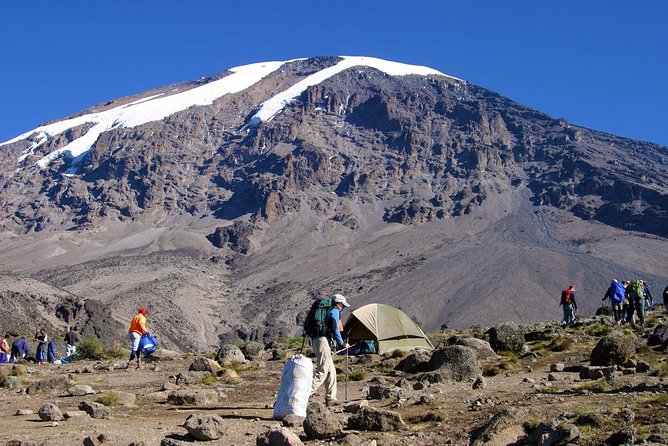
From around 4155m/13,632ft down toward Buffalo Camp at about 4033m/13,232ft, the trek follows inclines and declines around Kibo’s northern slopes. You’ll have outstanding north-facing views out toward the plains stretching toward the Kenyan/Tanzanian border. That kind of scenery is a strong motivator on days when your legs feel the altitude.
If you’re feeling good, there’s an optional detour to Little Lent Hill at about 4375m/14,353ft before rejoining the circuit. It’s a nice “bonus effort” for people who like stepping a bit further without turning the day into a suffering contest.
Then on Day 6, you head toward Pofu Camp and the Rongai Third Cave area. The trek starts with climbing up Buffalo Ridge, then you descend into Pofu Camp for lunch. Because this day is shorter than the day before, it’s a chance to feel the system working—you should be more acclimatized by now.
What you should notice: your body often feels better on this kind of shorter day, but that doesn’t mean you can relax your hydration and snack rhythm. You’ll want fuel ready because the summit day is coming.
Summit night and crater camping: the hardest hours, the best reward
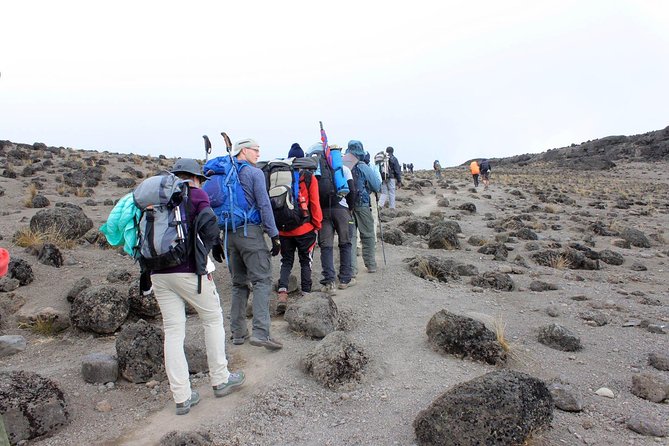
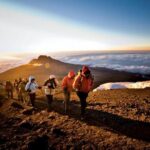
Day 7 is the true gear-and-headlamp day. You climb steadily up to around 4717m/15,476ft and over the saddle between Kibo and Mawenzi. After that, you continue to School Hut where you’ll have an early dinner, then rest because you’ll begin your summit attempt just before midnight.
This is where preparation becomes survival skills. Get your warm clothes ready. Use insulated water bottles. Keep snacks organized. Have your headlamp sorted. And yes—camera-ready, because even in the dark your experience is going to feel cinematic. When you’re about to climb the roof of Africa, your gear should be boring and functional.
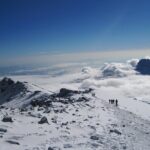
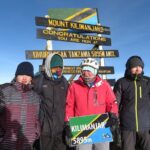
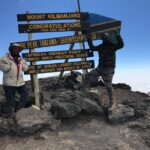
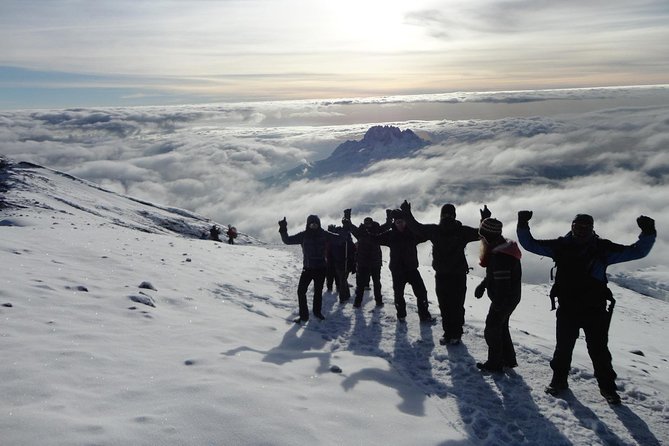
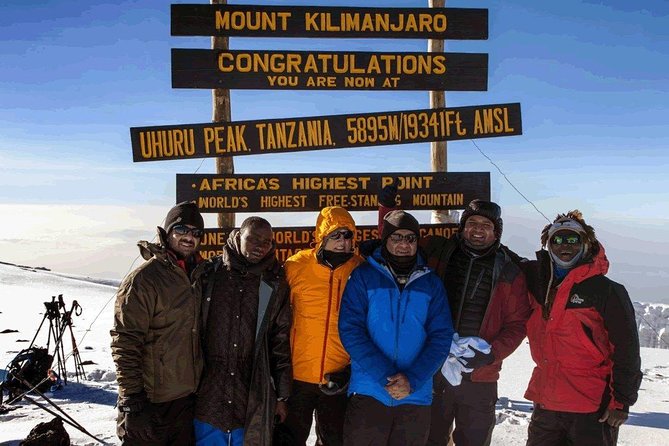
Day 8 is Uhuru Peak at 5895m/19,341ft. You’ll start the ascent just before dawn, summit, then descend into Kilimanjaro’s Crater for an overnight at Crater Camp beneath the glaciers.
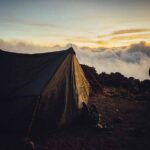
This is the part that makes this trek different from the standard “summit and go home” formula. Sleeping in the crater is a strange mix of awe and vulnerability. You’re high, cold, and close to something huge and icy. The night is memorable because it feels like you’re inside the mountain’s story, not just climbing to the top.
Practical note: crater camping isn’t a warm-and-cozy victory lap. Dress for cold nights and keep your layers consistent. If you’re missing warmth, you’ll feel it fast.
Morning in the crater and descent to Millennium and Mweka Gate
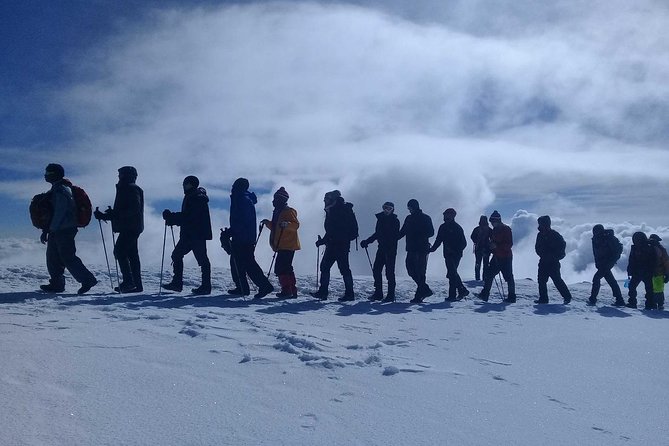
Day 9 starts with exploring the Ash Pit area in the crater, then you descend to Millennium Camp. This is a “recover and reset” day after summit efforts. You’ve earned the chance to slow down mentally, eat well, and let your legs unclench.
Day 10 continues downhill through lush rainforest to Mweka Gate. The certificate of achievement is part of the payoff, but the bigger win is the transition from alpine cold into green forest air. Your senses come back online. This final day often feels longer because your body is finally paying attention again.
If you’re the kind of person who wants to finish strong: take it carefully on the descent. Knee strain is common on Kilimanjaro. Trekking poles help here too.
Price and what $4,211.27 really covers (and what to budget for)
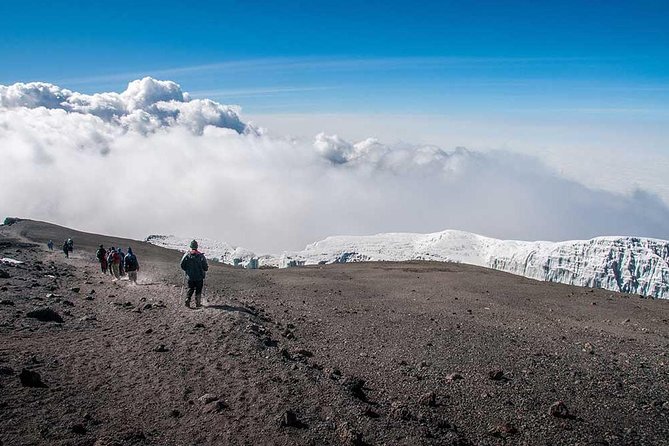
At $4,211.27 per person, this is not a bargain trek. The value is in what’s included and what the route tries to deliver.
Here’s what you’re paying for in plain terms:
- All fees and taxes included
- Return transfers between the Kilimanjaro airport and Moshi, plus back to the airport
- A hotel night after the climb (with breakfast), so you’re not immediately sleeping on a mountain schedule
- Emergency oxygen for emergencies only, plus a basic first aid kit
- A full support team: qualified mountain guide, assistant guides, porters, and cook with wages meeting KINAPA standards
- Camping setup: tents, camp chairs/tables, and sleeping mattresses
- Daily logistics: fresh drinking water and hot water for washing
- Meals (breakfast, lunch, dinner) across the trek, with the summit and recovery days covered by the camp rhythm
What you’ll still need to budget for:
- Visas and flights
- Travel and health insurance
- Personal hiking gear (usually rented in Moshi)
- Meds and water purification tablets
- Optional but highly recommended portable toilet
- Personal snacks and any meals not specified
The price also makes sense if you care about the kind of trek that stays organized. You’re not carrying camp gear. You’re not negotiating camp logistics nightly. You’re spending energy on acclimatization and moving safely.
If you’re a budget-only traveler, you may feel sticker shock. If you want a guided, camp-supported climb with crater camping as a core feature, this can look like a fair deal for what you get.
Who this Kilimanjaro 360° trek fits best
This is best for:
- You want the Northern Circuit feel—more varied terrain, less crowd energy, and better chances to experience the mountain quietly
- You’re willing to put real effort into the summit night and want a structured acclimatization plan
- You like comfort upgrades that don’t ruin the adventure—hot water for wash, mattresses, and camp support matter at altitude
- You want a private group experience, not a crowded assembly-line hike
It may be a tougher fit if:
- You’re not ready for cold exposure (including nights that can drop below zero on the plateau sections)
- You have trouble with long hiking days and early-morning schedules during the summit push
- You’re hoping for guaranteed “easy” steps—Kilimanjaro always asks for effort, even on gentler routes
Should you book this crater-camping Kilimanjaro trek?
If your dream includes a night at Crater Camp under glacier terrain, and you want a route that prioritizes acclimatization and lower-traffic scenery, I’d say this is a strong choice.
Book it if you:
- Can handle a medium-difficulty trek with a serious summit night
- Plan ahead for cold clothing and the wet-mud reality on day one
- Want camp comfort basics covered by the operator
Skip it (or at least ask more questions) if:
- You’re very uncertain about your fitness for high-altitude exertion
- You dislike cold nights and exposed, sub-zero conditions
- You’d rather spend less and do a more bare-bones version of Kilimanjaro
FAQ
How many days is the Mt Kilimanjaro 360° trek?
The experience is listed as about 10 days. The northern circuit plan is also described as a 9-day trek, with an included hotel night after the climb and a final descent day.
What difficulty level is it?
It’s rated medium difficulty, with the summit day being the most demanding part of the schedule.
Where does the trek start and end?
It starts in Moshi (meeting point: Moshi Urban, Tanzania) and ends back at the same meeting point after the descent through Mweka Gate and the drive back to Moshi.
Is airport transfer included?
Yes. Return transfers are included between Kilimanjaro airport and Moshi, and Moshi back to Kilimanjaro airport.
Do I get a hotel after the climb?
Yes. There is a hotel night after the climb with breakfast included.
Is emergency oxygen provided?
Yes. Emergency oxygen is included for use in emergencies only, not as summit aid, along with a basic first aid kit.
What camping and washing setup is included?
Camping equipment is included (tents, camp chairs/tables, and sleeping mattresses). Fresh water for drinking and hot water for a wash are provided daily.
What are the main highlights during the trek?
The big highlight is reaching Uhuru Peak, then descending into Kilimanjaro’s Crater for a night at Crater Camp beneath the glaciers. There’s also a morning visit to the Ash Pit in the crater.
What personal gear should I plan for?
Personal hiking/trekking gear is not included, and you’ll likely rent it in Moshi. The trek also recommends items like gaiters and trekking poles, plus personal medications and water purifying tablets.
What is the cancellation window for a full refund?
You can cancel up to 3 days in advance of the experience start time for a full refund. If you cancel less than 3 full days before, the amount paid is not refunded.