REVIEW · MOSHI
6 Days Machame Route Kilimanjaro Climbing Trekking Tour
Book on Viator →Operated by Macpace Tours and Safaris · Bookable on Viator
Kilimanjaro hits you in the lungs and the heart. This 6-day Machame Route trek is a well-paced climb that mixes rainforest walking, high-altitude ridges, and a serious summit night.
I like that it’s camping with real comfort for the trail: waterproof sleeping tents, mattresses, mess tents, and purified drinking water. I also like the heavy-lifting support included in the price, from guides and porters to conservation and rescue-related fees.
One drawback to think about: it’s not a casual hike. Even with acclimatization built into the schedule, you still face steep sections like the Barranco Wall and a midnight summit push.
In This Review
- Key things that matter on the Machame Route
- Why the Machame Route works so well for most climbers
- Getting to Moshi and the start line at Machame Gate
- Day 1: Machame Gate to Machame Camp (5 to 7 hours of ascent)
- Day 2: Rainforest to moorland, Machame Camp to Shira Cave Camp
- Day 3: Lava Tower climb, then down to Barranco Camp (tough day)
- Day 4: Barranco Wall to Karanga Camp, then Barafu Camp for summit prep
- Day 5: Heavy scree to Stella Point, Uhuru Peak sunrise, then down to Millenium Camp
- Day 6: Rainforest descent from Mweka Camp to Mweka Gate, then Moshi
- What’s included in the price, and why that can be good value
- What’s not included, and what you should plan to bring
- The human side: guides, crews, and the feel of support
- Who this trek fits best (and who should think twice)
- Should you book this 6-day Machame trek with Macpace Tours and Safaris?
- FAQ
- How long is the Kilimanjaro Machame trek?
- Where does the climb start and where do you return?
- What does the $1,950 per person price include?
- What is not included in the tour price?
- What is the meeting point?
- Is this tour private?
- What is the cancellation rule?
Key things that matter on the Machame Route
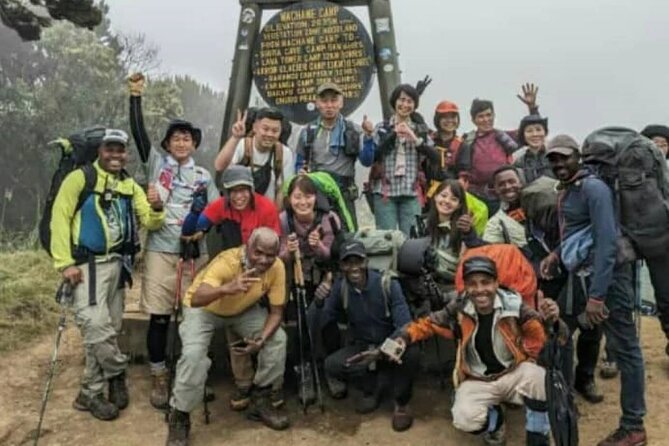
- Acclimatization that actually shows up on your feet with the Lava Tower climb and a proper descent to Barranco Camp.
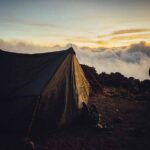
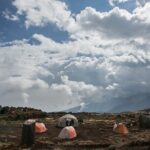
- Camping setup is more than a tent: waterproof four-season tents on twin sharing, mattresses, and table-and-chair mess tents.
- Summit night is the main event: a start around 12:00 and the plan to reach Uhuru Peak for a sunrise reward.
- Real staff support: guides named in past trips include Elipokea, Victor, Baraka, and Maneno, plus crews who set up camps on time.
- Safety gear is part of the included package with an emergency oxygen cylinder and rescue fees covered in the overall pricing.
Why the Machame Route works so well for most climbers
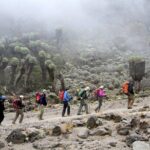
The Machame Route is one of Kilimanjaro’s classic ways up because it gives you variety without skipping the altitude lessons. Day by day, you move from forest to moorland to the barren, crater-rim world where every step feels louder than it looks.
What I like about this version is the balance between grind and recovery. You’re climbing hard, but the plan includes enough altitude stepping to help your body adjust before the real summit test. If you’re coming in with moderate fitness and a willingness to follow your guide’s pacing, Machame is often a strong choice.
You can also read our reviews of more tours and experiences in Moshi.
Getting to Moshi and the start line at Machame Gate
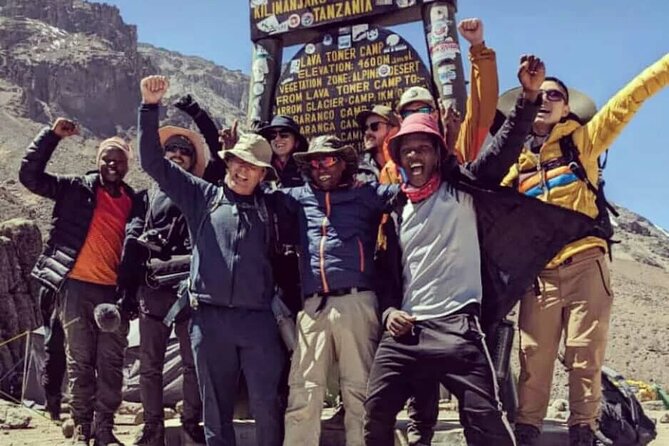
Your trip is based out of Moshi, Tanzania, and you’re handled with airport pickup and drop-off plus transfers to and from your Moshi hotel. The climb begins with a drive from Moshi to Machame Gate (about 45 minutes). From there, you’re officially in Kilimanjaro mode.
Machame Gate sits at roughly 5,381 ft / 1,640 m. That matters because you’re not spending your first day at sea level, so the trek immediately starts working on acclimatization. It also means the early forest air feels cooler and cleaner than the town.
Day 1: Machame Gate to Machame Camp (5 to 7 hours of ascent)
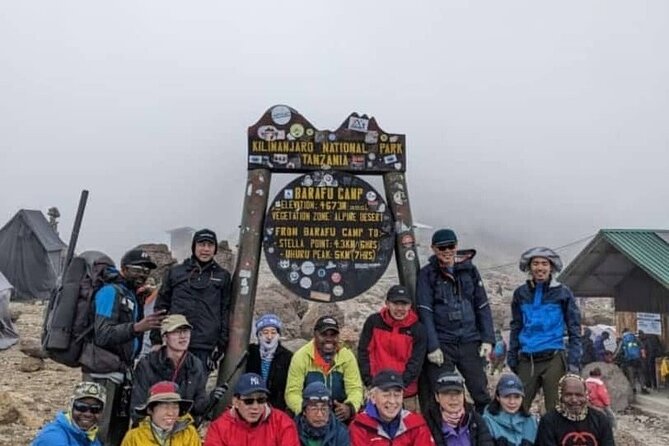
Day 1 is a steep warm-up. You drive to Machame Gate, then work your way uphill for 5–7 hours to Machame Camp (around 9,301 ft / 2,835 m). The plan notes you’ll have limited sleep time that first night, because you’re still doing a full climb day even after the transfer.
I like Day 1 because it sets your rhythm fast. Even if it feels like a lot, it’s also a controlled start: you’re building breath discipline and learning how your legs respond on incline, not on flat ground.
Practical heads-up: come in hydrated and ready for dust or mud underfoot. Your guides will steer pace, but your job is to keep moving steadily without sprinting.
Day 2: Rainforest to moorland, Machame Camp to Shira Cave Camp
This is the day you transition zones. You hike from Machame Camp (~9,301 ft) to Shira Cave Camp (~12,598 ft / 3,840 m). The walk climbs through the last stretch of rainforest and into moorland, with a rocky ridge section that can feel technical even when you’re not at extreme altitude.
The Shira area is where Kilimanjaro begins to look more open and windier. It’s also where you’ll notice the change in temperature and how quickly sweat cools once you stop moving.
The overnight at Shira Cave Camp is at altitude, so pacing still matters. I’d think of Day 2 as building comfort in “thin air.” You’re not trying to conquer anything here, just arrive and recover.
Day 3: Lava Tower climb, then down to Barranco Camp (tough day)
Day 3 is flagged as tough for a reason: you climb from Shira Cave Camp (~12,598 ft) up to about 15,223 ft at Lava Tower, then you descend to Barranco Camp (~12,959 ft) for the night. Total hiking time is listed around 5–8 hours.
That up-then-down pattern is more than a routing choice. It’s one of the ways Kilimanjaro treks try to help you acclimatize: gain altitude to “train” your body, then drop to sleep lower. Your legs may feel crushed anyway, but your body often has an easier time recovering.
Expect effort, not speed. This day is often where people realize they need to slow down. If you’ve got a tendency to push when the views are good, this is where you need to resist.
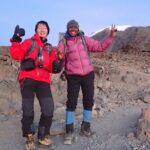
Day 4: Barranco Wall to Karanga Camp, then Barafu Camp for summit prep
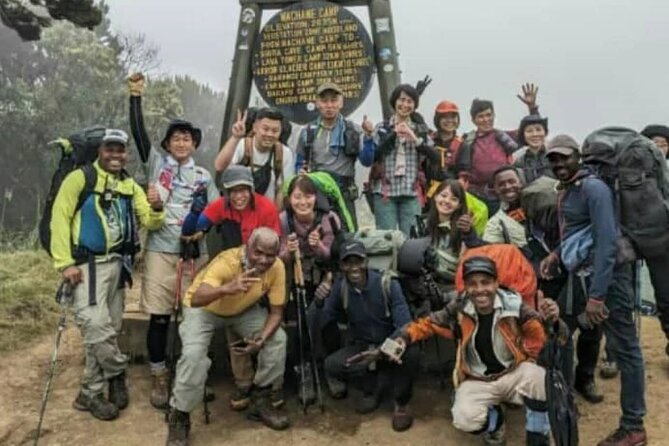
Day 4 links three key pieces of Kilimanjaro: the Barranco Wall, the ridges toward Karanga, and the pre-summit staging at Barafu.
You hike from Barranco Camp (~12,959 ft) to Karanga Camp (~13,238 ft), crossing over the Barranco wall and Karanga Valley ridges. The route includes a tough spot known as Kiss Stone Point on the Barranco Wall, and the plan notes climbers handle it with professional guides. After Karanga, you continue to Barafu Camp (~15,354 ft / 4,679 m), crossing terrain that connects with the Mweka route.
Timing on Day 4 is described as 3–4 hours to reach Barafu Camp, then you spend the rest of the day resting. The summit attempt preparation begins at midnight (around 12:00), with an early dinner first.
This is the day where logistics and morale matter. Your job is to eat early, keep warm, and let your guide manage the plan for the night. The summit part of Kilimanjaro isn’t just climbing; it’s also decision-making under cold, fatigue, and changing conditions.
Day 5: Heavy scree to Stella Point, Uhuru Peak sunrise, then down to Millenium Camp
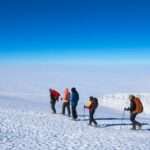
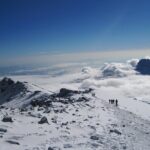
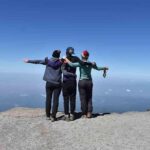
Day 5 is the big one. You start from Barafu Camp (~15,354 ft) around 12:00, head northwest, and ascend through heavy scree toward the crater rim at Stella Point. You get about a 15-minute break there before continuing to Uhuru Peak, the summit point at 5,895 m / 19,341 ft.
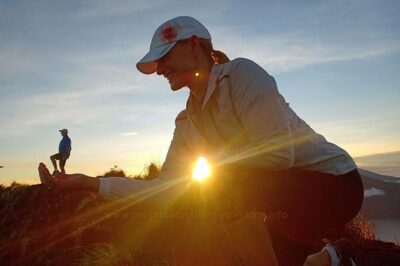
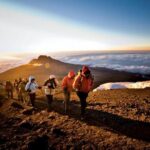
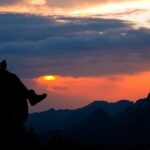
If you’re lucky with conditions, the prize is sunrise from the top. After reaching Uhuru Peak, you descend back toward Barafu and rest for about 2 hours, taking lunch and then continuing to Millenium Camp for the last dinner and overnight.
What I like about this layout is that it doesn’t pretend summit day is only “one climb.” You’re also recovering, refueling, and resetting for the final descent. That matters because your body still needs to be smart after the summit victory.
Also, be ready for cold. Even when sunrise happens, you’re still at serious elevation, and your body needs you to manage warmth carefully.
Day 6: Rainforest descent from Mweka Camp to Mweka Gate, then Moshi
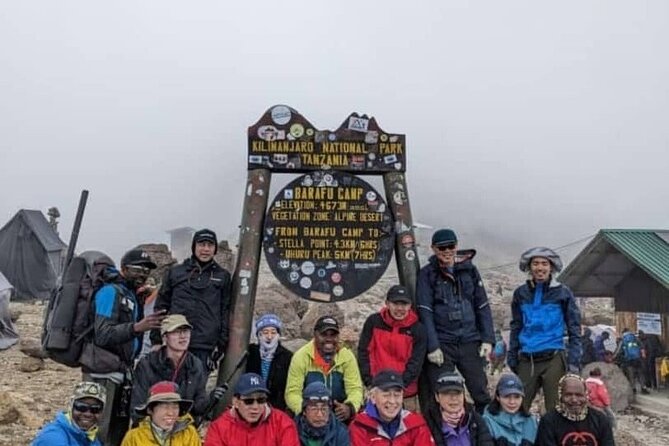
Your final day begins at Millenium Camp and drops to Mweka Camp (~10,104 ft / 3,079 m) before you descend further through the rainforest zone to Mweka Gate (~5,380 ft / 1,640 m). Total walking time is about 3–4 hours.
This is the day where Kilimanjaro turns from high-altitude battle back into gravity and rhythm. The air feels different as you move down into the rainforest zone, and your mind often feels a bit freer because you’re no longer chasing the summit timeline.
At Mweka Gate, you receive your Kilimanjaro summit certificate, then you’re driven back to Moshi for an overnight stay.
What’s included in the price, and why that can be good value
This tour costs $1,950 per person for the 6-day trek. Price sounds big until you look at what’s included, because Kilimanjaro isn’t just your walking day. It’s park fees, staffing, camps, food, water logistics, and safety planning.
Included items worth paying attention to:
- Transfers between Moshi and the mountain and back, plus airport pickup/drop-off
- Professional guides, porters, and cook salaries
- Waterproof four-season mountain sleeping tents (twin sharing), plus mattress
- Emergency oxygen cylinder
- Quality mess tents with table and chairs
- Large portions of fresh, healthy meals (6 breakfasts, 6 lunches, 6 dinners)
- Clean, purified drinking water
- Conservation fees plus camping/hut fees and rescue fees (all treated as part of park fees)
- VAT (18%) and your summit certificate
- Mentions of hotels for the trip
That’s a lot of the “hidden costs” people forget to price when they compare operators. You’re also not left scrambling for the essentials like cooking infrastructure or purified water.
What’s not included, and what you should plan to bring
You’ll need to budget separately for:
- Tanzania visa
- International and domestic flights
- Travel insurance
- Tips/gratuities
- Personal trekking equipment like sleeping bags, hiking boots, and clothing (available for renting, but not included by default)
Given the summit night is brutally cold for many people, I’d treat gear planning as a make-or-break step. If you’re unsure what warmth level you need, ask the operator before you arrive so your rental (if you use it) actually matches the mountain conditions.
The human side: guides, crews, and the feel of support
Your experience isn’t only the route. It’s how you’re cared for while your body is tired.
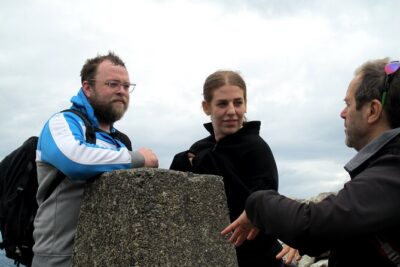
In the feedback, specific staff names come up: guides like Elipokea, Victor, Baraka, and Maneno. People also note quick communication from Egbert and practical help from Walter with luggage. One trip notes guides who were first aid qualified, which you should appreciate because altitude emergencies don’t wait for a calm day.
The practical win is camp setup and pacing support. If your crew is on time and your guide keeps you moving at a safe effort level, the trek feels less like a fight and more like a challenge you can manage.
Who this trek fits best (and who should think twice)
This Machame plan fits best if you:
- Can handle a moderate physical fitness level and long hiking hours
- Want camping rather than a more basic setup
- Prefer a classic route with acclimatization built into the altitude pattern
- Are okay with cold nights and a serious summit night schedule
You might think twice if you’re looking for a short, lightweight hike or if you’ve never trained for steep days. The route includes long uphill segments and challenging terrain like the Barranco Wall section at Kiss Stone Point, plus scree on summit day.
Should you book this 6-day Machame trek with Macpace Tours and Safaris?
If your goal is a well-supported Kilimanjaro climb with camping logistics handled and key safety pieces included, this is an easy choice to consider. The price is high enough that you should compare carefully, but the included package covers many costs that add up fast on their own: park-related fees, tents and mattresses, purified water, emergency oxygen, and full meal support.
Before you pay, do two things:
- Check your personal gear plan so your sleeping bag and boots fit your comfort needs for summit-night cold.
- Be honest about your pace tolerance. If you can handle slow, steady climbing and follow guidance, you’ll likely enjoy Machame’s mix of forest, ridges, and summit sunrise.
If that sounds like your kind of challenge, booking is a solid move. Kilimanjaro is demanding, but with the right support, it’s also deeply memorable in a way that feels earned.
FAQ
How long is the Kilimanjaro Machame trek?
The tour runs about 6 days.
Where does the climb start and where do you return?
It starts from Moshi, Tanzania, with the drive to Machame Gate, and ends back at Mweka Gate with a drive back to Moshi.
What does the $1,950 per person price include?
Included items include mountain transfers and back to your Moshi hotel, airport pickup/drop-off, guides, porters, and cooks, waterproof tents and mattresses, sleeping tents for twin sharing, emergency oxygen cylinder, quality mess tents, meals (6 breakfasts, 6 lunches, 6 dinners), clean purified drinking water, conservation fees and rescue fees, VAT, and your summit certificate.
What is not included in the tour price?
Not included are the Tanzania visa, international and domestic flights, personal trekking equipment (sleeping bags, hiking boots, clothes, etc), tips/gratuities, and travel insurance.
What is the meeting point?
The start meeting point is Macpace Tours & Safaris Ltd at LONGUO A, 25010, Tanzania.
Is this tour private?
Yes. It’s listed as a private tour/activity, meaning only your group participates.
What is the cancellation rule?
You can cancel for a full refund up to 24 hours before the experience’s start time. Canceling within 24 hours doesn’t receive a refund.