REVIEW · MOSHI
Kilimanjaro Trekking 7Days 6Night Lemosho Route
Book on Viator →Operated by Uprise Africa Explorer · Bookable on Viator
Seven days to Kilimanjaro’s top, with room to breathe. This Lemosho route from the Londorossi Park Gate walks you through forest wildlife, heather moorland, and glacier scenery, with fewer people on the trail. The small-group setup (up to 10 travelers) also means you’re not just a number in the dark.
I love that all park fees, taxes, and camping equipment are handled, so the budget stays predictable from day one. I also like the steady pacing moments built into the plan, including long hiking days when you need them and shorter stretches later, like the Barranco/ Karanga-style segments.
One consideration: Lemosho is described as more scenic but tougher than the Mangaru route, and your hiking days can be long—like 7 to 8 hours on Day 2, plus significant time above 4,000 meters.
In This Review
- Key things that make this Kilimanjaro trip tick
- Lemosho Route in 6 Nights: Scenic, Higher, and Built for Your Legs
- Day 1 from Londorossi Park Gate: Forest Wildlife and a Ranger-Led Start
- Day 2 Shira Ridge Hike: Heather Moorland, Streams, and Possible Uhuru Peak
- Barranco Wall to Karanga Valley: The Mid-Trek Test That Feels Like Work
- Barafu Camp and the South Circuit Views: Why You’ll Remember the Air Up There
- Day 7 Descent to Mweka Gate: Summit Certificates and the Drive Back to Your Hotel
- What You Really Get for $3,000: Fees, Camping, Meals, and a Small-Group Team
- Your Guides and Small-Group Advantage (Kissima, Sanga, Fransis, Peter)
- Weather, Pace, and the One Thing to Plan for: Altitude
- Who This Lemosho Trek Best Suits
- Should You Book This 7-Day Lemosho Kilimanjaro Trek?
- FAQ
- How long is the Kilimanjaro Lemosho trek?
- What route does this trek use?
- Where does the trek start, and what time does it begin?
- What is the maximum group size?
- What’s included in the price?
- What meals are included?
- Is pickup offered?
- Do I need a Tanzania visa?
- What if weather is bad?
Key things that make this Kilimanjaro trip tick
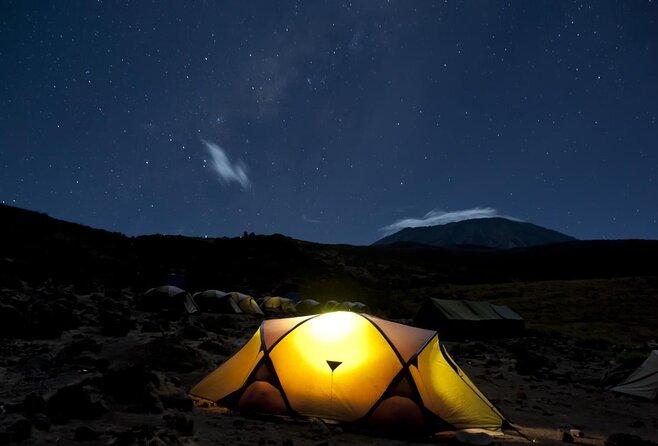
- Lemosho scenery in phases: forest tracks, heather moorland, then higher ridges with big mountain views
- Smaller group (max 10) for more attention from your guide and a calmer trekking rhythm
- All-in logistics: fees, taxes, camping gear, and a full meal plan are included
- Ranger-led start with wildlife passing through the forest zone with buffalo and elephant in the area
- Altitude variety built into the route: camps at 2,650 m, 3,850 m, 4,250 m (Barranco Wall climb), and the descent from 3,090 m on Day 7
- Summit proof at Mweka Gate: you receive your summit certificates and are then taken back to your hotel
Lemosho Route in 6 Nights: Scenic, Higher, and Built for Your Legs
If your main goal is to see Kilimanjaro as a changing environment—not just a straight line up—you’ll like Lemosho. The plan starts in the forest zone at the Londorossi Park Gate, then transitions into the giant heather moorland area with volcanic rock, and later you gain access to ridges where the mountain’s ice and peak views can show up when the clouds behave.
Lemosho is often seen as the “more views” route, and the description here backs that up: fewer people, more scenery, and a trek that’s challenging because you’re spending time in higher terrain rather than rushing through. That’s the tradeoff. You get more time to work with altitude, but you also commit to longer days—especially early on.
You’ll be hiking with enough time on the trail to feel your rhythm, not just your discomfort. Day 1 is listed as a shorter start (about 2–3 hours), while Day 2 is your first major push (about 7–8 hours). By the middle, the plan includes a mix of climbing and hiking through valleys and junction areas that connect you toward the Mweka Trail system later on.
You can also read our reviews of more tours and experiences in Moshi.
Day 1 from Londorossi Park Gate: Forest Wildlife and a Ranger-Led Start
Day 1 has a classic Kilimanjaro feel: a drive, a briefing, and then the first real step into the wild. After a gear check with your guides, you’ll head out on a 3-hour drive to Londorossi Park Gate, where you register and begin the climb. Starting with that organized setup matters. It reduces the chaos when you’re already nervous and cold.
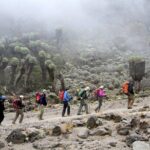
One detail I really like here is the armed Park ranger leading you on the forest track. This isn’t a casual nature walk—it’s an official trek route. And it’s not just dramatic on paper: the forest track is described as being inhabited by wildlife such as buffalo and elephant, and you may even spot them up close depending on conditions.
The day’s hiking time is listed as 2–3 hours (about 6 km / 4 miles), and you end at the first campsite, Mti Mkubwa (2,650 meters). Translation: you’re not jumping straight into the high-breathing grind. You’re easing in at the lower altitude before the route climbs into the heather zone.
Day 2 Shira Ridge Hike: Heather Moorland, Streams, and Possible Uhuru Peak
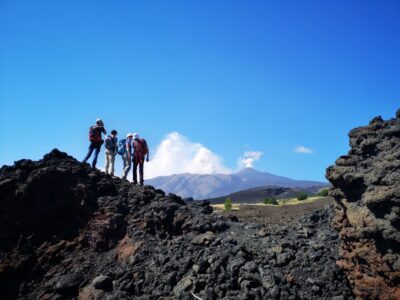
Day 2 is where Kilimanjaro starts feeling like Kilimanjaro. After breakfast, the trail gradually steepens and moves into the giant heather moorland zone, where you’ll cover a longer distance—listed as 7–8 hours and 16 km / 10 miles. You’re also crossing streams, with volcanic rock formations scattered through the landscape.
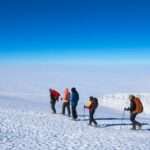
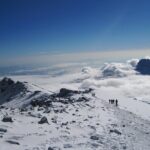
The route description mentions Shira Ridge, and it’s worth mentally bookmarking what that means: higher ridgelines often bring wider views if clouds clear. You may even be able to see Uhuru Peak from this area if it’s not cloudy. On the western side, you can also get views of the Northern Ice fields, which is exactly the kind of moment you want to chase—not sprint for.
You’ll spend the night at Shira 2 camp (3,850 meters). That altitude spike from Day 1 is real, so plan your energy carefully: slow steps, steady breathing, and no heroic “I’ll catch up fast” moments. This is the kind of day where “feeling rough” is not failure. It’s the terrain doing its job.
Barranco Wall to Karanga Valley: The Mid-Trek Test That Feels Like Work
By the next major climb segment, the plan shifts into the “yes, you’re truly going up” phase. The day described here leaves Barranco Camp behind and continues with a climb of the Barranco Wall, reaching 4,250 meters. The hike to the top of the wall is listed as taking about 1.5 hours, then you transition to more level terrain.
From there, you hike toward a steep descent into the Karanga Valley, where you’ll reach around 4,050 meters and spend the night at Karanga campsite. There’s also a useful orientation detail: you come across a junction that connects with the Mweka Trail. Even if you don’t memorize it all, knowing the route is linking into a known descent path can make the back half feel less mysterious.
This is also the segment where you may notice why Lemosho can be tougher than alternative routes. The hiking times here are shorter than Day 2—about 3–4 hours (around 5 km / 3 miles)—but the effort can feel more concentrated. Climbing a wall and managing a steep descent taxes your legs differently than long steady walking.
Barafu Camp and the South Circuit Views: Why You’ll Remember the Air Up There
The next move carries you up to Barafu Camp. You’ll spend about 3–4 hours hiking (around 4 km / 2 miles), but don’t let the distance fool you. Higher altitudes can make “short” feel steep, slow, and surprisingly draining.
Here’s one of the most motivating parts of the plan: it explicitly mentions completing the South Circuit, with views of the summit and glaciers from different angles. That’s not the kind of view you see from a single overlook. It suggests you’re getting multiple sightlines during the approach.
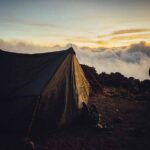
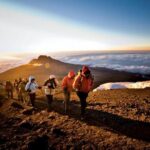
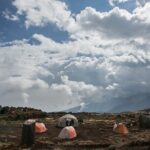
Barafu Camp is also where the route description highlights the emotional payoff: setting up camp with views of the summit and glaciers. Even with clouds and changing weather, having that moment of “we’re really here” can carry you through the final stretch.
While the data provided doesn’t list each minute of the very highest push day by day, you can still trust the structure of the plan: once you’re at Barafu and the South Circuit is complete, the schedule then leads into the summit result that shows up on Day 7 when you descend and collect certificates.
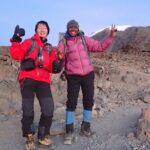
Day 7 Descent to Mweka Gate: Summit Certificates and the Drive Back to Your Hotel
Day 7 is built for relief and celebration. After breakfast at 3,090 meters, you start descending to the Mweka Park Gate. This day is listed as 3–4 hours for about 10 km / 6 miles—and yes, descending can feel harder than you expect if your quads are angry.
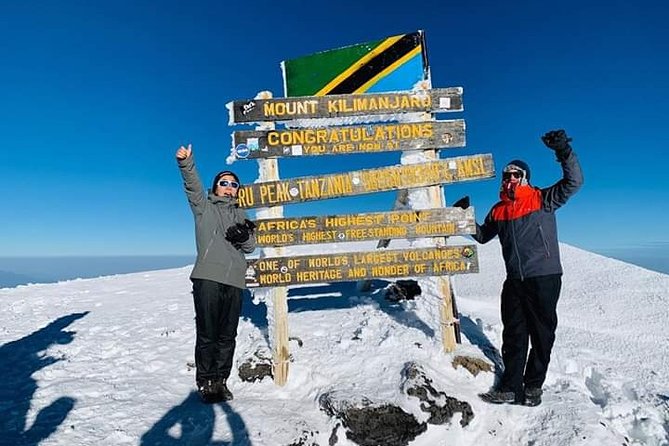
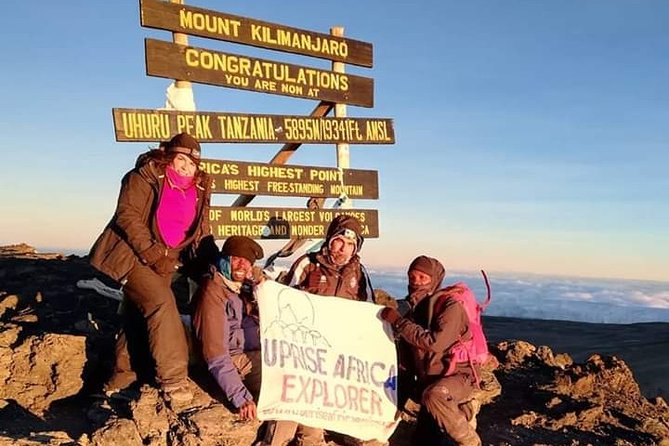
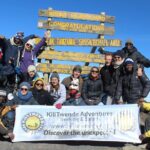
The big milestone here is the payoff: you’ll reach Mweka Park Gate to receive your summit certificates. It’s a tangible moment that matters after days of cold starts, slow breathers, and trekking poles that feel like extensions of your body.
Finally, the plan says your vehicle will be waiting at Mweka gate to drive you back to your hotel. That’s a practical detail worth caring about. You don’t want to solve transportation right after you’ve finished. You’ll want recovery, a shower, and a meal that doesn’t require planning around camp times.
What You Really Get for $3,000: Fees, Camping, Meals, and a Small-Group Team
Let’s talk value, not just numbers. This trek is listed at $3,000 per person, and the included items are what keep that price from turning into a surprise bill later. You get all fees and taxes, Kilimanjaro trekking, and meals: lunch for 7 days, breakfast for 6 days, dinner for 6 days. Camping support is also included—all camping equipment, fees, and meals are part of the experience description.
From the team side, the experience description emphasizes small-group attention, and multiple guide names show up in the shared trekking stories tied to this operator. You might work with guides such as Kissima, Sanga, Nguma, Innocent, Fransis, or Peter depending on your departure. You may also meet a camp cook mentioned by name in past experiences—Schabari is one that comes up—along with porters who are described as very helpful.
One more cost item matters: the trek includes nearly everything you’d expect for a structured climb, but Tanzania visa fees are not included. That’s handled separately on arrival at the airport.
Bottom line on value: the price makes more sense if you want fewer separate payments, organized camp logistics, and a team-run trek where the big moving parts are already stitched together.
Your Guides and Small-Group Advantage (Kissima, Sanga, Fransis, Peter)
The operator emphasizes small group size with a maximum of 10 travelers. In practical terms, that tends to mean less waiting, more time for questions, and a better chance that your guide notices when you’re struggling.
Past experiences connected to this company highlight friendly, upbeat guidance and a positive team atmosphere. Names that come up include Kissima for professionalism, Sanga for being a standout guide, Fransis as a head guide, and Peter as an assistant guide. Those are not just trivia. On Kilimanjaro, good pacing advice, altitude monitoring, and gear help can be the difference between coping and flailing.
You’ll also do a gear check at the start with your guides. That matters because cold-weather trekking is unforgiving if you show up with the wrong setup. Good coaching on what to wear, how to pack, and how to manage yourself at altitude keeps you safer.
Also, the trek uses an armed ranger at the start. That’s another form of “we’re managing this seriously,” not improvising as you go.
Weather, Pace, and the One Thing to Plan for: Altitude
Altitude is the main variable you can’t control. The plan itself gives you altitude milestones that are worth respecting: 2,650 meters on Day 1, 3,850 meters at Shira 2 on Day 2, climbing to 4,250 meters on the Barranco Wall, then camping around 4,050 meters in Karanga Valley.
This is why pacing matters so much on Kilimanjaro. If you go too hard early, you can pay for it later. If you go too slow, you might get frustrated. The Lemosho plan’s structure—shorter Day 1, longer Day 2, then varied segments—helps you find a workable rhythm.
Weather also plays a big role in what you see. The route description mentions a visibility possibility for Uhuru Peak on Day 2 if it’s not cloudy. It also references glacier views from different angles later. So even if you can’t control clouds, you can control your expectations: some days will be crisp and photographic, and some will be fog-and-headlamp days.
One more practical note: the experience notes that it requires good weather and can be changed if conditions aren’t suitable.
Who This Lemosho Trek Best Suits
This trek fits you best if you want a famous summit experience but prefer a calmer trail with fewer people. The small group up to 10 travelers is a strong match if you value guide attention and want the route to feel less crowded.
You’ll also enjoy it if you like seeing Kilimanjaro as a sequence of environments: forest, heather moorland, ridges, valleys, and glacier views. The route is described as more scenic, and the itinerary’s terrain hints support that.
It may not be the best fit if you’re looking for the easiest Kilimanjaro option. Even though this plan includes some shorter hiking days later, it’s still positioned as tougher than the Mangaru route, and your body will deal with long hiking hours and significant time above 4,000 meters.
If you’re traveling solo, this can still work well because group size stays small and the team supports you day to day. If you’re traveling as a couple or friends, you’ll likely like that you’re not managing a big crowd.
Should You Book This 7-Day Lemosho Kilimanjaro Trek?
Book it if you want a structured, team-run climb where fees, taxes, camping gear, and most meals are included, and you prefer the Lemosho route’s quieter feel with more scenery along the way. The setup is also friendly to first-timers because you get briefings and gear checks, and the route includes ranger-led start structure.
Hold off if your top priority is the easiest route possible. This trek is framed as tougher than alternatives, and the schedule includes a big early day (Day 2 at 7–8 hours). If you’re injury-prone or you know you struggle with altitude or long days, you’ll want to be honest about your limits before committing.
Based on the strong sentiment around professionalism and team care tied to this operator, I’d treat this as a serious option rather than a casual hike. But do your homework on your own conditioning. Kilimanjaro is not about willpower alone. It’s about pacing, preparation, and staying calm when the mountain asks for patience.
FAQ
How long is the Kilimanjaro Lemosho trek?
It’s listed as 7 days (about 6 nights) starting from Moshi, Tanzania.
What route does this trek use?
This experience follows the Lemosho route.
Where does the trek start, and what time does it begin?
The meeting start time is 11:00 am, and the trek begins with a drive to Londorossi Park Gate.
What is the maximum group size?
The tour has a maximum of 10 travelers.
What’s included in the price?
Included items are all fees and taxes, Kilimanjaro trekking, and camping equipment along with meals.
What meals are included?
You get lunch for 7 days, breakfast for 6 days, and dinner for 6 days.
Is pickup offered?
Yes, pickup is offered, and the plan also includes a vehicle waiting at Mweka Park Gate to drive you back to your hotel.
Do I need a Tanzania visa?
Yes. The Tanzania visa is listed as $50 / $100 for American residents per person on arrival at the airport.
What if weather is bad?
The experience requires good weather. If it’s canceled due to poor weather, you’ll be offered a different date or a full refund.