REVIEW · ALICANTE
Alicante: Via Ferrata del Ponoig Guided Trek and Climb
Book on GetYourGuide →Operated by Jose Francisco Carbonell Oltra · Bookable on GetYourGuide
Metal staples and big views build real confidence. Via Ferrata del Ponoig is a K4 guided climb that takes you above the Valley of Guadalest and toward the Mediterranean, and I love the practice-climb wall session and the reassuring instruction that helps you move with safety in mind. The one drawback: this is a nearly vertical, physically demanding route, so it is not for people with vertigo or mobility limitations.
You also get real value for $65 because the guide supplies the full safety setup (harness, helmet, and ferrata kit) and includes photos, while keeping the group small at up to 10 people. Expect a warm-day sweat, some big nerves at first, and then that satisfying moment when the steps feel doable.
In This Review
- Key Things I’d Prioritize About This Via Ferrata
- Where Via Ferrata del Ponoig Hits the Sweet Spot Near Alicante
- Meeting at Parking Vía Ferrata Ponoig and Getting Set Up
- The Safety Briefing Is Not Just Talk
- Your “Before the Cliff” Practice Climb: How It Preps You
- The K4 Via Ferrata Climb: Metal Staples, Security Cable, and Exposure
- The Views Over Guadalest, Sierras de Aixortá, and the Mediterranean
- Equipment, Shoes, Water, and the Little Things That Make It Better
- Price and Value: Is It Worth $65?
- Who Should Book This (and Who Should Skip It)
- Booking, Timing, and Tour Languages (Quick Practical Notes)
- Should You Book Via Ferrata del Ponoig?
- FAQ
- How long is the Via Ferrata del Ponoig guided trek and climb?
- Where do I meet the guide?
- What difficulty level is this via ferrata?
- Are the safety gear and harness included?
- What shoes should I bring?
- Do I need to bring water and snacks?
- Is there a practice climb before the main route?
- What languages do the guides speak?
- How big is the group?
- Who is this activity not suitable for?
- Is cancellation free, and can I pay later?
Key Things I’d Prioritize About This Via Ferrata
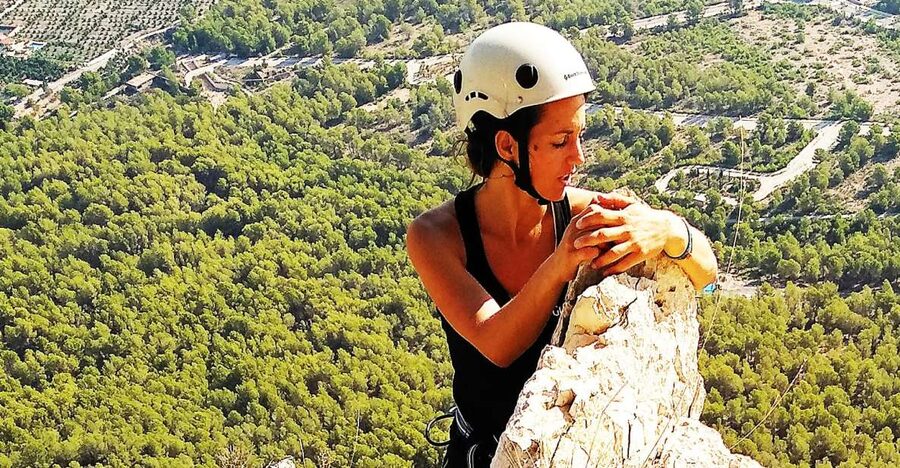
- K4 difficulty with steep, aerial steps supported by a security cable
- Guided practice on a rock wall before you go high
- Top-to-bottom safety gear included: harness, helmet, and ferrata kit
- Major payoff views over Guadalest, the Sierras de Aixortá and Bernia, and out to the Mediterranean coast
- Small group size (limited to 10) for closer guidance
- Photos included, so you do not have to fumble with your phone mid-climb
Where Via Ferrata del Ponoig Hits the Sweet Spot Near Alicante
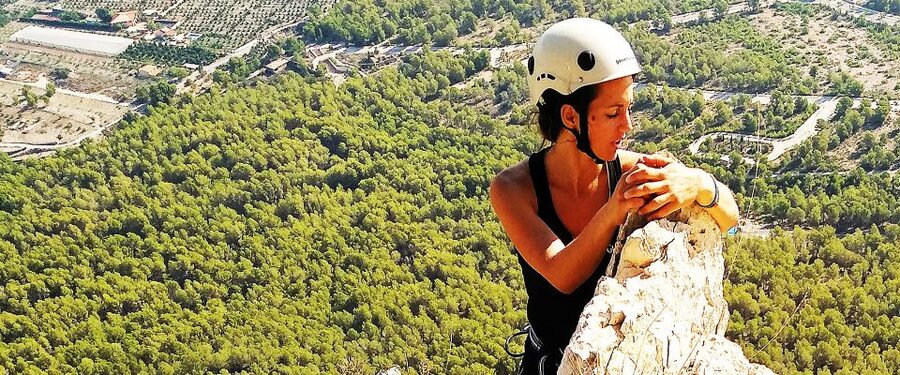
Via Ferrata del Ponoig is the kind of activity that feels like it should take a whole day, but it lands neatly in a 5-hour window. That timing matters. You get a serious climbing experience without turning your trip into a logistics puzzle.
The big appeal is the K4 rating paired with a guided structure. You are not just handed a cable and told good luck. You get taught the basics, then you climb using thick metal staples in the rock and the security cable system. For most people, that combination turns fear into focus.
Also, the scenery is not an afterthought. You climb to viewpoints over the Valley of Guadalest and the surrounding sierras, and you can even see the Mediterranean from above. In other words: you get the workout, then you get the reward.
And yes, safety is a theme here. People mention guides who stay calm and reassuring, and names like Frank and Osmar show up in real feedback. That matters because this is the sort of route where a clear briefing can make all the difference between white-knuckle and steady progress.
Meeting at Parking Vía Ferrata Ponoig and Getting Set Up
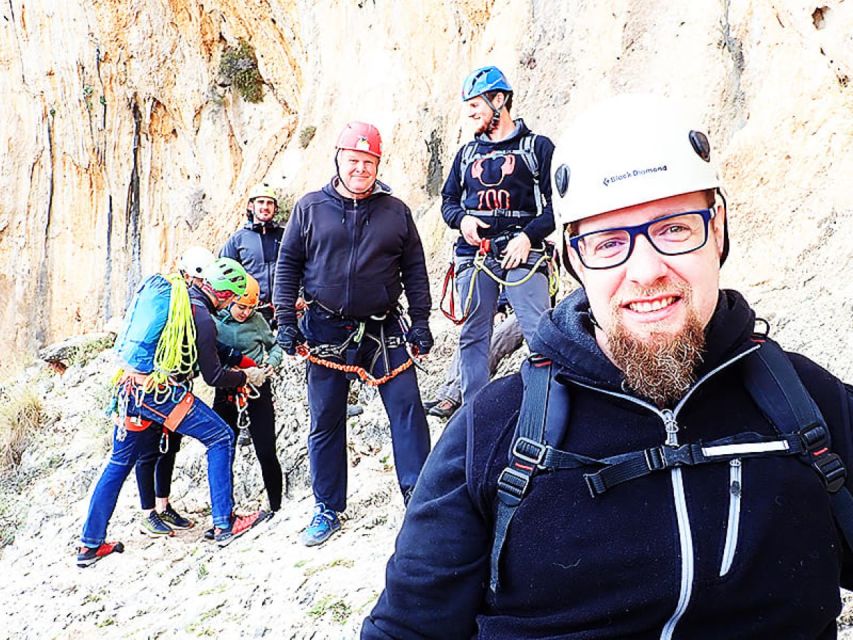
Your start is straightforward: meet at Parking Vía Ferrata Ponoig. Look for your guide holding a visible sign. This is helpful on a practical level, because you can arrive, park, and stop guessing.
Once you’re with the group, the session flows into gear and instruction. You will put on a harness, helmet, and ferrata kit. The route is vertical and aerial in places, so having everything fitted correctly is not a detail. It affects comfort, movement, and your ability to clip in confidently.
The tour runs about 5 hours total. The itinerary highlights a guided tour and safety briefing period of around 4 hours, which lines up with what you should expect: time for getting kitted, learning the system, doing practice, then climbing and returning.
Small group size also shows up here. The group is limited to 10 participants, which usually means you get more direct help if your hands shake, your harness feels off, or you need a quick repeat on technique.
The Safety Briefing Is Not Just Talk
Before you go up, you learn the basics with your guide. This is the part I appreciate most, because it changes how you approach the climb. Instead of thinking about the scary bits, you focus on the steps you can control: how to clip properly, how to move your weight, and how to handle the equipment during transitions.
In the provided structure, you also practice climbing on a rock wall with your guides. That practice step is huge for confidence. Even if you have climbed before, the ferrata setup has its own feel. The guide helps you get that feel on the ground before you commit to the cliff.
Guides also pair instruction with pacing. Real feedback mentions guides who adapt to the group and give clear instruction in English (and Spanish too). That matters because the most common via ferrata mistake is rushing. A calm guide helps you slow down when you need to.
Practical tip: keep your focus on the guide’s cues. If you hear a technical instruction you do not fully understand, ask again right away. On a via ferrata, clarification is better than guessing.
Your “Before the Cliff” Practice Climb: How It Preps You
This is where you build the muscle memory that makes the vertical section easier to manage. You are learning on a rock wall before you start the upward journey, and it functions like a bridge between land and height.
What you learn is not described in technical terms here, but the goal is clear: help you climb with safety in mind while using the security cable system. Practicing first is especially important because the climb is classified as K4, which typically means steep and exposed sections. You want to understand how to handle your body and your clips before you are dangling near the cable line.
I also like that this portion sets expectations for what comes next: thick metal staples embedded in the rock, a secure cable, and aerial steps that can feel very straight up.
If you’re the type who gets nervous when you cannot see your feet, this practice climb is your friend. You can experiment with your balance and rhythm on a smaller scale.
The K4 Via Ferrata Climb: Metal Staples, Security Cable, and Exposure
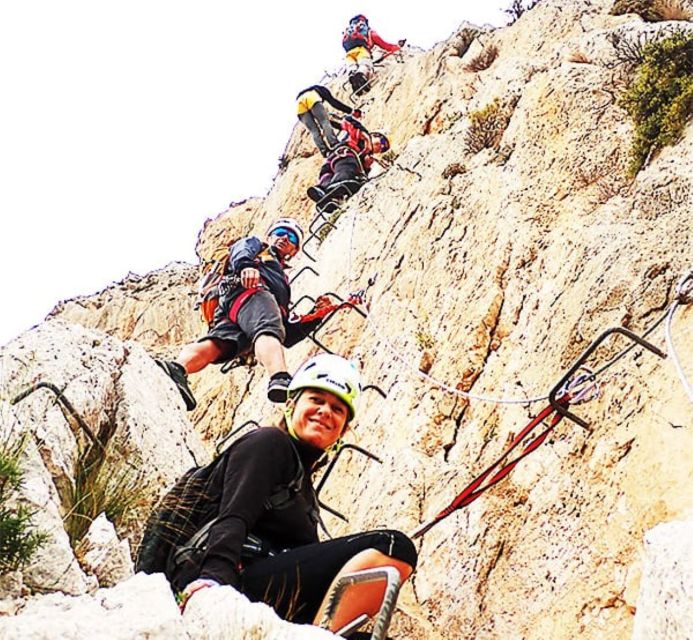
Then comes the main event: climbing straight up with the help of thick metal staples in the rock and the security cable. That “straight up” phrasing matters. This is not a gentle hike with a few cable assists. It’s a vertical climb where you are constantly placing your feet and trusting the system.
You will start from the base of Via Ferrata del Ponoig and begin upward once you are ready. As you climb, you will feel your heart rate jump. That is normal. Your legs are doing the work, and your brain is doing the extra work of staying calm at height.
Here’s what you can usefully expect about the physical sensation: K4 routes tend to feel intense because the steps can be steep and exposed, even with a safety line. That is why the activity is explicitly flagged as involving significant physical activity and a nearly vertical climb.
Also, the tour is designed around safety equipment. A high-quality harness, helmet, and ferrata kit are part of the included gear list. You should still double-check that everything is fitted comfortably before you start. If a strap feels wrong, you want it fixed before you climb, not halfway up.
One small mental hack: treat the climb like a series of short tasks. One secure step at a time. Do not try to mentally sprint to the top. I know it sounds obvious, but when you’re on a steep section, it prevents panic.
The Views Over Guadalest, Sierras de Aixortá, and the Mediterranean
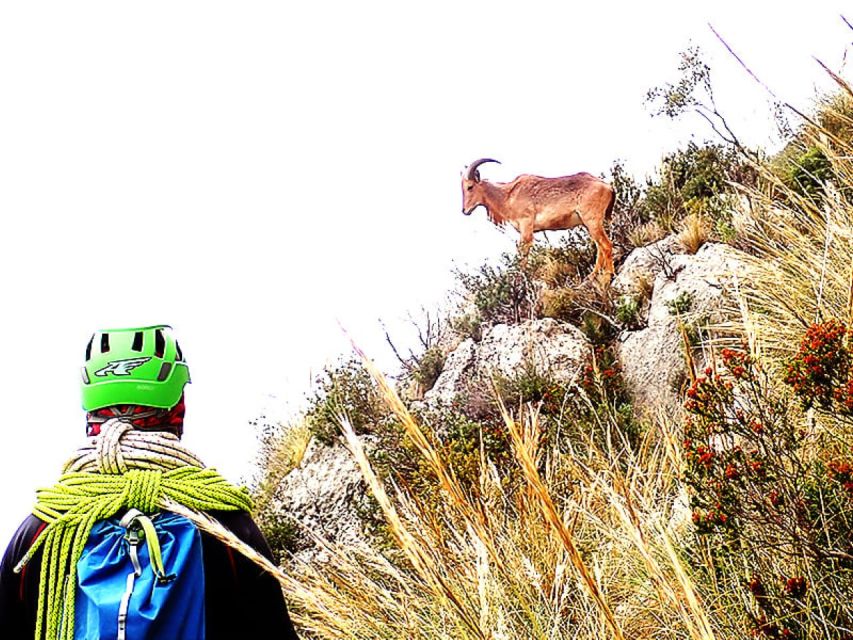
The route rewards you while you work. As you climb, you get panoramic views over the Valley of Guadalest and the Sierras de Aixortá and Bernia, plus the Mediterranean coast from above.
This is more than scenery for photos. Height changes how you judge distance and terrain. Seeing the valley and coastline in the same experience helps the climb feel like a journey rather than a test.
The Mediterranean view is also a nice contrast to the rock-and-staples reality. You’re climbing a cliff, but you can still orient yourself visually by looking out. That can help calm your nerves because your brain gets landmarks.
And if you’re a photo person, take a breath and plan for it. The tour includes photos, which is great. Still, do not rely on your phone to capture the best angles while you are mid-climb. Focus on safe movement first. Let the included photos handle the key moments.
Equipment, Shoes, Water, and the Little Things That Make It Better
What’s included:
- Climbing guide
- Safety gear (harness, helmet, ferrata kit)
- Photos
What’s not included:
- Food and drinks
- Shoes not included
So you need to bring hiking shoes and plan for hydration. Water is specifically listed as something to bring, and you’ll want enough for a 5-hour, nearly vertical effort. Weather-appropriate clothing matters too, because conditions at the cliff can feel harsher than you expect.
Here’s a practical checklist I’d use if I were doing this again:
- Hiking shoes with solid grip (not flimsy sneakers)
- Water in a usable bottle or small pack
- Weather-appropriate clothing (bring layers if temps swing)
- A small personal snack if you like a quick energy bump
One tip from real feedback: people recommend bringing a small daypack and even a sweet snack like haribo, plus suncream. While sunscreen and snacks are not part of the included list, they are the kind of sensible extras that help you enjoy the climb rather than just survive it.
Also, think about your comfort at height. If you’re wearing anything that rubs or shifts, fix it before you start. You’ll be moving your body differently when you’re clipped in.
Price and Value: Is It Worth $65?
At $65 per person for 5 hours, this is not a random add-on. The value is tied to what you do not have to source yourself.
You get:
- A live guide
- Safety gear (harness, helmet, ferrata kit)
- Photos included
- Small group support (up to 10 people)
If you were renting gear and paying for instruction separately, this price would likely feel more expensive. But here, the tour packages the critical pieces you need to feel safe and competent on a K4 climb.
The only real trade-off is that food and drinks are not included. So you should budget for that in your day plan. Bring water during the activity, and eat beforehand or afterward based on your schedule.
In short: this is good value when you want the full guided experience and do not want to deal with equipment and instruction separately.
Who Should Book This (and Who Should Skip It)
This is not for everyone, and that’s a good thing. You’ll have a much better time if you match your expectations to the activity.
Not suitable for:
- Pregnant women
- People with mobility impairments
- People with vertigo
- Children under 18
Also, it’s flagged as significant physical activity and nearly vertical climbing. That means you should show up ready to work: legs, balance, and a willingness to follow safety steps carefully.
Who it suits well:
- People who are physically capable of steep climbs
- People who want structured learning (including the practice wall step)
- Anyone who enjoys heights as long as safety guidance keeps you calm
If you love views and want a climbing day that feels like a true adventure, Via Ferrata del Ponoig makes sense. If you get easily panicked at exposure or you are currently managing vertigo, skip it. You want an experience you can actually enjoy.
Booking, Timing, and Tour Languages (Quick Practical Notes)
The tour is listed as about 5 hours, with starting times based on availability. Your guide speaks Spanish and English, and the group is kept small.
The meeting point is Parking Vía Ferrata Ponoig. Look for your guide with a visible sign so you can connect fast and avoid wasting time before gear fitting.
If flexibility matters, you have options like reserve now & pay later and free cancellation up to 24 hours in advance. That’s useful if weather could shift your plans.
Should You Book Via Ferrata del Ponoig?
Book it if you want a guided K4 climbing experience with real safety support, clear instruction, and big payoffs in views. The best part is the combination of practice first, then a vertical climb with a security cable, so you are not guessing your way up. I also like that photos are included, because you can stay focused on safe movement instead of juggling a camera.
Skip it if steep exposure is a problem for you, if you have vertigo, or if you know you cannot handle nearly vertical physical effort. There are safer ways to enjoy the area if that’s your situation.
One last decision tip: if you’re nervous, this is exactly the type of activity where a calm guide and a small group can help. Real feedback highlights guides such as Frank and Osmar for being patient and reassuring, and that tone is what you want before you face metal staples and open air.
FAQ
How long is the Via Ferrata del Ponoig guided trek and climb?
The total duration is about 5 hours.
Where do I meet the guide?
Meet at Parking Vía Ferrata Ponoig. Look for your guide holding a visible sign.
What difficulty level is this via ferrata?
It is categorized as K4.
Are the safety gear and harness included?
Yes. Safety gear is included, including a harness, helmet, and ferrata kit.
What shoes should I bring?
You need hiking shoes. Shoes are not included with the activity.
Do I need to bring water and snacks?
Water is required and food and drinks are not included. A small snack can help, but the only stated requirement is water.
Is there a practice climb before the main route?
Yes. You practice climbing on a rock wall with your guides before you begin the upward climb.
What languages do the guides speak?
The live guide is available in Spanish and English.
How big is the group?
The group is limited to 10 participants.
Who is this activity not suitable for?
It is not suitable for pregnant women, people with mobility impairments, people with vertigo, and children under 18.
Is cancellation free, and can I pay later?
There is free cancellation up to 24 hours in advance for a full refund, and you can reserve now and pay later.