Rome has a way of feeling bigger than you expect.
This walk turns the city into a living timeline, using phone augmented reality to recreate ancient Rome while an archaeologist guides you through classic sights and lesser-known corners. I like the focused small group size (max 10) that makes it easy to ask questions, and I love the mix of major landmarks plus stops that feel genuinely local. The main consideration: it’s a walking route with uphill and downhill, so you’ll want to be comfortable on your feet.
Beyond the usual photo stops, you get a smarter way to look at ruins and street-level landmarks. You’ll see how Rome may have looked long ago, and you’ll also pick up practical context you can carry into the rest of your trip. It runs in English, uses a mobile ticket, and the route is planned for a 3 to 4 hour stroll in good weather.
In This Review
- Key Highlights Worth Your Attention
- A Phone-Based Time Machine Around Rome’s Ancient Core
- Meet the Archaeologist: Small Group, Real Room for Questions
- Teatro di Marcello: When a Roman Theater Looks Like a Fortress
- Ghetto Ebraico di Roma: Medieval Charm Meets Ancient Architecture
- Isola Tiberina: Legends, the Tiber, and Rome’s First Inhabitants
- Bocca della Verità and Santa Maria in Cosmedin
- Foro Boario: Early Temples and Marble That Survived
- Aventine Hill at Giardino degli Aranci: Panoramas and an Optical Illusion
- Buco della Serratura: The Keyhole Into Malta’s State Within a City
- Testaccio: Market Energy, Street Art, and a Mysterious Hill
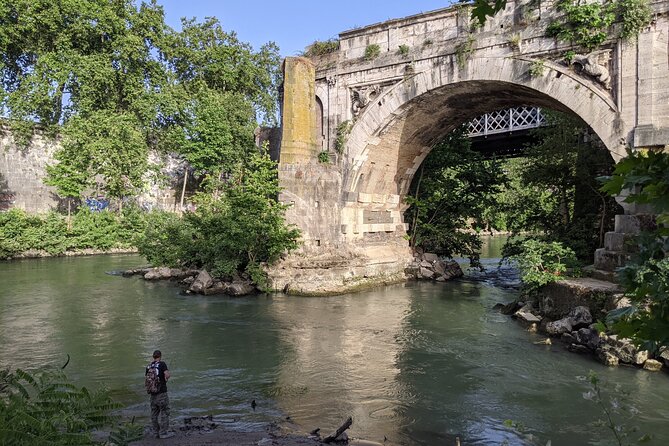
- Pyramid of Cestius: Rome’s Egyptian Detour
- How Long It Really Takes: 3–4 Hours of Walking + Phone Time
- Price and Value: Why $3.61 Can Make Sense Here
- Who This Walk Is Best For (and Who Might Skip It)
- Should You Book This Urban Trekking Walk?
- FAQ
- What is the duration of the tour?
- How much does it cost?
- Is the tour offered in English?
- How large is the group?
- Do I need to buy admission tickets for the stops?
- Where does the tour start?
- Where does the tour end?
- What should I bring?
- Is there a fitness requirement?
- What happens if the weather is bad?
Key Highlights Worth Your Attention
- 3D phone augmented reality that helps you picture what you’re standing next to
- Archaeologist-led guidance designed to connect buildings, legends, and daily Roman life
- A max of 10 people, so the pace stays human and questions stay welcome
- Offbeat-but-perfect stops like the Jewish Ghetto area, Tiber Island, and Keyhole of the Priory
- View time on Aventine Hill at the Orange Garden, with a known optical illusion
- Testaccio as a break from the heaviest tourist flow, with market energy and street art
A Phone-Based Time Machine Around Rome’s Ancient Core
This is the kind of Rome experience that changes how you look at the city. You’re not just walking from point A to point B. Your phone is the tool that brings ancient layers into focus, including immersive AR views tied to the Colosseum and Roman Forum area. Even if you already know the big names, seeing them reconstructed in your own space makes the scale feel real.
And that matters, because Rome can be deceptively confusing. Lots of stones, lots of angles, and plenty of ruins that look like… well, ruins. With AR, the gaps between what’s left and what once stood there become less intimidating. You get a clearer sense of why these places mattered and how the streets you’re standing on fit into the bigger story.
Meet the Archaeologist: Small Group, Real Room for Questions
The tour is led by an archaeologist, and the group is capped at 10 travelers. That’s a big deal in Rome, where large groups can turn every question into a quick shout. Here, you’ll have room to ask follow-ups as you walk, and that’s one reason people rate this experience so highly.
One archaeologist guide named Anastasia has been praised for bringing lots of detail and making the walk feel effortless, even with a hill included. If you like tours where you’re not just listening but also engaging, this format is a strong match.
English delivery is built in, and the tour uses a mobile ticket, so you’re not juggling paper or finding a ticket counter during your day.
Teatro di Marcello: When a Roman Theater Looks Like a Fortress
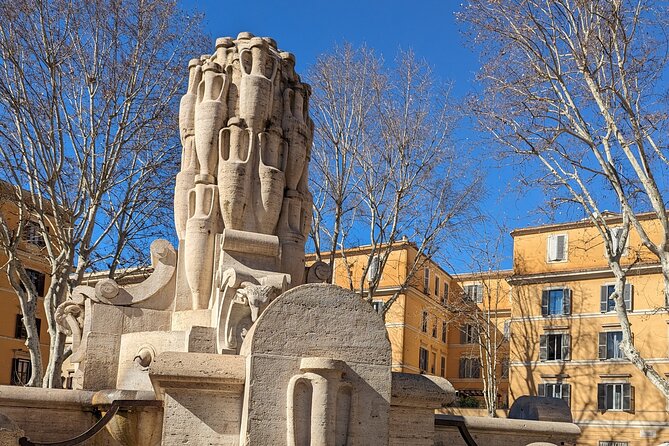
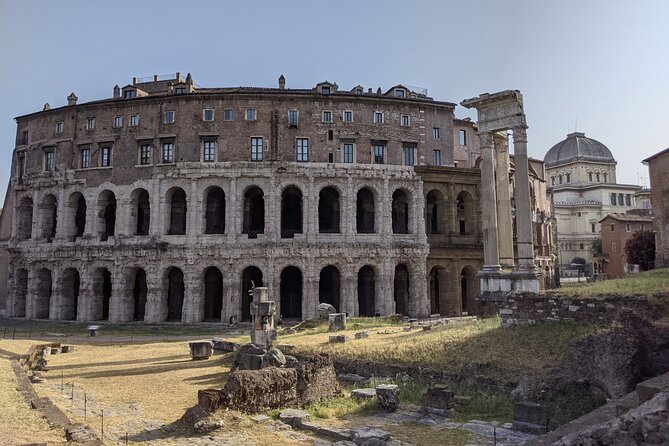
The walk starts with Teatro di Marcello, a site that plays tricks on your expectations. You may already know theaters in the Roman world, but this one’s look can feel medieval, with castle-like bulk in the stonework. That contrast is exactly why it’s a great first stop: it trains your eyes to notice how Rome’s layers overlap.
This stop is short—around 20 minutes—but it sets the tone for the rest of the route. You’re learning how Rome kept reusing space over centuries. Even if you’re not an architecture nerd, you’ll likely find yourself staring at details because the guide will point out what to see and why it looks the way it does.
It’s also listed as free admission for this experience, so you’re not paying extra just to get your bearings.
Ghetto Ebraico di Roma: Medieval Charm Meets Ancient Architecture
Next comes the Ghetto Ebraico di Roma area. This is one of those places where history isn’t frozen behind ropes. You get a neighborhood feel, with a mix of ancient references, distinctive old architecture, and what’s described as medieval charm.
This stop is also about 20 minutes, which is long enough to get oriented and pick up the story behind the streets. You’ll learn how the Jewish Ghetto fits into Rome’s bigger timeline, and you’ll likely notice how everyday life still shapes the area.
And yes, this stop pairs well with appetite. The tour description calls out delicious food in the neighborhood, which makes this a practical moment to think about lunch—without turning the tour into a food-only detour.
Isola Tiberina: Legends, the Tiber, and Rome’s First Inhabitants
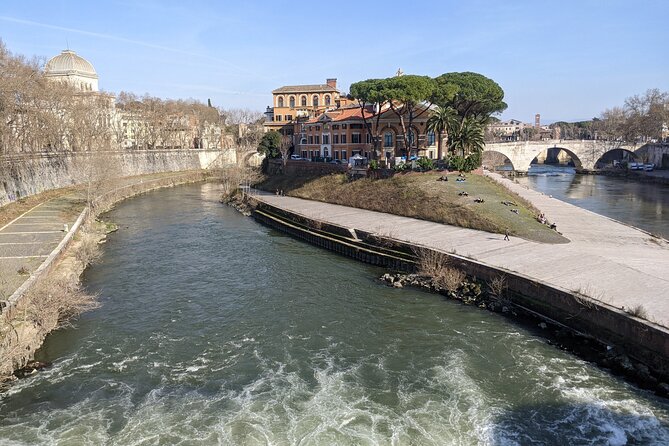
Isola Tiberina, the Tiber Island, is small, strange, and story-heavy. You’ll learn about legends tied to the island and its significance for the city’s first inhabitants. The framing in the tour is memorable: it’s where new true Romans are born every day, which is playful, but it signals something important.
This stop isn’t about a single statue or a single ruin. It’s about place and meaning. Being on an island right in the river changes how you understand Rome’s geography, and it helps connect myth, history, and the city’s physical layout.
Expect about 20 minutes here, with free admission.
Bocca della Verità and Santa Maria in Cosmedin
Then you hit Bocca della Verità, the famous mouth people use as a test of truthfulness. If you like playful traditions tied to real buildings, this is where the tour balances entertainment with context.
Right nearby is the beautiful medieval church of Santa Maria in Cosmedin. This is also where relics of St. Valentine rest, according to the tour info. That religious detail makes the stop feel more than just a gimmick photo moment. You’re connecting a well-known legend with a specific site and a real place you can step into.
This is about 20 minutes, and it’s listed with free admission.
Foro Boario: Early Temples and Marble That Survived
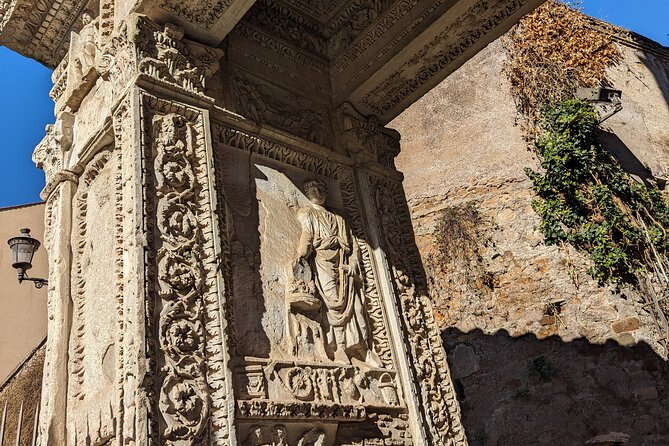
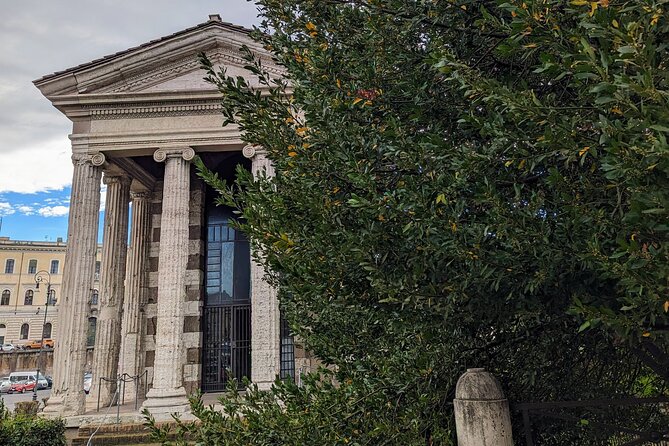
Foro Boario is a quieter section of the Rome conversation, and that’s part of the value. You’ll learn about typical early Roman temples and then admire the first temple in marble that’s still well-preserved.
The tour info hints at an interesting explanation for why it remains in such good condition. Even without the exact reason stated in the data you provided, the key is the approach: you’re getting the logic behind preservation, not just the name of the monument.
This is a ~20 minute stop with free admission, which makes it a good switch if you want one more dose of ancient Rome without spending time in long ticket lines.
Aventine Hill at Giardino degli Aranci: Panoramas and an Optical Illusion
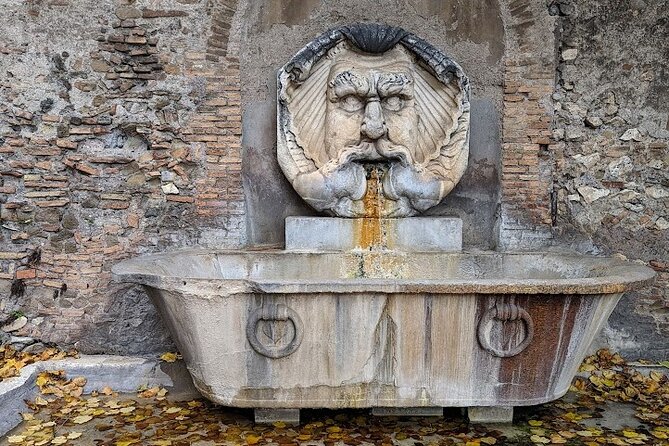
Aventine Hill is where Rome rewards you for walking. At the Giardino degli Aranci (Orange Garden), you get panoramic skyline views, and the tour includes a special optical illusion involving St. Peter’s Basilica seeming to shrink as you approach.
This kind of stop is worth it because it’s both fun and useful. It gives you a visual anchor for the rest of your time in Rome. Once you understand how viewing angles can distort what you think you’re seeing, you’ll start spotting similar effects around the city.
Expect about 20 minutes here, with free admission.
Buco della Serratura: The Keyhole Into Malta’s State Within a City
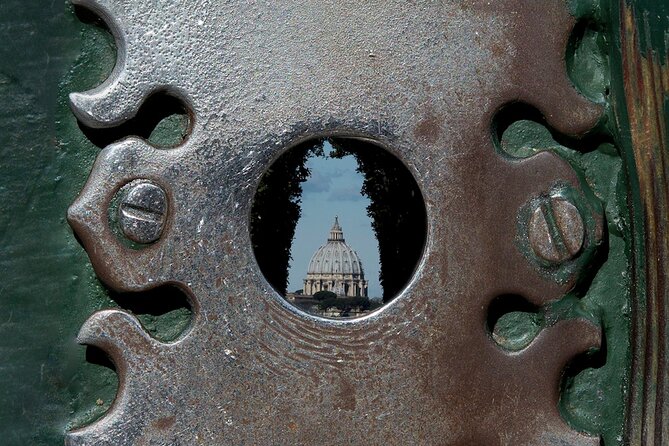
Now comes one of the most curious moments on the route: the Keyhole of the Priory of the Knights of Malta (Buco della Serratura). You peer through the keyhole and see something hidden—connected to the Sovereign Military Order of Malta.
The tour description points out the big political quirk: the order maintains its own sovereign territory inside the heart of Rome. That state-within-a-city idea is strange enough that you’ll want to hear the explanation more than once.
This stop lasts about 20 minutes and is listed with free admission. It’s also a nice break in pace because you can focus on one specific action and observation instead of scanning details for a whole hour.
Testaccio: Market Energy, Street Art, and a Mysterious Hill
After the classics, you get sent toward the more everyday Rome with Testaccio. The goal here is simple: escape tourist crowds and experience a real neighborhood where ancient and modern life sit side by side.
In Testaccio, you’ll spend about 30 minutes, and the tour description calls out the bustling market, vibrant street art, and a mysterious hill that hides a secret from Rome’s ancient past. Even if you only catch a slice of what the neighborhood offers, this stop helps Rome feel less like a museum and more like a living city.
Because the time is longer than several other stops, you’ll likely have a moment to slow down—grab a drink, take a few photos, and let the stories land.
Listed as free admission, so it’s a low-cost way to shift your perspective.
Pyramid of Cestius: Rome’s Egyptian Detour
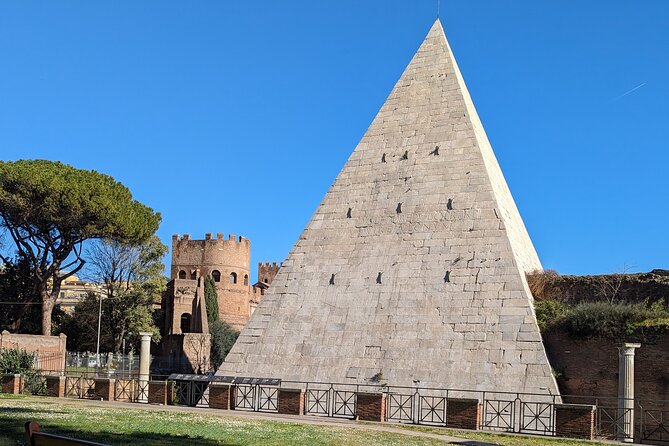
The final stop is the Pyramid of Cestius (Piramide Cestia). This is Rome’s Egyptian oddball: a lone survivor of the city’s fascination with Egyptian style. The tour notes that this was once one of many similar structures, tied to the tastes of a wealthy Roman magistrate and Rome’s broader mix of architectural influences.
This is one of those places that makes you rethink how eclectic Rome always was. Not everything is straight-line classic. Some of it is taste, fashion, and status—translated into stone.
This stop is about 15 minutes, with free admission.
How Long It Really Takes: 3–4 Hours of Walking + Phone Time
Plan on roughly 3 to 4 hours. The walking includes uphill and downhill sections, and you should have a moderate fitness level. Flat, comfortable shoes are mandatory. The route is designed for real walking, not a casual stroll where you barely notice your legs.
You’ll also be using your phone for AR, so be ready for short pauses as you look up reconstructions and follow along. That’s not a downside—it’s part of the point. Just don’t plan an ultra-tight schedule afterward.
Weather matters. The guide reserves the right to change or cancel in unfavorable conditions. Since the tour is planned for good weather, bring sun protection in warmer months and layered clothing if the day feels chilly.
A bottle or cup for water is recommended, and the tour is near public transportation, so you’re not forced into a car-based plan.
Price and Value: Why $3.61 Can Make Sense Here
At $3.61 per person, this feels like a bargain compared with what you usually pay for a guided walk in Rome. What makes the value click is the combination of factors: an archaeologist-led route, a small group (max 10), and planned stops set up with free admission.
You’re also paying for time and interpretation, not just for access. The AR component tied to major areas like the Colosseum and Roman Forum adds another layer of value because it upgrades how you process what you see.
The only caution on price is the obvious one: you still need to show up ready to walk. If you’re hoping for a mostly seated, low-effort experience, this route may feel like too much. But if you’re okay with walking and you want better context than a quick audio guide, the cost-to-experience ratio is hard to beat.
Who This Walk Is Best For (and Who Might Skip It)
This tour is a great fit if you:
- want an archaeologist’s framing of Rome, not just names and dates
- enjoy small group tours where you can actually ask questions
- like the mix of famous landmarks plus places that feel less crowded
- can handle uphill/downhill walking for about half a day
You might reconsider if you:
- struggle with uneven terrain or steep bits
- prefer Rome with minimal walking
- want only the biggest ticket sites with long stays at each one (this is more of a paced route than a sit-and-stare program)
Should You Book This Urban Trekking Walk?
If your Rome style is part history, part street-level wandering, and part learning-by-looking, book it. The AR phone component plus the archaeologist-led commentary gives you a way to connect monuments to meaning fast—without turning the day into a checklist.
I’d especially pick it if you like odd, specific stories: the truthfulness bite at Bocca della Verità, the keyhole portal tied to Malta, the optical trick at the Orange Garden, and the neighborhood feel of Testaccio.
One final tip: since this tour can sell out far in advance—its average booking timing is about 150 days—grab your slot early if your dates are set.
FAQ
What is the duration of the tour?
It runs about 3 to 4 hours.
How much does it cost?
The price is $3.61 per person.
Is the tour offered in English?
Yes, the tour is offered in English.
How large is the group?
The tour has a maximum of 10 travelers.
Do I need to buy admission tickets for the stops?
The provided stop details list Admission Ticket Free for each planned stop.
Where does the tour start?
The meeting point is Gusto Massimo Bar Bistrò di TIZIANO DI M. E. F. S.r.l., Via del Circo Massimo 5a, 00153 Roma RM, Italy. It starts at 10:00 am.
Where does the tour end?
The tour ends in a different location. Your confirmation details should show the exact end point.
What should I bring?
Bring a bottle or cup for water, and plan for flat, comfortable shoes. Layered clothing and sun protection are recommended in season.
Is there a fitness requirement?
Yes. You should have a moderate fitness level, since the route includes uphill and downhill sections.
What happens if the weather is bad?
The guide can change or cancel due to unfavorable weather. If that happens, you’ll be offered a different date or a full refund.