REVIEW · ROME
Trekking Excursion History and Nature Necropolis of Norchia from Rome
Book on Viator →Operated by Back To Nature · Bookable on Viator
Wild tombs and canyon trails beat the usual Rome. I really love the wild, almost abandoned feel of Norchia and the way your day mixes Etruscan ruins with real walking in nature. The trade-off: you need solid trekking shoes and outdoor clothing, because this is not a sit-and-stare tour.
You start in Rome at 8:00am and head out by a small 8-seater van. Along the way you get quick peeks at classic coast-and-mountains scenery between the Tolfa hills and the Lazio coast, before you reach the “Little Italian Petra” rock cemetery.
Once you’re in Norchia, the pace shifts to a proper hike: down into a canyon area, then back up through woods to higher ground. It’s about 7km of walking over 9 to 10 hours total, so it’s best if you like moving your legs and letting the place do the talking.
In This Review
- Key things I’d highlight before you book
- Why Norchia feels different from most Roman day trips
- The small-van route out of Rome: scenery plus a little pacing reset
- Necropoli di Norchia: rock tombs, canyon air, and a climb to the acropolis
- Via Clodia’s carved road: why the walk feels extra real
- The guide and the learning factor: useful archaeology, not a lecture
- Packed lunch in the field: a practical win (with wine and local tastings)
- Trekking reality check: 7km of walking, and the footwear issue
- Price and value: what you’re actually paying for
- Who this is best for
- Quick practical tips so the day runs smoothly
- Should you book the Trekking Excursion to Norchia?
- FAQ
- How long is the Norchia trekking excursion?
- What time does the tour start?
- Is pickup offered from Rome?
- Is this a private tour?
- How much walking is involved?
- What’s included in the lunch?
- Do I need entrance tickets for Norchia?
- What should I wear or bring for the hike?
- What if the weather is bad?
- Can I cancel for a refund?
Key things I’d highlight before you book
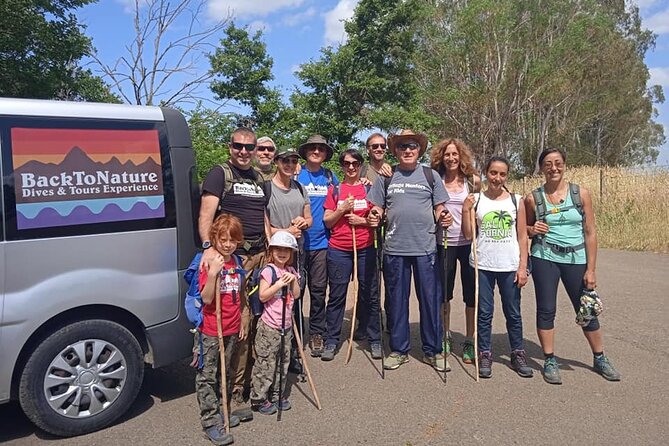
- “Little Italian Petra” rock tombs: Etruscan necropolis carved into dramatic tuff rock.
- Canyon + woods route: a descent toward the Acqualta river area, then a climb through forest to the acropolis.
- Via Clodia on foot: you’ll have the thrill of walking along a section of ancient road carved into tuff for over 400 meters.
- Lunch with local tastings (and wine): packed lunch provided by the guide, plus water and wine.
- Small, guided day: private group setup with a van transfer from Rome and guided site time.
- Weather matters: the operator requires good weather, so you should plan to be flexible.
Why Norchia feels different from most Roman day trips
Most Rome day trips hit crowds fast. Norchia doesn’t. This site feels remote and a bit untamed, with rock tombs rising out of the terrain like something you were never meant to find. That’s the point: you’re trading postcard Rome for a place that still has breathing room.
The big draw for me is the combo. You’re not just touring tombs from a viewpoint. You’re walking through the kind of natural terrain that makes the carvings and pathways feel more believable—like the landscape shaped the people, not the other way around.
You also get context that helps the ruins click. Norchia’s ancient identity links to the Etruscan world around Tarquinia (also tied to the Etruscan capital story of Tarchna). The settlement timeline stretches from early origins through the 3rd–1st centuries BC, and the ruins you’ll see are part of that long arc.
You can also read our reviews of more tours and experiences in Rome.
The small-van route out of Rome: scenery plus a little pacing reset
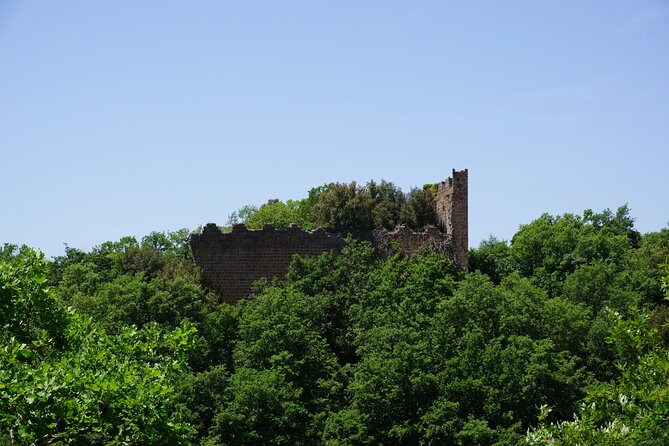
The day starts with pickup from one of the Rome meeting points chosen for your group. From there you take a transfer by an 8-seater van to the tour start area. The whole ride is not just transportation—it’s part of the experience.
You’ll travel along the Via Aurelia toward the north, with stop-style breaks for quick looks at the main ancient Roman Via Consolare between the green Tolfa Mountains and the Mediterranean coast. If you like geography, this is satisfying. You can literally see how the coast and hills frame travel routes.
A couple more scenic interludes follow:
- The Tolfa hills (Monti della Tolfa), historically connected to the area once called Maremma Laziale.
- A stop near Civitavecchia, where you’ll see the port city setting.
By the time you pass through Monte Romano, you’re not just leaving Rome—you’re moving from urban time into countryside time. That matters, because Norchia hits harder when your body has already warmed up to the outdoors.
Necropoli di Norchia: rock tombs, canyon air, and a climb to the acropolis
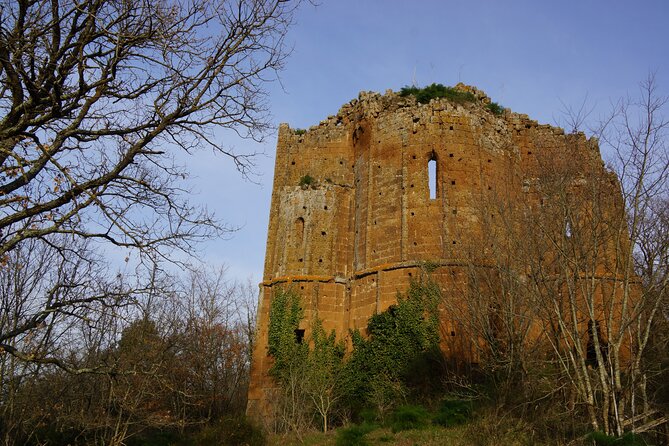
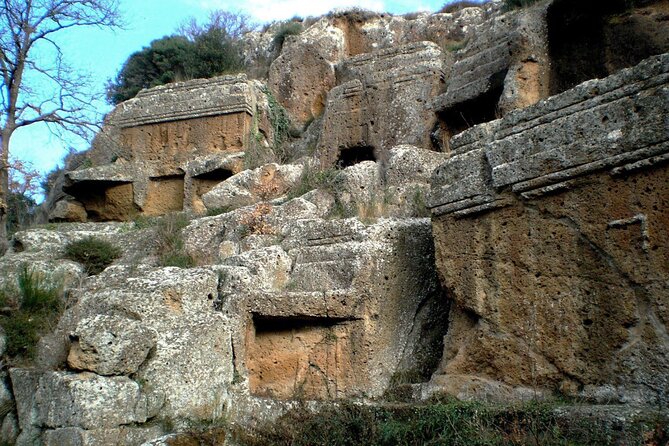
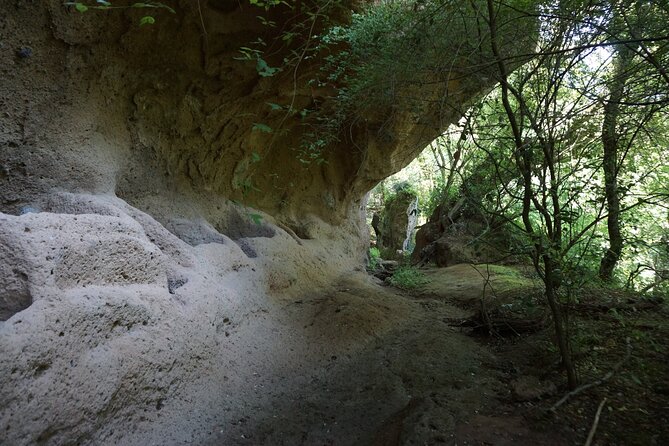
This is the heart of the day, and it’s where Norchia earns its nickname. The “Little Italian Petra” comparison makes sense: majestic rock tombs cut into the terrain, plus that rough, wind-and-stone feeling that’s hard to replicate in major sites.
Your guide leads the walking loop that starts with the necropolis exploration. Then you descend toward the deep canyon area connected to the Acqualta river. It’s the kind of descent where you feel the scale—tuff walls, carved spaces, and the sense that the place is half buried in nature.
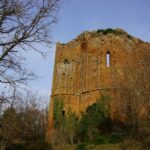
Then comes the climb. You move up through woods to reach the Etruscan-Roman acropolis area. In the Middle Ages, this higher zone was used as the site of the 12th-century Di Vico castle, and you can still sense the layering: Etruscan occupation, Roman reuse, and medieval fortification history all on the same bones.
One detail I’d pay attention to: the medieval traces are described as guarded by a lush forest. In practice, that means your higher-ground section feels greener and calmer than the rocky necropolis zones. So your senses shift as you go—stone drama below, forest hush above.
Via Clodia’s carved road: why the walk feels extra real
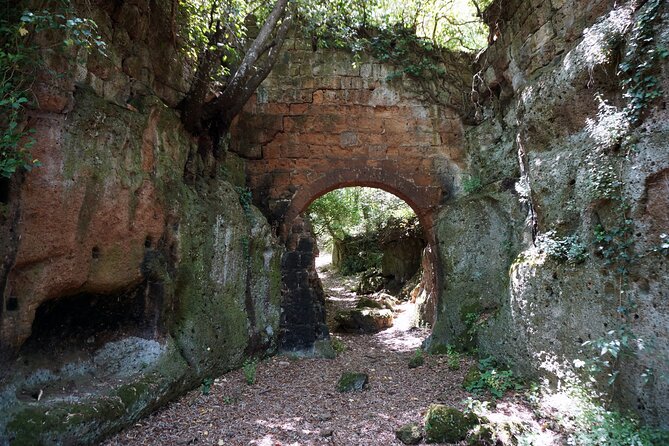
A normal museum visit shows you things. Norchia gives you a route.
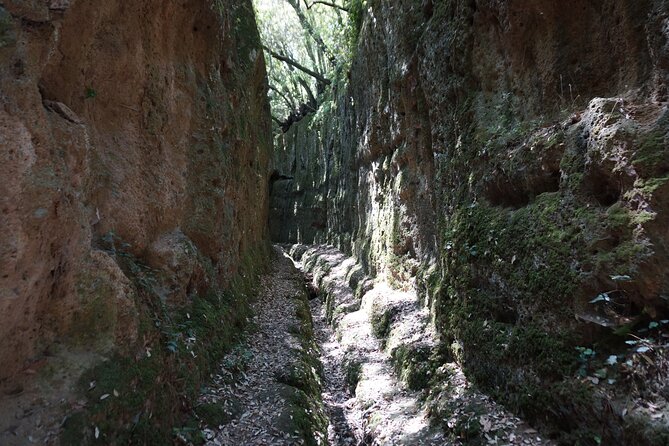
You’ll have the chance to explore the ancient Via Clodia, including a section dug entirely into tuff for more than 400 meters, known today as Cava Buia. That’s a key reason this tour works so well: you’re moving through a man-made passageway that has been wearing down under footsteps and time.
The tuff-carved road is also a good equalizer. If you’re not an archaeology specialist, it still makes sense. You can look down, see the material, and imagine the friction of carts, feet, and weather moving through the corridor.
The guide and the learning factor: useful archaeology, not a lecture
One of the nicest parts here is how the day is explained. In the reviews, the guide is named Edoardo, described as an expert and recognized archaeologist who explains clearly enough that even non-specialists start understanding what they’re looking at.
That’s exactly what you want from an off-the-beaten-path tour. If you can’t follow the story, you’re stuck with good scenery and nothing to connect it to. With a guide who can translate the place—Etruscan roots, medieval reuse, and the purpose of carved tombs—you feel like the walk has meaning, not just exercise value.
Packed lunch in the field: a practical win (with wine and local tastings)
By the time you’re out in Norchia, hunger hits fast. The good news: you get a packed lunch provided by the guide, with typical products, water, and wine tasting. Coffee or tea is included too.
This kind of lunch matters more than it sounds. You don’t have to hunt for food near the site, and you don’t lose time to restaurant detours. You can keep the day’s rhythm.
What to consider: since lunch includes wine, you’ll want to treat it like part of the day’s meal, not a separate night-out plan. In other words, I’d keep your hike pace sensible and save your energy.
Trekking reality check: 7km of walking, and the footwear issue
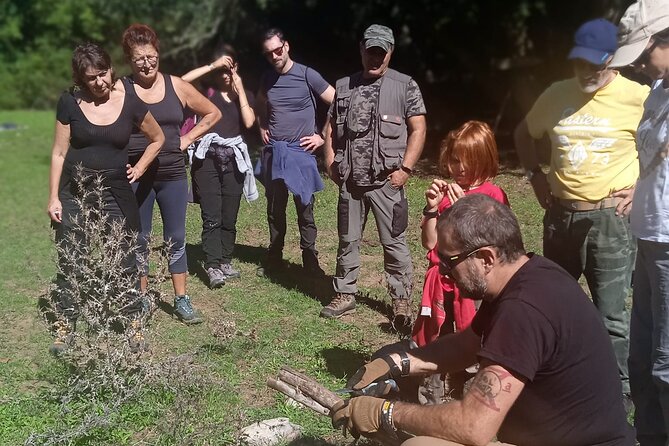
Let’s be honest: the tour is labeled most travelers can participate, but it’s still a trekking day. You should assume uphill and uneven ground. The route includes descent, then a climb through woods, plus the necropolis area walking.
The tour states that trekking shoes and suitable outdoor clothes are mandatory, but they’re not included. That means your packing list is on you.
If you’re deciding what to wear, think:
- Grippy shoes you trust on rock and dirt
- Layers (because you’ll be moving and the temperature can change with elevation and shade)
- Sun and rain readiness, since the tour requires good weather
If you show up in regular city sneakers, you’ll feel it. I’d rather you come prepared than forced to slow down.
Price and value: what you’re actually paying for
At $254.67 per person, this isn’t the cheapest day trip you’ll find. But when you break it down, the value looks more convincing.
You’re paying for:
- Round-trip pickup and a transfer by 8-seater van from Rome
- Entrance ticket to the archaeological site
- Parking fees and civil liability insurance included
- Lunch with typical local products, water, wine tasting, plus coffee or tea
- A private tour/activity setup for your group
- The guided time that turns rock and paths into a story
For a full 9 to 10 hours, with entry fees and a provided meal, the cost can make sense—especially if you’re comparing against days where you pay separately for guide time and tickets and then still have to buy lunch.
Two also-true notes:
- You’ll get more out of it if you like walking and nature settings.
- If you’re expecting a minimal-effort ruins highlight tour, this may feel like more work than you planned.
Who this is best for
This fits best if you:
- Want something off the standard Rome route
- Like combining ruins with active outdoor time
- Enjoy learning when the guide connects details to what you’re seeing
- Feel comfortable hiking around 7km in uneven terrain
It may not be ideal if you:
- Hate slopes and rocky ground
- Are traveling with limited mobility and don’t have good shoe support
- Want a full “museum-style” experience with minimal walking (this isn’t that format)
Quick practical tips so the day runs smoothly
- Start the day early in Rome and treat 8:00am as real start time.
- Wear your best trekking shoes immediately, don’t save them for a dramatic moment.
- Bring a light layer and think about weather changes, since the tour depends on good conditions.
- Plan for a full day: 9 to 10 hours is long enough that snack-and-water instincts matter, even though lunch and drinks are included.
Should you book the Trekking Excursion to Norchia?
I’d book it if you want the feel of an ancient place without the usual crowds, and you’re happy to walk. Norchia’s power is in its scale and remoteness—rock tombs, carved roads, canyon descent, and a climb into woodland calm.
Skip it if you’re not ready for a 7km trek or you don’t have proper shoes and outdoor gear. For the right traveler, though, this is the kind of day that makes you remember Italy as lived-in, not just photographed.
If you’re on the fence, here’s my simple rule: if hiking through stone and forest sounds like fun, Norchia will deliver.
FAQ
How long is the Norchia trekking excursion?
The experience lasts about 9 to 10 hours.
What time does the tour start?
It starts at 8:00am.
Is pickup offered from Rome?
Yes. Pickup is offered from selected pick-up points in Rome.
Is this a private tour?
It’s a private tour/activity, meaning only your group participates.
How much walking is involved?
The tour involves a 7km walk.
What’s included in the lunch?
You get a packed lunch with typical local products, plus water and wine tasting. Coffee and/or tea are also included.
Do I need entrance tickets for Norchia?
No. The entrance ticket to the archaeological site is included.
What should I wear or bring for the hike?
You must bring suitable outdoor clothing and trekking shoes. Trekking shoes, backpacks, and suitable outdoor clothes are not included.
What if the weather is bad?
This experience requires good weather. If it’s canceled due to poor weather, you’ll be offered a different date or a full refund.
Can I cancel for a refund?
Yes. You can cancel up to 24 hours in advance for a full refund. If you cancel less than 24 hours before the start time, the amount paid isn’t refunded.