REVIEW · MOSHI
6 Days Mount Kilimanjaro Trek Marangu Route
Book on Viator →Operated by Intrepid Explorer Tanzania · Bookable on Viator
There’s a reason the Marangu route is called the Coca-Cola trail. You get a classic southeast approach to Kilimanjaro with dorm-style huts, a structured acclimatization plan, and a summit attempt that starts around midnight. It’s the oldest established route, and it’s built for travelers who want the mountain without turning it into a full-time camping project.
Two things I’d bet you’ll like right away: the way the trek is paced (especially with the extra acclimatization day at Horombo), and the practical comfort touches that keep you functioning on big-altitude days, like hot water for washing and daily meals. One consideration: like all Kilimanjaro treks, altitude is still altitude, and the standard minimum for Marangu is five days even though summit success is better when you add that extra day.
In This Review
- Key things to know before you go
- Marangu Route and the Coca-Cola reputation
- Price and value: what $2,350 buys you
- Day 1 from Marangu Gate to Mandara Hut in rainforest green
- Day 2 to Horombo Hut: timberline to heath and moor country
- Day 3 acclimatization at Horombo: Zebra Rock or Mawenzi Ridge
- Day 4 to Kibo Hut: the long push with Last Water and the saddle
- Day 5 summit day: midnight start, Hans Meyer Cave, and Uhuru Peak
- Day 6 descent to Marangu Gate and back to Moshi comfort
- Huts, hot water, and the everyday comforts that matter at altitude
- The team behind your summit attempt: guides, porters, cook, and safety focus
- Gear and packing: what’s included, what you should rent, and what not to forget
- Who this trek is best for on Marangu
- Should you book this 6-day Marangu Kilimanjaro trek?
- FAQ
- How long is the trek?
- Where does the trek start and end?
- Are airport transfers included?
- What kind of accommodation is used on the Marangu route?
- Is emergency oxygen provided?
- What are the summit-day timings like?
- What’s included in meals and water?
- Do I need visas or travel insurance for this trip?
- Can I cancel for a full refund?
Key things to know before you go
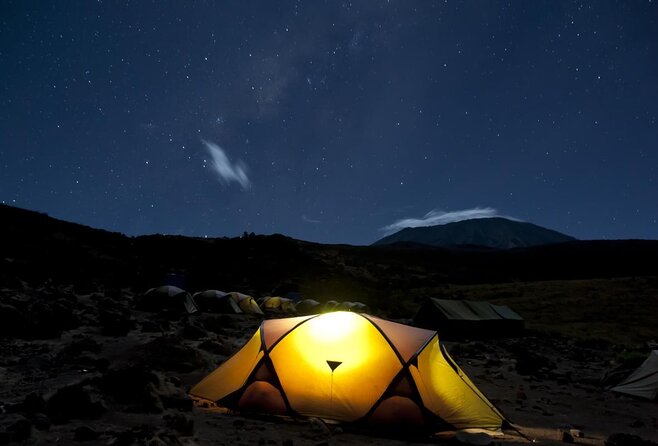
- Marangu is hut-based: dorm-style sleeping keeps things simpler than full camping routes.
- The plan includes acclimatization: an extra day at Horombo helps your body adjust before the Kibo and summit push.
- Summit day is a long midnight grind: expect 12–15 hours with cold, low oxygen, and a big elevation gain.
- Moshi transfers are included: you’re picked up and dropped back with less hassle on arrival day.
- Meals and water are handled: fresh drinking water and hot washing water show up daily, plus breakfast/lunch/dinner are included.
- Emergency oxygen is included: it’s for emergencies only, not a summit strategy.
Marangu Route and the Coca-Cola reputation
Marangu is Kilimanjaro’s southeast route, and it has earned its nickname because it feels like the most straightforward way to climb. It’s the oldest established route on the mountain, and it’s popular for one main reason: the trek uses huts. That changes the whole vibe. You spend less time managing gear at camp and more time focusing on trekking steadily, resting, and letting your body adjust.
This version also leans into what makes Marangu “work” for many first-timers: you’re not just pushed upward day after day. The schedule builds in a real breathing break on Day 3 by staying at Horombo longer for acclimatization. That matters because Kilimanjaro success is more about altitude management than raw speed.
Just keep your expectations grounded. Marangu is often described as the easiest route on Kilimanjaro, but easiest doesn’t mean easy. You’ll still hit very thin air near the top, and cold nights can be serious. The goal is to give you the best chance within a six-day timeline.
You can also read our reviews of more tours and experiences in Moshi.
Price and value: what $2,350 buys you
At $2,350 per person, this isn’t a budget hike. But it includes a lot of the expensive stuff that tends to get added later on other trips.
Here’s what you’re paying for in practical terms:
- Kilimanjaro National Park fees and taxes are included (not something you later negotiate or figure out yourself).
- Return transfers between Kilimanjaro airport and Moshi are included, plus you’re picked up from your lodge in Moshi for the trek start.
- You get hotel nights before and after the climb, with dinner and breakfast included.
- The team is fully staffed: qualified mountain guide, assistant guides, porters, and cook (with their wages included).
- Food is covered: five breakfasts and five dinners, plus six lunches.
- You get daily water support: fresh drinking water and hot water for washing each day.
- You also get emergency oxygen, explicitly for emergencies only.
What you should plan to cover yourself:
- Flights, visas, and health insurance
- Personal clothing and trekking gear (you can rent some locally)
- Personal medications and water purifying tablets
- Snacks and a portable toilet (both optional but very worth thinking about)
So is it “worth it”? If you value having the logistics handled and you want hut comfort plus a full support team, the package makes sense. If you already have gear, don’t need transfers, and are comfortable managing the “admin” side, you might find cheaper options. But on Kilimanjaro, saving too much can mean fewer safety buffers.
Day 1 from Marangu Gate to Mandara Hut in rainforest green
Your trek starts with pickup in Moshi and the paperwork at Marangu gate. Then you step into dense rainforest, where the temperature and humidity tend to feel more like you’re hiking in the tropics than heading for an ice summit.
Today’s distance is about 8.3 km (5.2 mi) and typically takes around 5 hours to reach Mandara Hut. Along the way, you’ll pass impressive vegetation and you may catch glimpses of primates. That rainforest start is a nice mental warm-up: it’s active, but it’s not the kind of altitude grind that knocks you sideways.
A highlight on Day 1 is that you can visit Maundi Crater for views of the Kenyan interior. It’s the first moment where the mountain starts to feel bigger than your immediate trail.
One small drawback: rainforest hiking can mean slick footing. Wear shoes you trust, and don’t rush. Your first job is to get your rhythm, not to “win” the early miles.
Day 2 to Horombo Hut: timberline to heath and moor country
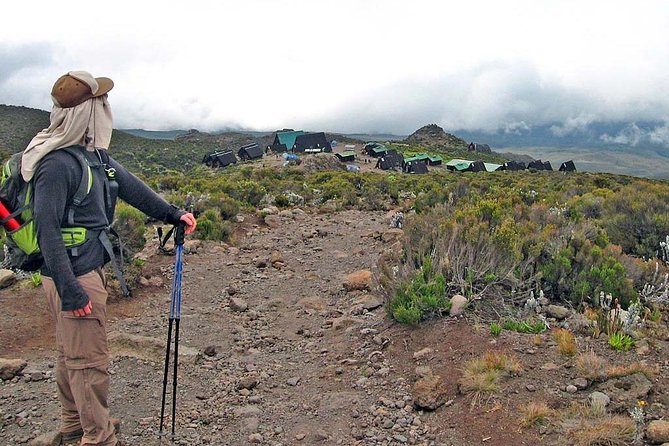
Day 2 is longer: about 12.5 km (7.8 mi) and around 9 hours to Horombo Hut, at 3700 m. The big change is time and terrain. After leaving Mandara Hut, you reach timberline and then move into the heath and moor zone.
This is the day where the mountain starts showing you its layers. You’re climbing into colder air, and the vegetation shifts from rainforest thickness to open moorland. After hours of steady uphill trekking, Horombo Hut finally comes into view.
Once you’re there, the views are a reward: you can look out toward Mawenzi and Kibo, plus the broad Masai steppe plains. I like this kind of “arrive and take it in” moment on Kilimanjaro. It reminds you that you’re gaining something beyond breathless effort.
Tip for your body: keep pace controlled. If you go too fast today, it can cost you tomorrow even if you reach Horombo. Altitude doesn’t care how tough you feel in the moment.
Day 3 acclimatization at Horombo: Zebra Rock or Mawenzi Ridge
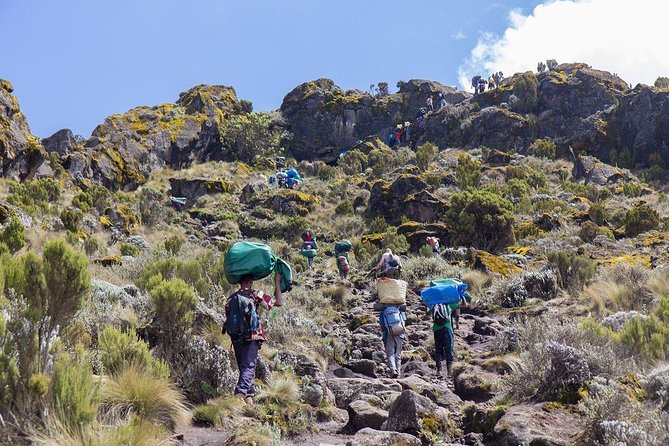
Day 3 is the reason a six-day Marangu trek often feels wiser than the minimum schedule. You hike up for acclimatization, then come back to Horombo for lunch, rest, dinner, and sleep.
In this plan, you spend the extra day doing a trek toward Mawenzi Ridge or Zebra Rock to help your body adjust to higher altitudes. The provided timing is about 4 hours for this acclimatization session.
Here’s what this day accomplishes:
- You get a “training hike” above your prior baseline without committing to the Kibo push yet.
- You give your body extra time to adapt to lower oxygen.
- You reduce the odds of feeling crushed on the summit attempt, because you’ve already practiced the rhythm at altitude.
This day also helps your brain. Kilimanjaro is as much mental pacing as physical. If you’ve never been this high before, Day 3 is where you learn what slow feels like.
Day 4 to Kibo Hut: the long push with Last Water and the saddle
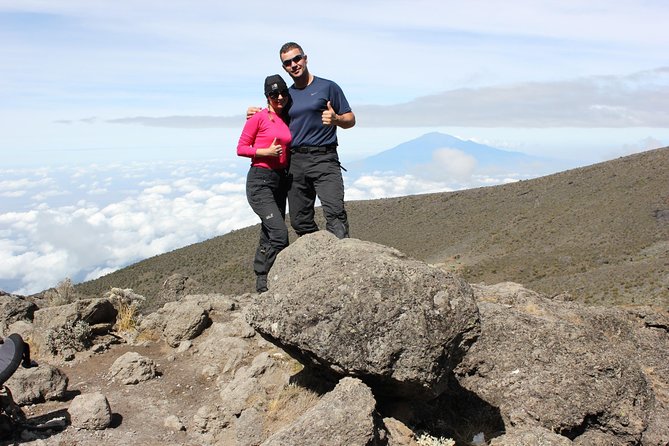
Day 4 is where things get serious. It’s described as a long and tough stage, and the numbers support it: about 9.5 km (5.9 mi), usually 6–7 hours, ending at Kibo Hut.
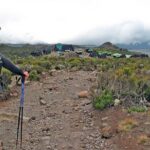
The trail is well built, but you’ll work for it. You pass the Last Water point, then the path moves through the saddle, a near-vegetation plateau that connects the main summit area of Kibo with Mawenzi.
That lack of vegetation can be mentally tough. Rainforest day one feels safe and familiar; above the saddle, it’s exposed. Cold can creep in, and you’ll likely feel your breathing working harder.
What you’ll appreciate is the payoff: once you reach Kibo Hut, you’ll have an early evening meal and then an early night. The night matters because the summit attempt starts around midnight.
A drawback to plan for: you’ll likely feel the climb more on Day 4 than the previous days, even if you keep pace steady. That’s normal. The key is staying calm and consistent.
Day 5 summit day: midnight start, Hans Meyer Cave, and Uhuru Peak
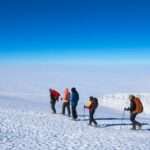
This is the Big Day. You’ll begin the final ascent around midnight, and the trek is long: about 22 km (13.7 mi) with 12–15 hours total from start to finish.
The route is graded slowly upward, which is exactly what you want for altitude. You pass Hans Meyer Cave at 5220 m, and then you keep moving until the air thins further near the crater rim.
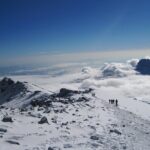
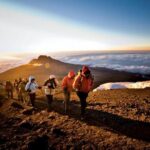
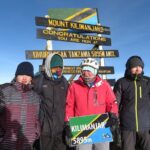
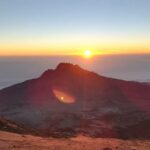
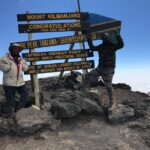
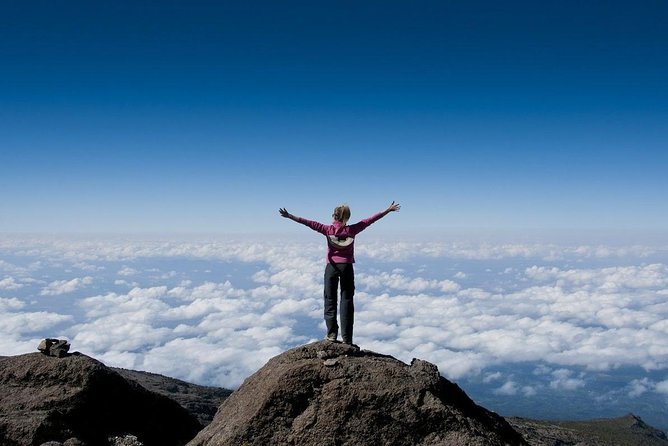
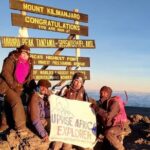
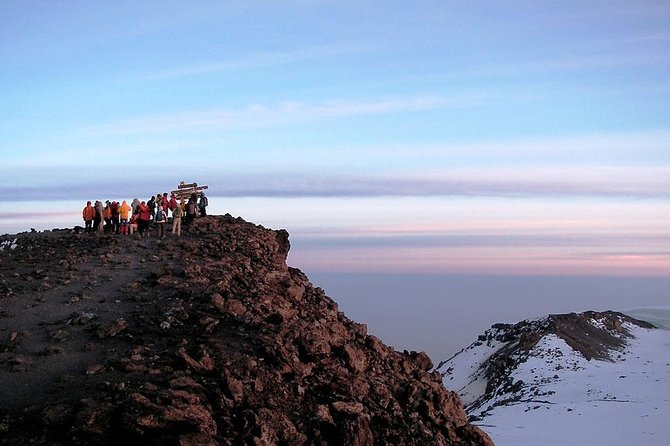
At sunrise, you reach Gillman’s Point (5681 m). This is the crater rim moment when the sun warms the land and the cold you’ve been fighting starts to feel manageable. After another 1–2 hours, you reach Uhuru Peak at 5895 m.
Then it’s back down to Kibo Hut. A warm meal is waiting for you, followed by a break before descending back to Horombo Hut.
Two practical thoughts here:
- Start slow. The midnight climb is not a test of athletic speed; it’s a test of breathing control.
- Expect a mental mix. You’ll feel cold, then “it’s working,” then tired, then euphoric when Uhuru Peak finally happens.
Also note: the plan includes emergency oxygen for emergencies only. Don’t count on oxygen as a summit aid. Count on your acclimatization, steady pace, and mental patience.
Day 6 descent to Marangu Gate and back to Moshi comfort
After the summit stage, Day 6 becomes “recovery through movement.” You descend through the heath and moor zone back toward Mandara Hut (2700 m), where a warm lunch is waiting.
From there you move back into tropical rainforest. You’re trekking about 20.8 km (12.9 mi) total in roughly 8 hours to return to the Kilimanjaro National Park gate (1860 m) area.
Once you say goodbye to your mountain guides, you get a short transfer back to your hotel in Moshi. Then comes the small miracle you’ll crave: a warm relaxing shower and time to celebrate what you did.
Even if your legs feel heavy, this final day is where you get proof that your planning paid off. You’re moving down safely, staying warm, and converting summit effort into real-life comfort.
Huts, hot water, and the everyday comforts that matter at altitude
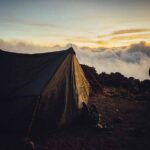
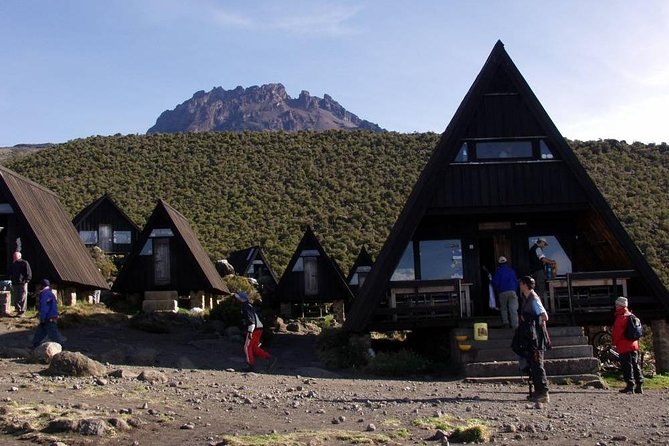
A huge part of Marangu’s appeal is sleeping in huts—dormitory-style accommodations. This is a big deal if you’re not trying to manage tents and full camping routines.
The package also supports daily comfort in ways that can make the altitude feel less punishing:
- Fresh drinking water daily
- Hot water for washing daily
- Meals at regular points that help you keep energy steady
- Camping equipment included in the broader gear list (useful if anything requires it)
In real terms, hot water and food matter more than people think. On summit night, you’ll be thinking about warmth and calories constantly. Having those logistics handled means you can focus on trekking.
The team behind your summit attempt: guides, porters, cook, and safety focus
This trek runs with a full mountain team: qualified guides, assistant guides, porters, and a cook, all with their wages covered. The vibe you want here is “supported, not dragged.” The best Kilimanjaro teams keep you moving at a pace that protects your altitude adaptation.
What I like about this setup is that emergency readiness is baked in. You’ll have emergency oxygen available for emergencies only. It’s not a loophole or a shortcut, but it does give real reassurance when you’re that high.
One name that shows up in the trip coordination for this company is Wence Tarimo. You may see his involvement in communication and organization around Moshi and the trek.
And yes, the service focus shows up in the kind of experiences people describe: well-planned days, meals that feel like they were thought through, and staff who keep safety as a priority.
Gear and packing: what’s included, what you should rent, and what not to forget
You won’t be trekking empty-handed, but you do need your personal setup.
The trek includes climbing-side basics like camping equipment, plus camp chairs/tables and sleeping mattress in the package list. Still, your personal gear matters because weather at Kilimanjaro can shift fast, especially at night.
What’s not included:
- Personal hiking/trekking gear (you can rent some gear locally in Tanzania)
- Personal medicine
- Water purifying tablets
- Snacks
- Portable toilet (optional but highly recommended)
My practical advice:
- Bring layers you can manage with gloves and a hat when cold hits.
- Plan for dry mornings and chilly nights.
- Don’t underpack for rain or wind. Even on a route known for relative structure, Kilimanjaro weather can make a simple hike feel harder.
If you tend to forget things when tired, make a checklist at least a week before departure. Kilimanjaro is not the day to improvise.
Who this trek is best for on Marangu
This six-day Marangu trek suits you if:
- You want hut-style sleeping rather than full camping
- You’re aiming for a structured plan with acclimatization built in
- You have a moderate physical fitness level
- You’d rather spend your energy trekking than managing logistics
It may not be ideal if:
- You strongly dislike dorm-style sleeping arrangements
- You’re looking for a fast, minimalist climb with fewer support services
- You want total independence rather than a staffed team
Also, the private tour format is listed: only your group participates. That’s helpful if you like a quieter pace with fewer strangers in your camp routine.
Should you book this 6-day Marangu Kilimanjaro trek?
If your priority is a classic, older-established Kilimanjaro route with hut sleeping, organized meals, and transfers handled from Moshi, I think this trek is a solid choice. The biggest reason is the acclimatization design: the extra day at Horombo is exactly where Kilimanjaro success starts to tilt in your favor.
I’d book it if you’re comfortable with a demanding summit day, you want safety support like emergency oxygen, and you value a team that keeps the journey running smoothly. The price is high, but when you include guides, porters, meals, fees, lodging, and transfers, you’re not just buying a trail—you’re buying a full system for getting you to Uhuru Peak with the mountain managed as best as it can be.
If you’re on the fence because you worry about altitude, don’t shrink back just because Marangu feels more “easy.” Instead, plan your approach: take the acclimatization day seriously, keep your pace controlled, and treat the midnight climb like the marathon it is.
FAQ
How long is the trek?
The trek is 6 days (approx.), with multiple stages climbing from Marangu gate through Mandara Hut, Horombo Hut, Kibo Hut, and then the descent back to Marangu gate.
Where does the trek start and end?
You start at the Kilimanjaro National Park area used for ticketing, and the activity ends back in the Kilimanjaro National Park area, followed by a transfer back to your hotel in Moshi.
Are airport transfers included?
Yes. Return transfers between Kilimanjaro airport and Moshi are included.
What kind of accommodation is used on the Marangu route?
Marangu is the only route described here as offering sleeping huts in dormitory-style accommodations.
Is emergency oxygen provided?
Yes. Emergency oxygen is included for emergency use only, not as summit aid.
What are the summit-day timings like?
You begin the final ascent around midnight, you reach Gillman’s Point at sunrise (5681m), and then you continue to Uhuru Peak at 5895m.
What’s included in meals and water?
Breakfast and dinner are included for the trek nights, lunch is included as well, plus fresh water for drinking and hot water for washing daily.
Do I need visas or travel insurance for this trip?
Visas and travel and health insurance are not included.
Can I cancel for a full refund?
Yes. Free cancellation is available up to 24 hours in advance for a full refund.
Would you like me to tailor this review to your situation (age/fitness, summit goal, and whether you prefer more comfort or more budget options)?