REVIEW · SAPA
Private Trekking through Terraces Rice Fields in Sapa
Book on Viator →Operated by Sapa Trekking Hiking Tours · Bookable on Viator
Rice terraces hit different up close.
This private half-day trek in Sapa takes you from Sapa center down through the Muong Hoa valley villages, with stories tied to everyday life for the Black Hmong and Giay communities. I love that you get real village time (not just a photo stop), and I also love the mix of big views plus hands-on details like terrace patterns and family homes. One consideration: the route involves walking on uneven paths, so moderate fitness helps, especially if the weather is wet.
What makes this outing especially interesting is the way the day is shaped around local culture and the terraces themselves. The trip is guided by someone connected to the Black Hmong community, with context on things like wedding parties, funerals, and Lunar New Year—timely, human details that make the scenery feel less like a postcard and more like a lived-in place. It stays private for your group, so you can ask questions without feeling rushed.
The value is strong for the length and what’s included: English-speaking guide, lunch, village entry fees, water, and a raincoat if the sky turns. It’s listed at about $45 for a 5.5-hour experience, which is impressive if you’re looking for a guided day that doesn’t balloon in price.
In This Review
- Key highlights to plan around
- Terraces near Muong Hoa: why the walk beats the viewpoint
- Start at Sapa Church and get set for a 9:00 departure
- Stop 1: Y Linh Ho Village and Mount Fansipan in the background
- Stop 2: Lao Chai Black Hmong village and ribbon-like terraces
- Stop 3: Ta Van Village for Giay culture in about 30 minutes
- Lunch, water, and the small extras that keep the day smooth
- Walking reality: moderate fitness and wet-day timing
- English-speaking private guide: what you’ll actually get from the stories
- Price and logistics: why $45 can be a smart deal
- Who this trek is best for (and who might want something else)
- Final call: should you book this private terrace trek?
- FAQ
- How long is the trekking experience?
- Where does the tour start and when?
- Is the tour private?
- What’s included for food and water?
- Are admission tickets included?
- Do you provide rain protection?
Key highlights to plan around
- Y Linh Ho terraced fields by Muong Hoa stream, with Mount Fansipan as a dramatic backdrop
- Lao Chai Black Hmong village walk, where terraces run in ribbon-like lines in front of homes
- Ta Van Giay culture stop, shorter but focused on food, music, and local community life
- Lunch included with a vegetarian option available
- Raincoat provided for bad weather, plus transport back from the last village
Terraces near Muong Hoa: why the walk beats the viewpoint
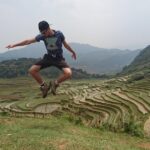
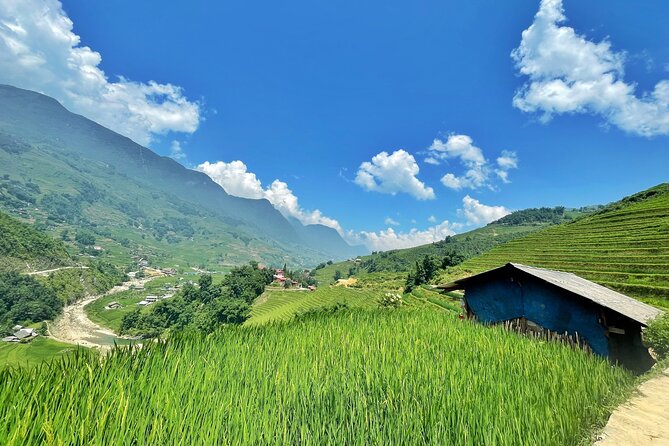
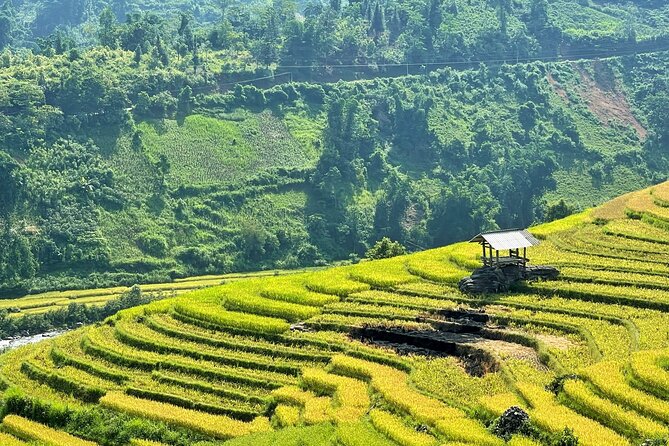
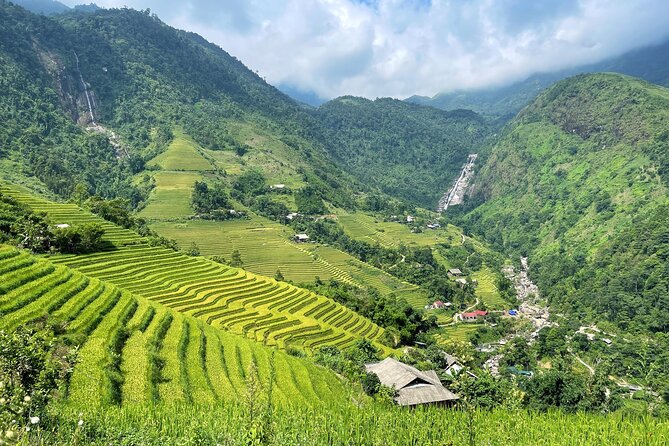
Sapa’s terraced rice scenery is famous for a reason, but the difference on this trek is timing and angles. By the time you’re walking between villages, the terraces aren’t just something you stare at from above. They turn into a map you move through—curves, ridges, and small water channels that make the valley feel engineered by generations of work.
You’ll also notice that terrace views change fast even when the distance stays short. The valley pulls your gaze up and down, and you’ll keep getting new views of different sections of the slopes as you descend from the Sapa center area. That matters because it turns the hike into a sequence of “new scenes,” not one long look at the same panorama.
The other big advantage: you’re not rushing only between big scenic stops. The day is arranged around village rhythm, so you see how agriculture sits beside houses and community life. When your guide explains how local events connect to the seasons and community, it helps you read the terrain with more meaning.
You can also read our reviews of more tours and experiences in Sapa.
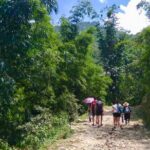
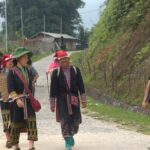
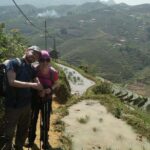
Start at Sapa Church and get set for a 9:00 departure
The tour starts at Sapa Church on P. Hàm Rồng, right in the town center area. The start time is 9:00am, and pickup is offered, which makes the morning less stressful—especially if you’re not sure how to get out to the villages on your own.
You’ll typically want to arrive a few minutes early so you can match with your guide and get your bearings fast. This is also a good moment to do a quick gear check: shoes with grip, a light layer for the cooler morning, and whatever keeps you comfortable for a few hours of walking.
The tour is private, meaning it’s only your group. That’s a real quality-of-life upgrade in places like Sapa, where paths can get busy near major viewpoints. Private also means your pace can be more flexible, within reason, depending on how your group is feeling.
Stop 1: Y Linh Ho Village and Mount Fansipan in the background
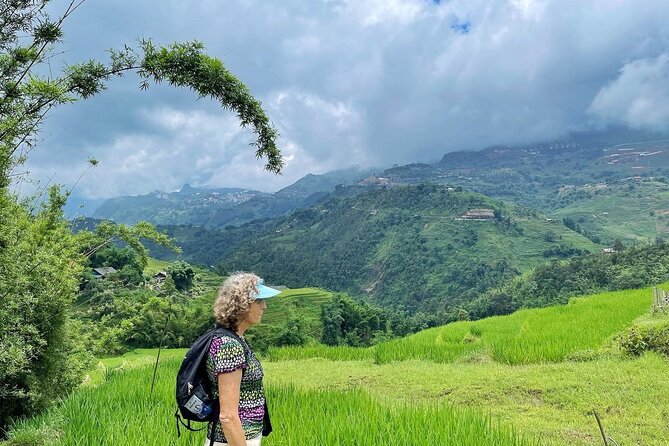
Your first stop is Y Linh Ho, a small village along the Muong Hoa stream with Mount Fansipan towering above. This is where the terraces tend to feel most dramatic, partly because the valley opening gives you wide sightlines and partly because you’re viewing terrace sections that hug the stream area.
You get about 3 hours here, which is a long enough window to do more than skim the edges. That time matters because it lets you notice details: the way the terraces step down the slope, the way fields sit in relation to the homes, and the way water movement shapes what grows where. A long-ish village stop also helps if you’re the type who likes to ask questions and doesn’t want to feel like you’re on a strict clock.
One practical note: this is the first part of the day, so it’s a good place to judge how your legs are doing. If you’re going to be sore later, it’ll often show up after the first village segment. Take it steady, pause for photos when you want, and save energy for the longer village-to-village feeling you’ll get next.
Tickets for this stop are included, so you don’t need to worry about paying admission separately.
Stop 2: Lao Chai Black Hmong village and ribbon-like terraces
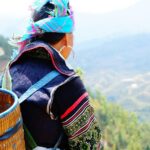
Next up is Lao Chai, described as an ancient Black Hmong village situated between the Muong Hoa valley and the terraced fields. This portion is shorter than the first stop—around 2 hours—but it’s dense with the kind of details that make Sapa feel real.
Here’s what makes Lao Chai stand out: the terraces wind in silk-ribbon shapes right in front of the houses. That phrase might sound poetic, but on the ground it means you get repeating curves and sweeping lines, with the fields visibly structured around home areas.
You’ll also get a sense of family presence. Your route includes views of the houses of the Ly, Lo, and Giang families. Even if you’re not doing a formal tour inside every home, seeing how the village layout ties to the fields helps you understand how agriculture and daily life overlap.
Also, admission for Lao Chai is listed as free, which is a nice small cost saver inside an already budget-friendly trip.
Possible drawback: because the terraces can be close to the path in places, you’ll want to watch your footing. The scenery is worth it, but good shoes make a bigger difference here than in flat city sightseeing.
Stop 3: Ta Van Village for Giay culture in about 30 minutes
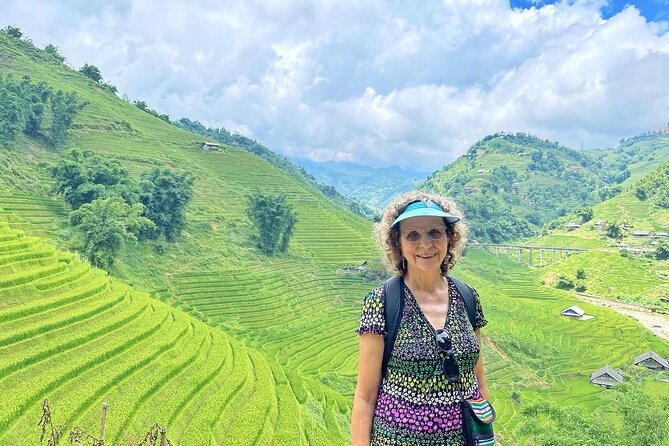
The final village stop is Ta Van, a community of Giay people. This is a shorter visit—about 30 minutes—so it’s more of a cultural snapshot than a long hangout.
Even with the shorter time window, Ta Van is valuable because it shifts the day from terrace-focused agriculture talk to broader cultural texture. The stop highlights things like local food, music, and community features. That mix is helpful because it keeps your day from becoming only about “pretty views” and instead rounds out the cultural story.
Tickets for Ta Van are included. After this stop, the tour provides transport back to Sapa from the last village, and the activity ends back at the meeting point.
If you’re the kind of traveler who likes deep village immersion, you may wish you had more time here. But as part of a 5.5-hour half-day plan, it works well as a closing chapter after the longer Y Linh Ho and Lao Chai segments.

Lunch, water, and the small extras that keep the day smooth
A trek goes sideways when you’re hungry, cold, or stuck without simple comforts. This tour handles a few key issues for you:
- Lunch is included, and it’s traditional food.
- Vegetarian food is available if you need it.
- You get one small bottle of water.
- A raincoat is provided if weather turns bad.
In Sapa, weather changes quickly. Even if you start with clear skies, you can end up with mist or rain while you’re walking down. Having a raincoat included isn’t flashy, but it’s the difference between enjoying the trek and spending half the day uncomfortable.
One more practical point: the price includes village entry fees. That means fewer “surprise payments” mid-day. For a half-day tour, that kind of transparency makes a real difference in how easy the day feels.
If you like to sip more water than one bottle, bring a little extra on your own. The tour includes one bottle, but it doesn’t pretend that one bottle fits every thirst level and pace.
Walking reality: moderate fitness and wet-day timing
The trip calls for moderate physical fitness. That doesn’t mean you need to be a trail runner, but you should expect uneven ground and some uphill/downhill movement as the route connects villages and terrace areas.
The biggest factor isn’t just effort—it’s footing. In wet conditions, paths can get slippery. That’s why the included raincoat matters; it helps you stay warmer and drier, and you’re better able to keep your balance.
Timing helps too. Starting at 9:00am means you’re usually moving earlier in the day, when fatigue can be lower and visibility may be better. Still, the experience requires good weather, so if conditions are poor, you should be ready for rescheduling or a refund offer.
My practical tip: pack with the same mindset you would for a day hike. Good grip shoes, a light layer you can remove as you warm up, and a small bag to keep your phone safe from mist.
English-speaking private guide: what you’ll actually get from the stories
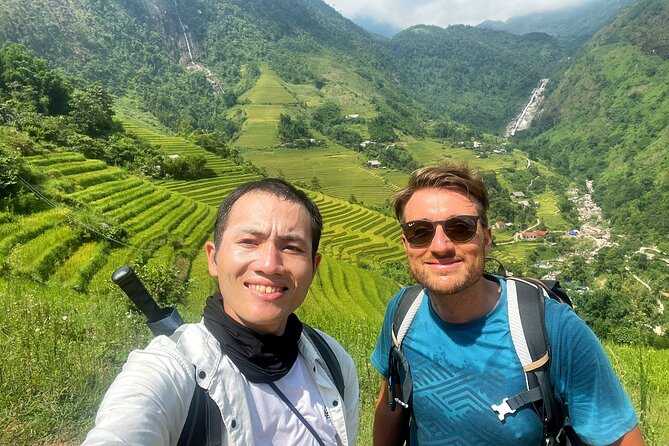
The value of a private guided trek isn’t just navigation. It’s what the guide helps you notice.
This experience is built around cultural storytelling, and it’s tied to the guide’s connection to the Black Hmong community. You’ll hear about community events like wedding parties, funerals, and Lunar New Year—not as abstract facts, but as part of how people live and mark time.
That kind of context matters because terraces are more than agricultural technology. They’re part of the calendar. When you understand why people talk about seasons and community gatherings, you start seeing the valley as a system, not a scenic set.
Also, the tour team is described as responsive and professional, with English-speaking guidance that’s easy to follow. If you’re worried about your questions not landing, this is the kind of setup where communication tends to work smoothly.
Price and logistics: why $45 can be a smart deal
At around $45 for a private 5.5-hour trek, this stands out as good value—especially because several costs are wrapped in:
- Guide (English speaking)
- Lunch (traditional, vegetarian option available)
- Village entry fees
- Water
- Raincoat
- Transportation back to Sapa from the last village
For many Sapa activities, costs add up fast once you factor in guide fees, transport, and admissions. Here, you get a structured day that covers the basics without turning it into a pay-as-you-go puzzle.
A fair caution: $45 also means you should manage expectations around pacing. The itinerary is designed for a half-day arc: three village stops, with Ta Van shorter than the earlier sections. If you want a long, slow, hours-only wandering day, you might look for an extended trek version. But if you want something that balances views, culture, and comfort, this length is a strong fit.
Who this trek is best for (and who might want something else)
This tour is a great choice if you:
- Want terraced rice views tied to village life
- Prefer a private day with an English-speaking guide
- Like cultural context, not just scenery
- Want lunch and basic comfort items handled for you
It’s also a good match for couples and small groups who don’t want the scramble of shared tours.
You might choose something else if you:
- Have very limited mobility. The route involves walking and uneven terrain.
- Want a full day of village immersion. Ta Van is short, and the total day is built for a quick, focused route.
Final call: should you book this private terrace trek?
If your goal is a guided half-day that combines Sapa’s signature rice terraces with meaningful village context, this is easy to recommend. I like that the plan covers the big-name village areas—Y Linh Ho, Lao Chai, and Ta Van—without leaving you cold or hungry, since lunch, water, and a raincoat are included.
Book it if you want something that feels authentic, organized, and not overly expensive. Think of it as a well-paced cultural hike: you’ll spend enough time in key villages to feel the place, then return to town without turning the day into a marathon.
If the weather looks risky, keep an eye on conditions. This experience depends on good weather, so plan flexibility matters. And do bring the right footwear; the scenery is worth the effort, but you’ll enjoy it more when your footing feels secure.
FAQ
How long is the trekking experience?
It runs for about 5 hours 30 minutes.
Where does the tour start and when?
The meeting point is Sapa Church on P. Hàm Rồng, and the start time is 9:00am.
Is the tour private?
Yes. It’s a private tour, and only your group participates.
What’s included for food and water?
Lunch is included, with vegetarian food available if needed. You also get one small bottle of water.
Are admission tickets included?
Yes. Village entry fees are included overall, with specific stops listing ticket inclusion. Y Linh Ho and Ta Van include admission tickets, while Lao Chai is listed as free.
Do you provide rain protection?
A raincoat is included in case of bad weather. The experience does require good weather, though.