REVIEW · ANDROS
10-Day Inn-to-Inn Self-Guided Trekking Holiday Andros Trail – Cyclades
Book on Viator →Operated by One Foot Forward · Bookable on Viator
Andros rewards slow steps. This private, self-guided inn-to-inn trek links Andros’ best-known walking areas with real history—towers, monasteries, old stone paths—and time to cool off in blue-water bays like Batsi. You hike by day, sleep in a new town each night, and keep your own pace.
My favorite parts were the logistics and the trail support. I liked that you get daily breakfast so mornings start clean, and you also receive a practical “Walkers Pack” with route info and local tips so you’re not guessing. I also felt like I could relax about the moving parts: the plan is designed around easy transfers and luggage handling.
One thing to consider: the walking can run hot and some days are described as demanding with challenging climbs. If you’re not used to uphill hikes, you’ll want to pace yourself, bring smart water habits, and plan for warm weather conditions.
In This Review
- Key points to know before you hike Andros’ trail
- Port-to-hotel comfort in Gavrio and your Walkers Pack setup
- Day 2 from Froussei Valley: watermills, ravines, and a first big climb
- Day 3 toward Batsi: Agios Petros Tower to a round-bay swim
- Day 4 via Fardia Strada to Menites: Venetian-era paths and tough climbs
- Day 5 to Ormos Korthiou: Panachrados Monastery and a sea-side finish
- Day 6 on the old road: Andros Town, medieval castles, and Dipotamata watermills
- Day 7 toward Apoikia: the Pythara ravine, small waterfalls, and possible rerouting
- Day 8 through Vourkoti to Arni: Kouvara ridge views and highest-point drama
- Day 9 down to Batsi: descending from Arni and finishing with biodiversity
- Day 10: a simple port transfer for your departure
- Price and value: what you’re paying for on this $1,037.16 trek
- How demanding is it, really? Fitness and pacing on Andros trails
- Who this Andros trek is best for (and who should rethink it)
- Should you book this Andros Trail?
- FAQ
- FAQ
- Is this trek guided or self-guided?
- Where does the trekking start and where do I end?
- How many nights of accommodation are included?
- Is breakfast included each day?
- Do you handle luggage transfers between hotels?
- Are transfers provided to the start of each trekking day?
- What fitness level do I need?
- What is the Walkers Pack?
- What if the weather is poor?
- Can I cancel and get a full refund?
Key points to know before you hike Andros’ trail
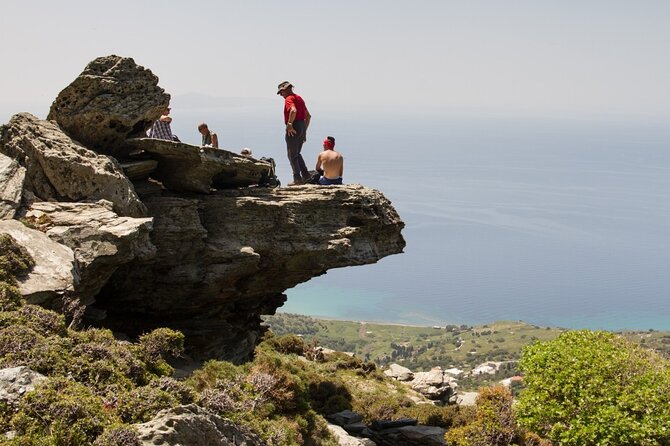
- Luggage transfer + inn-to-inn rhythm means you travel light and hike more
- Daily breakfast included keeps you fueled without extra planning
- Walker’s Pack briefing and documentation helps you follow the route with confidence
- Historic waypoints like the Agios Petros Tower and monasteries add context to every day
- Season-based contingency on one day can extend your walk if Apoikia’s only hotel is closed
Port-to-hotel comfort in Gavrio and your Walkers Pack setup
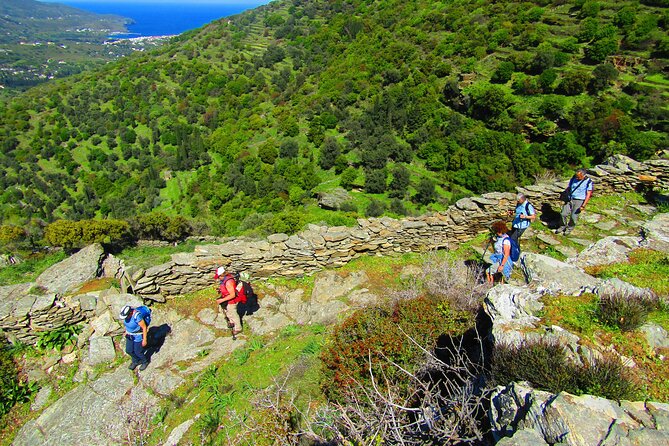
Most hiking holidays start with uncertainty. Here, you start with a port meet-up in Gavrio. You’ll connect with the team, get driven to your hotel, and settle in. There’s even a welcome moment with drinks and Greek mezes, which is a nice way to shift from travel-mode to vacation-mode fast.
What matters, though, is what happens next: you receive your self-guided documentation, the Walkers Pack, plus a briefing about the routes, the island, and how the days work. This is where you get your bearings fast—where to start, what to watch for, and what’s worth a closer look when the trail takes you through villages and old paths. In plain terms, it helps you hike like a planner, not like a lost tourist.
Gavrio is also a smart place to base day one, because it’s the hinge of the Andros trail story. You’ll spend your first night here, then start hiking the island’s interior the next morning.
Practical tip: on arrival day, don’t overbook your evening. You want an early-ish dinner and an easy night because the next days include real elevation changes.
You can also read our reviews of more tours and experiences in Andros.
Day 2 from Froussei Valley: watermills, ravines, and a first big climb
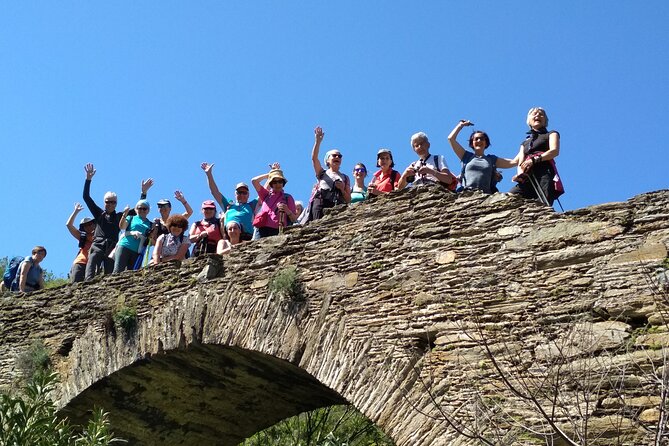
Your second day begins with a transfer to the starting point in the Froussei Valley. This is the kind of start that changes how you see Andros. Instead of assuming the Cyclades are all dryness and wind, the route takes you through a ravine-like setting between Ammolohos and Palestou, walking alongside a stream with old stone watermills. The trail passes the millers’ village area that functioned until the mid-20th century. It’s not just scenery; it’s evidence of how people once engineered water and energy in a place known for dry conditions.
Then the day tilts upward. The route ascends to cross Ammolohos and climb toward the higher slopes near Gavrio—around 600 m. You finish in Gavrio, so you’re not trapped miles away with no payoff. This is a great first “test day”: long enough to feel like trekking, but structured to bring you back to your base for the next overnight.
Where this hike shines: when you’re walking through the mill area and then watching the path gain elevation, you get a satisfying cause-and-effect feeling—how the island’s water and the terrain shaped where people lived and worked.
Day 3 toward Batsi: Agios Petros Tower to a round-bay swim
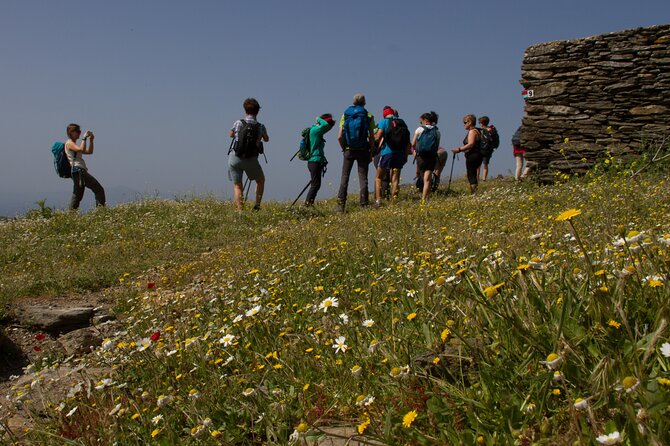
Day three reads like a history lesson with good shoes. You start from Gavrio Town, and before you reach the village of Batsi, you cross the Agios Petros Tower. The tower dates to the Hellenistic period (4th–3rd century BC) and is noted as one of the best preserved in the Cyclades. It’s the kind of landmark that instantly tells you this is not random footpaths; there’s a layered past here.
After the tower, the trail moves through a picturesque village and continues to the Monastery of Agia. You’ll want to give yourself time for this detour because it’s specifically called out as worth visiting. Then you get a descent trail down to Batsi, a seaside town known for its round bay and clear water.
This is where Andros starts to feel like a true hiking-and-rest combo. You finish a day of walking and you can reward yourself with a swim in the sea right where you sleep.
Consideration: coastal descents can be tough on knees after a climb. If you have any knee sensitivity, bring trekking poles. They’re not glamorous, but they save you later.
Day 4 via Fardia Strada to Menites: Venetian-era paths and tough climbs
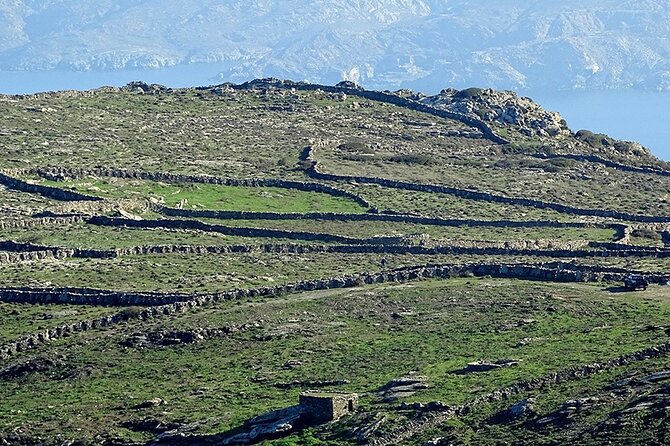
Day four is for hikers who want a mix of history and elevation. After breakfast and a transfer to your trail start, you begin along one of the island’s oldest and longest routes. It’s called Fardia Strada and traces back to Venetian times. That detail matters: you’re walking a route that has been used long before modern trekking maps existed.
The route leads you to Pitrofos Village, where sea views show up as you cross the mountain. Then you continue to Menites Village. The day is described as demanding with challenging elevation. It also notes that the hike combines segments of four routes from the network, which helps explain why it feels varied—different terrain, different angles on the island, and fewer moments of monotony.
Why this day is worth your energy: it’s one of the clearest “Andros is not just beaches” days. You’re in the middle of the island, moving through older connections between settlements.
Practical note: plan your pace. If you force speed on a day like this, the finish can feel harder than it should. Save your strength for the last part into Menites.
Day 5 to Ormos Korthiou: Panachrados Monastery and a sea-side finish
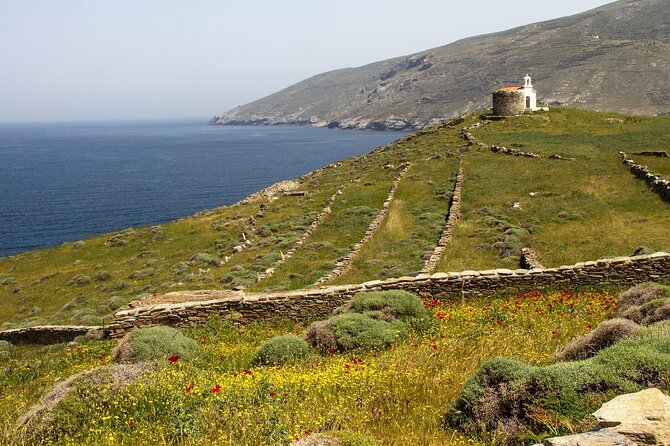
Day five is built around a mountain-to-sea feel. You start by combining two different routes from the Andros hiking network and a segment associated with the Andros Trail Race. The trail takes you to Panachrados Monastery in the Gerakonas mountain range at about 550 m.
Then comes the move south: the path travels along the next side of the mountain toward the Korthi area villages, with a rich agricultural feel and sea views as you approach the end.
You finish at Ormos Korthiou, described as a seaside town. This is one of the days where the “reward” is built into the walk rather than tacked on at the end—you can sense the coast coming as the terrain changes.
Consideration: because this day mixes routes, expect a range of trail character. Some parts might feel smoother, while others could be more uneven. Good footwear is not optional here.
Day 6 on the old road: Andros Town, medieval castles, and Dipotamata watermills
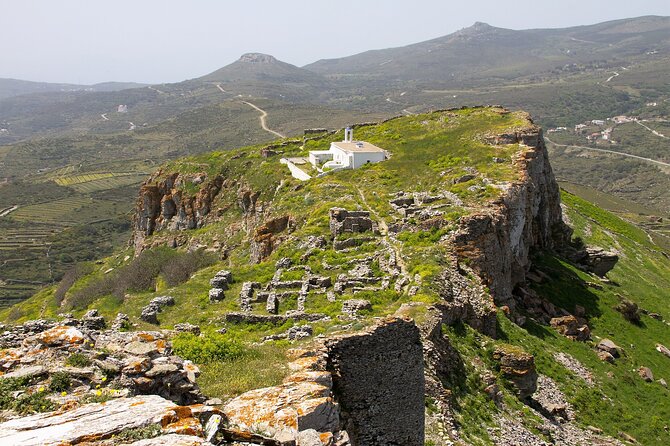
Day six takes you into Andros Town, and it’s one of the most historically framed walks on the trip. Your route uses one of the popular network options, following agricultural areas. It also traces an older road that connected Hora to the island’s two medieval castles.
This is the day where you’re moving between big ideas—castles, commerce, and old travel arteries. On the way you pass the Upper Castle, the Dipotamata gorge with stone watermills, an arched bridge, and the village of Sineti.
If you like walking where you can picture how people once moved—trading, farming, traveling—this is the day. Even if you’re not a history superfan, these specific spots help you anchor what you’re seeing.
Practical tip: when the trail crosses gorge areas and bridge-like sections, slow down. It’s easy to rush when the day feels busy. A careful pace keeps you safe and helps you enjoy the details.
Day 7 toward Apoikia: the Pythara ravine, small waterfalls, and possible rerouting
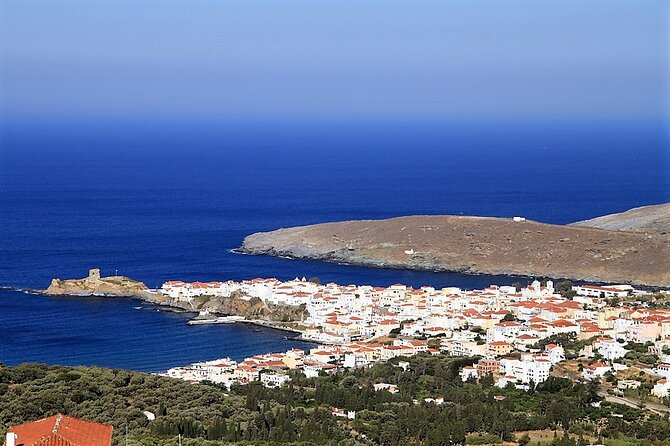
Day seven is described as a relatively shorter walk, starting from the capital town toward Apoikia Village. You’ll follow a well-preserved trail through major settlements linked to seamanship and rural Andros, running up parallel to the Pythara ravine.
There’s a specific detour worth knowing about: a small offshoot route to small waterfalls. If you like quick nature breaks during a hike, build in time for this.
Then there’s a real-world contingency. Apoikia is remote, and the plan notes that the only hotel may be closed depending on season. If that happens, you’ll walk a 12 km circular route and overnight back in Andros Town instead. This kind of note is actually a good sign: it means the route isn’t built on fantasy conditions. You’ll have a backup approach.
How to use this info: ask yourself if you’re okay with a possible extra loop length. If 12 km is within your comfort range, you’re set. If you prefer strict control over distance, you might want to plan for that possibility.
Day 8 through Vourkoti to Arni: Kouvara ridge views and highest-point drama
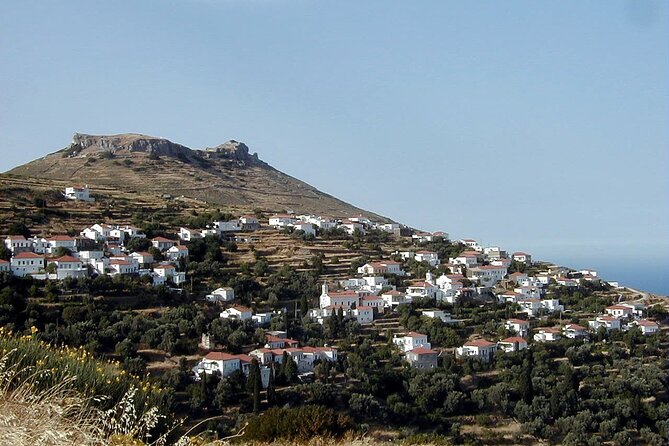
Day eight shifts you into greener, higher-feeling terrain. You go from the northeast and Apoikia through Vourkoti settlement and into Arni, specifically described as one of the island’s greenest areas, with a forested valley.
Then the big payoff: walking along the ridge near the highest point of Andros, Kouvara, for breathtaking views and diverse scenery.
This is the kind of day hikers remember long after the logistics fade. Not because it’s “perfect,” but because the route is built to move you from village life into wild-feeling valley and up toward the island’s top.
Consideration: ridge walking can mean wind exposure. Even if it’s not described as windy here, the Cyclades often bring breezes that can shift how warm you feel. Pack a layer and don’t rely on the morning weather alone.
Day 9 down to Batsi: descending from Arni and finishing with biodiversity
Day nine is a downshift in altitude with a coastal reward. You descend from Andros’ highest mountain area and move from the green valley of Arni toward the cosmopolitan Batsi.
The route is described as one of the greenest hiking routes on the island with significant biodiversity. Dense vegetation and splendid views connect the mountain to the sea. In other words: you get both shade and scenery variety, which can help when the earlier days have already taken your stamina.
Finish at Batsi, where you’ve already seen the round bay charm on day three. That repeat helps too—you can compare your experience from different angles and different days.
Practical tip: plan your last evening in Batsi intentionally. This is a perfect place to do one last good meal and give your legs time to recover.
Day 10: a simple port transfer for your departure
Your final day depends on your departure time. You’ll get a transfer to the port so you can leave without last-minute scrambling.
It’s a small detail, but it matters. A hiking holiday can feel chaotic on departure day unless it’s planned well. Here, the ending is designed to keep your last hours calm.
Price and value: what you’re paying for on this $1,037.16 trek
At about $1,037.16 per person, this trek isn’t the cheapest way to do Andros. The value comes from what’s bundled into the fee:
- Eight nights of accommodation are included, so you’re not hunting for lodging on each stop.
- Daily breakfast is included, which saves time and takes one daily decision off your plate.
- Luggage transfer handles the heavy part of “move every night.”
- You also get transfers to each trekking day’s starting point, so you don’t burn energy on logistics instead of hiking.
- It’s a private tour for just you and your group, so you’re not negotiating crowds into a self-guided plan.
On top of that, you get the “human” part: the team briefing and ongoing communication that many people highlight as a big reason the trip feels smooth. I like self-guided trips, but I also want structure—and this one clearly invests in that.
Bottom line: you’re paying for stress reduction plus real route support. If you already know Andros well and love doing everything from scratch, you might DIY cheaper. If you want the freedom of self-guiding without the guesswork, this price starts to make sense.
How demanding is it, really? Fitness and pacing on Andros trails
The tour notes moderate physical fitness. But moderate doesn’t mean easy. Several days include challenging elevations and longer connections, especially the day built around Fardia Strada and the day moving over higher points like Kouvara.
Here’s what helps:
- You’ll start each day with breakfast, so you’re not hiking hungry.
- You’ll get transfers to starting points and luggage handling so you can focus on walking.
- The routes are described as signposted and supported through documentation.
Also, one real-world caution from a past traveler: the hikes can be hotter than expected. Even if you don’t expect extremes, summer-style warmth can still catch you off guard. Bring sun protection, plan water carefully, and don’t treat the itinerary’s description as a temperature guarantee.
Who this Andros trek is best for (and who should rethink it)
You’ll likely love this if you:
- Want self-guided freedom with strong route support
- Prefer real local food and staying in different towns (rather than one base and day trips)
- Like hiking that mixes historic anchors with sea and valley scenery
- Appreciate having luggage transfer so your pack stays sane
You might think twice if you:
- Hate uphill walking or need very predictable distances (because one day can switch to a 12 km circular option if a hotel is closed)
- Are sensitive to heat and don’t plan for warm conditions
- Want a fully guided, commentary-heavy experience every minute (this is self-guided)
One more practical note: service animals are allowed, and it’s noted as near public transportation—useful if you’re building flexibility into your wider trip.
Should you book this Andros Trail?
If you want a trekking holiday that feels grown-up and calm—good planning, real walking variety, and the freedom to hike at your own pace—this is a strong pick. The combination of eight included nights, daily breakfast, and luggage transfers makes it easier than most “independent” trekking setups.
I’d book it if you’re excited by towers, monasteries, old watermill connections, and finishing hikes with sea time in Batsi. If heat or steep days scare you, pick your travel month wisely and bring a smarter approach to pacing. And if you like being able to switch plans when conditions change, you’ll probably appreciate the trip’s season-aware flexibility around Apoikia.
FAQ
FAQ
Is this trek guided or self-guided?
It’s self-guided. You’ll receive a briefing and your Self-Guided documentation called the Walkers Pack, and then you hike the routes on your own.
Where does the trekking start and where do I end?
You start in Gavrio (Gavrio 845 01, Greece). The activity ends back at the meeting point.
How many nights of accommodation are included?
The trip includes eight nights of accommodation.
Is breakfast included each day?
Yes. Daily breakfast is included so you start each walking day with food ready.
Do you handle luggage transfers between hotels?
Yes. Luggage transfer is included, so you don’t have to carry everything between towns.
Are transfers provided to the start of each trekking day?
Yes. After breakfast, you get a transfer to the starting point of your trekking day.
What fitness level do I need?
You should have moderate physical fitness. Some days include demanding elevations and challenging terrain.
What is the Walkers Pack?
It’s your self-guided document package. It includes travel information and local recommendations, plus a briefing about the trails and how the program works.
What if the weather is poor?
This experience requires good weather. If it’s canceled due to poor weather, you’ll be offered a different date or a full refund.
Can I cancel and get a full refund?
Yes. You can cancel up to 24 hours in advance for a full refund. If you cancel less than 24 hours before the start time, the amount paid will not be refunded.