REVIEW · STROMBOLI
Stromboli: Sunset Trekking Tour
Book on GetYourGuide →Operated by Travelovers · Bookable on GetYourGuide
Volcano nights start with a hike. On this Stromboli sunset trek, you climb into the drama of an active volcano and then watch it put on a show right after golden hour. I love the mix of live eruptions and real geography like Sciara del Fuoco—and one drawback to plan for is that delayed starts or very large groups can make the hike feel rushed before darkness arrives.
You’re also not just standing there. You walk through wild vegetation, learn how the Aeolian Islands formed, and you even get gear that makes the later hike safer and easier, like a headlamp and a protective helmet. The other consideration is that it’s not for everyone: people with heart or breathing issues, or anyone who panics with heights, should skip this one.
Overall, this is a $35 tour that tries to balance awe with safety and guidance. If you go in prepared (proper shoes, water, jacket) and you’re comfortable hiking, you’ll get a front-row seat to an active volcano up close—sound, breath, and all.
In This Review
- Key things to know before you go
- What makes a Stromboli sunset trek work in real life
- Starting at Stromboli Adventures: where your hike really begins
- The Sentiero Paesistico climb: what you’ll notice on the way up
- Belvedere Point and Sciara del Fuoco: geology becomes something you can see
- The observation point at sunset: where eruptions turn into a show
- The return hike with headlamp time: expect a different pace
- Group size, start time, and why dusk can steal minutes
- Price and value: what you’re really paying for at $35
- Who should book this Stromboli sunset trek—and who shouldn’t
- Should you book the Stromboli Sunset Trek?
- FAQ
- How long is the Stromboli sunset trekking tour?
- How much does it cost?
- What’s included in the price?
- What should I bring?
- Are sports shoes allowed?
- Is the hike suitable for children?
- What languages are available for the guide?
- When can the tour be canceled or not take place?
- Is this tour suitable for people with medical conditions or heights fears?
Key things to know before you go
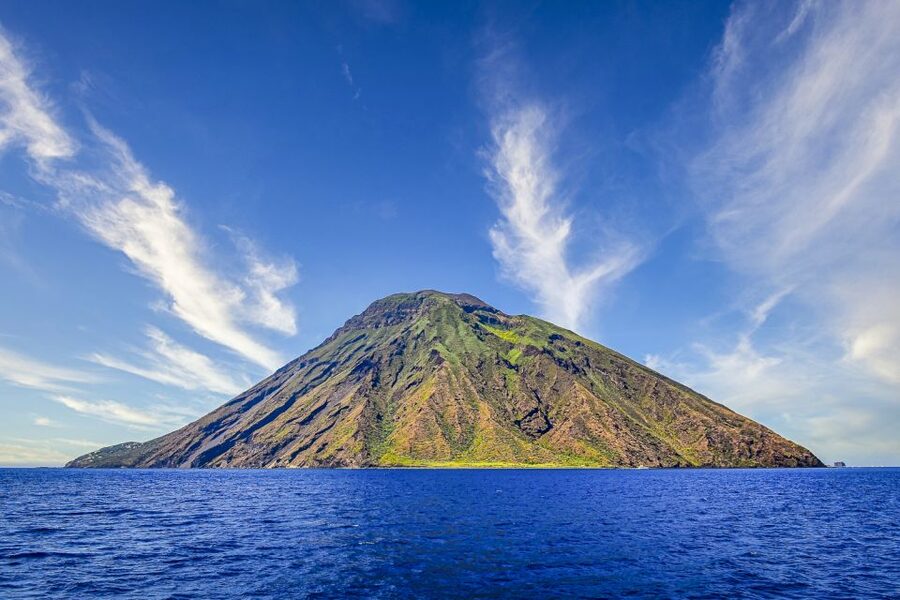
- Explosions on a timing you can plan around: you can admire eruptions about every 10–15 minutes from roughly 400 meters altitude.
- You’ll learn what you’re seeing: the guide explains the geology of the Aeolian Islands plus local flora, fauna, and settlement life.
- Sciara del Fuoco is the star view: at Belvedere Point, you’ll look down into the talus-scree depression that defines Stromboli’s activity.
- Sunset is the main event: the best viewing point comes after a short uphill stretch, with about one hour for sunset and volcano watching.
- You’ll hike after dark: a headlamp is included for the return portion.
- Group size and pacing can vary: the tour can run with different group sizes, so build in flexibility and give yourself extra breathing room.
What makes a Stromboli sunset trek work in real life
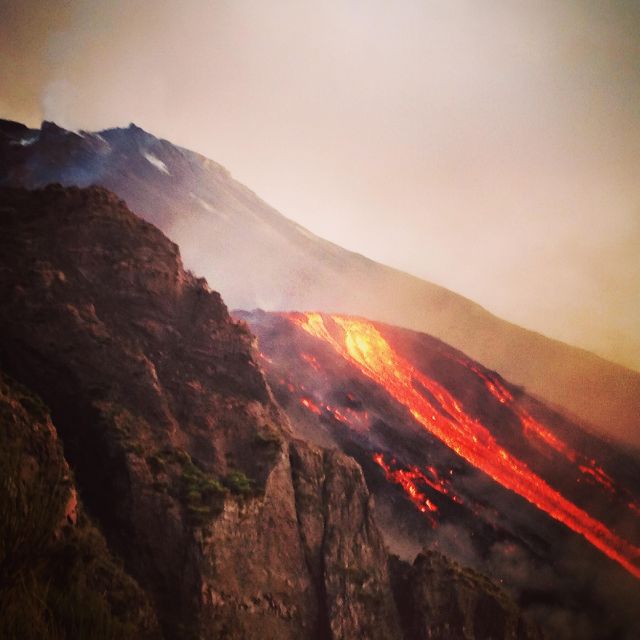
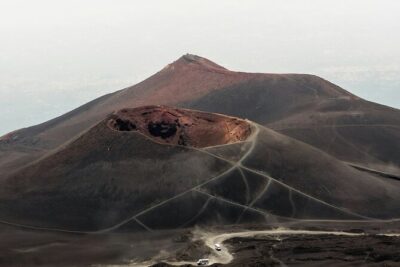
Stromboli’s appeal is simple: it’s active, and you get to experience that activity firsthand. From a lower altitude around 400 meters, you’re close enough to see volcanic explosions, but far enough that the moment stays controlled by the tour plan.
The sunset factor matters because it turns a daytime hike into a full sensory experience. You’re not only looking for orange bursts against the horizon—you’re also listening to the volcano and feeling how present it is in the landscape. That’s the kind of moment you remember because it doesn’t feel staged.
And you’re not just watching from one spot. The route strings together three stages that build: vegetation and early craters, the Belvedere viewpoints and Sciara del Fuoco, then the observation area for the show as daylight fades.
You can also read our reviews of more tours and experiences in Stromboli.
Starting at Stromboli Adventures: where your hike really begins
Your meeting point is Stromboli Adventures (Agenzia Escursioni & Tour Operator). Before the tour starts, you have to exchange your voucher at the ticket counter, and you should arrive 30 minutes early so you’re not rushing into check-in.
There’s also a short safety briefing right at the start (about 15 minutes). This matters more than it sounds, because you’re hiking on volcanic terrain and later you’ll be moving with a headlamp as light drops.
Included gear gets handed out as part of the setup: a hiking map, a headlamp, and a protective helmet. You still need to bring the basics your body depends on—especially hiking shoes, water, and a jacket for cooling air near sunset.
The Sentiero Paesistico climb: what you’ll notice on the way up
The hike begins along the Sentiero Paesistico, described as a 250-meter trek through lush vegetation. Even early on, the trail gives you clues that you’re not in ordinary country: you start seeing crater-related features as you climb.
This part of the experience is typically guided (about 1.5 hours total up to the main viewpoint time). The point isn’t speed. It’s rhythm—walking far enough to change your perspective, while staying safe on uneven ground.
Here’s where good footwear becomes non-negotiable. The tour specifies hiking shoes and says sports shoes aren’t allowed. That’s a real hint that the surface can be gritty and uneven, so save your feet and bring shoes meant for hiking rather than cushioned sneakers.
Also, consider your comfort with altitude even if the difficulty is described as low. “Low difficulty” doesn’t mean “flat.” You still need steady legs and a steady head.
Belvedere Point and Sciara del Fuoco: geology becomes something you can see
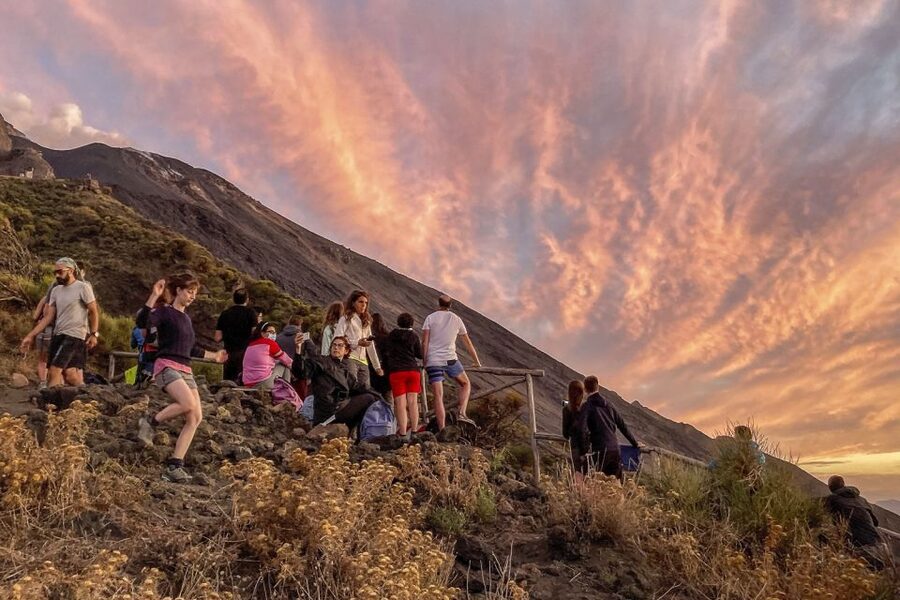
After getting underway, you reach Belvedere Point, where the views start to explain the volcano in a way photos can’t. This is where you can admire Sciara del Fuoco—the famous talus scree or depression that’s strongly tied to Stromboli’s activity.
From Belvedere Point, you walk about 20 minutes to the observation area. That short segment is worth it because it gets you into the viewing position for sunset and the eruption show that follows.
This is also where the guide’s talk really helps you get more out of the hike. You’ll get explanations about the geological history of the Aeolian Islands, plus notes on local flora and fauna and how human settlement life fits into this volcanic setting. Even if you’re not a geology person, hearing how the landscape works makes what you see feel more meaningful.
The observation point at sunset: where eruptions turn into a show
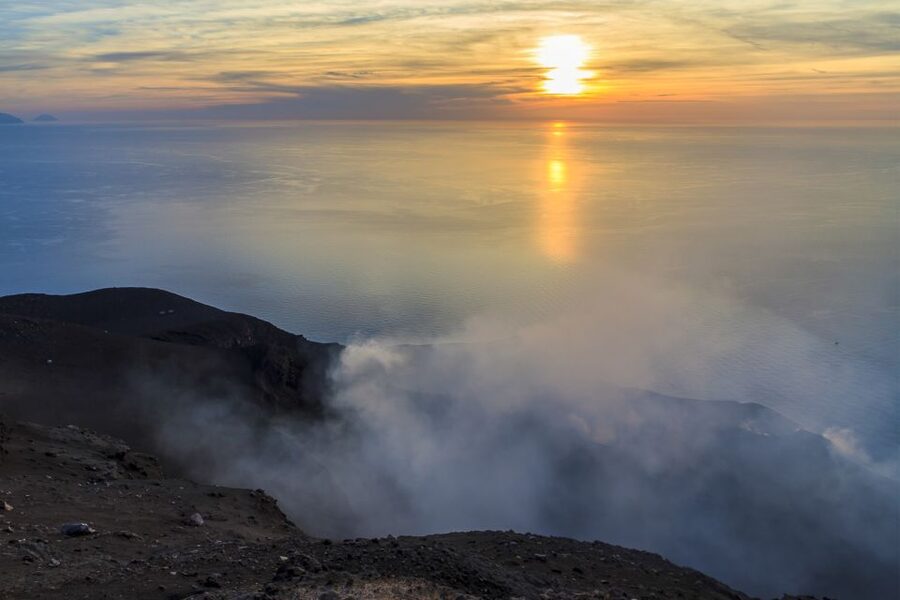
Once you reach the observation point, you get the best window for the day. Sunset viewing happens during a dedicated break time of about one hour, with scenic views on the way in and then the main show.
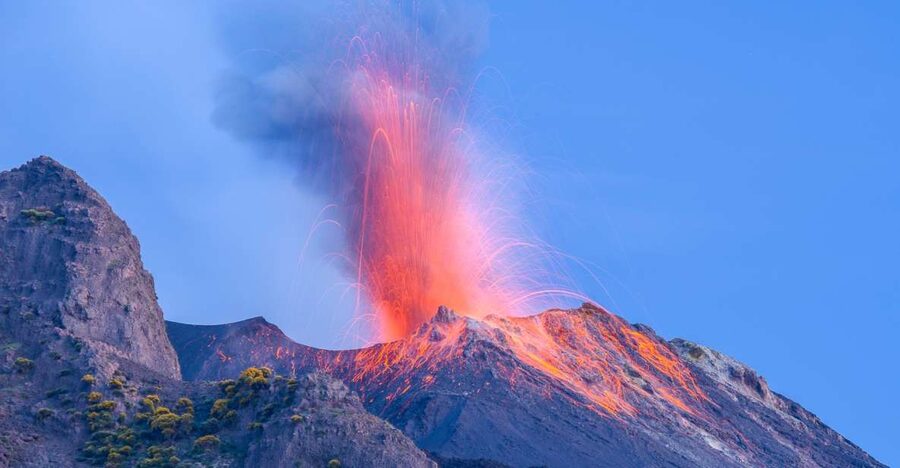
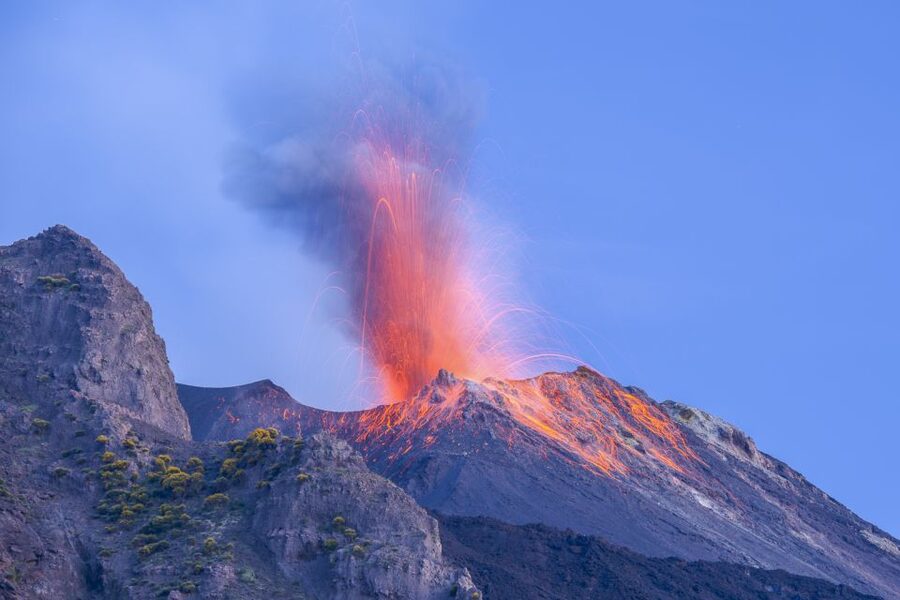
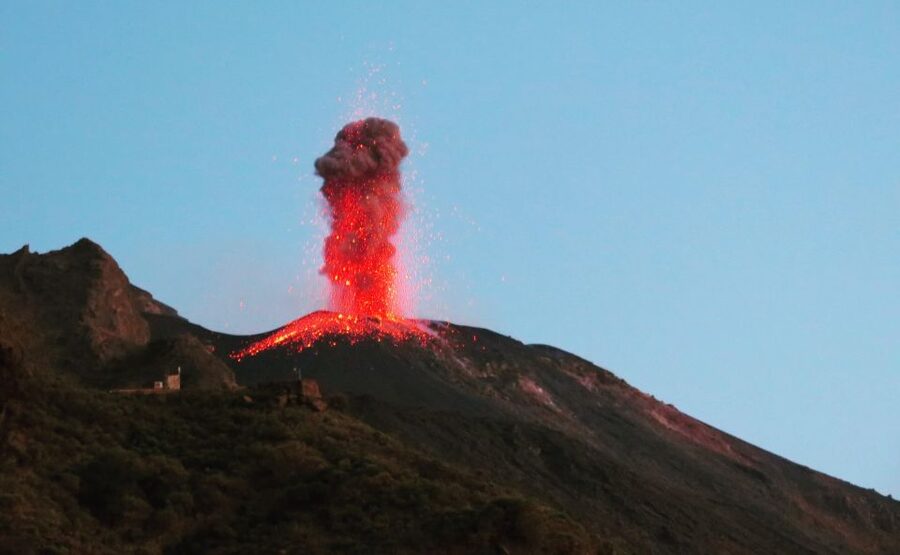
The key detail: you can see volcanic explosions every 10–15 minutes from around 400 meters altitude. That interval is important. It means you can actually relax and enjoy the view between bursts instead of constantly scanning like it’s a lottery.
This is also where the experience becomes more than visual. The tour highlights the chance to listen to the sound and breath of a live volcano. You’re outside, you’re up high, and the volcano is right there in the environment—so even the pauses between explosions feel like part of the performance.
A jacket helps. Even on a warm Sicily day, your body cools down once you stop moving for sunset. Bring water too, because the best viewing moment is easier when you’re not dealing with a thirst emergency.
The return hike with headlamp time: expect a different pace
Your tour includes another guided tour and walk back, bringing the total experience time to about 5 hours. The included headlamp is there for the fact that you’ll likely be hiking when light is fading or gone.
This stage is where energy management matters. Reviews-based feedback points to how pacing can vary, especially if a group is large: guides may move faster at the front, and the group can feel strung out. If that happens, it can reduce the time you get for explanations along the way.
So here’s how you protect your own experience. Stay near your guide when possible, but don’t feel pressured to sprint. If you need a slower pace, it’s better to state it calmly early rather than wait until you’re halfway up or down.
A practical trick: plan on short pauses only when you’re allowed to. You want to save your body so you can keep moving safely, especially after sunset when the terrain gets harder to read.
Group size, start time, and why dusk can steal minutes
Timing is a big deal on a sunset hike. If the tour starts later than expected, the dark arrives sooner, and that can shorten the amount of hiking you get before you have to adjust. Because the tour is built around sunset viewing, losing time can change the overall rhythm.
The same applies if the group is very large. Big groups can mean less personal attention, less time for stop-and-explain moments, and a pace that feels too quick for the middle of the pack. One way to reduce stress is to arrive early at the meeting point and handle check-in smoothly.
Also, keep your expectations flexible. This is an active volcano area, so conditions can change. The tour notes that in case of high volcanic activity or poor weather, the hike won’t take place. That isn’t a bait-and-switch—it’s part of keeping this experience safe.
Price and value: what you’re really paying for at $35
At $35 per person for about 5 hours, you’re paying for more than a hike. The value comes from the full package: a local guide, a hiking map, a headlamp, and a protective helmet—gear costs add up fast when you’re traveling.
You also get a free 30-minute tour at the Stromboli Visitor Center. That matters because it gives context to what you see outside. Seeing the visitor center content before or after your trek can help you connect the eruptions and crater features to the bigger picture of Stromboli and the Aeolian Islands.
You’ll still need to spend a little extra on what isn’t included. The tour doesn’t include snacks, so bring something small if you know you get hungry during hikes. And you’ll want hiking boots (or at least proper hiking shoes) that you bring yourself.
For the people who want something more than scenic walking—this is one of the better deals. It’s active, guided, and tied to a specific natural event window.
Who should book this Stromboli sunset trek—and who shouldn’t
This experience can be enjoyed by the whole family, but children under 5 may struggle. Even if you’re traveling with kids, you need to think about their tolerance for hiking time, uneven ground, and potentially cooler sunset air.
The climb is described as low difficulty, but the tour still expects participants to be in good health, used to hiking, and determined enough to reach the summit. If you’re the type who gets winded easily or stops often, you’ll have a better time if you choose a faster pace hike elsewhere and come back later.
Important medical and comfort limits are stated clearly. It’s not suitable for people with heart problems, respiratory issues, or other pre-existing medical conditions. It’s also not ideal for people who are afraid of heights, which makes sense when you’re standing on volcanic terrain and looking down into big drops.
If you’re healthy, comfortable with moderate hiking, and you can handle time outside in changing light, this is the kind of tour that rewards you quickly.
Should you book the Stromboli Sunset Trek?
I’d book it if you want a memorable, guided volcano experience that’s timed for sunset and focused on real viewing rather than just getting to a viewpoint. The combination of eruptions every 10–15 minutes, a guide-led explanation of the Aeolian Islands, and included safety gear gives you a lot for the money.
Skip it—or at least reconsider—if any of these apply: you have respiratory or heart concerns, you strongly dislike heights, you’re traveling with very small children, or you know you struggle with hikes that include late return in lower light. Also, if you’re a perfectionist about exact start times, build in buffer. A sunset hike depends on daylight, and delays can reduce how much route you cover.
If you’re ready for a real live-volcano moment, this trek is one of the most direct ways to get it.
FAQ
How long is the Stromboli sunset trekking tour?
The tour lasts about 5 hours.
How much does it cost?
It costs $35 per person.
What’s included in the price?
You get a guide, a hiking map, a headlamp, a protective helmet, and a free 30-minute tour at the Stromboli Visitor Center.
What should I bring?
Bring hiking shoes, water, and a jacket.
Are sports shoes allowed?
No. Sports shoes are not allowed.
Is the hike suitable for children?
It can be enjoyed by families, but children under 5 may struggle.
What languages are available for the guide?
The guide is available in English, French, Italian, and Spanish.
When can the tour be canceled or not take place?
If there is high volcanic activity or poor weather, the tour will not take place.
Is this tour suitable for people with medical conditions or heights fears?
It is not suitable for people with heart problems, people with respiratory issues, those with pre-existing medical conditions, or people afraid of heights.