REVIEW · KATHMANDU
16 Day Private Manaslu Circuit Trekking
Book on Viator →Operated by Ambition Himalaya Treks & Expeditions · Bookable on Viator
Manaslu Circuit is for people who like their trekking quieter. This 16-day private route slips deep into Nepal’s Gorkha district, so you get big mountain drama without the same constant rush you’ll find on Everest and Annapurna. I especially like how the trip is set up with permits, trekking gear, and trained support already lined up, so you can focus on walking and acclimatizing. One drawback to plan for: it is still a serious trek, and Larkya La is the kind of day that punishes poor pacing and slow starts.
You start in Kathmandu, base yourself around Thamel, then head west into the Budhi Gandaki valley. You’ll sleep in teahouses and lodges on the circuit, with a few higher, quieter villages on the Larkya side, plus monastery visits that add meaning beyond the mountain photos. With that said, the price is not cheap, so make sure you’re comfortable with a full-service package and the physical demands that come with crossing the highest point on the trek.
In This Review
- Key highlights worth your attention
- Manaslu Circuit: Why this route feels different
- Value and pricing: what $1,098 actually buys
- Kathmandu setup in Thamel: the calm start you want
- Driving days: from Kathmandu’s valley to the Budhi Gandaki
- Machha Khola to Jagat: forests, hot tea, and Gurung rhythm
- Jagat to Deng: Philim permit checks and rhododendron scenery
- Deng to Namrung: big views start showing for real
- Lho and Samagaon: monastery time and steady acclimatization
- The Larkya La corridor: Samdo and Dharamsala basecamp vibe
- Crossing Larkya La: the one day you respect
- Bhimtang to Tilje and Chyamje: rhododendron returns
- The ride back to Kathmandu: finishing without rushing
- Who this Manaslu Circuit trek is best for
- A quick note on safety and gear reality
- Should you book this Manaslu Circuit trek with Ambition Himalaya?
- FAQ
- What is the trek duration and meeting point?
- Is airport pickup and drop included?
- Is Kathmandu accommodation included?
- Are permits included?
- Do I have a guide and porter support?
- What gear is provided for the trek?
- Are meals included on the trek and in Kathmandu?
- Do I need to bring a tent or carry a lot of supplies?
- Can I cancel for a full refund?
Key highlights worth your attention
- Private trek feel, but with strong logistics: you travel as your own group, yet you get a guide plus porter support.
- Permits handled end to end: Manaslu, Annapurna, Special Immigration Permit, and TIMS are included.
- Teahouses instead of carrying everything: you’ll have cozy lodge-style nights rather than a tent-and-supplies trek.
- Hot springs and village culture: Tatopani stops and Gurung/Buddhist sites add texture to the walking days.
- Real pass-crossing effort: the Larkya La crossing day starts early and stays serious until you’re safely down.
Manaslu Circuit: Why this route feels different
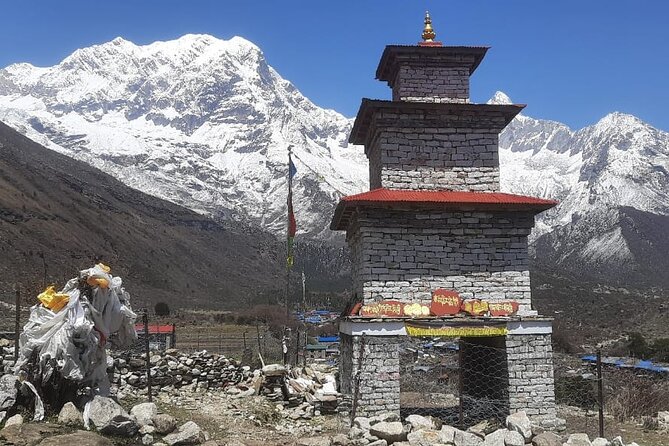
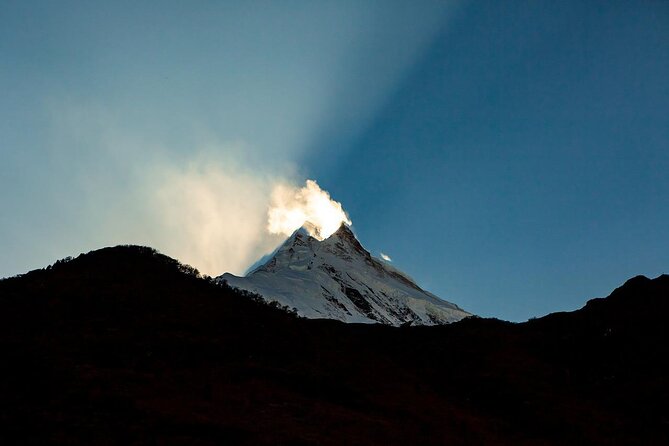
If you’ve ever looked at Nepal’s famous trekking maps and thought, I like the Himalayas, but I don’t love crowds, Manaslu is a strong answer. Manaslu sits tucked inside Gorkha district, and it stays less trafficked than the superstar routes. That matters because trekking is mental as much as physical: quiet paths make it easier to settle into rhythm, take your time at viewpoints, and actually notice what’s around you.
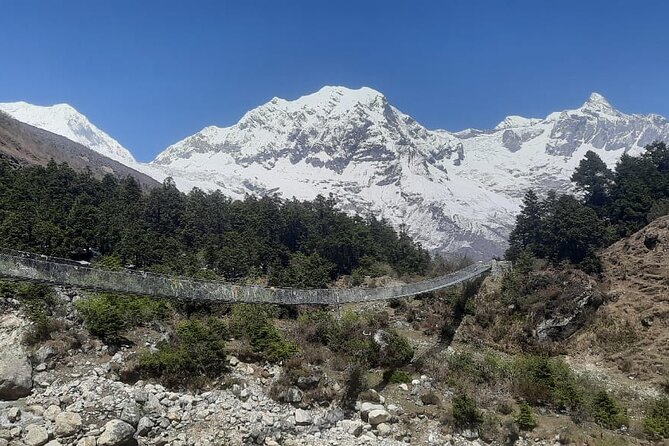
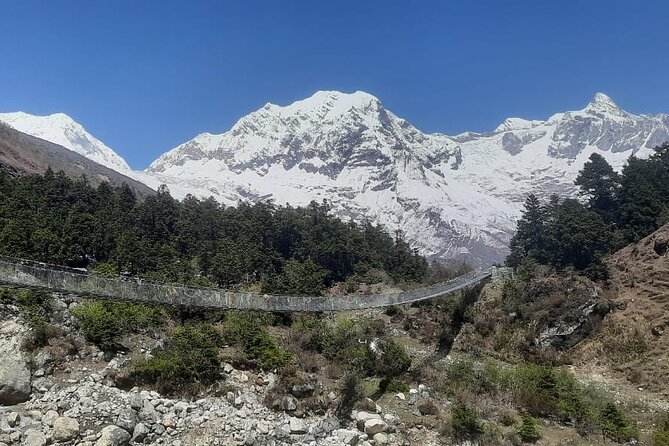
The other thing that makes this circuit special is how many different village and mountain moments you string together without it turning into a nonstop grind. You’re following the Budhi Gandaki river system for a long stretch, then you swing toward the Larkya La side with Tibetan-influenced settlements like Samdo. You’ll see Manaslu again and again, often framed by pine forests, birch, and rhododendron, plus big-glacier sightlines as the pass day approaches.
You can also read our reviews of more tours and experiences in Kathmandu.
Value and pricing: what $1,098 actually buys
At $1,098 per person for about 16 days, this isn’t a bare-bones budget trek. But when you look at what’s included, the value story gets clearer. Your package covers airport pickup and drop by private vehicle, trekking guide support, and porter coverage (with a porter shared between two paying people). It also includes all required permits (Manaslu, Annapurna, Special Immigration Permit, and TIMS), which can be a hassle to coordinate on your own.
The gear list is also a big deal for value and comfort. You get a down jacket, sleeping bag, and duffel bag, plus a trekking map and a first aid kit. That can save you from either renting low-quality equipment locally or hauling your own bulky cold-weather kit through Kathmandu.
One more quiet win: the company builds in worst-case rescue and medical evacuation arrangements. It’s not something you want to think about on vacation, but it’s the kind of insurance of planning that reduces stress when weather turns or altitude bites.
Where you should be honest with yourself is the pace of the journey and altitude risk. This trek still requires moderate fitness and thoughtful acclimatization. If you hate early mornings, long walking days, or unpredictable weather, you might find this route demanding.
Kathmandu setup in Thamel: the calm start you want
Your trip begins at Tribhuvan International Airport, with pickup by agency representatives and a transfer to a comfortable hotel in Thamel. Thamel is the tourist hub for a reason: you’ll be close to food, pharmacies, trekking shops, and easy walking routes to rest, organize your day pack, and keep your logistics simple.
The day after arrival is built for preparation, not rushing. You meet your trek associates so questions get answered before you’re far from cell service and road access. If you want a quick culture hit, Kathmandu Durbar Square is close by and is a UNESCO World Heritage site. Even a short visit gives you a sense of Nepal beyond the mountains.
Also notice what’s not in this setup: you’re not expected to cram sightseeing all day while your body adapts to altitude travel planning. That matters because you’re about to start hiking.
Driving days: from Kathmandu’s valley to the Budhi Gandaki
Getting onto the trail is done by road first, and those drive segments can be tiring, but they’re useful. You head west out of Kathmandu valley, following a route that tracks rivers and gradually changes the scenery from urban and agricultural to river gorge and forested hills.
One driving stretch goes as far as Malekhu area, then across the river system and onward to Arughat, an older trading outpost. As you approach Arughat, the road starts giving you early glimpses of mountains like Manaslu, Ganesh, and Himalchuli. That first wow moment is a morale boost, even if it’s not the full circuit drama yet.
You then continue toward Machha Khola for your first overnight. This is your first real taste of the Budhi Gandaki corridor, and you’ll feel it in the way the landscape narrows and the trail gets more “Nepal trekking” than “road trip.”
Machha Khola to Jagat: forests, hot tea, and Gurung rhythm
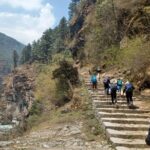
The early trekking portion keeps things interesting without throwing everything at you at once. Following the Budhi Gandaki river, the valley grows more dramatic as you gain height. You cross rivers like Thado Khola and pass through villages with a strong Gurung presence.
At Khorlabesi, you get to experience a simpler, more local pace. You’ll have hot Tibetan-style tea at a teahouse, which sounds small, but it’s the kind of warmth that keeps you moving. Not far ahead is Tatopani, a hot water spring area—if you’re up for it, it’s a great way to soothe tired legs.
Then you reach Jagat for the night. This is one of those stops where you’ll likely feel the circuit switching from travel to trekking life: less traffic, more walking sounds, and the slow build toward bigger altitudes.
Jagat to Deng: Philim permit checks and rhododendron scenery
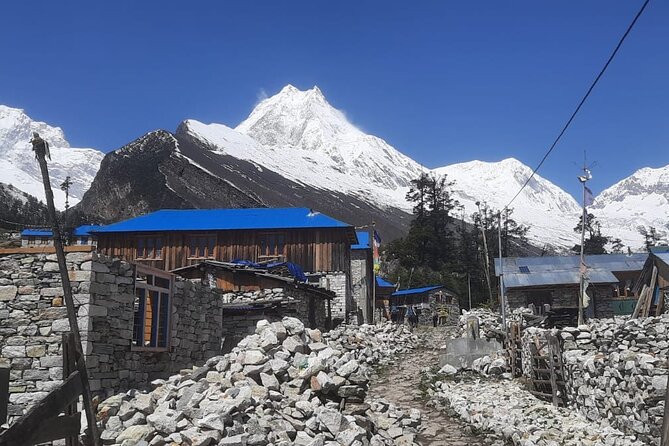
The trek from Jagat onward continues along river bends and through terraced fields. You pass through Salleri and cross bridges that keep you actively oriented to the valley system. Philim is an important checkpoint because trekking permits are checked there.
That might not sound exciting, but it’s a practical reality of Manaslu. Having permits organized in advance makes the day smoother, and it reduces the kind of delays that can stress your pace and schedule.
After Philim, you’ll walk through barley and millet terraces, then enter more forested terrain with pine and rhododendron. Waterfalls feed into the Budhi Gandaki, which adds constant movement to the scenery. You end at Deng, with a night that feels like a reset before the next stage of rising terrain.
Deng to Namrung: big views start showing for real
This section starts after breakfast and continues to build your view window. You’ll reach Rana hilltop first, then cross toward Bihi Phedi, where the trail splits into routes including one that leads to the village of Bihi. Either way, the key change happens: the Budhi Gandaki valley opens up more wide, so the scale of the mountains becomes obvious.
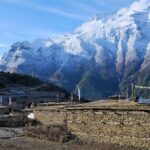
Manaslu and neighboring peaks start appearing more clearly, along with Annapurna II and Ganesh. You pass Prok and Ghap—traditional Gurung villages—and reach Namrung for the night. If you love mountain framing, this is a good day for photos, because the valley geometry gives you multiple angles without needing to hike extra.
Lho and Samagaon: monastery time and steady acclimatization
As you head toward higher settlements, the trek balances effort with living in the Manaslu world. A gentle ascend leads to Lho Gham and then Lho Village. You’ll likely get a strong view of Manaslu from this area, plus a monastery in Lho Village that you can visit and spend a few quiet minutes inside.
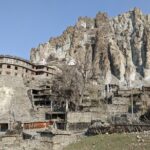
Then the trip pushes onward to Samagaon. Villages like Sho and Sama appear along the way, and Sama village includes the Ribung monastery—one more cultural stop that breaks up the monotony risk on long trekking days. Shyala offers views that can include Himalchuli, Manaslu, Peak 29, and large glaciers. When the glacier views start becoming believable, that’s when you know you’re on the right altitude arc.
You then get an acclimatization day in Samagaon. This is a big deal. You can explore the village and learn more about the local Buddhist community of Gurung and Sherpa people. If you want a specific hike, Pung Yen Monastery is an option. This is also where you can choose whether to go for a detour toward Manaslu Base Camp, which takes about half to a full day and depends on your preference.
The Larkya La corridor: Samdo and Dharamsala basecamp vibe
From Samagaon, you trek toward the far northern borders of the Manaslu region. You’ll reach a diversion where one path leads toward Manaslu Base Camp and another toward Larkya La Pass. Here, you take the Larkya La route.
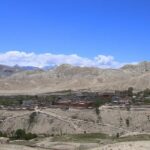
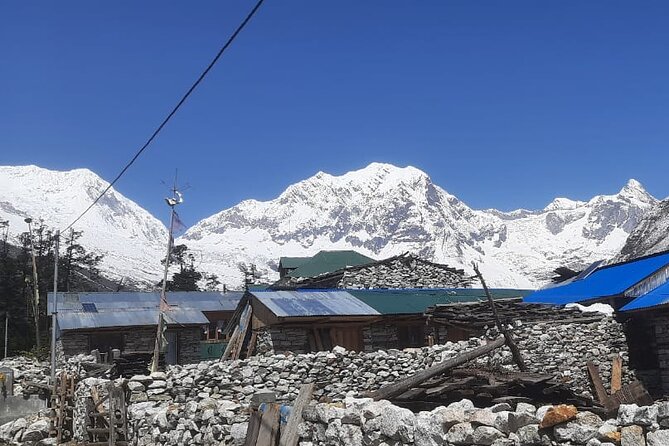
You pass through areas like Kemro Kharka, with yak grazing fields, then move among birch, pine, and juniper. Kani and Samdo are key stepping stones. Samdo is described as a settlement of Tibetan asylum seekers, and there’s a Samdo Monastery you can hike to once you arrive. These places tend to feel quieter and more weather-focused than the earlier circuit sections.
The next day brings you to Larkya Bazaar, a seasonal market where local people trade and monasteries and stupas dot the route. You cross areas with multiple river systems and move closer to Dharamsala, which sits at the base of Larkya La Phedi. Dharamsala is the last “rest before serious” night.
Crossing Larkya La: the one day you respect
If you want one part of the Manaslu Circuit to treat like a mission, make it the Larkya La day. You start very early to navigate icy glacial moraines around the Larkya glacier. That means this isn’t just about toughness; it’s about technique, stability, and pacing.
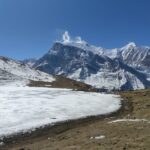
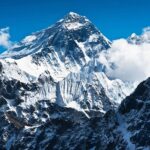
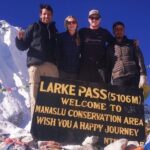
The reward is dramatic, because the pass area gives you views of multiple peaks at once, including Larkya Peak, Cho Danda, and several others like Manaslu, Himalchuli, Cheo Himal, Gyagi Kunja, Kang Koru, Ganesh, and Ratna Chuli. You spend a few moments at the pass for photographs, but the real win is making it safely down.
Then you descend toward Bhimtang for the night. Descending can feel easier mentally after the top, but your legs still need attention. Take care with downhill footing so you don’t turn a hard win into an injury story.
Bhimtang to Tilje and Chyamje: rhododendron returns
After the pass, the landscape shifts again. You’ll wake with panoramic mountain views, then move toward Sangure Kharka, a yak grazing field. The walking becomes mostly downhill, and rhododendron forests start to dominate more of your terrain as you lose altitude.
You continue through scenic valleys like Karche, then reach Gho and later Tilje. Tilje is home to Gurung inhabitants, and it’s a good place to connect with what “home” looks like in remote trekking Nepal. You’ll spend the night in a teahouse, which helps you keep things simple as your body recovers from the pass day.
The following day continues toward Chyamje with villages like Thonje along the way. You meet rivers such as the Marsyangdi system and the Dudh Khola that feeds it. As you approach lower elevations, you also see people who are following routes from the Annapurna Circuit route. This is a reminder that you’re approaching the end of your loop, and it changes the feeling of the trail from isolated to shared.
Chyamje is a large settlement and works as a gateway to the upper reaches. It’s a solid place to end your trekking day and sleep.
The ride back to Kathmandu: finishing without rushing
Your final trek day transitions into road travel. You drive from Chamje toward Besisahar first, with roads described as somewhat bumpy. You’ll pass waterfalls, river views, and small traditional villages along the way, which helps the journey feel alive rather than like a long bus ride.
Then comes an easier, more memorable drive from Besisahar to Kathmandu. You ride along river banks like Marsyangdi and Trishuli, and the road serpentines through the Mahabharata hill range. The route enters Kathmandu via Nag Dhunga Pass. Overnight in Kathmandu follows, giving you a chance to eat a proper meal, stretch, and decompress.
Who this Manaslu Circuit trek is best for
This is a private trek with strong support, so it works well if you want authentic villages, big scenery, and a calmer trail atmosphere. It’s also a good fit if you don’t want to deal with permits, gear rentals, and day-to-day coordination in Nepal.
You’ll likely enjoy this most if you:
- Like trekking that’s demanding but managed, with acclimatization built in
- Prefer teahouses and lodge-style nights over camping with a heavy load
- Want to see Gurung and Buddhist cultural stops, not just hike-to-viewpoints
- Appreciate having a guide and porters handle the workload so you can focus on safety
If you’re aiming for a casual stroll or you hate early mornings, especially on the pass day, you might find it too intense.
A quick note on safety and gear reality
Good planning does most of the safety work on high trekking routes. This package includes necessary paper works, taxes, company service charges, and worst-case rescue and medical evacuation arrangements. You also get a first aid kit and trekking map, plus cold-weather gear that can make the difference on cold mornings.
Still, your body is part of the equation. Altitude and exertion are real here, and you should go into the trek with moderate physical fitness and a willingness to pace yourself.
Should you book this Manaslu Circuit trek with Ambition Himalaya?
I’d book it if you want a less crowded Manaslu experience with the heavy lifting handled for you: permits, guide support, porter system, and key gear. The price feels more reasonable when you account for the inclusive trekking meals and accommodations, Kathmandu lodging with breakfast, and the cold-weather gear like sleeping bag and down jacket.
I’d think twice if you’re chasing a super-low-effort holiday. The Larkya La day is the kind you plan around with respect, not bravado. And if you expect endless comfort in villages with full amenities, you’ll need to match your expectations to teahouse reality.
FAQ
What is the trek duration and meeting point?
This experience runs for about 16 days. It starts with pickup at Tribhuvan International Airport in Kathmandu and ends back at the meeting point.
Is airport pickup and drop included?
Yes. You get airport pickup and drop services by private vehicle.
Is Kathmandu accommodation included?
Yes. You have accommodation in Kathmandu as per the itinerary, with breakfast included.
Are permits included?
Yes. The package includes all required permits, including Manaslu, Annapurna, Special Immigration Permit, and TIMS.
Do I have a guide and porter support?
Yes. You get a trekking guide, and an assistant guide if your group has more than 6 people. Strong porters are included (1 porter shared between 2 paying people), with their expenses and insurance covered.
What gear is provided for the trek?
You’re provided with a down jacket, sleeping bag, duffel bag, a T-shirt, a trekking map, and a first aid kit.
Are meals included on the trek and in Kathmandu?
Meals and accommodation on the trek are included, and you have breakfast in Kathmandu. Lunch and dinner in Kathmandu are not included.
Do I need to bring a tent or carry a lot of supplies?
No. The trek uses teahouses and lodge-style accommodations on the circuit, so you are not expected to carry tents and large amounts of food.
Can I cancel for a full refund?
Yes. You can cancel up to 3 days in advance for a full refund, but if you cancel less than 3 full days before the start time, the amount paid is not refunded.