REVIEW · KATHMANDU
Kanchenjunga South Base Camp Trek – 13 Days
Book on Viator →Operated by Breeze Adventure Pvt Ltd · Bookable on Viator
This trek has a rare kind of quiet. You’re headed into the Kanchenjunga region for big mountain views with far fewer trekkers than the headline routes, plus time with local Rai, Limbu, and Tibetan communities along the way. I love how the route mixes real trail days—river crossings, forest walks, and steep little climbs—with moments that feel personal, like your first clear looks at Kanchenjunga and Kyabru.
Two things I really like here: the small group size (up to 7) and the way the trip is built around practical support, not just a route on paper. In the guidance side, the company’s owner, Kishwor, shows up in the story multiple times, and in one of the trekking experiences I read about, the guide Galje matched a slower pace and still found great options. One drawback to factor in: the driving days are long, and the trek itself is remote enough that you should expect fewer comforts as you get deeper into the mountains.
In This Review
- Key points to know before you go
- Why Kanchenjunga South Base Camp feels different from the usual big treks
- Day 1: Kathmandu culture hits before the mountain miles
- Day 2: Taplejung and the slow transition from road to trail
- Day 3: First Kanchenjunga glimpses, rivers, and a suspension bridge moment
- Day 4: Kabeli Khola forest walking and a short steep payoff
- Day 5: Mostly uphill along the river, with landslide rubble terrain
- Day 6: The relentless climb, plus a movie-like Spanish moss forest
- Day 7: Lalung valley rhododendrons and a glacier-backed lake sunset
- Day 8: Yalung Glacier approach, last teahouse life, and Ramche’s stars
- Day 9: Excursion day with close Kanchenjunga southern-wall views
- Day 10: Back to Tseram, and a long but easier walking rhythm
- Day 11: A shortcut route toward Ranipul to save downhill time
- Day 12: Terraced hills to Ilam, then a hotel night with real sleep
- Day 13: Back to Kathmandu and a farewell dinner
- Price and value: what you’re really paying for
- The quality of the guidance: Kishwor and Galje as a real-world signal
- Accommodation, meals, and what they’ll feel like on the ground
- Who this trek is for (and who should think twice)
- Should you book this Kanchenjunga South Base Camp trek?
- FAQ
- FAQ
- Where does the trip start and end?
- How long is the Kanchenjunga South Base Camp trek?
- What is the group size?
- Is pickup offered?
- What accommodations do you use during the trek?
- Are meals included?
- What permits are included?
- What costs are not included in the price?
- What fitness level is recommended?
- What is the cancellation window?
Key points to know before you go
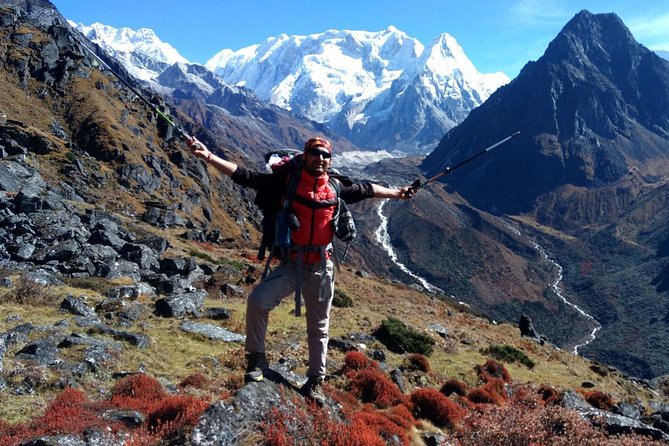
- A calmer Kanchenjunga experience: far fewer trekkers than more famous base camp trails
- Support that matters day to day: government-authorized guide plus porters, with a first aid kit included
- Nature heavy: chances for Himalayan Tahr, black bear, musk deer, snow leopard (rare), and Red Panda, plus birds like snow cock and pheasant
- Real teahouse trekking with a contingency: Ramche is the last teahouse, and if the group is large you might sleep in a tent
- Views that reward effort: early mountain glimpses, glacier walks, and an excursion day aimed at the southern wall of Kanchenjunga
- Good value for the total package: permits, conservation fees, and trek meals are included, not treated like add-ons
Why Kanchenjunga South Base Camp feels different from the usual big treks
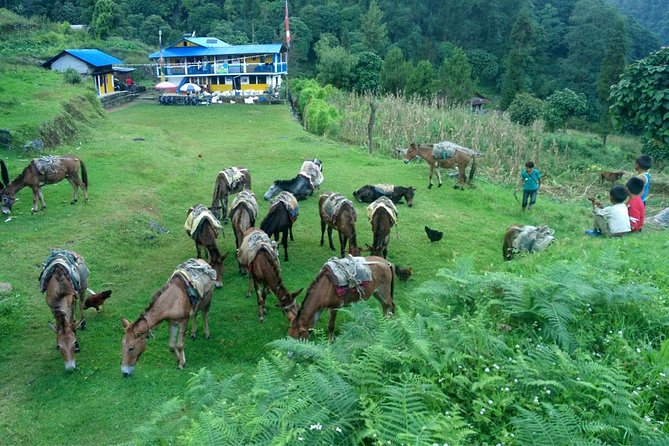
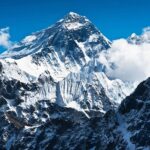
If you want the Everest-style payoff—massive Himalayan scenery—without the same crowds, Kanchenjunga South Base Camp is one of the better picks in Nepal. The mountain itself, Kanchenjunga at 8,586 meters, is the world’s third-highest peak, and it sits across Nepal, Tibet, and India. That border-crossing geography isn’t just trivia. It shapes weather, culture, and the feel of the route.
The trip also leans hard into place. You walk through communities tied to Rai, Limbu, and Tibetan village life, and you’ll notice that even within one country, local dialects and rituals can shift from village to village. For a trekking day, it makes the trail feel less like a straight line and more like moving through living neighborhoods.
Then there’s wildlife. This isn’t a zoo promise, but the Kanchenjunga Conservation Area is home to rare animals like Himalayan Tahr, Himalayan black bear, musk deer, snow leopard, and Red Panda. Birders have a bonus angle too, with possibilities like snow cock and pheasant. Even when you don’t spot the big names, you’re walking in habitat that feels wild and still.
You can also read our reviews of more tours and experiences in Kathmandu.
Day 1: Kathmandu culture hits before the mountain miles
Your trip starts in Kathmandu with sightseeing by private vehicle after breakfast. You’ll visit several UNESCO World Heritage Sites, learning the religious and historical significance behind each location. I like this kind of opener because it gives you context before you head into a region where faith and daily life are woven together.
After Kathmandu, you’re on an overnight bus to Ilam. Expect a long day rather than a gentle warm-up. If you tend to get stiff in cars, bring something to help your back and neck. Also, plan to keep your day-one energy for tomorrow, because the real trekking rhythm starts soon.
Day 2: Taplejung and the slow transition from road to trail
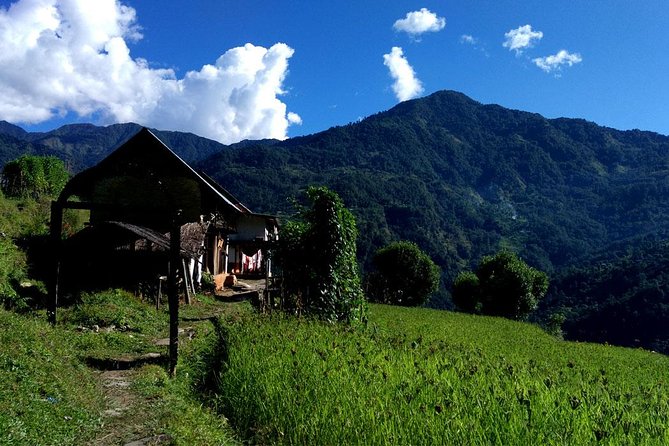
Today is another long drive to Taplejung, where the route begins to feel like Nepal you rarely see on a tight city itinerary. You pass villages and agricultural fields, with a lot of green texture and hillside farming. It’s the kind of scenery that keeps you calm and focused—good brain fuel after the travel day.
You’ll sleep in a guest house in Taplejung. This matters more than people think. Guest-house nights give you a reset before the first real walking day, and the trek starts with gentle downhill and bridge time rather than a brutal uphill shock.
Day 3: First Kanchenjunga glimpses, rivers, and a suspension bridge moment
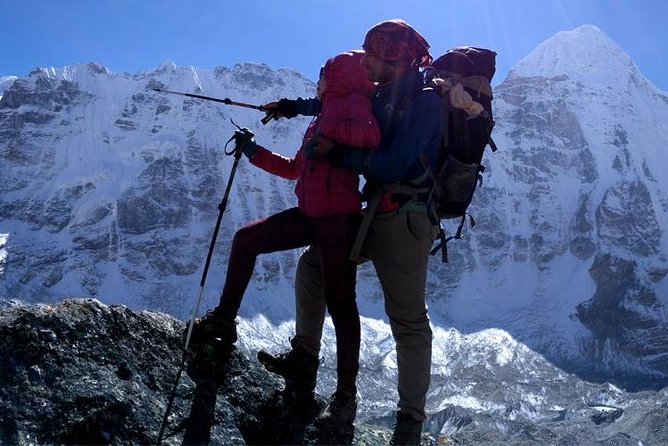
From breakfast, the route goes down through millet and rice fields toward a suspension bridge over the Phewa Khola at about 1,430 meters. Bridges like this do two things at once: they break up the walking rhythm and they give you perspective on how steep this terrain is.
After the bridge, you keep moving to Sinchebu Bhanjyang (about 2,240 meters), a small Gurung settlement. The practical win here is that you’re not just grinding elevation—you’re getting village touchpoints and a chance for tea or a snack.
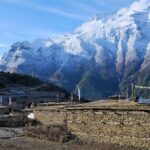
Then comes a big emotional moment: your first meaningful glimpses of Kanchenjunga and Kyabru. The advice I’d give you in that moment is simple: stop trying to multitask. Let the view land, take a breath, and then keep going. If you chase photos at the wrong time, you miss the feeling.
The day ends in Khesewa at a teahouse.
Day 4: Kabeli Khola forest walking and a short steep payoff
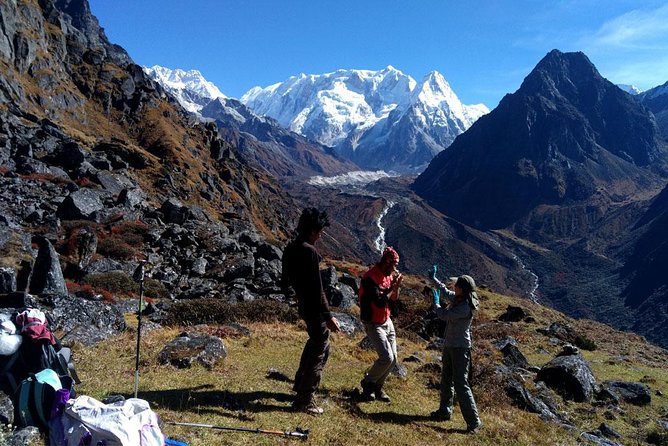
Day 4 begins with breakfast and then pushes you into mixed forest on a relatively flat trail toward Kabeli Khola. A string of small waterfalls keeps things moving and helps you stay awake on a day that’s physically moderate.
Lunch happens in Yangpang, with views of Mt. Jannu. Even if the mountain name doesn’t mean much to you, the view itself will. Jannu often brings a sharp, dramatic presence, and it’s a good reminder that the Kanchenjunga area isn’t just one mountain.
The day finishes with a short but steep uphill climb for about 20 minutes to Pumpe Dada. That’s a common pattern on this trek: short efforts that test your legs, followed by steady walking that lets you recover.
Overnight is in a teahouse.
Day 5: Mostly uphill along the river, with landslide rubble terrain
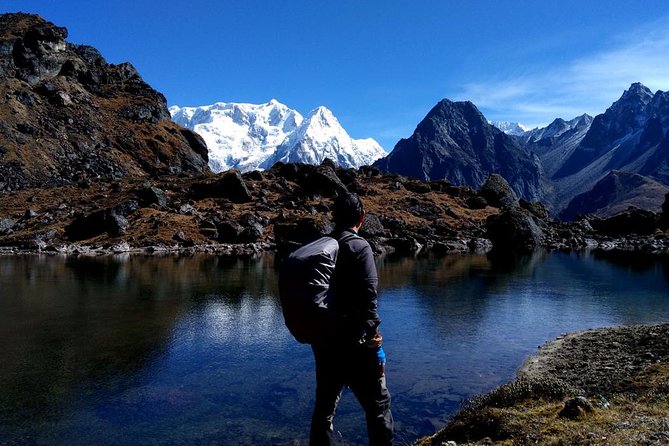
Today is mostly uphill on an easy trail that follows alongside the Kabeli Khola. You’ll notice ridge lines beyond the stream, and that forward-looking view makes the uphill feel less repetitive.
The route includes switchbacks up the valley, then some tricky-feeling stretches under rocky cliffs where rubble remains from past landslides. This is one of those days where you’ll be grateful for a guide and porters, because having people who know the trail line reduces your stress and keeps you steady.
After crossing another small suspension bridge and passing small settlements, you reach Yamphudin for the night in a teahouse.
If you’re prone to rushing, don’t. Keep your pace controlled on days like this—your energy is going to matter more at Ramche and base camp country later.
Day 6: The relentless climb, plus a movie-like Spanish moss forest
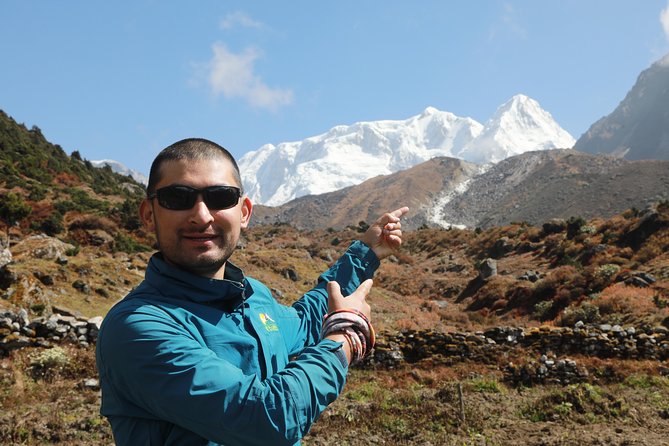
Above Yamphudin, services thin out, so it’s good the trip is provisioned well. From Amje Khola, you tackle a relentless climb on a well-maintained trail.
At Chitre, you might see grazing yaks, which is a sweet morale boost because it’s wildlife you can actually spot easily. Then the day turns visual again: you pass through a forest with draping Spanish moss that looks like it belongs in a film set.
There’s lunch somewhere along the way during this long walking day, then you keep hiking through the forest until you break into an opening. You cross a suspension bridge and continue gently uphill to Tortong.
Overnight is in a teahouse.
Day 7: Lalung valley rhododendrons and a glacier-backed lake sunset
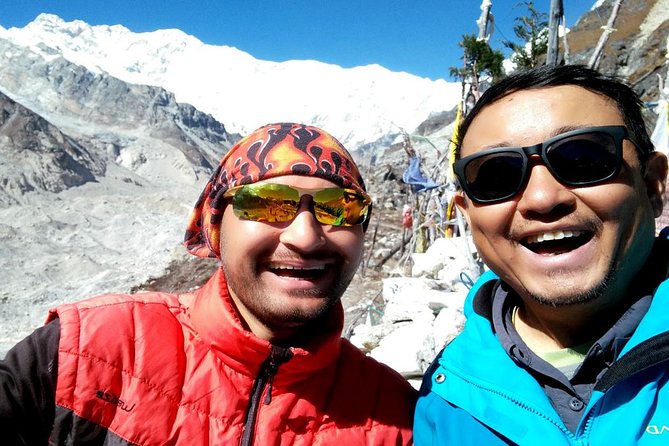
Day 7 starts a gradual climb toward Tseram over about 3–4 hours. You walk alongside the Simbuwa Khola through the Lalung valley, with Tuplung peak showing up in the background for much of the day.
Rhododendron forest is the star vegetation here, and you’ll also be walking with the Yalung Glacier in view. At Cheram village you stop for lunch, then you hike up to a small lake for about 1–2 hours.
If the weather cooperates, this can set you up for a sunset view of the Himalaya. That’s one of those moments where you’ll want to dress for quick temperature swings and keep an eye on clouds. Then you head down to Tseram for the night in a teahouse.
Day 8: Yalung Glacier approach, last teahouse life, and Ramche’s stars
From Tseram, you ascend slightly before reaching the start of the Yalung Glacier area. The walk is on a valley path, and it’s another day that blends scenic reward with steady trekking.
You pass Lapsang, then reach Ramche. Ramche is described as the last teahouse on the Kanchenjunga South Base Camp trek. If you travel in a large group, you might sleep in a tent instead of a teahouse.
That detail matters for expectations. Teahouse days are one kind of comfort. Tent nights are another. Either way, you should plan for cold at night and be ready for starry skies. In this area, the night can feel wide open.
Day 9: Excursion day with close Kanchenjunga southern-wall views
This is the day that changes how you remember the trek. You’re not just walking forward—you’re going out to get a closer feel for Kanchenjunga’s massive southern wall.
You start early with a packed lunch and follow the valley around its curve. The route aims toward the ridge where the three main summits of Kanchenjunga are associated with elevations of 8,420 meters, 8,586 meters, and 8,474 meters. Even if you don’t track numbers on the trail, you’ll feel it when the mountain wall opens up into view.
You keep heading toward Oktang and descend onto the glacier for a traverse to a point below the base camp area. You’ll earn this day. That also means you’ll want to pace yourself during earlier days so you don’t feel drained.
Day 10: Back to Tseram, and a long but easier walking rhythm
Day 10 is a return to Tseram on the same general trail. It’s described as a long day but not the hardest kind of day, so you can use it for recovery through steady walking.
I like this kind of day because it gives your body a chance to settle without turning the whole schedule into a grind. Keep your hydration consistent, and don’t assume you can make up time by speeding up. The mountains don’t care about your calendar.
Overnight is again in a teahouse.
Day 11: A shortcut route toward Ranipul to save downhill time
From here, you follow a historic trade route that used to connect India and Tibet before roads made the journey easier. The trail is now supported to help trekkers reduce a long downhill section.
The walking pattern is: a bit of uphill at the start, then mostly downhill toward Ranipul. You’ll stop for lunch along the way, and the day finishes with lodging connected to the trek route.
Why this matters: saving unnecessary downhill can protect your knees and reduce fatigue. If you’re worried about leg soreness late in the trip, this is a smart place to see the value of route planning.
Day 12: Terraced hills to Ilam, then a hotel night with real sleep
You wake up for a celebratory breakfast at the teahouse, then the hiking part ends. After that, you drive through rolling terraced hills and through quaint villages until you reach Taplejung for lunch.
Then you continue the drive to Ilam. Ilam is known for tea, and you’ll be in a hill town with a beautiful tea garden feel. Overnight is in a hotel. This is a key “let the body recover” moment, so I’d treat this night as recovery time, not sightseeing time.
Day 13: Back to Kathmandu and a farewell dinner
Your final day is a long drive back to Kathmandu. After weeks of trekking, you’ll likely feel a mix of tired and energized, because finishing a long mountain route has a strange emotional bounce.
You’ll have a farewell dinner in the evening and sleep in a hotel. The dinner isn’t just tradition—it’s your chance to shake loose trekking muscles, swap stories, and remember what mattered most.
Price and value: what you’re really paying for
The price is listed at $2,095.34 per person for 13 days, and the value comes from what’s bundled in.
You’re not just buying “a guide.” You’re getting government-authorized guide and porters, with insurance coverage for them and included first aid support. You also receive meals during the trek, plus accommodations in local guest houses while walking, and Kathmandu hotels (two nights in 2–3 star) with breakfast.
The most underappreciated value line is the permit side: you’ll have the Kanchenjunga Conservation Area Permit and government taxes handled. For a remote region like this, permits are part of the real cost of doing it right.
What you should budget separately: international airfare, meals in Kathmandu beyond breakfast, alcohol and specialty drinks like tea and coffee (as noted), and tips for guide and porter. Personal insurance is also not included, and that’s a serious line item for any high-altitude trek.
The quality of the guidance: Kishwor and Galje as a real-world signal
I wouldn’t overread short reviews, but there’s enough repeated signal here to take it seriously. In the feedback I saw, Kishwor (the owner) recommended this trek and answered questions thoroughly when people were deciding what to book. That kind of early clarity matters, because Kanchenjunga is not a casual choose-on-a-whim trek.
On the mountain side, Galje came up as an especially strong guide: always smiling, working to match a slower pace, and offering suggestions aligned with how the group felt that day. That’s the kind of guiding you want on a remote route where the weather and your energy can swing day to day.
Even if you never meet Kishwor personally, the company’s approach comes through in how they talk about fit and pace, not just route logistics.
Accommodation, meals, and what they’ll feel like on the ground
During the trek, you’ll stay in local guest houses. At the deep end, the standard changes: Ramche is the last teahouse on the trek, and if there’s a big group you might shift to tent sleeping.
Meal-wise, you’ll have breakfast, lunch, and dinner during the trekking days (plus breakfast in Kathmandu hotels). That’s important because it reduces decision fatigue. You won’t be searching for food at the end of a long day. Instead, you focus on walking well and resting.
In Kathmandu, breakfast is included on the hotel nights, but other meals are on your own. That’s common and easy to handle, especially since your days in the city are mostly about sightseeing and transport.
Who this trek is for (and who should think twice)
This is a great match if you want:
- big mountain scenery with fewer trekkers than major base camp routes
- a route where you’ll see real village life, not just teahouses and views
- wildlife and bird potential in a conservation area
- a guided experience with porters and permits handled
You should think twice if you:
- struggle with long drive days before trekking settles in
- expect high-frequency comfort upgrades deep into the route
- aren’t ready for the physical side of trekking in remote terrain (the fitness guidance here is moderate)
Should you book this Kanchenjunga South Base Camp trek?
Yes, if your main goal is a calmer, less-crowded Kanchenjunga experience with solid support and a trek plan that respects your time and energy. The excursion day aimed at getting close to the southern wall is a big reason to choose this route, and the backup details like tent sleeping at Ramche show the trip is designed for real-world conditions.
If you’re someone who likes shorter travel days, or you need consistent comfort every single night, you may find this too “mountain-real” for your taste. But if you can handle the mix of buses, guest houses, and high-country nights, this is the kind of trek that can stick with you long after your boots dry out.
FAQ
FAQ
Where does the trip start and end?
It starts at Breeze Adventure Pvt. Ltd, Thamel Marg, Kathmandu 44600, Nepal. It ends back at the same meeting point in Kathmandu.
How long is the Kanchenjunga South Base Camp trek?
The trek is listed as 13 days (approx.).
What is the group size?
The tour has a maximum of 7 travelers.
Is pickup offered?
Yes, pickup is offered.
What accommodations do you use during the trek?
You’ll use local guest house accommodations during the trek. At Ramche, which is the last teahouse on this trek, you may sleep in a tent if the group is large.
Are meals included?
Yes. Hygienic meals are included during the trek, with breakfast, lunch, and dinner noted in the inclusions. Kathmandu hotel breakfasts are also included.
What permits are included?
The Kanchenjunga Conservation Area Permit and government taxes are included.
What costs are not included in the price?
International airfare, meals in Kathmandu besides breakfast, alcoholic drinks, chocolates, tea and coffee, tips for guide and porter, and personal insurance are not included.
What fitness level is recommended?
Travelers should have a moderate physical fitness level.
What is the cancellation window?
Free cancellation is available. You can cancel up to 24 hours in advance for a full refund, and cancellations within 24 hours are not refunded.