REVIEW · KATHMANDU
Gokyo Lakes And Renjola Pass Trek – 12 Days
Book on Viator →Operated by Breeze Adventure Pvt Ltd · Bookable on Viator
Rare passes mean serious bragging rights. This Gokyo Lakes and Renjo La Pass Trek pushes deeper into the Khumbu than most routes, crossing the Renjo La Pass (5345m) for big Everest-area payoff. You start from Lukla, work your way past the six Gokyo Lakes, and finish by dropping toward Lukla again through Thame and Namche Bazaar.
Two things I really like: the view setup. From Gokyo Ri (5357m) you get a panoramic lineup of Everest, Lhotse, Makalu, and Cho Oyu, with the Ngozumpa Glacier nearby—exactly the kind of scenery that makes your early mornings feel worth it. The second plus is how the operator talks about its team: Breeze Adventure highlights experienced support and specifically thanks Sarki Sherpa in one of the feedback messages, and that emphasis on safety and comfort matters when you’re moving at altitude.
One consideration: this is real high-altitude trekking. You’ll be dealing with passes over 5,300m, and the tour asks for moderate physical fitness—so if you’re coming in undertrained or hoping to coast, this route will punish that plan.
In This Review
- Key Highlights That Matter
- Gokyo Lakes, Then Renjo La: The Route That Changes the Mood
- Starting in Lukla: Your Trek Begins With a Big Jump
- The Six Gokyo Lakes: Why This Part Still Feels Worth It
- Gokyo Ri (5357m): The Best View on an Everest-Region Trek
- Renjo La Pass: The Day You’ll Remember for the Wrong and Right Reasons
- The Descent via Thame and Namche Bazaar: Mountain Travel With a Cultural Thread
- Price and Value: What You’re Really Paying For
- Group Size, Guides, and Support: Comfort at Altitude Isn’t Soft
- Fitness Level: What Moderate Really Means Here
- Weather and Flexibility: When Plans Change, You Want a Plan B
- Booking Practicalities: Simple Touches That Reduce Stress
- Should You Book This Trek?
- FAQ
- Where does the tour start in Kathmandu?
- How long is the trek?
- What is the highest point on this trek?
- What is the daily structure like for Renjo La Pass?
- How many travelers are in the group?
- Does the tour include pickup in Kathmandu?
- What views do you get from Gokyo Ri?
- Which areas do you pass through on the way back?
- What fitness level do you need?
- What is the cancellation policy?
Key Highlights That Matter
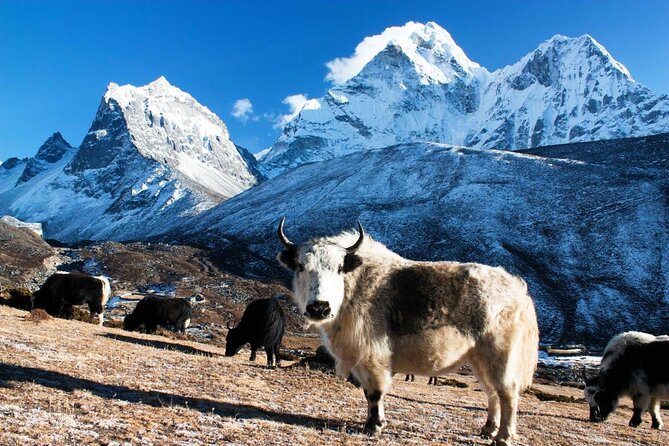
- Renjo La Pass (5345m) instead of the usual turn-back
This is what makes the trek feel different from the standard Gokyo Lakes route.
- Gokyo Ri’s four-peak Everest-area panorama
You’re looking for Everest, Lhotse, Makalu, and Cho Oyu—from one dramatic viewpoint.
- Ngozumpa Glacier views on both the approach and the passes
The glacier stays part of the story, not just a background detail.
- Small group size (max 15)
Easier pacing and less crowding when you’re trying to breathe, not fight a line.
- A safety-first, comfort-minded team culture
Breeze Adventure’s own responses emphasize experienced support and thanks to Sarki Sherpa.
Gokyo Lakes, Then Renjo La: The Route That Changes the Mood
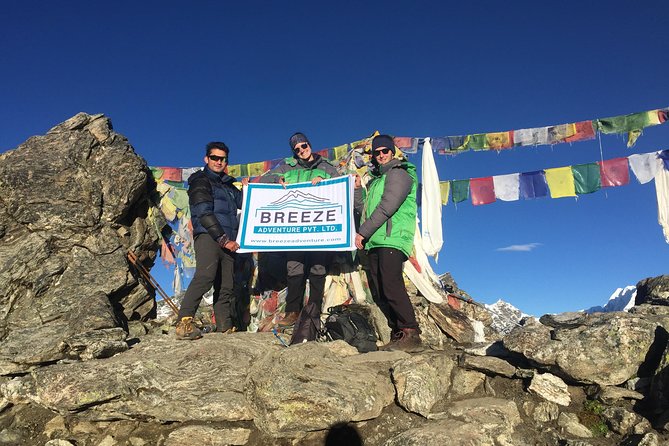
If you’ve done (or considered) the classic Gokyo Lakes trekking pattern, you already know the lakes are special. What’s different here is what comes after. Instead of heading back the same way you came, you continue up and over the Renjo La Pass, a crossing that not every Everest-region trek includes.
That single choice changes the whole emotional arc. The lakes give you the quiet, glassy beauty and the sense of getting close to the high world. The pass gives you the bigger, sharper feeling: wind, altitude, and that quick moment when everything lines up and you realize why people plan their holidays around mountains.
You can also read our reviews of more tours and experiences in Kathmandu.



Starting in Lukla: Your Trek Begins With a Big Jump
Your trek starts at Lukla Airport. Even if you’ve never flown into the Khumbu before, you’ll want to treat the first day as a transition, not a victory lap. The altitude is already in the background of your body even when you feel okay at the start.
This matters because the rest of the route is built around gradual gain and acclimatization. The operator’s structure is meant to get you up to the Gokyo Lakes area and then to the higher viewpoints like Gokyo Ri and Renjo La.
Practical tip: if you’re the kind of person who hates slow starts, remind yourself you’re not buying extra time—you’re buying safer breathing.
The Six Gokyo Lakes: Why This Part Still Feels Worth It
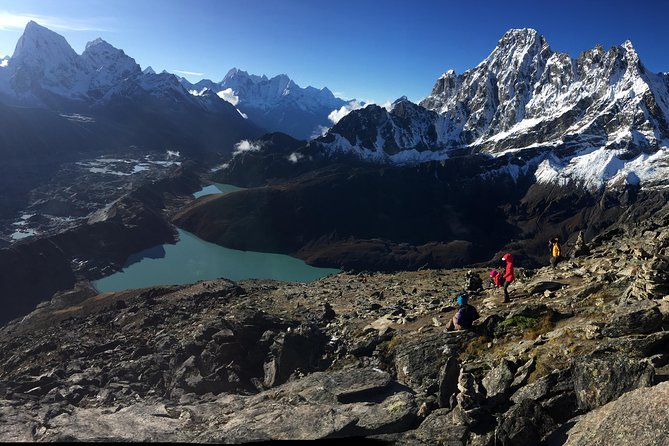
The trek includes passing the six Gokyo Lakes. This is the heart of the “Gokyo” part, and it’s not just because the lakes look good on a postcard. The lakes are scattered across a high glacial landscape, and that creates a weird-but-fun rhythm: you’re hiking with constant changes in color, wind direction, and the way the mountains frame each lake.
You also learn to walk in a focused way. Each time you stop, you’re taking in a new angle of the same high basin. That’s good training for later: it conditions your mind to notice details when your body is working harder.
Potential drawback: these sections can feel longer than expected if you push too hard early. With altitude trekking, you don’t want to “win” the first half and lose the back half.
Gokyo Ri (5357m): The Best View on an Everest-Region Trek
From the route plan, Gokyo Ri is a major highlight. You reach it after getting up through the Gokyo Lakes area, and it’s described as arguably the best viewpoint on an Everest-region trek.
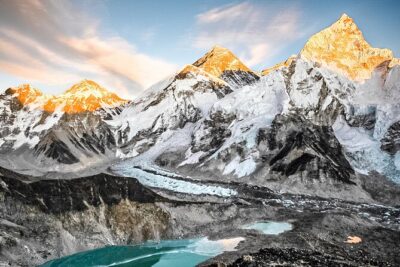
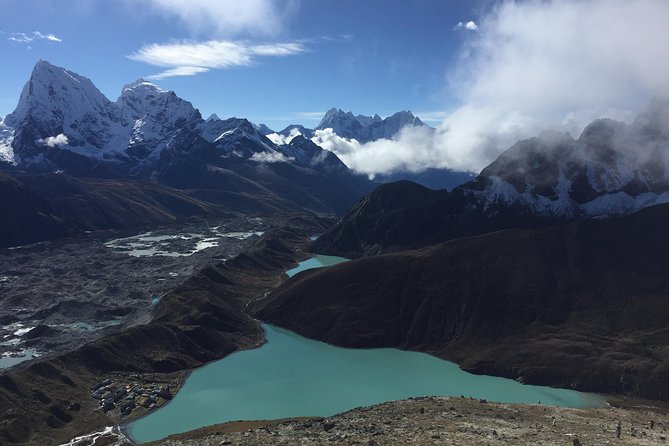
Here’s what makes it hit: Gokyo Ri sits just west of the Ngozumpa Glacier, and the view is a panorama of four 8,000+ meter peaks—Mt. Everest, Lhotse, Makalu, and Cho Oyu. That’s not a single peak photo moment. It’s a “whole lineup” moment, where your brain has to process multiple icons at once.
Practical way to enjoy it: don’t just take pictures and move on. Spend a few minutes picking out the peaks and imagining which way the glaciers and ridges connect. That’s when the scenery turns from wow into understanding.
Renjo La Pass: The Day You’ll Remember for the Wrong and Right Reasons
The next big push is the Renjo La Pass (5345m). Expect an early rise for the ascent, because that’s how you get your best chance for views and clearer conditions.
The value here is twofold. First, you get another stunning outlook over the Ngozumpa Glacier and massive peaks in the distance. Second, you get that classic high-pass feeling: the trail narrows, the wind can increase fast, and you’re suddenly aware that you’re in the thin air world, not the cozy foothills world.
One thing to plan for: timing and energy. A pass day rewards steady effort and calm breathing. If you surge upward to “feel productive,” you can pay for it later. Keep your pace conversational, even when you’re alone with your thoughts.




The Descent via Thame and Namche Bazaar: Mountain Travel With a Cultural Thread
After Renjo La, you peacefully descend toward Lukla via Thame and Namche Bazaar. This return route matters more than it sounds. Instead of disappearing down empty terrain back toward the same trailhead, you pass through the human footprint of the Khumbu—villages and trade routes that have supported trekkers and locals for generations.
Thame and Namche Bazaar are both named as part of the route back, so you should expect the trek to shift from pure scenery mode to a more mixed travel feeling. You’re still hiking, but you’re also moving through places with more infrastructure and familiar faces.
This is also where you’ll notice how your body handles altitude “coming down.” Some people feel surprisingly strong at first, then get tired later. Build in small pauses and don’t treat every downhill as easy just because you’re going down.
Price and Value: What You’re Really Paying For
The listed price is $1,800.62 per person for an approx. 12-day trek. On paper, that’s a lot. But in the Everest region, price often reflects the coordination headaches you’d rather not manage alone.
You’re paying for organized mountain logistics, guided support, and a planned route that includes a high pass and multiple major viewpoints. The operator also runs with a maximum of 15 travelers, which is a quiet but important detail. Smaller groups tend to mean less waiting at chokepoints, better pacing, and more chances for your guide to manage small problems early.
One more value point comes from how Breeze Adventure responds to feedback: they emphasize safety and comfort and highlight guide support like Sarki Sherpa, plus they mention being flexible when plans need adjusting. That flexibility can matter if weather changes your day or if your pace needs to shift to protect acclimatization.
Group Size, Guides, and Support: Comfort at Altitude Isn’t Soft
This experience has a maximum of 15 travelers. That’s not a tiny group, but it’s also not a busload. The practical result is that the trek often feels like a shared plan you can actually follow, rather than a crowded line.
You’ll also want to think about the guide relationship. In the feedback messages, Breeze Adventure specifically thanks Sarki Sherpa for help, and that signals real guide involvement rather than a purely hands-off setup. In a trek that reaches Renjo La at 5345m, good guidance is about more than route knowledge—it’s about helping you stay steady and safe when conditions shift.
And yes, it’s also about comfort. Trekking at altitude is mentally demanding. If the team is experienced and organized, the trip feels calmer even when the air is thin.
Fitness Level: What Moderate Really Means Here
The tour calls for moderate physical fitness. That sounds friendly, until you remember you’ll be moving through elevations around 5,300m at key points, including Renjo La and Gokyo Ri.
So use the word moderate as a warning label. You don’t need to be a mountaineer. But you do need to be able to hike consistently and handle long days. If you’re mostly sedentary and your plan is to “start hard on day one,” you’ll likely struggle.
A good mindset: treat this as training for steadiness. Keep your exertion controlled. Let acclimatization do its job. When you feel the pass approaching, your job is to move forward without panic.
Weather and Flexibility: When Plans Change, You Want a Plan B
This trek requires good weather. If it’s canceled due to poor weather, you’ll be offered a different date or a full refund. That matters because the Renjo La Pass experience is view-focused, and visibility is everything.
It also helps that Breeze Adventure has shown flexibility when schedules need adjusting. One of the feedback notes thanks the team for changing plans on the fly when time was limited. That kind of adaptability is valuable in the real mountains, where clouds and wind don’t care about your ideal schedule.
Booking Practicalities: Simple Touches That Reduce Stress
You start and finish back at the meeting point in Kathmandu: Breeze Adventure Pvt. Ltd, Thamel Marg, Kathmandu 44600, Nepal. Pickup is offered, and the tour notes mobile ticket and that confirmation is received at booking.
There’s also a maximum group size, plus the business has set opening hours with a Monday window listed. You don’t need to memorize those hours to enjoy the trek, but it’s good to know the operator is set up for communication in Kathmandu before you head out.
If you’re coming in with a tight schedule, keep your Kathmandu buffer days. Even when the trek is set, flights and mountain timing can still require patience.
Should You Book This Trek?
You should book if you want the Gokyo Lakes experience but don’t want the route to feel repetitive. The Renjo La Pass crossing is the main reason this trek stands out, and Gokyo Ri delivers the high-payoff view of Everest, Lhotse, Makalu, and Cho Oyu plus the Ngozumpa Glacier connection.
You might skip or reconsider if you’re not ready for days built around altitude and early starts. This isn’t a casual hike. It’s a serious mountain trek that expects you to be steady and moderately fit.
If you choose it, go in with two goals: hike calmly, and spend time at the viewpoints instead of rushing through them.
FAQ
Where does the tour start in Kathmandu?
The meeting point is Breeze Adventure Pvt. Ltd, Thamel Marg, Kathmandu 44600, Nepal.
How long is the trek?
The duration is approximately 12 days.
What is the highest point on this trek?
Renjo La Pass is listed at 5345 meters (17,536 feet). Gokyo Ri is listed at 5357 meters (17,575 feet).
What is the daily structure like for Renjo La Pass?
The plan includes an early rise to ascend Renjo La Pass.
How many travelers are in the group?
The tour has a maximum of 15 travelers.
Does the tour include pickup in Kathmandu?
Pickup is offered.
What views do you get from Gokyo Ri?
Gokyo Ri provides a panoramic view of Mt. Everest, Lhotse, Makalu, and Cho Oyu, and it is located just west of the Ngozumpa Glacier.
Which areas do you pass through on the way back?
The descent back to Lukla is described as going via Thame and Namche Bazaar.
What fitness level do you need?
The tour says travelers should have a moderate physical fitness level.
What is the cancellation policy?
There is free cancellation. You can cancel up to 24 hours in advance for a full refund, but not within 24 hours of the experience start time.