REVIEW · KATHMANDU
Everest Three High Passes Trek – 20 Days
Book on Viator →Operated by Himalayan Adventure Treks and Tours Pvt Ltd · Bookable on Viator
Three High Passes means big days and bigger views. This 20-day Everest trek strings together Kongma La, Cho La, and Renjo La plus Gokyo Valley lakes and a classic Everest finish at Kala Patthar.
What I like most is that the package handles the hard-to-plan parts for you: airport pickup and Kathmandu–Lukla flights, then lodge stays and meals on trek. I also like the way the itinerary builds in acclimatization and gives you the Everest views at the right moments, not just on a random schedule.
The main drawback is the obvious one: you’re stacking high passes at altitude, with cold, steep terrain and long hiking days. If your fitness is shaky, you’ll feel it fast, even with rest days like Namche and Dingboche.
If you want an adventure that feels truly Himalayan, not just a checklist, this trek has the shape and pacing that can get you there. You’ll also pass through real Sherpa villages, monasteries, and the Sagarmatha National Park corridor that defines the Khumbu.
In This Review
- Key highlights worth knowing
- Getting to Lukla and starting the trek without extra headaches
- Phakding to Namche: Sagarmatha National Park hits early
- Namche acclimatization plus Khumjung’s real Sherpa life
- Tengboche to Dingboche: monasteries, views, and the slow angle change
- Chhukung and Chhukung Ri: practice scrambling before Kongma La
- Kongma La to Lobuche: the hardest day starts at dawn
- Kala Patthar: Everest views, cold hands, and a clear reason to go
- Cho La day: steep boulders and a crevasse curve
- Gokyo Valley: Ngozumpa Glacier and the six-lake system
- Renjo La: a different pass day with Everest back in view
- Thame and Namche again: Tibetan trader routes and Sherpa villages
- Lukla to Kathmandu: the landing after the passes
- Price and value: what $2,700 covers on a serious trek
- Tea houses and daily rhythm: comfort where you can get it
- Fitness, gear, and safety: three passes demand respect
- Who should book this trek?
- Should you book Everest Three High Passes?
- FAQ
- What’s included in the Kathmandu start of this trek?
- Are flights to Lukla included?
- Which high passes does the trek include?
- What about permits and trekking paperwork?
- How are meals handled during the trek?
- How is porter support arranged?
Key highlights worth knowing
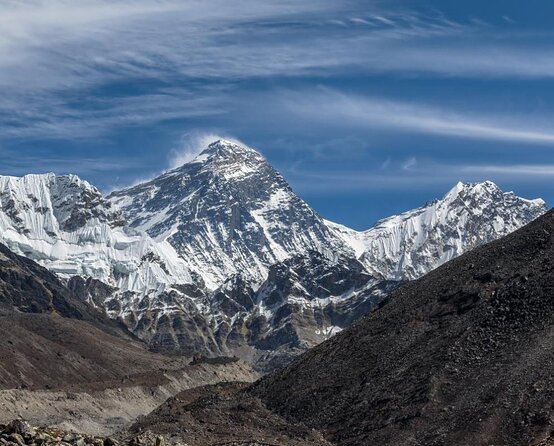
- Three named high passes: Kongma La (5,535 m), Cho La (5,420 m), Renjo La (5,360 m)
- Everest Base Camp plus Kala Patthar (5,545 m) for high-altitude sunrise-style views
- Acclimatization built in with stops in Namche and Dingboche (plus small day hikes)
- Gokyo Valley contrast: Ngozumpa Glacier and the six-lake region, including Gokyo Ri
- Support that matters on steep days: an experienced guide and a porter (1 porter for 2 clients)
- Cultural stops in the Khumbu like Tengboche’s monastery area and Khumjung’s monastery and Hillary School
Getting to Lukla and starting the trek without extra headaches
Most people underestimate how much of the anxiety comes before you ever hike. Here, your trip begins in Kathmandu with an airport transfer to your hotel by private vehicle, then you move to the airport the next day for a short scenic flight to Lukla (described as under 30 minutes). That flight is brief, but it sets the tone: mountains, river valleys, and the feeling that you’re entering a real remote system, not just “going somewhere pretty.”
Your package also keeps the Kathmandu side organized. You have two nights in a 3-star hotel with breakfast, and there’s a planned transfer to the airport on the way out (with a 3-hour buffer). The tour also includes travel and rescue arrangements and a first aid kit, which is practical insurance when you’re operating in a high-altitude environment where things can get complicated quickly.
The one thing you should understand up front: the package is not trying to be a luxury vacation. It’s building you a working trek schedule: flights, permits/paperwork, lodge stays, and the right kind of guiding support for three passes.
You can also read our reviews of more tours and experiences in Kathmandu.



Phakding to Namche: Sagarmatha National Park hits early
After landing in Lukla, the first trekking segment to Phakding is a manageable on-ramp (3–4 hours). The trail runs through natural scenery, and you’re hiking in a place where you can still feel the river valleys and forest zone before altitude starts tightening everything.
On day 3 you head toward Namche Bazaar via the Dudh Koshi riverside trail. This is where the park presence becomes real: Monjo is described as the entrance to Sagarmatha National Park, and the scenery shifts toward big mountain views as you walk. This portion is important even if it feels scenic rather than hard. It helps your body learn the motion and your mind learn the routine: steady pace, frequent pauses, water discipline, and respecting altitude.
What you’ll enjoy here: the sense of momentum. Each day gives you a new “layer” of the Khumbu—forest and river edges first, then the bigger mountain scale around Namche.
Namche acclimatization plus Khumjung’s real Sherpa life
Namche is one of the best places on this route to stop and breathe. Day 4 is built as an acclimatization day, which matters because you’ll be hiking higher soon. You still move enough to stay warmed up, including a short hike toward Everest View Hotel, then back to Namche.
This day also includes cultural and park context. You tour Khumjung, including the monastery and Hillary School. You can also visit a visitor center near the Sagarmatha National Park headquarters to learn about early Everest ascenders, Sherpa culture, and plant and animal life in the Everest region.
Two reasons this is a smart add-on:
1) You’re not just waiting around with nothing to do at altitude.
2) It helps you understand the people who live with these mountains every day, not just the marketing of Everest.
Small consideration: it’s still a high-altitude day. Even with acclimatization, you should keep your effort moderate and stay patient with your body.
Tengboche to Dingboche: monasteries, views, and the slow angle change
From Phunki Thanga you go toward Tengboche, home to the largest monastery in the Everest region. The itinerary notes that you may arrive in the afternoon and could see a Buddhist religious ceremony. Even if you don’t catch a ceremony, Tengboche is still a strong cultural anchor. It’s one of the spots where the trail feels like a living spiritual route, not just a hiking corridor.
Day 6 continues with downhill sections through birch, conifers, and rhododendron forests, while mountain views keep sharpening—Everest, Lhotse, Ama Dablam. The route dips to Debuche, crosses the Imja River, passes by Pangboche, then works its way to Dingboche. Dingboche is described as windy, with chortens and prayer flags—classic Khumbu cues that you’re in the higher, more exposed zone now.
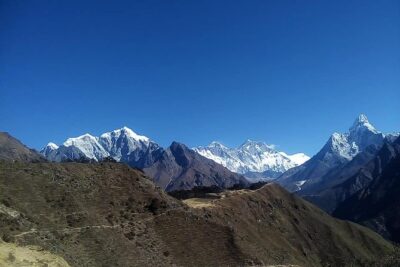
Then day 7 is another acclimatization day in Dingboche, with a day hike to Nagarjun Hill for panoramic views (including Makalu, Lhotse, Chalotse, Tawache, Ama Dablam). This is exactly what you want before the pass work begins: a chance to get your “view day” without pushing your body too hard.
Why it’s valuable: Congestion and cold stress happen later. These controlled days are your chance to build altitude tolerance safely.
Chhukung and Chhukung Ri: practice scrambling before Kongma La
Day 8 shifts the scenery toward glacier moraine country. You pass through stone-walled fields and the Imja Khola valley, then walk through glacier moraines with towering mountains overhead. The itinerary stops at Bibre, a yak herdsman place, and you’re treated to a strong view of Ama Dablam and Amphu Labsa across the valley.
After lunch, you climb toward Chhukung Ri. The route includes easy scrambling near the summit, and from the top you can look directly across the valley at Ama Dablam and nearby peaks. Then you descend back to Chhukung for the night.
Think of Chhukung Ri as a training day. Kongma La is coming early the next morning, and scrambling practice helps. Even if you’re not a technical climber, it reminds you what it feels like to use hands for balance on uneven ground.




Kongma La to Lobuche: the hardest day starts at dawn
Day 9 is described as an early start to reach Kongma La Pass (5,535 m). The trek offers route options: one goes over hills north of Chhukung over Nuptse Glacier moraines; another returns toward Bibre and follows a trail above the Niyang Khola. Either way, when you reach the top the pass is marked by cairns and prayer flags.
The important part isn’t just “reaching the summit.” The itinerary calls out that the final descent from the pass is the most difficult part of the day, turning north through Khumbu Glacier to Lobuche. That’s the pattern you should plan for: pass days often punish your legs on the way down, when you’re already tired from climbing.
Day 10 continues along lateral moraine and brings you up toward Thangma Riju and onward toward Changri Glacier. Gorakshep is the staging area, surrounded by peaks. Then you continue to Everest Base Camp, passing rocky dunes, moraines, and streams. You return to Gorakshep for the night.
What you’ll feel here: the trek becomes more “high-expedition” feeling even though you’re not climbing Everest. The ground is rougher, and everything is higher and colder.
Kala Patthar: Everest views, cold hands, and a clear reason to go
Day 11 is the classic Everest viewpoint day: you start early in the morning for Kala Patthar (5,545 m) to catch the early light on Everest. The itinerary is upfront about what this means. Expect cold, potential wind, and dark trekking conditions before sunrise depending on season.
You climb for several hours and reach Kala Patthar where you get close-up views of Everest and other Himalayan peaks. Then you descend to Lobuche for the night.
This is the moment most people remember because it blends effort and payoff in a rare way. You’ll be far enough up that the mountain scale feels direct, not distant. And because the timing is early, the views are the best kind of reward: hard-earned, not random.
Cho La day: steep boulders and a crevasse curve
After your time around Everest Base Camp, day 12 starts downhill along the Khumbu Glacier and then begins a more complex route toward lakes and Dzongla. You pass stupa and tombstones in the distance and see Chola Tsho Lake, then another smaller lake, cross Chola Khola on a bridge, and reach Dzongla.
Day 13 is where Cho La Pass (5,420 m) takes over. The itinerary notes that as you gain height the Cho La Lake begins to appear, and Ama Dablam presides over mountain views to the south while Cholatse rises to the west. Climbing is described as steep and made worse by boulders where you may need to scramble. The final climb can be tricky as the trail curves around a crevasse, with prayer flags and cairns marking the pass.
Then you go down toward Thangnak. The itinerary says the path leading down is not difficult even though it’s long, which is a useful heads-up: not all “long” days equal “hard.”
Practical takeaway: build leg strength, but also build caution habits. When trails curve around crevasses, footwork matters more than speed.
Gokyo Valley: Ngozumpa Glacier and the six-lake system
Crossing from Cho La into the Gokyo region changes the whole feel of the trek. Day 14 has you walking down up to the Gokyo Valley, reaching the edge of the Ngozumpa glacier (described as the longest glacier in Nepal). After crossing the glacier side, you see the second Gokyo Lake and then the third, then arrive at Gokyo Village where you sleep.
Day 15 is Gokyo Ri day plus lake exploration. You climb Gokyo Ri for views, and you can tour the fourth Gokyo Lake (the itinerary says it’s about 3 km north of Gokyo Village). You continue trekking to the fifth lake and reach the viewpoint called Scoundrel’s Viewpoint at the edge of the fifth lake. The view described includes Cho-Oyu, Gyachung Kang, Everest, Lhotse, Nuptse, Makalu, and the huge Ngozumpa Glacier.
What I like about this section is that it doesn’t just trade “Everest views” for something generic. You get an entirely different glacial geography, plus the way the lakes step through the valley. You also get a full day to explore—time you can use to adjust your pace if you’re tired.
Renjo La: a different pass day with Everest back in view
Day 16 starts early for a longer trek. You walk alongside Dudh Pokhari for a while, then descend toward Renjo La Pass. Views along the way include the Himalayan and Rolwaling ranges, and the itinerary highlights that Renjo La’s views feel like Gokyo Ri—third Gokyo Lake and Gokyo Village below the gray smear of the Ngozumpa Glacier.
Then you reach Renjo La Pass (5,360 m) with outstanding views of Everest from the top. After that, the trail winds down stone stairs, then crosses loose scree to reach the south bank of Angladumba Tsho Lake.
This is a key contrast moment: after Cho La, you now do another high pass, but the valley system changes and your vantage shifts. You’re also likely starting to feel the cumulative effect in your knees and lungs, so the descent style matters.
Thame and Namche again: Tibetan trader routes and Sherpa villages
On day 17, the trek follows a traditional route used for centuries by Tibetan traders from Marulung to Thame. You cross the Bhote Koshi River, descend to Taranga, and keep going past bridges until you reach Thame. Thame sits under its famous Gompa on a hill to the west.
From Thame, you descend gradually through a few small villages to Namche Bazaar. The day ends with Namche described as the biggest town in the Everest region.
Day 18 continues with steady descent, crossing several bridges over fast-flowing Dudh Koshi and tributaries. The itinerary emphasizes open plains and forests of rhododendron and pine, plus distant views of snow-covered peaks. You pass Sherpa villages and notice the faith traditions—prayer stones and prayer flags—then reach Lukla.
Why this “backtrack” still feels rewarding: you’re not repeating. You’re moving through the same region with new mental maps. The way the valleys open and close makes it feel like a different trek.
Lukla to Kathmandu: the landing after the passes
Day 18 ends in Lukla, then day 19 brings you back to Kathmandu by flight, usually scheduled in the morning for safety purposes. After you arrive, you can rest or shop for souvenirs, and the itinerary includes a farewell dinner at an authentic Nepalese restaurant with cultural performance.
Day 20 is your final transfer to the airport by Himalayan Adventure Treks and Tours, about 3 hours before your flight. It’s a good close: you’ll have time to think through what you learned and plan what you do next in Nepal.
Price and value: what $2,700 covers on a serious trek
At $2,700 per person, you’re paying for more than “guiding.” In this package, a lot of the logistical weight is handled for you:
Included highlights:
- Airport pickup and private hotel transfers
- Two nights in Kathmandu (3-star hotel) with breakfast
- Meals during trekking (lunch, dinner, breakfast as listed)
- TIMS and Khumbu valley permit plus “necessary paper works”
- Kathmandu to Lukla flights and return flights (including Kathmandu/Ramachap to Lukla per the plan)
- Accommodations in lodges/tea houses during the trek
- Experienced guide and a porter system (1 porter for 2 clients)
- Travel and rescue arrangements, plus medical supplies/first aid kit
- Duffle bag return after trek and company t-shirts
- Farewell dinner with cultural performance
Not included:
- Nepal visa fee
- International airfare
- Extra hotel nights in Kathmandu if timing shifts
- All meals in Kathmandu (the package only covers hotel breakfast in Kathmandu)
- Travel and rescue insurance
- Personal expenses and tips for guide/porter
So is $2,700 a deal? If you price it out yourself, flights, permits, logistics, and a support team can add up quickly. Where this package feels most valuable is the combination: flights + passes + permit paperwork + guide/porter + lodge stays. If you’d otherwise try to DIY parts of this, the risk is higher than the savings.
Tea houses and daily rhythm: comfort where you can get it
During the trek you’re in lodges/tea houses, and the itinerary implies normal trekking comforts rather than high-end rooms. On a trek like this, the “comfort” question is really about sleep, warmth, and how quickly you can recover between days.
Your day structure is built around reality:
- early starts for the higher passes,
- acclimatization stops at Namche and Dingboche,
- and full days for places like Gokyo Valley.
Practical advice: assume cold nights at altitude. Pack for wind and low temperatures, and plan to be flexible about rest. A good guide and a workable porter system help a lot, but your best tool is preparation.
Fitness, gear, and safety: three passes demand respect
The tour data is clear: you should have strong physical fitness. That’s not just marketing. Three high passes and a route that includes Kongma La, Cho La, Renjo La means:
- steep climbs,
- technical-feeling sections (especially around Cho La),
- and tough descents that wear your legs.
Gear items aren’t listed in the provided information, so I’ll keep this practical: bring layers for cold mornings, plan for wind, and don’t assume every day will feel easy even when you’re “just walking.” The itinerary also notes scrambling on Chhukung Ri and potential scrambling/boulder sections around Cho La, plus cold sunrise climbing at Kala Patthar.
Safety-wise, you have travel and rescue arrangements and a first aid kit included, but you still need travel and rescue insurance not included in the price. That’s a line you shouldn’t skip.
Who should book this trek?
This is a strong fit if you:
- want a real high-altitude challenge in the Khumbu without technical climbing on ropes,
- enjoy a mix of Everest views and glacial lakes (Gokyo isn’t just a side quest),
- and want an organized trek with named support roles (you’ll be traveling with an experienced guide and a porter system set up for your group).
It’s also a good match for people who care about Sherpa culture and monasteries, since the route includes Khumjung and Tengboche-style spiritual landmarks, not only mountain scenery.
If you’re new to high-altitude trekking or you struggle with consistent uphill days, you’ll likely find this too intense. The route’s logic assumes you can handle long days and cold nights.
Should you book Everest Three High Passes?
If you’re excited by the idea of conquering three high passes and getting the payoff of Everest Base Camp and Kala Patthar, this trek earns its reputation as a serious adventure. The value is strong because the package includes the big moving parts: Lukla flights, permits, lodges, guide support, and a porter system.
I’d book it if you’re physically ready and you want the kind of itinerary that mixes challenge with acclimatization and meaningful cultural stops. I wouldn’t book it if your goal is an easy vacation, or if you’re uncertain about handling steep, cold terrain and early morning starts at altitude.
FAQ
What’s included in the Kathmandu start of this trek?
You get a private airport pickup and transfer to your Kathmandu hotel, plus two nights in a 3-star hotel with breakfast. There’s also a Kathmandu start time listed as 7:00 am at Tribhuvan Airport.
Are flights to Lukla included?
Yes. The tour includes Kathmandu to Lukla flights and return flights, with the plan also referencing Kathmandu/Ramachap to Lukla and Ramachap flight.
Which high passes does the trek include?
You cross three passes: Kongma La Pass (5,535 m), Cho La Pass (5,420 m), and Renjo La Pass (5,360 m).
What about permits and trekking paperwork?
TIMS and the Khumbu Valley permit are included, along with necessary paper works.
How are meals handled during the trek?
Meals during trekking are included (lunch, dinner, and breakfast as listed). All meals in Kathmandu are not included beyond the hotel breakfast.
How is porter support arranged?
An experienced guide is included, along with a porter system listed as 1 porter for 2 clients.