REVIEW · MOSHI
Best 5 Days Kilimanjaro Bike Trek Tour via Marangu Kilema Route
Book on Viator →Operated by #1 Best Kilimanjaro Bike Tour Operators | BURIGI CHATO SAFARIS C.O L.T.D · Bookable on Viator
Biking toward Uhuru Peak sounds almost wrong, but this Kilimanjaro bike trek via Kilema is built for it. You start in the Marangu area, cycle through alpine desert and up to key huts, then make the summit attempt with the support of guides and porters. It’s one of the very few ways to connect mountain-bike riding with a Kilimanjaro top-out plan.
I love the trip’s focus on progressive acclimatization over about five days, not a rushed grab-and-go style. I also like the way the plan mixes real riding distance with rest, checkpoints, and orientation so you’re not just pedaling blindly.
One drawback: this is still Kilimanjaro. Even if you’re a cyclist, you should expect long hours, early starts (including the late-night/very-early summit push), and a real chance of rough biking conditions like flats.
In This Review
- Key Highlights You’ll Feel on This Kilimanjaro Bike Trek
- Why the Marangu–Kilema Route Is Different for Bike Riders
- Price and Value: What You Pay vs. What You Still Need
- The Real-World Ride Style: How This Bike Trek Runs Day to Day
- Day 1: Marangu Gate Registration and the First Spin to Horombo Hut
- Day 2: Alpine Desert Riding with a Mawenzi/Horombo Loop
- Day 3: Up to Kibo Hut, Thermal Prep, and Summit-Path Orientation
- Day 4: Zigzags to Hans Meyer’s Cave, Then Bike Riding near Uhuru Peak
- Day 5: Final Descent to Kilema Gate and Back to Moshi
- What to Pack (and What to Expect) for a Bike Trek at High Altitude
- Safety and Group Handling on the Trail
- Should You Book This 5-Day Kilimanjaro Bike Summit Trek?
- FAQ
- How long is the Kilimanjaro bike trek on the Marangu–Kilema route?
- What route does this tour use to reach the summit by bike?
- What’s included in the price?
- What’s not included?
- Is the tour suitable for me if I’m not an elite athlete?
- Can I bring a service animal?
Key Highlights You’ll Feel on This Kilimanjaro Bike Trek
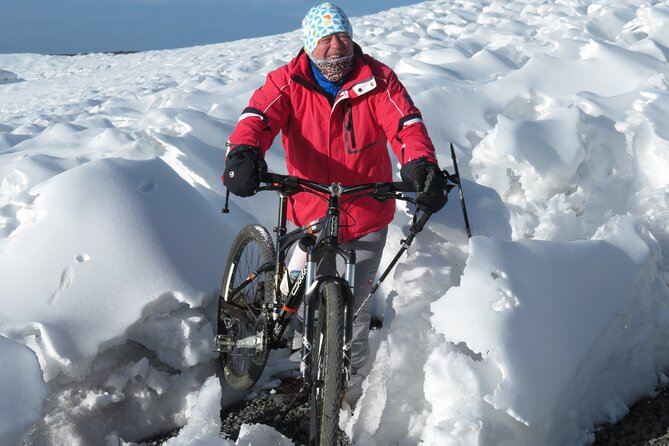
- Kilema route built for summit by bike: cyclists can ride sections and then coordinate with porters for the summit segment.
- Acclimatization is part of the plan: you gain altitude over multiple days with time to recover at Horombo and Kibo huts.
- Night summit approach timing: you’re woken around 4:00 am for the zigzag ascent and then shift to bike riding near the summit zone.
- Safety support on the trail: guides stay organized with an escort approach (and radios have been used on past departures).
- Expect wild, high-altitude wildlife: one recurring note is to be ready for big rats around camps/huts.
- Punctures are a practical risk: people doing these rides flag flat tires as something to plan for on rocky terrain.
Why the Marangu–Kilema Route Is Different for Bike Riders
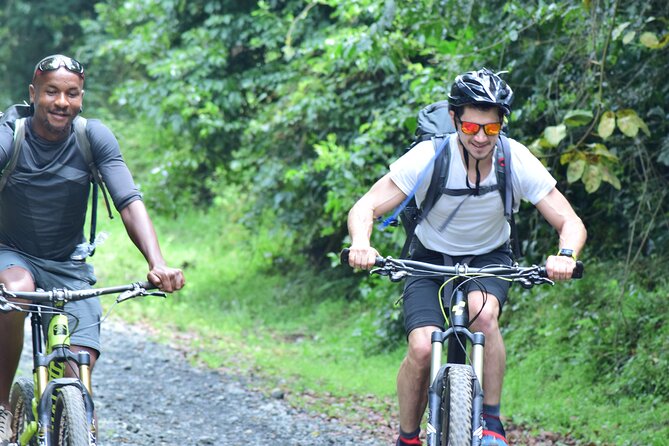
Kilimanjaro is famous for routes on foot, but this one is tailored for cyclists who want the extra challenge of doing parts of the journey on a mountain bike. The big selling point here is the Kilema route—it’s described as the route that can reach the summit by mountain bike, using a system where cyclists meet porters at Horombo Hut and continue toward the summit push.
That matters because most “bike Kilimanjaro” ideas stop short of the real altitude grind. Here, the schedule is built to keep you moving toward Uhuru Peak while still giving you time to adjust to the thinning air.
You can also read our reviews of more tours and experiences in Moshi.
Price and Value: What You Pay vs. What You Still Need
The price is $3,292 per person, and for that money you’re getting a lot of the moving parts handled. The included package covers private gate transfers (including getting you to the park gates and back), plus airport pick-up and drop-off. You also get an experienced tour guide, park fees and taxes, and all meals listed as breakfast (4), lunch (5), and dinner (4).
It also includes hotel accommodation before and after trekking (you can book directly or via the operator). In other words, you’re not just paying for the biking; you’re paying for the whole logistics chain: getting to the gates, getting fed, and getting positioned for summit timing.
What’s not included is important:
- flights
- medical insurance
- visa
- personal climbing gear
- mountain trekking bike hiring
So yes, the total cost can look steep, but you’re also buying a full service plan in and out of the park. If you don’t already have the right gear and a bike solution, that extra budget can change the math quickly.
The Real-World Ride Style: How This Bike Trek Runs Day to Day
This trip isn’t a casual cycling holiday with downhill scenery and short stops. Your days include riding on alpine desert and dealing with uneven ground (including small stone sections). The itinerary times you for several hours each day, with day-to-day changes in terrain that will feel very different as altitude climbs.
The other big “feel” factor is that even though you’re on a bike, you’re still doing Kilimanjaro acclimatization. You’ll be packing duffel bags, eating like you mean it, and preparing thermal layers for the summit window.
Finally, group size is capped at 200 travelers, but that doesn’t mean you’ll be shoulder-to-shoulder with everyone. In at least some departures, people have described groups around 16 with multiple vehicles escorting to keep the ride safe and coordinated. You’ll still want to ride with patience; speed isn’t the goal up here.
Day 1: Marangu Gate Registration and the First Spin to Horombo Hut
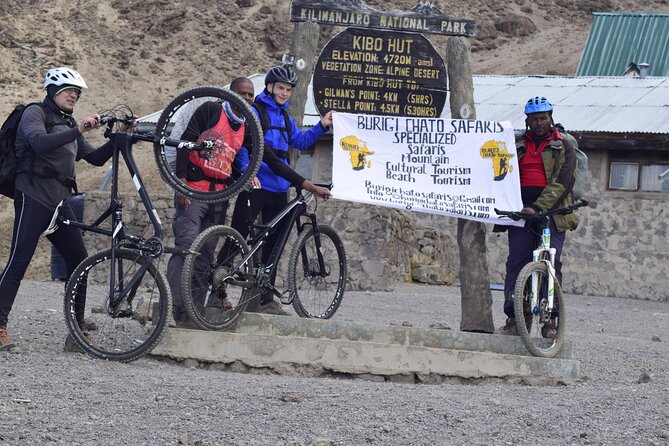
Day 1 starts with a transfer from Moshi into Kilimanjaro National Park. You meet your guide, then drive to Marangu Gate where hikers are required to register at the Park office. After that sign-in, you go onward to the Kilema Gate for the biking start.
Once you arrive, you do a practical check: make sure your day-pack has essentials like drinking water, a lunch pack, and extra clothing, and then do a final check of your mountain bike. You begin with the first cycling section of about 16 km, paced with your guide on a mountain bike.
The payoff on Day 1 is that you’re not just “starting the climb.” You’re learning the rhythm: careful power, stable control, and keeping your effort within what your altitude system can handle.
Day 2: Alpine Desert Riding with a Mawenzi/Horombo Loop
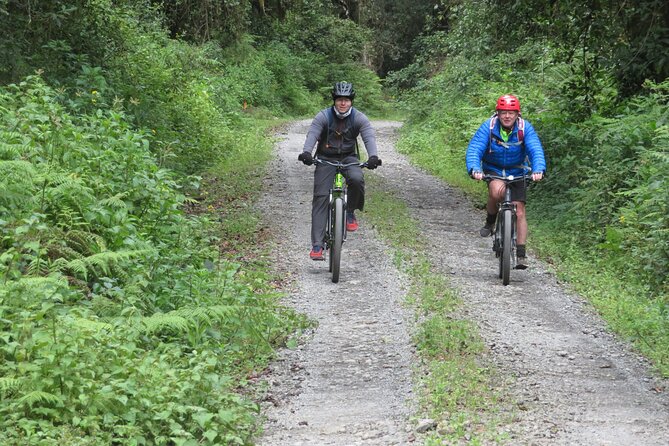
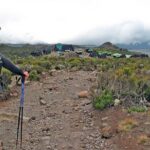
After breakfast you ride through alpine desert vegetation. This is the part that many cyclists find both impressive and humbling because the ground can be rocky, with small-stone sections that don’t behave like a smooth trail.
Today’s cycling distance is about 10 km, and the day is described as roughly 90% riding. You cycle through areas toward Mawenzi Hut and then back to Horombo Hut.
This day is valuable because it gives you a taste of the high-altitude environment without making you sprint toward the summit. It’s also a good time to practice your own pace and your tire-management mindset—because up here, a small problem can become a long delay.
Day 3: Up to Kibo Hut, Thermal Prep, and Summit-Path Orientation
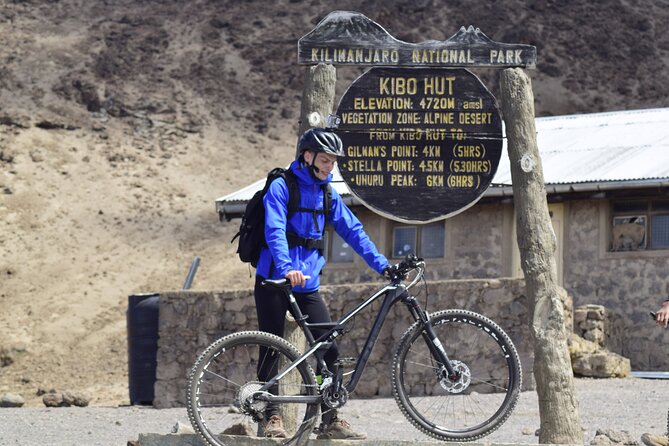
Day 3 is where the altitude starts to feel more serious. You wake early, pack your duffel bags, then head back up toward Kibo Hut. The ride includes an initial stretch of around 3 km, with a final longer approach of about 7 km that offers a good biking trail.
After lunch, you rest, but there’s also an option near mid-afternoon depending on how you feel: you may hike partway up the summit path just to get your bearings. This kind of orientation can help a lot on summit night because it reduces the “blank map” feeling when the route goes steeper.
Kibo Hut itself is described as a stone-built block house with bunk beds for 60 climbers. The summit (Uhuru Peak) is still about 1,195 m higher, and the plan calls for your final ascent the same night. That’s why thermal clothing and summit-ready preparation are a big deal today.
A practical note: if you hate early cold starts, Day 3 is your warning. You’ll want to be organized so you can focus on temperature management, not scrambling for layers.
Day 4: Zigzags to Hans Meyer’s Cave, Then Bike Riding near Uhuru Peak
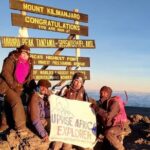
Day 4 is the “big morning” and it starts early—around 4:00 am you’ll be awakened to begin the ascent. You climb via zigzags on a long sloped path, reach Hans Meyer’s Cave after roughly two hours, and then face a steeper gradient from there.
You continue for about another three hours to Gilman’s Point. At that point, porters handle the bike logistics, and you shift into the bike segment that runs toward Uhuru Peak.
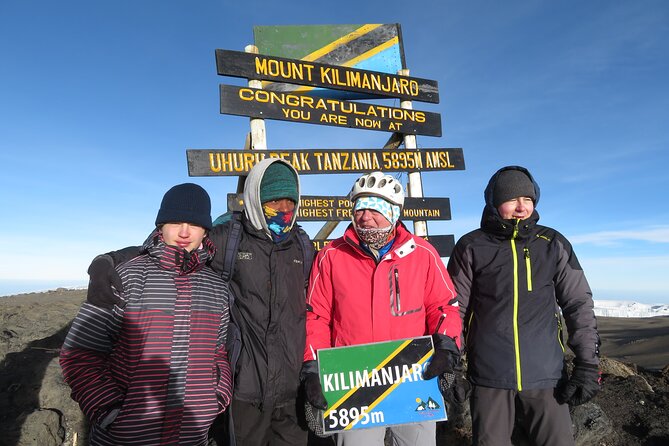
The plan describes riding to Uhuru Peak, arriving to spend a few minutes and take photos, then riding down to Stella Point. After lunch you ride down to Horombo, with the route described as alpine desert on the higher segments (and alpine desert/icecap-zone descriptions on parts of the descent).
Why this day works (even if it feels intense): it doesn’t treat the summit like a single moment. You climb, you reposition, you bike when the route allows, and you still have a structured way to return to Horombo.
Day 5: Final Descent to Kilema Gate and Back to Moshi
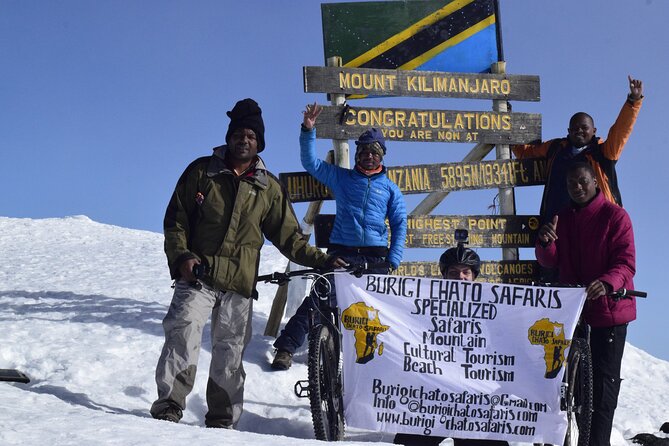
On your final morning, you do the last ride down to the Kilema Gate. The description highlights a change in scenery as you descend: you move across alpine and rainforest before reaching the gate.
From there, you transfer back to Marangu Gate for checkout and then continue onward to your hotel in Moshi. This is the day that usually feels like a win even if you’re tired—because you’re riding in the opposite direction of altitude, and that alone can make the whole trip feel more human.
What to Pack (and What to Expect) for a Bike Trek at High Altitude
The tour plan tells you to prepare smartly, not just pack a lot.
For your day pack on ride days, the essentials specifically mentioned include:
- drinking water
- lunch pack
- extra clothing
For the summit attempt window, thermal clothing is called out as something you’ll need to prepare. That’s not optional on Kilimanjaro. Layers are what keep your body working while the cold tries to freeze your momentum.
Also, treat bike reliability as part of your planning. One of the most repeated practical tips from people who’ve done Kilimanjaro bike riding is to expect flats—unless your bike and setup are built for rugged, stony ground. If you’re using your own bike, tire choice and strong rims can matter.
And yes: one recurring note is to expect big rats around the camps. Not everyone gets stressed by that, but it’s smart to keep food managed and gear stored responsibly.
Safety and Group Handling on the Trail
This kind of trek lives or dies on coordination. Even though the plan is cycling-focused, you’ll be working with guides and porters and riding in terrain that can slow you down.
In past experiences with this operator style, people have described:
- groups around 16
- multiple escort vehicles
- guides using radio communication to stay coordinated
You shouldn’t assume every departure will match those exact numbers, but the overall takeaway is clear: there’s active management on the ride. That’s a big plus when you’re dealing with rocky descents and altitude fatigue.
Still, you should ride defensively. Keep your speed controlled. Watch your front wheel placement on stone. Save your energy for the parts that really matter.
Should You Book This 5-Day Kilimanjaro Bike Summit Trek?
If you’re a cyclist who wants a real Kilimanjaro challenge—not just a scenic ride with a view—you’ll probably love this plan. The itinerary is structured around acclimatization, it uses huts like Horombo and Kibo to pace your altitude gains, and it gives you a summit-day flow that includes time on the bike near Uhuru Peak.
Book it if:
- you can handle long days and early wake times
- you’re comfortable cycling on rough, rocky sections
- you want the rare mix of mountain biking plus summit ambition
Maybe skip or rethink if:
- you’re mainly looking for an easy fitness ride
- you don’t have (or don’t want to budget for) climbing gear and insurance
- you’re strongly opposed to puncture risk and high-altitude cold preparation
If you do book, focus on readiness: layer up, keep your day-pack basics tight, and treat bike reliability like part of your summit strategy.
FAQ
How long is the Kilimanjaro bike trek on the Marangu–Kilema route?
It’s listed as 5 days (approx.), with a starting time of 8:00 am.
What route does this tour use to reach the summit by bike?
It uses the Kilema route to summit Uhuru Peak. Cyclists meet their porters at Horombo Hut and continue toward the summit.
What’s included in the price?
Included items are private transportation for gate transfer and airport pick-up/drop-off, an experienced tour guide, hotel accommodation before and after, all fees and taxes, and meals: 4 breakfasts, 5 lunches, and 4 dinners.
What’s not included?
Not included: local and international flights, personal climbing gears, medical insurance, visa, and mountain trekking bike hiring.
Is the tour suitable for me if I’m not an elite athlete?
The guidance says travelers should have moderate physical fitness level.
Can I bring a service animal?
Yes. Service animals are allowed.