REVIEW · KATHMANDU
Annapurna Sanctuary Trek ( 11 Days)
Book on Viator →Operated by KJ Adventure Nepal Private Limited · Bookable on Viator
A high-altitude daydream is hiding in the details. This 11-day Annapurna Sanctuary Trek strings together temple-city Kathmandu, lakeside Pokhara, and classic sanctuary trekking toward Annapurna Base Camp, with plenty of teahouse stops along the way. I especially like how the route balances forest trekking, suspension bridges, and big-mountain moments without pretending it’s easy.
Two standout strengths: you get English-speaking guide support plus porter service (1 porter for 2 clients), and the trip is built around comfort that keeps you moving. In fact, one guide named Prajwol has been praised for sharing the kind of trail information you actually need. One consideration: you’ll want solid moderate fitness, because the route includes repeated uphill and high-elevation walking around 4,130m.
In This Review
- Key things that make this trek worth your time
- Why the Annapurna Sanctuary Trek feels like a front-row seat to the Himalaya
- Price and logistics: what $1,300 actually buys you
- Kathmandu Days 1–2: temples, UNESCO time, and practical trekking prep
- Pokhara flight and the trek start at Matkyu: forests, the Modi River, and first climbs
- Jhinu Danda to Upper Sinuwa: suspension bridges and Chhomrong Khola views
- Deurali, Hinku Cave, and the long build to Machhapuchhare Base Camp
- Annapurna Base Camp day from Machhapuchhare Base Camp: 4,130m and peak spotting
- Chhomrong return and Upper Sinuwa: bamboo forests, bridges, and living culture
- Pokhara decompression: jeep ride, lakeside night, and easy fun after big walking
- Flying back to Kathmandu and the farewell dinner
- Who this trek suits (and who should think twice)
- Should you book this Annapurna Sanctuary Trek?
- FAQ
- What’s included in the trek package price?
- Are meals covered during the trek?
- How do the domestic flights work?
- What permits are required?
- Will I have porter support?
- What fitness level do I need?
- Can I cancel for a refund?
Key things that make this trek worth your time
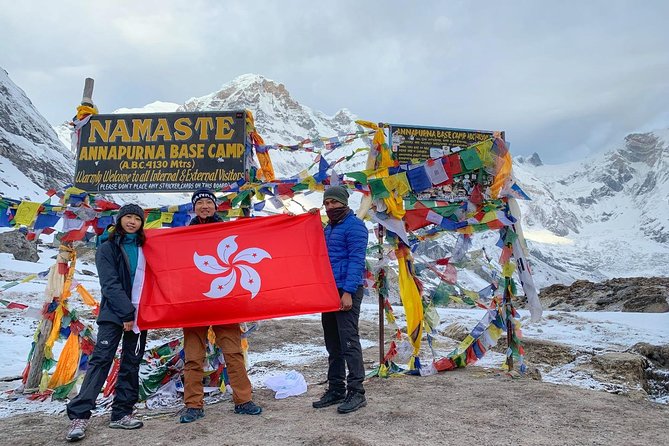
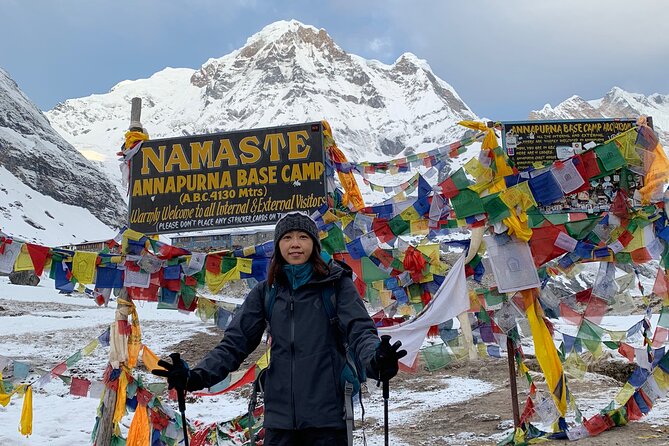
- Annapurna Base Camp at 4,130m with sweeping views of Annapurna South and the surrounding peaks
- Teahouse trekking with full-board nights on the trail, so you’re not constantly planning meals
- Hinku Cave landmark routing (tied to early Annapurna I expeditions) as part of the hike story
- Machhapuchhare Base Camp approach that earns the big view build-up before Annapurna Base Camp
- Porter support (1 porter per 2 clients) and a provided trekking map and duffel for smoother days
- Kathmandu UNESCO day plus proper trekking prep, not just a quick airport shuffle
Why the Annapurna Sanctuary Trek feels like a front-row seat to the Himalaya
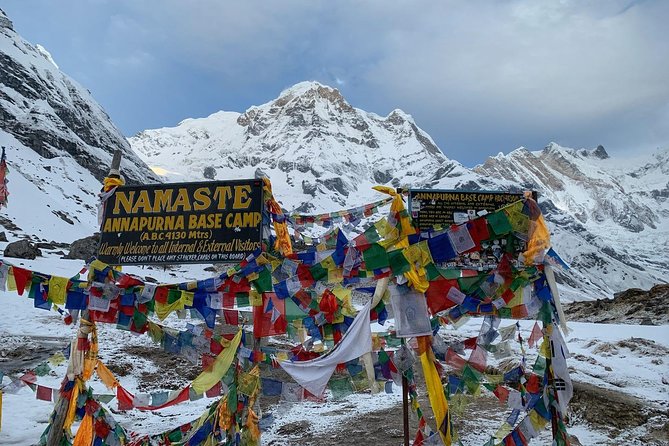
The Annapurna Sanctuary route is popular for a reason: it’s built around gradual altitude gain, then a big payoff. You start in forests, you cross bridges, you pass villages, and you work your way up to a natural bowl where the Annapurna massif dominates the horizon.
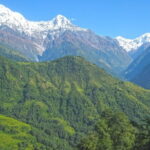
One thing I love is that you’re not walking through a single “type” of scenery. The trail moves through oak and rhododendron forests, steeper stair sections, open stretches, and glacier-fed river views. The region is also known for exceptional biodiversity—listed figures include 1,226 flowering plant species, 518 birds, and 105 mammals—so even when the view isn’t huge yet, the walk still feels alive.
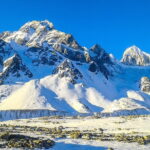
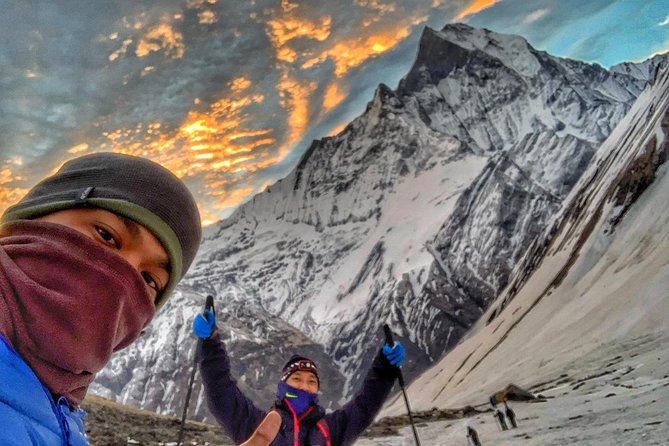
Then, as you near the sanctuary core, the peaks stop being “background.” Annapurna, Dhaulagiri, and Machhapuchhre begin appearing like they’re closer than they should be. From base camp, you’re looking at the Annapurna Massifs from their strongest angle, with enough space around you that you can actually breathe and take it in.
You can also read our reviews of more tours and experiences in Kathmandu.
Price and logistics: what $1,300 actually buys you
On paper, $1,300 for an 11-day trek sounds like a serious chunk of money. In practice, the value comes from how much is bundled together—especially because this itinerary includes two-way domestic flights by Buddha Air between Kathmandu and Pokhara.
Here’s what you’re paying for beyond the hiking:
- Kathmandu and Pokhara lodging on a bed-and-breakfast basis
- Teahouse/lodge stays on a full-board basis during the trek (twin sharing)
- An experienced English-speaking trekking guide
- Porter service throughout (1 porter for 2 clients)
- Permits and paperwork, including ACAP and TIMS
- Local transportation in Nepal (private vehicle/jeep as needed)
- Extras that matter on a long walk: duffel, trekking map, and a trip completion certificate, plus a medical kit
You do pay less attention to “day-to-day logistics,” which is a big deal when you’re gaining altitude and your energy is limited. The trek day becomes: walk, eat, rest, repeat—under local guidance.
The main drawback tied to value is also simple: if you don’t care much about comfort, meals included, and guided pacing, you might find cheaper DIY options. But if you want the route without constant planning pressure, this package pricing makes more sense.
Kathmandu Days 1–2: temples, UNESCO time, and practical trekking prep
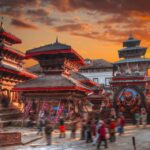
Your trip starts in Kathmandu with an airport greeting and transfer to your hotel. Then Day 2 is your “big picture” city day. You’ll visit major stops in the Kathmandu Valley, including sites among Nepal’s UNESCO World Heritage locations. The schedule highlights Kathmandu Durbar Square, Swayambhunath, Pashupatinath, and Bouddhanath.
What you’ll like here isn’t just the architecture—it’s the way this day sets your pace. Before you hit the mountains, you get a briefing on trekking basics and help configuring your backpack for the days ahead. That prep time is underrated. When you’re packing for a lodge-based trek, small mistakes can turn into big annoyances later.
If you’re the type who likes to know how the trip works before you step on the trail, this Kathmandu rhythm is a win.
Pokhara flight and the trek start at Matkyu: forests, the Modi River, and first climbs
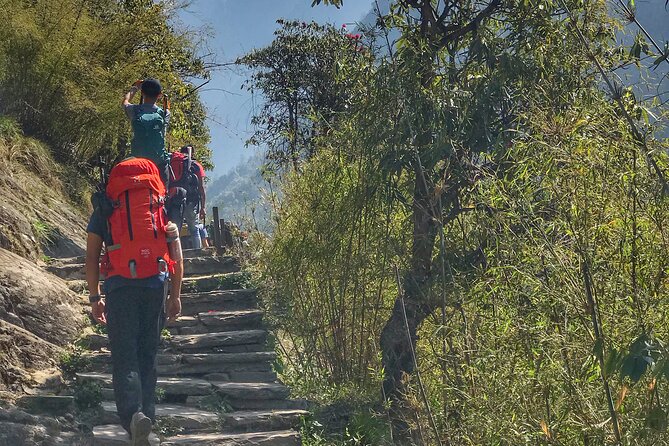
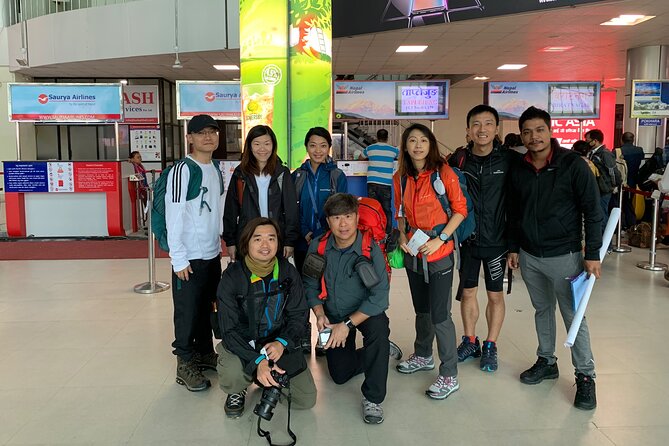
Day 3 moves from city life to trekking reality quickly. You’ll take a short scenic flight from Kathmandu to Pokhara (about 25 minutes), then drive roughly two hours to Matkyu, where the trek begins.
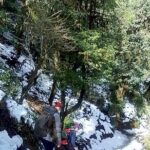
The early hike is a gentle way to “get your legs talking” again. You climb through oak and rhododendron forests, and you’ll hear the Modi River running alongside parts of the trail. Then you transition into stone stairs and denser walking until you reach Jhinu Danda for the night.
The practical highlight on this day is Jhinu Danda itself. The itinerary specifically calls out natural hot springs, so you have a built-in recovery moment. After a day of stairs and uphill effort, that soaking option can be a mental reset too.
Jhinu Danda to Upper Sinuwa: suspension bridges and Chhomrong Khola views
Day 4 ramps things up with a climb toward Chhomrong village. You’ll pause there briefly, and this stop is less about check-the-box and more about meeting the culture you’ll keep walking through.
From Chhomrong, you descend steep stone staircases to a suspension bridge over Chhomrong Khola. Crossing it changes the feel of the trail fast: you get the river’s motion and the sense of dropping into the valley. Then you climb again, steadily, until you reach Upper Sinuwa at about 2,340m.
This day matters because it teaches you the pattern you’ll repeat throughout the trek: walk uphill to gain altitude, drop down to a river/valley section, then climb again. Getting comfortable with that rhythm early makes base camp day far less stressful.
One possible drawback: bridge descents plus steep stairs can feel harder than the distance suggests. If your knees are sensitive, plan to take those stair segments slowly and consistently.
Deurali, Hinku Cave, and the long build to Machhapuchhare Base Camp
Day 5 starts with uphill walking through dense forest, then shifts into open stretches as you climb higher. You’ll notice glacial river views below, and the trail keeps you working without getting boring.
A key cultural-mountain detail appears at Hinku Cave, described as an important landmark for early Annapurna I expeditions. It’s a small stop you shouldn’t rush, because it’s one of those places that turns the route into a story, not just mileage.
After Hinku Cave, the hike continues toward Deurali, where you stop for lunch. Then you continue onward to Machhapuchhare Base Camp (MBC) for the overnight in a hotel in that area.
Day 6 continues the effort toward MBC, with the same general trekking pattern: forest sections that open up higher, glacial river views, then a steady climb. The payoff is specifically called out—mesmerizing views of Machhapuchhre and surrounding peaks from Machhapuchhre Base Camp—so this is your second major “view day” on the way to the sanctuary core.
What’s valuable here: you get the big mountain build-up before Annapurna Base Camp. Instead of one single wow moment, you earn it in stages.
Annapurna Base Camp day from Machhapuchhare Base Camp: 4,130m and peak spotting
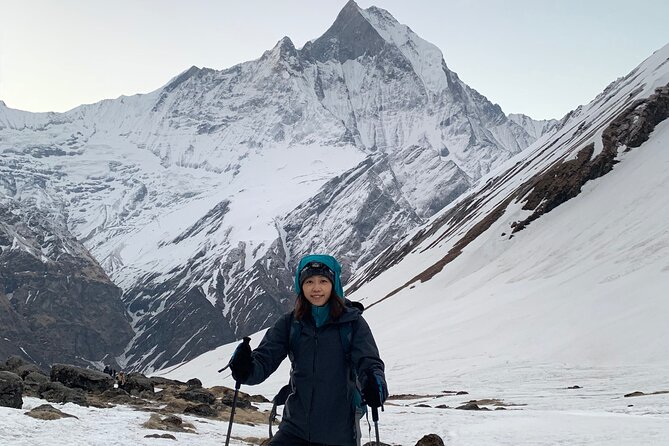
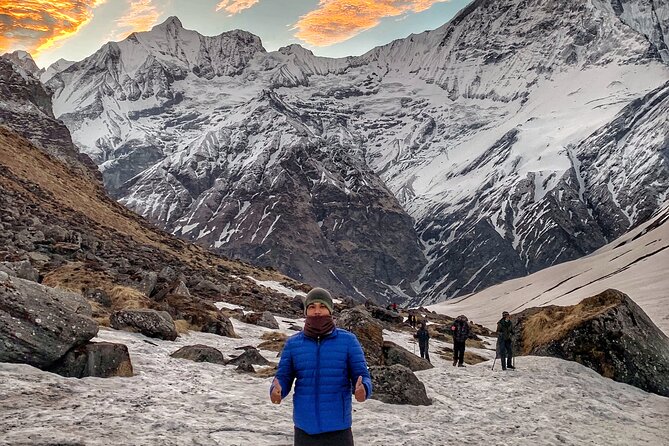
Day 7 is the highlight most people plan around. You’ll hike from Machhapuchhare Base Camp to Annapurna Base Camp, noted as about a 2-hour hike, and the trail is described as wide and clear.
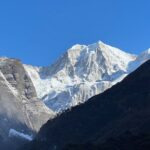
Base camp sits at about 4,130 meters. The view at the top is specifically framed around Annapurna South and then a wider sweep of high Himalayas: Annapurna, Dhaulagiri, Machhapuchhre, Hiunchuli, Nilgiri, and others.
This day is as much about pacing as it is about altitude. The sanctuary doesn’t just “look impressive.” You’ll likely feel that sense of scale when peaks appear all at once, and the air gets thinner. Your job is to move steadily, stop often if you need to, and spend time at base camp rather than treating it like a quick photo stop.
After your time at base camp, you retrace your way down through MBC, Deurali, and Himalaya, overnighting in Dhovan. That return downhill isn’t easy, but it’s usually mentally easier than pushing higher again.
Chhomrong return and Upper Sinuwa: bamboo forests, bridges, and living culture
Day 8 shifts from “highest point focus” to “trail and culture focus.” You start after breakfast and the route is mostly downhill, with a short climb to Upper Sinuwa.
You’ll pass through bamboo forests, then continue down to Chhomrong Khola and the suspension bridge above it. After crossing, you walk an inclined path for about an hour and reach Chhomrong for the night.
Chhomrong is the spot where the itinerary points you toward traditional lifestyles and older cultural routines. This is one of those trekking towns where the landscape and the people feel linked: you’re not just passing through guesthouses, you’re walking through community life that has shaped this trail for generations.
A small caution: because the direction is mostly downhill, it can still be hard on your body. If you feel your calves tighten or your knees complain, you’ll be glad you paced earlier rather than racing down.
Pokhara decompression: jeep ride, lakeside night, and easy fun after big walking
Day 9 brings you back down to earth. You retrace the route toward Matkyu via Jhinu Danda, including descents through dense forests and hundreds of stone stairs. You’ll pass through oak and rhododendron forests alongside the Modi River again.
At Matkyu, you take a jeep back to Pokhara and spend the night at a hotel. Pokhara is also where you can finally act like a normal tourist again: the itinerary mentions nightlife and live concerts, plus the lakeside setting with options like boating on Fewa Lake and renting a bicycle to explore.
This decompression night is practical. After days of trekking, you don’t need another “experience.” You need rest, a good meal, and a chance to let your legs loosen up.
Flying back to Kathmandu and the farewell dinner
Day 10 is a fly-back day, with breakfast then the flight to Kathmandu. After arrival you’ll be escorted to your hotel for downtime. In the evening, the representative takes you out for a farewell dinner, which is a nice human finish to a trek that otherwise runs on early starts and concentration.
Day 11 is a flexible end based on your flight time, with a final airport escort from the meeting point.
Who this trek suits (and who should think twice)
This Annapurna Sanctuary trek fits best if you want a guided, lodge-based experience and you prefer having permits, transport, and meal planning handled. It also suits you if you’re okay with moderate fitness and you expect long walking days.
It’s especially attractive if you care about:
- Major peak views without needing to manage a complex support system yourself
- Porter help (1 porter for 2 clients) to reduce pack load
- Real Kathmandu prep and sightseeing before the trek starts
Think twice if you’re dealing with knee issues on stair-heavy descents, or if you want a “short and casual” hike. Even though this is packaged as 11 days, the effort is real because you’ll climb and descend repeatedly, and you’ll reach altitude around base camp.
Should you book this Annapurna Sanctuary Trek?
If you’re craving the Annapurna sanctuary experience and you’d rather spend your energy on the trail than on logistics, I’d book it—especially with the included flights, guides, teahouse full-board nights, and porter support. The price looks fair when you factor in permits (ACAP and TIMS), domestic air, and the fact that you’re getting guided pacing for a high point at 4,130m.
Do book only if you’re ready for a structured trek with early days, stairs, and real altitude time. And if you’re the kind of person who appreciates both mountains and culture—temples in Kathmandu, village life around Chhomrong—this route rewards you on multiple levels, not just at the final viewpoint.
FAQ
What’s included in the trek package price?
The package includes two-way domestic flights (Kathmandu to Pokhara and back), Kathmandu and Pokhara accommodations on a bed-and-breakfast basis, teahouse/lodge accommodation during the trek on full-board basis, an English-speaking trekking guide, porter service throughout (1 porter for 2 clients), permits and paperwork (ACAP and TIMS), private transportation, a farewell dinner, a medical kit, and entrance fees for Kathmandu sightseeing on Day 2. It also includes breakfast and some lunches/dinners as listed in the included section.
Are meals covered during the trek?
Yes. During the trek, teahouse/lodge stays are on a full-board basis, and the plan includes breakfast and set numbers of lunches and dinners (as specified in the included section). Meals in Kathmandu and Pokhara are not included.
How do the domestic flights work?
You fly Kathmandu to Pokhara (about 25 minutes) on Day 3, and you fly Pokhara back to Kathmandu on Day 10. The flights are included and handled through Buddha Air in both directions.
What permits are required?
The trek includes permits and paperwork for ACAP and TIMS.
Will I have porter support?
Yes. Porter service is included throughout the trek, with 1 porter for 2 clients.
What fitness level do I need?
The information provided says travelers should have a moderate physical fitness level.
Can I cancel for a refund?
You can cancel up to 24 hours in advance of the experience for a full refund. If you cancel less than 24 hours before the start time, the amount paid will not be refunded.