REVIEW · KATHMANDU
Annapurna Circuit Trek
Book on Viator →Operated by Outfitter Nepal · Bookable on Viator
Thorung La tests you, then rewards you hard. This trek is built around a classic high-pass route, with guided logistics and lodge/tea-house nights that make the tough days feel manageable. You’ll also get a full day of Kathmandu sightseeing focused on UNESCO-listed attractions, plus transport that helps you spend less time figuring out buses and more time walking.
What I really like here is the balance between effort and support. The plan includes a proper acclimatization window in Manang (including optional educational stops), and the guide teams show up repeatedly in reviews for staying organized and safety-first—people like Ram and Balaram Khadka (Bala) get named often. One thing to consider: this is still a serious trek, with a very high 5416m Thorung La crossing and a knee-pounding descent afterward.
In This Review
- Key takeaways before you commit
- Before You Go: What the $994 price really buys
- Your route in plain English (and why it’s a good structure)
- Day 1: Kathmandu to Chamje (bus drama, then dinner reality)
- Days 2–3: Steep climbs, suspension bridges, and monastery prayer flags
- Days 4–5: Manang valley views and the air gets thinner
- Day 6: The Manang acclimatization day you’ll thank yourself for
- Day 7–8: Yak Kharka to Thorung Phedi, with oxygen working against you
- Day 9: Thorung La (5416m) to Muktinath—big views, big knees
- Day 10–12: River-town recovery, then Ghorepani and Poon Hill sunrise into Pokhara
- Lodges, gear, and day-pack reality (how to pack smart)
- Guides and support: what the teams do right
- Who should book this trek (and who should reconsider)
- Should you book this Annapurna Circuit Trek?
- FAQ
- What time is the meeting point?
- Are airport or hotel pickups included?
- What’s the group size limit?
- What’s included during the trek?
- Do I need to arrange a porter, or can I hire one?
- Is travel insurance included?
- Are flights and the Nepal visa included?
Key takeaways before you commit
- Max 10 travelers means you’re not lost in a giant crowd, which makes it easier to move as a team.
- Manang acclimatization day is not just downtime—it can include icefall viewing, a panorama hike, an aid-post visit, and a glacier lake walk.
- Thorung La (5416m) is the dramatic centerpiece, with early climbing and big Kali Gandaki valley views.
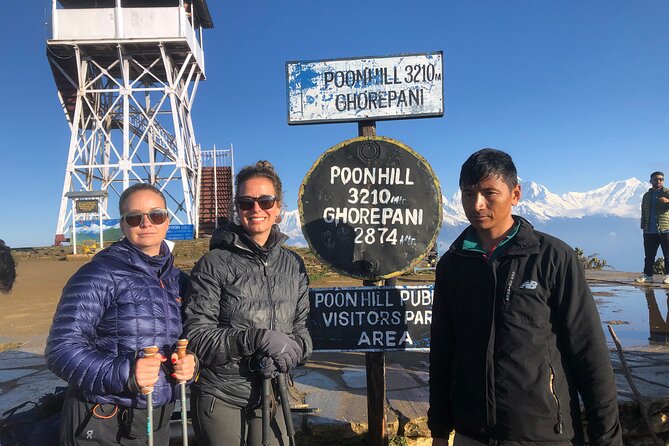
- Poon Hill sunrise (3232m) on day 12 delivers a long list of peaks in the early light, including Machhapuchhre and Annapurna I/II/III.
- Ground transportation is woven in (bus to Besisahar, jeep legs, then return to Pokhara) to reduce transfer stress.
- Reviews repeatedly highlight guide and porter support that feels practical—like keeping the group on track and helping solve issues that pop up in real trekking life (including gear problems like shoes).
Before You Go: What the $994 price really buys
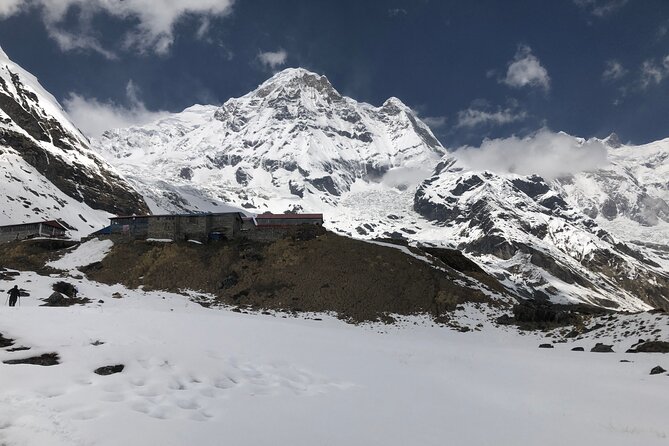
At $994 per person for about 12 days, you’re paying for the spine of the trip: a guide, core transport legs, and all the in-trek logistics. That includes ground transport from Kathmandu to the trek start area and later transfers (including Muktinath to Tatopani by jeep). You also get lodge/tea-house accommodations during the trek and coverage of government taxes/VAT/service charges.
What’s not included matters for budgeting. Your Nepal entry visa fee, international flights, and airport departure tax aren’t part of the package. City meals while you’re in Kathmandu and Pokhara also aren’t included. And once you’re on the trail, alcohol and soft drinks/dessert are extra.
If you’re traveling solo, there’s a mandatory single supplement (the amount isn’t stated here, but it’s said to be payable on arrival). Also remember: travel insurance is compulsory, so don’t show up hoping vibes replace paperwork.
You can also read our reviews of more tours and experiences in Kathmandu.
Your route in plain English (and why it’s a good structure)
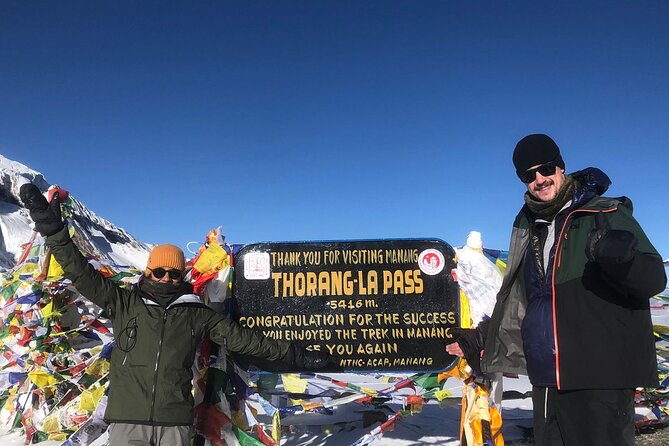
This trek follows a well-paced arc: river valleys and village trails early on, then higher terrain and acclimatization, then the Thorung La crossing, then a descent that keeps the views coming down the Kali Gandaki corridor. The final act is classic Pokhara-country trekking: Ghorepani and the Poon Hill sunrise morning, then you work your way down toward the Pokhara area.
A key value here is that you don’t do everything the hard way. The itinerary uses local bus and jeep legs at the start and at transition points. That matters because Nepal trekking is already physically demanding—you don’t need extra hours lost to unclear connections.
Also, the program is built as a guided experience with a small group size. The company states a maximum of 10 travelers, and their guide/porter model is “you carry a day pack, the main luggage moves with porters” (with a stated porter allowance target around 20 kg total per porter, depending on how many trekkers are in the group).
Day 1: Kathmandu to Chamje (bus drama, then dinner reality)
Day 1 starts early, with a 6:15am meeting point and pickup from your hotel. You travel by bus along the Kathmandu–Pokhara highway as far as the Dumre area, then the road gets thrilling afterward. The plan includes a change at the bus terminal for Besisahar, followed by a local jeep to Chamje, your overnight stop.
What’s special about this day is that it sets expectations. You’ll feel the effort later, but today is about getting into the rhythm: breakfast before you leave, then a long travel day that ends with a lodge night in trekking country.
Potential drawback: the start time is early. If you’re prone to travel-day crankiness, plan for it. Get sleep the night before and don’t try to “power through” with late-night packing.
Days 2–3: Steep climbs, suspension bridges, and monastery prayer flags
On Day 2, you descend to the river and cross a suspension bridge, then climb hard to Sattale (1550m.). The description makes one thing clear: sections are steep enough that one slip would be serious. You’ll spend time on undulating trail above the river, moving through rockier, boulder-heavy stretches, then reach the Tal plain (1700m.) as the valley narrows.
Day 2 ends at Dharapani. The trek time is listed around 6 hours, which is a good reminder that the circuit isn’t always about constant uphill. You’ll do work, then recover, then do more work.
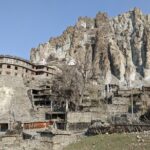
Day 3 pushes you into higher scenery and a cultural stop. You start near Dudh Khola, and the route passes through Bagarchhap, described as a Bhote village with prayer flags around a Buddhist monastery. You also move through pine and oak forest and reach Chame for the night.
Why these days matter: they teach you what the trek really is. It’s not only “mountains.” It’s bridges, zigzags, monasteries, and small villages—often in the same afternoon.
Days 4–5: Manang valley views and the air gets thinner
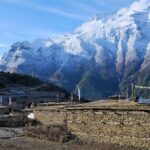
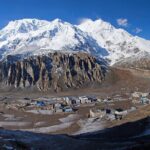
You reach Manang over the next two days, and these are the days where the scenery starts pulling focus. Day 4 includes passes through orchard country (including an apple orchard), then fir and pine forest, then high rocky walking. You follow paths along tight valley sides and cross wooden bridges while moving toward Manang.
Day 5 keeps you in the Manang area but shifts the emphasis to views. You climb ridges for big panoramas, with Tilicho peak (7145m.) visible in the description. You pass Humde airstrip (3320m.), cross a reduced flow over a wooden bridge, and walk through villages and cultivated fields, including a mention of Braga.
A practical note: Manang is where altitude starts to feel personal. Even when day times are listed around 5 hours, you’ll often work harder than you expect because your body is adapting.
Day 6: The Manang acclimatization day you’ll thank yourself for
This rest day is one of the best parts of the whole structure. Day 6 is explicitly an acclimatization day before crossing Thorung La, and it gives you optional ways to use the time.
You can choose an easier loop style day or a more educational one:
- A day walk to see the icefall coming down from the Annapurnas
- A climb above the village for a wider Annapurna range and Manang Valley panorama
- A visit to a Himalayan Rescue Association (HRA) aid post (described as interesting and educational)
- A trip to Ganagapurna Glacier Lake
Why this is valuable: acclimatization days aren’t “nice to have” in high-altitude treks. They’re risk management. The trek doesn’t hide that—this day is built in for a reason.
Day 7–8: Yak Kharka to Thorung Phedi, with oxygen working against you
Day 7 ascends gently to Yak Kharka, passing through Gunsang (3960m.). You’ll get panoramic views across the day, but the itinerary notes that even if the distance feels shorter, it can still feel tiring because you’re heading higher with less oxygen.
Day 8 is the bridge between “getting used to it” and “committed to the pass.” You cross headwaters of the Marsyangdi via a covered wooden bridge, then move over a narrow trail across an unstable scree/spree slope and descend to Thorung Phedi.
These two days are where your trek shoes earn their pay. Start early, keep your pace steady, and avoid sprinting to feel productive. Your lungs don’t care about ego.
Day 9: Thorung La (5416m) to Muktinath—big views, big knees
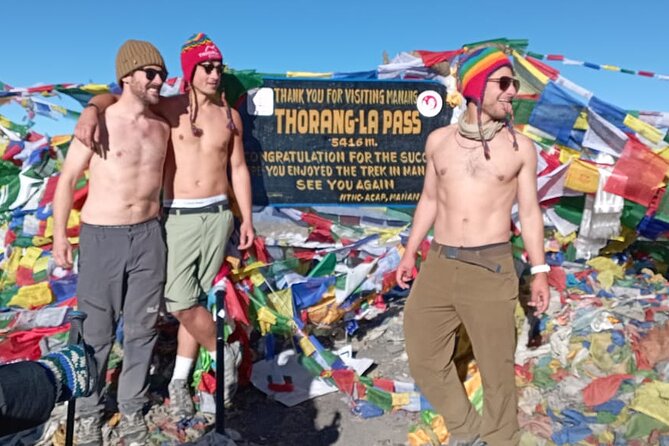
This is the centerpiece day. You start very early, cross Thorung La (5416m.), then descend to Muktinath.
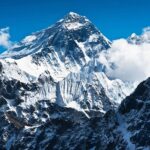
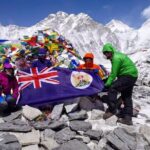
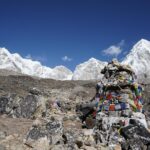
The trail steepens immediately after leaving camp, but it’s described as well defined because local people use it. After about 4 hours of steady climbing, you reach the chorten and prayer flags at the pass. The views are described as dramatic: snow-covered mountains above, the head of the Kali Gandaki valley below, and the brown and purple hills of Mustang stretched out before you.
Then comes the real test: the descent to Muktinath is called a knee pounding 1600m drop. Your reward is compensated views, including Dhaulagiri.
Practical tip: plan for your knees today. Even with guide support, physics is physics. Trek poles help, and a careful descent rhythm beats hero steps.
Day 10–12: River-town recovery, then Ghorepani and Poon Hill sunrise into Pokhara
Day 10 starts with a freshening up and a return to breakfast at the lodge, then a jeep ride from Muktinath to Tatopani along the Kali Gandaki River. You’re moving faster today than on foot, which is often what your body needs after the pass day.
Day 11 heads you toward Ghorepani. You start on flatter land, then climb steeply for at least an hour. The route goes through villages with different caste and agricultural land, and the itinerary notes that many residents serve in the Gorkha Regiment and Indian Regiment. You’ll walk through rhododendron forests and may see wildlife like monkeys and birds.
Overnight is in a lodge in Ghorepani.
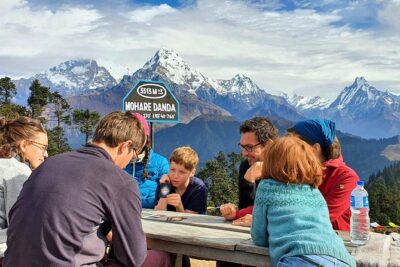
Day 12 is the payoff morning. You head early to Poon Hill (3232m.) for sunrise, with a long list of visible peaks in clear wording: Dhaulagiri (8167m.), Tukuche Peak, Nilgiri, Varaha Shikhar, Annapurna I, Annapurna South, Annapurna III, Machhapuchhre, Annapurna IV, Annapurna II, and Lamjung Himal, plus others. After sunrise, you return for breakfast and then continue your descent through rhododendron and oak toward Banthanti and onward toward the Pokhara direction.
What I like about ending this way: it reduces the “end-of-trek slump.” You still work, but you finish with a clear visual goal and a sense of arrival.
Lodges, gear, and day-pack reality (how to pack smart)
You’ll be in lodges/tea houses for overnight stays. That’s part of the charm and part of the logistics. The upside is you don’t have to carry a camping setup. The downside is you should expect basic trekking comforts: warm layers, limited space, and the need to manage your own hydration and energy.
Luggage is handled by porters. The plan states your main gear is carried, and you carry a day pack with necessities like water, camera, sunscreen, and spare layers. If you need a porter yourself, there’s an option at $20 per day.
Also, if you’re flying domestically in Nepal, the stated weight allowance is 15 kg including your hand bag, and excess weight can cost $1 or more per extra on top of the tour cost.
Guides and support: what the teams do right
This is one of those treks where the guide changes the experience. The program consistently lists an experienced guide and porters with defined responsibility. The company says the guide handles logistics and leads you on trail, and it also describes a porter ratio: a porter for each 2 trekkers, carrying about 20 kg (with about 10 kg from each trekkers).
In the reviews, guide names come up again and again:
- Balaram Khadka (Bala) leads teams that prioritize safety and good vibes.
- Ram is described as professional and attentive.
- Jitu is credited with smooth planning and keeping things comfortable.
- Indra, Kapil, Hom, and Rabi show up with the same theme: organization, friendliness, and problem-solving.
One particularly useful detail from the reviews: if gear trouble happens, the team tries to help you handle it. A review mentions support for a shoes problem via a local fix. That’s not glamorous, but it’s exactly the kind of practical help you want when you’re weeks from a store.
Who should book this trek (and who should reconsider)
This trek fits best if you:
- Want a guided circuit-style experience with structured transport and small group size
- Are comfortable with long days and the altitude arc
- Like the mix of nature and community—villages, prayer flags, forest trekking, and the pass experience
You should reconsider if you:
- Have knee issues or mobility limits, since the itinerary includes a 1600m descent after Thorung La
- Struggle with early starts (the plan starts around 6:15am at the meeting point)
If you’re a confident hiker who likes clear structure, this is a strong option. If you’re new to trekking at altitude, you’ll want to take training seriously and avoid treating acclimatization days as optional.
Should you book this Annapurna Circuit Trek?
I’d book it if you want a classic high-pass trek with less “logistics chaos” and more trail time. The combination of Manang acclimatization, a clearly timed high-altitude day, and then a rewarding finish around Ghorepani + Poon Hill sunrise is a sensible way to build your trip.
I’d think twice if you’re looking for an easy walk or if you hate early mornings and high-elevation strain. This itinerary is demanding by design. The good news is that the support system is part of the package, and the guide teams are repeatedly praised for keeping everyone safe and moving.
If you want my bottom-line checklist: good fitness, sensible gear prep, and a willingness to respect altitude. If those check out, you’ll likely love how the days connect—valleys to pass to Pokhara lights.
FAQ
What time is the meeting point?
The tour lists a start time of 6:15am for the meeting point.
Are airport or hotel pickups included?
Yes. Pickup is offered, and the program mentions airport or hotel pickup plus car transfers.
What’s the group size limit?
The experience states a maximum of 10 travelers.
What’s included during the trek?
You get lodge/tea-house accommodations, an experienced guide, government taxes/VAT/service charges, and key ground transportation legs. The trek also includes meals listed for specific trek days, while meals in Kathmandu and Pokhara are not included.
Do I need to arrange a porter, or can I hire one?
Main luggage is carried by porters in the program. If you need an additional porter, the stated cost is $20 per day.
Is travel insurance included?
No. Your travel insurance is listed as compulsory, and it is not included in the tour price.
Are flights and the Nepal visa included?
No. International airfare and the Nepal entry visa fee are not included. The visa is described as obtainable on arrival with passport photos.