REVIEW · KATHMANDU
Annapurna Base Camp Trek
Book on Viator →Operated by Glorious Himalaya Trekking Pvt. Ltd. · Bookable on Viator
Annapurna Base Camp is a serious wow. This 13-day trek threads through forests, villages, and high-altitude sanctuaries, with mountain views that keep stacking up. I especially like how the route gives you a real sense of Nepal changing with elevation, from bamboo-rhododendron slopes to the Annapurna Sanctuary’s icy peaks. You’ll also get proper setup fast, starting with pickup at Tribhuvan Airport and a gear check briefing in Kathmandu.
Two things I like a lot: the practical logistics and the way the day-by-day pacing protects your energy. You’re not left figuring out permits, lodges, or transport. Instead, you move between Kathmandu–Pokhara–the trail with a mix of private vehicles and tourist bus legs, while your guide handles the trek flow. The one drawback to note: meals during the trek aren’t included, so you’ll need to budget for breakfast/lunch/dinner on the trail (a lodge meal plan is common, but it’s still on you financially).
By the time you reach base camp at about 4,130m, you understand why this area is sacred and why it wasn’t open to foreigners until 1956. The mountains feel close enough to touch, and the whole experience is built around that moment—without pretending it’s a walk in the park.
In This Review
- Quick hits before you go
- Kathmandu setup: gear briefing, city nights, and an early start
- Pokhara transfer: the breather between city life and mountain life
- Day-by-day on the trail: what each segment really feels like
- From Nayapul through Tikhedhunga (the first uphill tests)
- Ulleri to Ghorepani: stairs, forests, and a classic route vibe
- Poon Hill sunrise and ridge walking to Tadapani
- Down to Sinuwa: rhododendron, Gurung villages, and a quieter feel
- Deurali day: bamboo-rhododendron meanders and real elevation
- The sanctuary day: Machhapuchhre Base Camp and onward to ABC
- Back down from ABC: downhill trekking and choosing to enjoy it
- Bamboo to Chhomrong to Jhinu Danda, plus hot springs
- Cities at the end: Pokhara, Kathmandu, and farewell dinner energy
- Price and value: what $650 buys (and what you still pay for)
- What to expect day to day: comfort level and realistic pacing
- Fitness, altitude, and the smart way to go
- Who should book this ABC trek?
- Should you book? My straight answer
- FAQ
- What time does the tour start in Kathmandu?
- How long is the Annapurna Base Camp trek?
- What’s included in the price?
- Are meals during the trek included?
- Do I need to get a visa and buy international flights?
- Are vegetarian options available?
- Are porters included?
Quick hits before you go
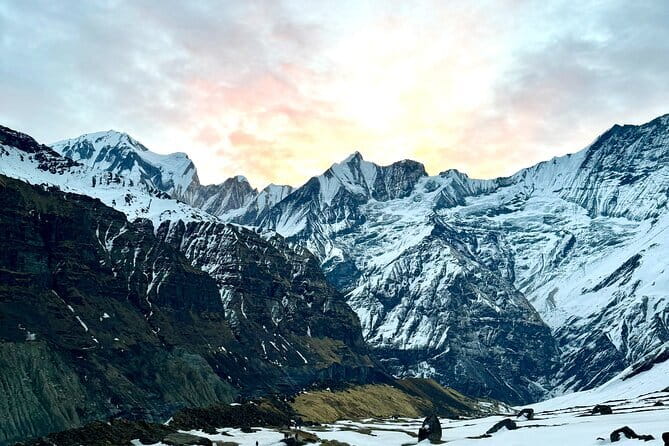
- Poon Hill sunrise at 3,210m: a timed early hike for big panoramic views.
- Annapurna Base Camp views at ~4,130m: the payoff day in the Annapurna Sanctuary.
- Hot springs at Jhinu Danda: a short walk to soak tired legs after hiking days.
- Guide-led route flexibility: the operator has handled itinerary changes when health or weather demanded it.
- Permits and essential fees included: you don’t have to chase paperwork at the last minute.
- Twin-share lodge nights: realistic trekking comforts without hotel fantasies.
Kathmandu setup: gear briefing, city nights, and an early start
Your trip begins at Tribhuvan Airport in Kathmandu with pickup to your hotel. The schedule shows a 6:30am start time, which matters because trekking days up here don’t really care about your sleep goals. You’ll get a briefing in the hotel and a guide-led gear prep check—helpful if you’re the sort of traveler who packs a beautiful sweater but forgets basics.
You’ll spend two nights in Kathmandu with breakfast included. That’s enough time to handle any final shopping (snacks, water, trekking basics) and get your bearings in Thamel later on, without turning the city portion into a whole second vacation.
If you’re worried about who’s guiding you: this operator has used guides with names that show up repeatedly in their customer feedback, including Ganesh (owner/operator), plus trekking guides such as Prakash, Jiban, Buddhi, and Keshab. What those names have in common is a focus on clear communication and staying responsive if something changes.
You can also read our reviews of more tours and experiences in Kathmandu.
Pokhara transfer: the breather between city life and mountain life
On day 2, you drive from Kathmandu to Pokhara, following the Trisuli River with stops along the way for lunch. After crossing the bridge over the Marshyangdi River, you roll into Pokhara—the relaxed lakeside base most people needed after Kathmandu.
You get a hotel night in Pokhara with time to decompress by Phewa Lake. You can boat, stroll, or just sit with a coffee and let your body remember what “not rushing” feels like. This is also where you’ll mentally switch from city pace to trek pace.
Why I like this design: it prevents that classic mistake—showing up at the trailhead already worn down. Pokhara gives you a calm landing before you start hiking.
Day-by-day on the trail: what each segment really feels like
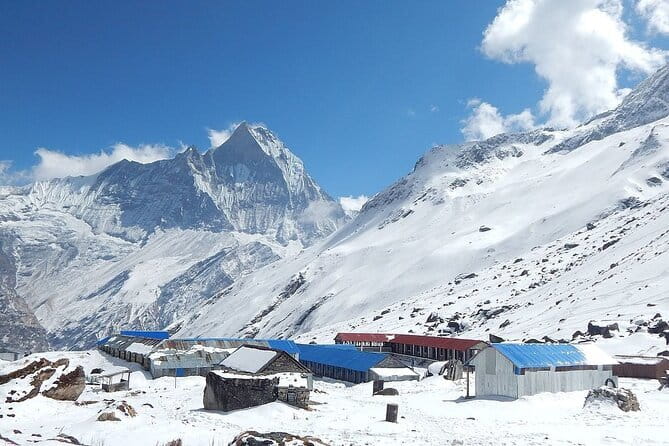
Here’s how the trek generally unfolds, and what each chunk is doing for you.
From Nayapul through Tikhedhunga (the first uphill tests)
The trekking starts at Nayapul. From there, you walk to Birethanti, a riverside village at the confluence of the Modi and Bhurungdi Kholas. It’s a good warm-up zone: you’re not yet staring down big altitude numbers, but you’re already on Nepal’s path system.
Then comes the first real climb rhythm: you head above Sudame along an off-road section and rise gradually toward Tikhedhunga. The day feels like the trek is gently saying: yes, this is happening.
Ulleri to Ghorepani: stairs, forests, and a classic route vibe
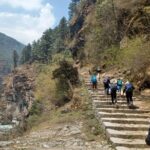
Day 4 is a steep climb via stone staircases to Ulleri (a Magar village). You’ll walk through oak and rhododendron forest, with the air typically feeling cooler and more “alive” as you gain height toward Banthanti, Nagethanti, and finally Ghorepani.
This is one of the trek’s most satisfying early transitions: your body starts working, your views start expanding, and the forest changes texture as the elevation shifts.
Poon Hill sunrise and ridge walking to Tadapani
Day 5 is a highlight day—Poon Hill at 3,210m. You hike up early, with the guide’s pacing pushing you toward a sunrise moment. The key benefit of Poon Hill is the sweeping view range: you get a big look at Annapurnas, Dhaulagiri, Machhapuchhre (Fishtail), Manaslu, and even Dolpo in the far western direction on clear days.
After the sunrise magic, you climb along the ridge through pine and rhododendron toward Deurali, then descend to Banthanti and turn toward Tadapani. This day works well because it gives you a dramatic “why we’re here” payoff, then moves you forward without lingering too long at any one altitude.
Down to Sinuwa: rhododendron, Gurung villages, and a quieter feel
Day 6 shifts gears with a steep downhill walk through rhododendron forest. You reach a Gurung community village, then take a comparatively easier path to Sinuwa at about 2,300m.
This matters because downhill can feel easier on paper—but it’s still leg work, just in a different way. The lodge nights here help reset you before the higher sanctuary days.
Deurali day: bamboo-rhododendron meanders and real elevation
On day 7 you drop to Sinuwa Khola, then climb to Khuldighar (around 2,380m). The trail runs along rocky banks and levels out, with bamboo and rhododendron forest sections that feel calmer than the steeper staircase days.
You finish at Deurali, typically staying at a lodge here. This day helps you acclimatize by spreading out the effort, instead of going all gas and no brakes.
The sanctuary day: Machhapuchhre Base Camp and onward to ABC
Day 8 is the big one: reaching Annapurna Base Camp at about 4,130m after hiking through forest and crossing Hinku Cave. You pass Deurali and also reach Machhapuchhre Base Camp first.
Important reality check: Machhapuchhre Base Camp is a stop, not a summit attempt. You’ll hear the logic right on the trail—summiting Machhapuchhre isn’t permitted, so this route leans into scenery and access rather than conquest.
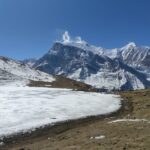
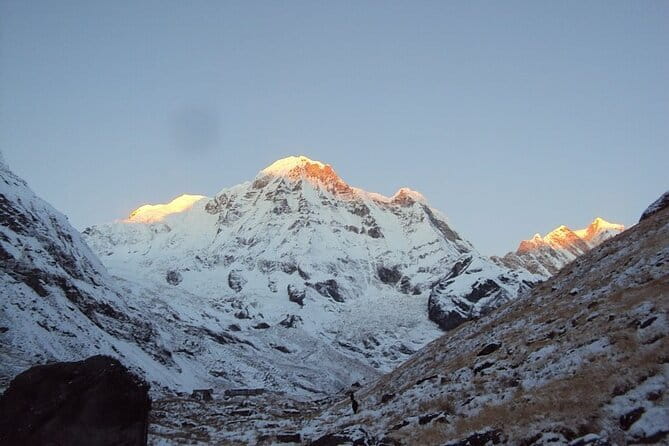
From Machhapuchhre Base Camp, you walk another couple hours to ABC. The Annapurna Sanctuary surrounds you with icy peaks, and the view isn’t just pretty—it’s intense. This is where the whole trek becomes more than “exercise with scenery.”
Back down from ABC: downhill trekking and choosing to enjoy it
Day 9 turns back toward Sinuwa and continues to Bamboo for the overnight. It’s downhill work, so it’s often easier mentally. Still, downhill means your quads do the complaining.
The payoff is that you’re not rushed and you’re surrounded by the same dramatic terrain that got you to base camp in the first place.
Bamboo to Chhomrong to Jhinu Danda, plus hot springs
Day 10 starts with an uphill to Kuldighar, then moves downhill to Chhomrong Khola. You climb stone steps up to Chhomrong, then descend to Jhinu Danda for the night.
This is where the trek becomes pleasantly human again: you can walk 15–20 minutes downhill from Jhinu Danda to reach hot springs, a soak option that can save your next morning. Even if you’re not a spa person, your legs will probably vote yes.
Cities at the end: Pokhara, Kathmandu, and farewell dinner energy
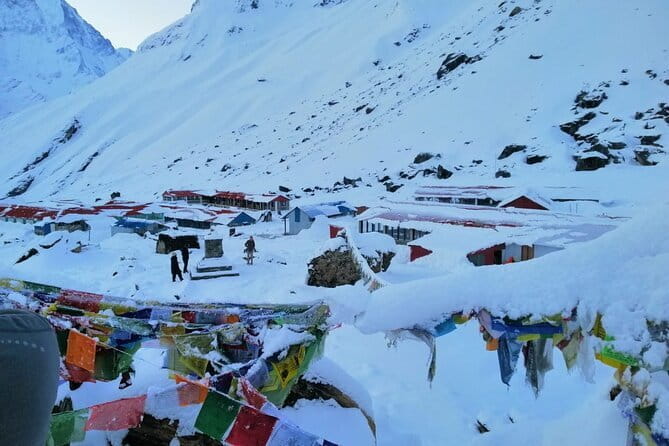
Day 11 brings you back toward civilization: you walk to Nayapul, then take a bus to Pokhara. You’ll have lunch provided on the way (as scheduled), then check into a hotel for an overnight with bed and breakfast included.
Day 12 returns to Kathmandu by tourist bus. You can do it by flight if you prefer, but the overland option lets you enjoy views of the Marshyangdi and Trishuli Rivers and see how people live alongside them. That city-to-trek-to-city loop is part of why this kind of trek feels complete instead of chopped in half.
The evening includes a farewell dinner at a typical local restaurant with cultural dance performance. It’s not just a formal wrap-up; it’s a good way to decompress after days of simple routine.
Day 13 is your final day: you’ll be dropped at Kathmandu International Airport for your return flight.
Price and value: what $650 buys (and what you still pay for)
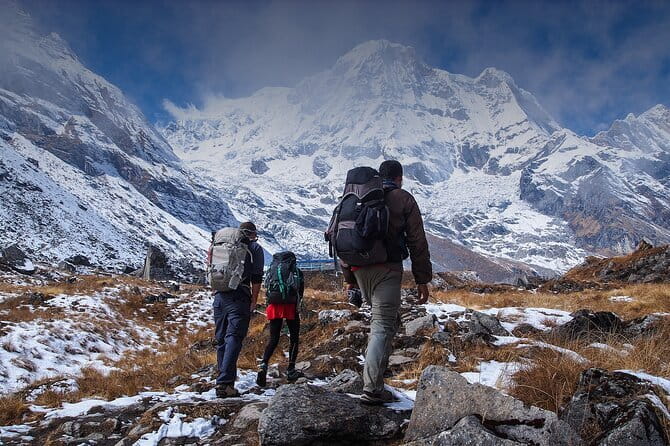
At $650 per person for a roughly 13-day trip, you’re not just paying for a guide and a route. This price includes a lot of the friction-avoidance pieces:
- Airport pickup and drop-off by private vehicle
- 8 nights twin-sharing lodge accommodations on the trek
- 2 nights in Kathmandu and 2 nights in Pokhara with breakfast
- One experienced trekking guide
- Long-range transport Kathmandu–Pokhara–Kathmandu by tourist bus
- Private vehicle transfer to/from trekking points
- Permits and entrance fees
- First aid medicines carried by your guide
- A welcome dinner with cultural dance, plus a farewell dinner
- An adventure certificate after the trip
What you should budget separately (because it’s not included):
- International flights and Nepal visa
- Meals during the trek (breakfast/lunch/dinner on the mountain days)
- Tips for the trekking guide
- Porters are available, but at an additional price
So the value equation looks like this: you’re paying for planning, access, and guided execution. If you already know how much food budgeting matters to you—and you’re okay carrying your own essentials or paying for a porter—then $650 can make the trek feel much less stressful.
What to expect day to day: comfort level and realistic pacing
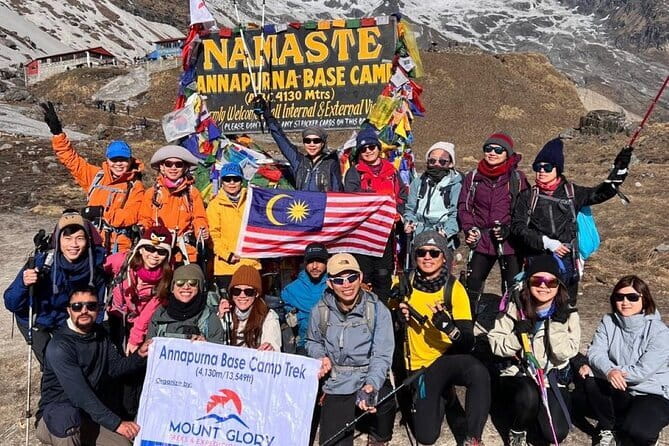
This trek is designed around local lodges with twin-share rooms, not luxury hotels at altitude. Plan on simple conditions: warm layers, early nights, and mornings that arrive whether you feel ready or not.
The itinerary builds in variety:
- early climbs (Tikhedhunga/Ulleri)
- a major sunrise moment (Poon Hill)
- forest days that shift with elevation
- the base camp day that hits highest altitude payoff
- a return that keeps the rhythm moving while staying scenic
Also, because this is a private tour/activity, you’re not forced into random group dynamics. You should still expect a shared trail experience with other hikers, but your on-the-ground guiding will be tailored to your group.
Fitness, altitude, and the smart way to go
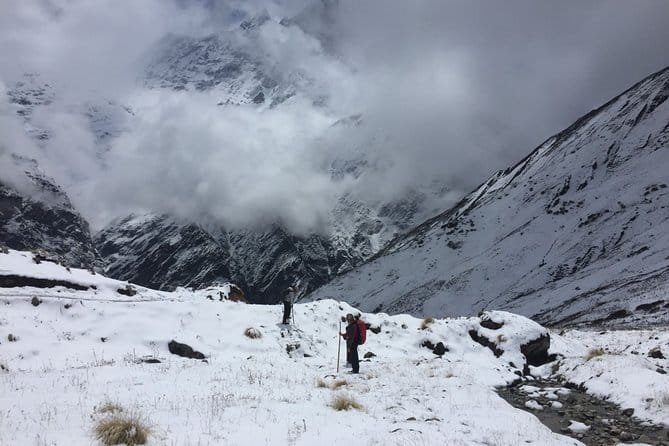
You’ll want moderate fitness. That doesn’t mean “you must be a mountain athlete.” It means you can handle steep sections, stairs, and long walking days without falling apart.
Altitude numbers to keep in mind:
- Poon Hill at about 3,210m
- Annapurna Base Camp at about 4,130m
- Several mid-route elevations in the 2,000–2,400m band that acclimatize you gradually
The trek’s structure helps, but you still should be cautious with hydration and pacing. If you feel unusually bad at altitude, tell your guide early. This operator has shown willingness to adjust plans when health or weather required changes, so speaking up early is worth it.
Who should book this ABC trek?
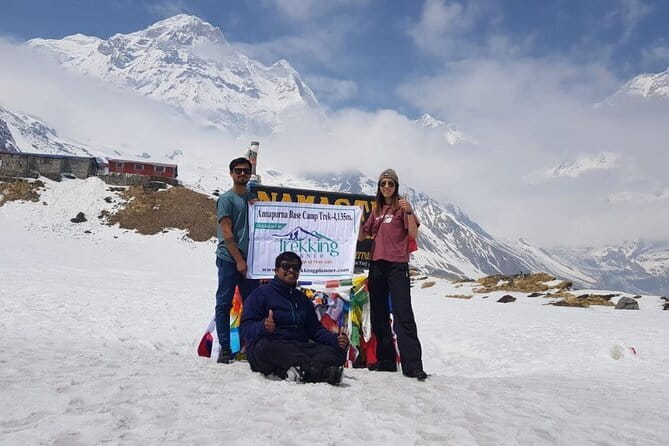
This is a strong match if you want:
- a guided, permit-managed trek to ABC
- a route that includes Poon Hill sunrise and a classic Annapurna region experience
- a balanced mix of trekking and city decompression (Kathmandu and Pokhara)
- a trip style where you can travel as a group and not feel mixed into strangers
It’s less ideal if you:
- want all meals included in the price
- expect hotel-grade comfort every night on the mountain
- hate early mornings (day 5 sunrise prep is real)
Should you book? My straight answer
I’d book this trek if you want the ABC experience without the mental tax of figuring out logistics. The biggest “yes” for me is that the essentials are handled: permits, guide, transport, lodges, and the key cultural dinners. The trek itself also hits the best-known moments—Poon Hill and Annapurna Base Camp—plus the underrated win of hot springs at Jhinu Danda.
Before you sign: confirm your meal budget for the trek days and decide whether you want a porter. If you do that homework, $650 looks like a practical deal for a big Himalayan goal.
FAQ
What time does the tour start in Kathmandu?
The meeting point is Tribhuvan Airport, Kathmandu, and the start time is listed as 6:30am.
How long is the Annapurna Base Camp trek?
The duration is listed as about 13 days.
What’s included in the price?
The package includes airport pickup and drop-off, Kathmandu and Pokhara hotel stays with breakfast, trek lodge accommodations (twin sharing), an experienced trekking guide, transport between Kathmandu and Pokhara, private transfers to/from trekking points, permits and entrance fees, welcome and farewell dinners, first aid medicines carried by the guide, and an adventure certificate.
Are meals during the trek included?
Meals during the trek are not included. The listing notes dinner is included, but trek meals are otherwise not.
Do I need to get a visa and buy international flights?
Yes. International flights and the Nepal visit visa are not included.
Are vegetarian options available?
Yes. Vegetarian options are available if you advise at the time of booking.
Are porters included?
Porters are available at an additional price, so they are not included automatically.