REVIEW · KATHMANDU
Upper Mustang Trek 14 Days
Book on Viator →Operated by Trek Mania Nepal · Bookable on Viator
Upper Mustang is time-warp trekking. This Upper Mustang trek takes you from arid Kali Gandaki Valley villages to Lo Manthang, the walled capital with Tibetan-influenced monasteries and cave sites. I love how the plan balances adventure with real-world comfort: deliberate acclimatization, handpicked teahouse stops, and a guide who knows how to keep the days moving without feeling rushed.
My second favorite part is the organization. You get airport pickup/drop in Kathmandu, pre-planned transportation, and a government license holder English-speaking trekking guide (Devaraj is named in the reviews), plus a first aid medical box. One drawback to plan for upfront: the trek price covers some essentials, but meals (all meals) and accommodation during the trek are not included, and tips/porters are also on you.
In This Review
- Key things that make this trek worth your time
- Upper Mustang: the walled kingdom you’ll keep thinking about
- Kathmandu to Pokhara: why the travel days matter
- The Jomsom flight: saving your legs (and planning for wind)
- Kagbeni to Chele to Syanboche: learning the Mustang pace
- Ghami and Tsarang: monasteries with more gravity
- Lo Manthang: walled city mornings, Thubchen Gompa, and Chhoser Cave
- The return: Dhakmar to Kagbeni and what you see differently the second time
- Price and value: what you’re really paying for at about $1,212
- Comfort and pacing: the practical version of a good trek
- Who should book—and who might think twice
- Should you book Upper Mustang Trek with Trek Mania Nepal?
- FAQ
- What is the meeting point for this trek?
- How long is the Upper Mustang Trek?
- Is this tour private?
- What permits are included?
- What transportation is included?
- Is accommodation during the trek included?
- Are meals and drinks included?
- Do I need to budget for porters and tips?
- What’s the cancellation cutoff for a full refund?
Key things that make this trek worth your time
- Restricted-area access is built in: Upper Mustang Restricted Area Permit is included for 10 days, plus the Annapurna Conservation Area Permit.
- A classic route with a real payoff: Kagbeni → Chele → Ghami → Tsarang → Lo Manthang, then the return via Dhakmar back to Kagbeni.
- Lo Manthang isn’t just a stop—it’s a focus: Thubchen Gompa and Chhoser Cave are scheduled, so you get more than passing photos.
- Flights reduce fatigue and keep logistics sane: Pokhara ↔ Jomsom saves you from a long slog to the trailhead (and Jomsom can be windy).
- Private group travel: only your group participates, so you’re not squeezed into someone else’s pace.
Upper Mustang: the walled kingdom you’ll keep thinking about
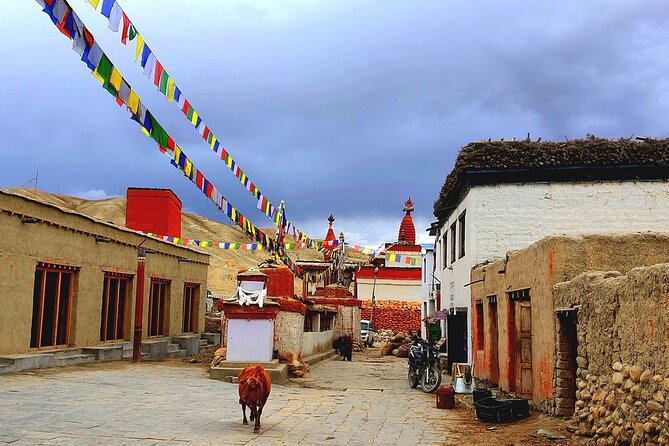
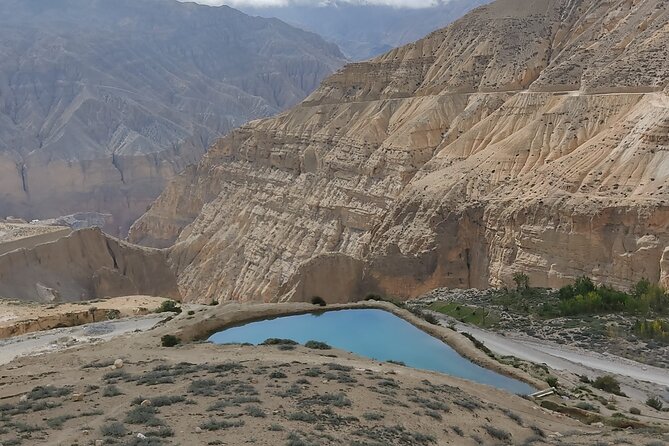
Upper Mustang has that rare feel of a place still operating on its own rules. You’re walking through a region shaped by Tibetan culture—mud-brick villages, walled towns, monastery courtyards, and cave sites that feel ancient even when you’re looking at them in the present tense. The trek doesn’t treat this as a checklist. It builds toward Lo Manthang, so the cultural sights land with more weight.
The route is also practical for what it is. It starts with a gentle Kathmandu buffer day, then gives you a Pokhara scenic reset, and only then pushes you into the Mustang trail rhythm. Once you’re moving on foot, the daily stages are set up to make room for slow altitudes, long views, and stops that actually matter.
What I like here is the mix of “stark” terrain plus human detail. You’re not just staring at rock. You’re meeting the rhythm of village life: narrow lanes, monastery buildings, and the way people use caves and religious spaces as part of everyday geography.
You can also read our reviews of more tours and experiences in Kathmandu.



Kathmandu to Pokhara: why the travel days matter
Most trekking disasters aren’t on the trail—they’re in the head from bad logistics. This tour does something smart right up front: it gives you time to settle in.
Day 1 plants you in Thamel, Kathmandu. It’s a convenient base for getting oriented—shops, walking streets, and a lively atmosphere after travel. You’ll have time to unwind and adjust before the real movement begins. Then on Day 2, you drive to Pokhara. That day is more than transit. You’re rolling through countryside and terraced fields, then arriving in a lakeside city you can actually enjoy without packing and repacking.
Pokhara’s Phewa Tal is a perfect palate cleanser. You get a calm lakeshore walk, and you can even rent a boat to skim across the water with Annapurna and Machapuchare views in the mix. Tal Barahi Temple—on a small island—adds that quick spiritual moment without turning the day into a marathon.
If you’re wondering why I’m spending so much time on these “warm-up” days: because Upper Mustang will test your energy. Having a smoother start makes your trek days feel better, not worse.
The Jomsom flight: saving your legs (and planning for wind)
On Day 3, you fly from Pokhara to Jomsom, then start trekking to Kagbeni. This is where the trip turns from “travel” into “mission.” Jomsom is the gateway, and it comes with one big reality: strong winds. The itinerary doesn’t spell out how windy, but it does flag the characteristic. So you should assume conditions can shift quickly.
The benefit is still worth it. You’re not spending days trudging to the Mustang trailhead. You’re arriving positioned to start exploring right away, which helps you keep the overall 14-day plan working without turning it into a stretched-out endurance event.
Kagbeni on Day 3 is a good first taste of Mustang. You get mud-brick architecture, tight alleyways, and Buddhist monasteries that reflect the region’s Tibetan-influenced heritage. It’s not huge, but it sets the tone: this is remote enough that every stop feels intentional.
Kagbeni to Chele to Syanboche: learning the Mustang pace
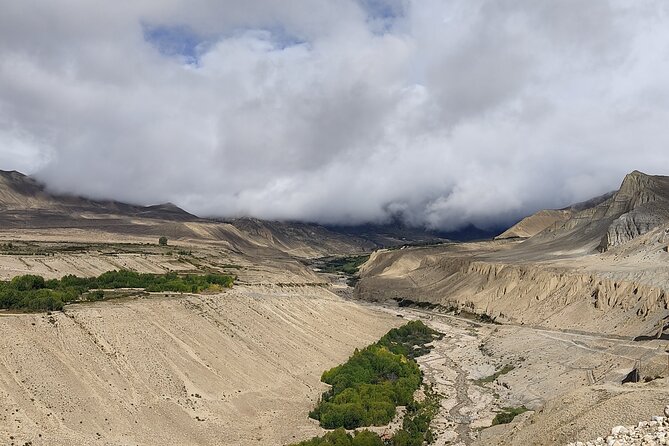
Days 4 and 5 build the “remote beauty” feel. You start Day 4 from Kagbeni toward Chele, moving through arid terrain with ancient caves and traditional Mustang villages. The key word in your experience here is scale: wide open dryness, sparse greenery, and trails that make you pay attention to footing and breathing.
Day 5 pushes into high-altitude desert terrain across rugged, barren stretches. Expect big sky and long sight lines. You’ll feel the quiet. In a place like this, even a routine tea stop becomes part of the day’s rhythm—because the alternative (rushing) would only make things harder.
A small practical note: because teahouses are part of the route experience, you’ll want to be ready for basic facilities. This doesn’t mean it’s uncomfortable. It means you should travel with the mindset of a trekking circuit, not a hotel-city vacation.
Ghami and Tsarang: monasteries with more gravity
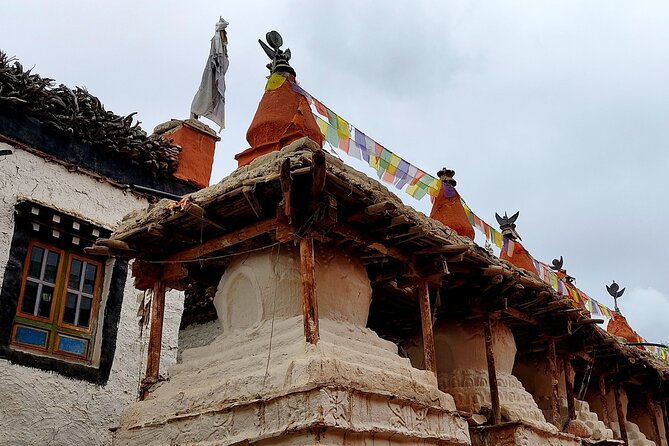
Day 6 takes you to Ghami, described as a larger and more vibrant village with historical monasteries. That jump matters: you’re not only walking through scenery anymore—you’re walking through communities that have a steady center. When villages feel slightly larger, you often get clearer access to local routine and more chances to observe day-to-day life around religious buildings.
Day 7 moves from Ghami to Tsarang, which is known for its ancient monastery and Tsarang Fort. Forts in Mustang aren’t just old walls. They’re markers of how people historically defended, governed, and shaped travel through the region. When you reach a place like Tsarang, you can feel the “why” behind the architecture.
This stretch is also a steady build toward Lo Manthang. Each day adds a new layer: first terrain, then village rhythm, then major religious and defensive landmarks.




Lo Manthang: walled city mornings, Thubchen Gompa, and Chhoser Cave
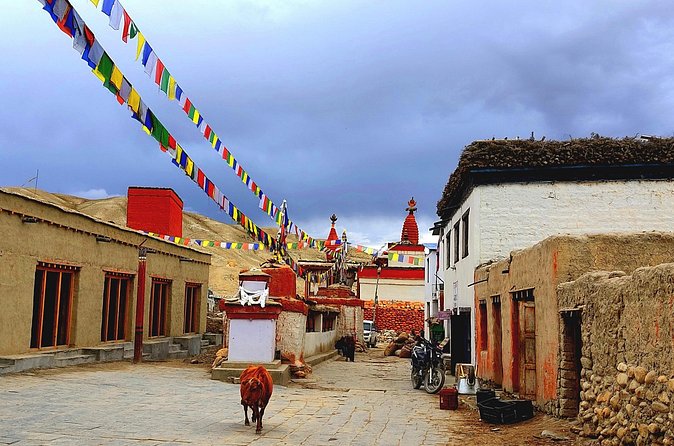
Day 8 is your arrival at Lo Manthang, the capital. The itinerary frames it as a walled city with narrow streets and traditional mud-brick homes. That walled-city idea is important. It’s not only dramatic. It also concentrates everything: monasteries, houses, and viewpoints feel closer together, so your time inside Lo Manthang has density.
Day 9 is where the trip earns its reputation. You visit Thubchen Gompa, listed as one of the oldest and most significant monasteries in Lo Manthang. This is a stop that can slow your pace in a good way. Monasteries like this often make you pay attention to materials, layout, and light—things that you miss when you treat sightseeing as photo time.
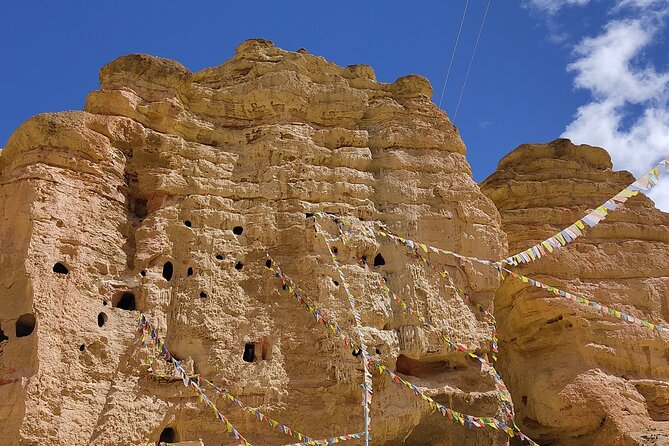
Then you head to Chhoser Cave near Lo Manthang. Cave sites are among Upper Mustang’s standout features because they connect you to the region’s use of geography as shelter, storage, and historical religious space. The itinerary notes it’s been used for centuries and has historical significance—so you’ll likely feel that sense of continuity when you’re there.
That day ends back in Lo Manthang. This matters for your energy. Instead of constantly packing and moving, you get time in the place you’ve been building toward.
The return: Dhakmar to Kagbeni and what you see differently the second time
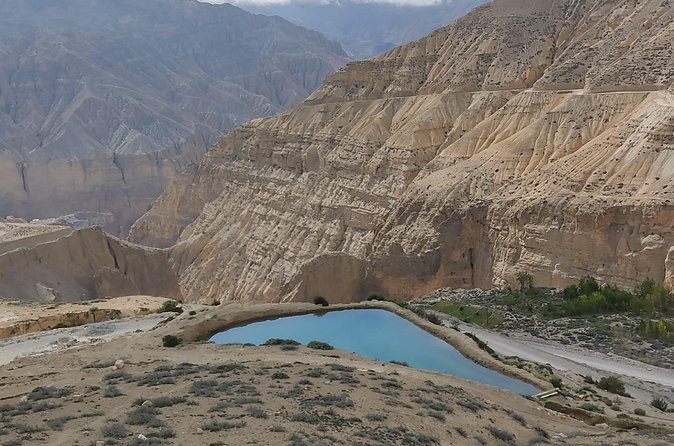
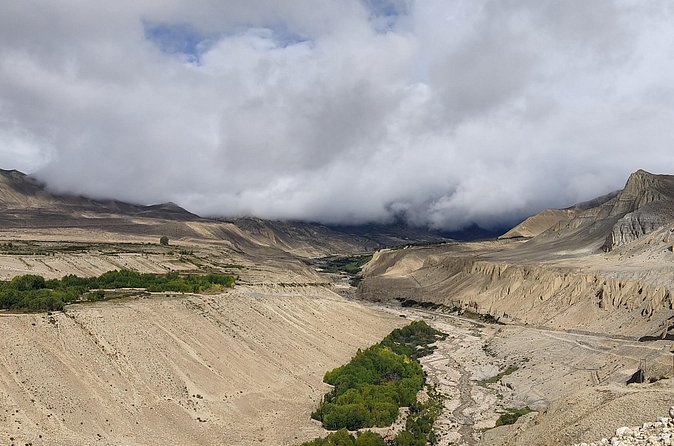
Day 10 takes you back from Lo Manthang to Dhakmar. The itinerary specifically calls out fresh perspectives: rock formations and expansive valleys look different when you’re not arriving. It’s like reading a story again with more context. The same terrain can feel harsher or friendlier depending on where you are in the route and what you now understand about the region.
Day 11 completes the loop back toward Kagbeni. Retracing steps can feel repetitive on paper, but in Mustang it often doesn’t. You’ve changed. Your eyes have changed. You’re noticing different details—doorways, monastery edges, the way the trail curves through dry land.
Day 12 then flies you from Jomsom to Pokhara. You’ll get that last decompression moment in a place that feels easier on the body after days in remote terrain.
Day 13 drives you back to Kathmandu. It’s a scenic route and a chance to reflect without rushing.
Price and value: what you’re really paying for at about $1,212
At $1,212 per person for roughly 14 days, the value hinges on what’s included versus what you’ll pay separately. This trip includes airport pickup/drop, Kathmandu accommodation for 2 nights at Hotel Chhimeki, transportation per itinerary, a government license holder English-speaking trekking guide, permits (Upper Mustang Restricted Area Permit for 10 days plus the Annapurna Conservation Area Permit), and a first aid medical box.
It also includes dinner, plus a trekking kit items like a branded t-shirt, duffel bag, and a trekking map. Those are small perks, but I appreciate them because they remove guesswork about what you’ll need day-to-day.
Now the part you must plan for: meals (all meals) and trek accommodation are not included. Drinks are also not included, and porters are not included. Tips for guides and porters are not included either.
So this price is best understood as paying for guidance, access, and logistics—not for every cup of tea and every night of lodging on the trail. If you budget for teahouse meals and lodging while trekking, you’ll feel like you made a smart “you’re paying for the experience” purchase. If you budget like it’s a fully inclusive resort trip, you’ll feel surprised.
Comfort and pacing: the practical version of a good trek
The tour promise includes thoughtful pacing and acclimatization planning. Even without specific altitude numbers in the itinerary, the staged routing is a strong indicator: you don’t jump straight from valleys into a fully demanding high-altitude push without structure.
You also get built-in breaks where they matter. The schedule includes Kathmandu and Pokhara buffer days and a key monastery/cave day inside Lo Manthang. That kind of pacing helps you avoid the common problem of turning a cultural trek into a photo sprint.
You’ll also travel with a private group. That doesn’t just feel nicer—it can make it easier to keep your pace consistent, especially on windy travel days or longer walking stretches.
The comfort level will still be what Upper Mustang is: teahouse basics rather than boutique hotel rooms. But the plan is set up so you don’t lose days to chaos. Organization is one of the most praised parts of the experience, and it shows up here in the mix of permits, transport, and guide support.
Who should book—and who might think twice
I think this trek fits best if you want more than scenery. If you like walking through villages with monasteries, reading the architecture as part of the culture, and spending real time inside Lo Manthang, you’ll be in the right mindset.
You should consider this less if:
- You hate basic teahouse living and don’t want to budget for trek meals and accommodation.
- You don’t enjoy windy or travel-day variability around Jomsom.
- Your physical fitness is below moderate. The tour explicitly notes you should have a moderate physical fitness level.
On the other hand, if you’re steady on your feet, enjoy slow days, and want a guided route through one of Nepal’s most restricted and culturally distinct regions, this trip makes sense.
Should you book Upper Mustang Trek with Trek Mania Nepal?
Yes, if your priority is access, smooth logistics, and cultural stops that feel scheduled rather than accidental. The biggest reasons to lean in are the included permits (including the restricted area permit for 10 days), the structured routing toward Lo Manthang, and the fact that you travel with a licensed English-speaking guide supported by a first aid kit.
I’d only pause if you want fully inclusive meals/lodging or if you don’t want to handle extra trekking-day costs like teahouse meals, trek accommodation, drinks, and porters/tips. Once you accept that trade-off, this looks like a strong way to see Upper Mustang without turning the trip into a logistics project.
FAQ
What is the meeting point for this trek?
It starts at Hotel Chhimeki, 17 Purano Dhalko Marga, Kathmandu 44600, Nepal, and the experience ends back at the same meeting point.
How long is the Upper Mustang Trek?
It’s listed as 14 days (approx.).
Is this tour private?
Yes. It’s a private tour/activity, and only your group participates.
What permits are included?
The tour includes the Upper Mustang Restricted Area Permit (10 days only) and the Annapurna Conservation Area Permit.
What transportation is included?
Transportation is provided as per the itinerary, including flights from Pokhara to Jomsom (Day 3) and from Jomsom to Pokhara (Day 12), plus the Kathmandu–Pokhara drive and the return drive to Kathmandu.
Is accommodation during the trek included?
No. Accommodation during the trek is not included in the price.
Are meals and drinks included?
Dinner is included, but meals (all meals) are not included. Drinks are also not included.
Do I need to budget for porters and tips?
Porters are not included, and tips for guides and porters are not included, so you should plan for that.
What’s the cancellation cutoff for a full refund?
You can cancel up to 3 days in advance for a full refund, and cancellation less than 3 full days before the start time is not refundable.