REVIEW · ISLAMABAD
K2 And Gondogoro La Trek
Book on Viator →Operated by Trango Adventure · Bookable on Viator
K2 dreams start with a glacier plan. I love the private guide presence for the full trek and the way the route uses the Baltoro Glacier as your main highway toward K2. The big drawback to budget for: the Gondogoro La crossing is weather-linked, so the schedule can shift and you might need patience on the ground.
You’ll sleep in a mix of hotels and camps, and meals are built in for most days (dinner 18, breakfast 18, lunch 17). I also like that the operation is built around a safety-first crew, not just sightseeing, which matters when you’re dealing with ice, rockfall risk, and long travel days.
In This Review
- Quick hits on this K2 + Gondogoro La trek
- Islamabad start: briefing day, not just jet lag
- Skardu: the Baltistan ramp-up before the ice
- Into the Baltoro: Paiju, river crossings, and real glacier footsteps
- Urdukas rest day: why climbing high and sleeping low actually works
- Concordia and Broad Peak Base Camp: K2 views get chosen, not hoped for
- Upper Baltoro to Gondogoro La: technical travel at 2am
- Dalsangpa and Hushe: the end of the ice, start of the road
- Price and value: what $4,818.35 gets you (and what to double-check)
- Who should book this trek, and who should pause first
- Should you book? My decision guide
- FAQ
- Where does the K2 and Gondogoro La trek start and end?
- Do I get pickup and private transportation?
- What kind of lodging and meals are included?
- Is travel insurance included?
- What about the Gondogoro La crossing if weather is bad?
- How long is the return drive from Skardu to Islamabad?
- Is this a private tour for my group only?
Quick hits on this K2 + Gondogoro La trek
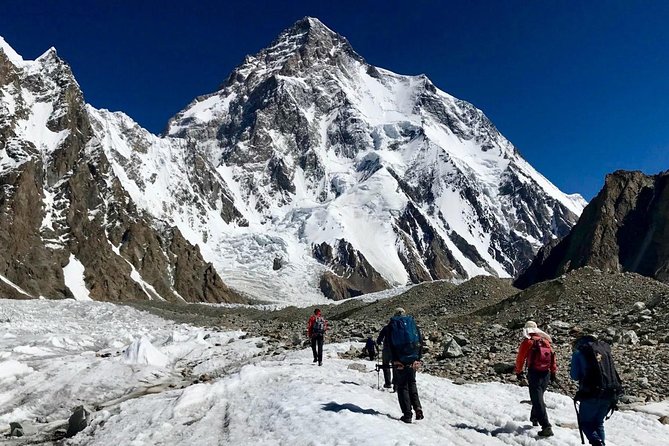
- Private, guided from Islamabad with pickup help and transportation to and from the trekking area.
- Baltoro Glacier time starts early, with camps like Paiju and Urdukas that set you up for the bigger days ahead.
- Concordia and Broad Peak Base Camp are chosen for serious K2 viewpoints.
- Gondogoro La is an early, technical day: crampons/harnesses and roped travel over the West Vigne Glacier.
- Buffer days for weather are built into the plan so you can cross on a clearer window.
- Skardu back-to-Islamabad is long-haul driving (18–20 hours), with an optional stop in Chillas.
Islamabad start: briefing day, not just jet lag
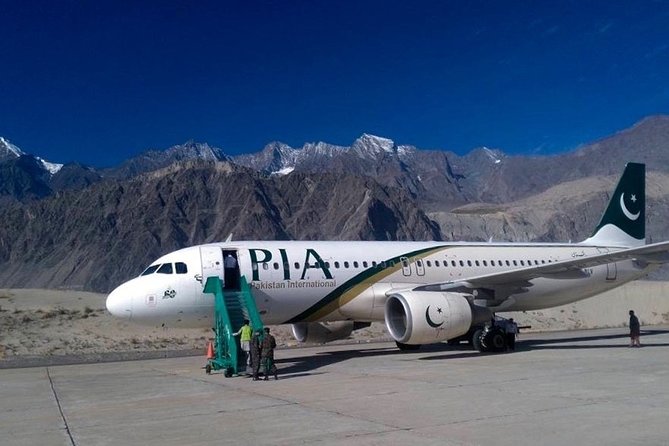
This trek begins and ends in Islamabad, which is a smart setup if you want one clean starting point. On Day 1, your guide meets you at Islamabad International Airport, then you’re transferred to a hotel. After that, the rest of the day is for recovery, because you’re about to switch from city life to high-altitude effort.
In the evening, there’s a group briefing about the K2 and Gondogoro La trek. If you still have energy, there may also be time for light sightseeing around Islamabad. The city is a purpose-built capital from 1961, so it’s not the usual “old streets and centuries” feel. For me, that’s a plus: it’s a place to get your bearings without getting mentally buried in logistics before the mountains start doing the talking.
One practical note: the booking details list a start time of 10:30 pm for the overall experience. Day 1 is still described as meeting after morning international arrivals. Before you go, sanity-check your confirmation so your internal clock and your actual pickup line up.
You can also read our reviews of more tours and experiences in Islamabad.
Skardu: the Baltistan ramp-up before the ice
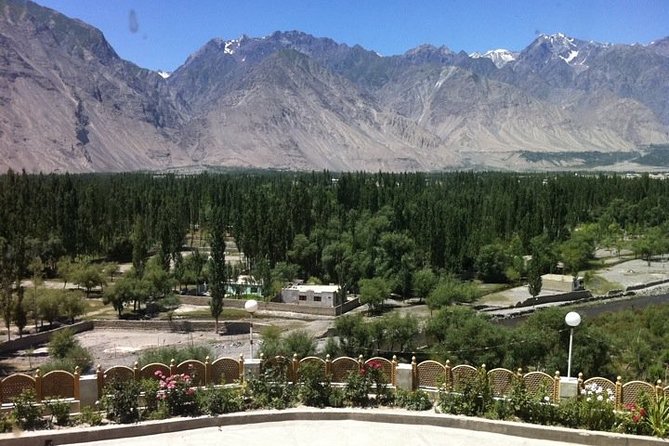
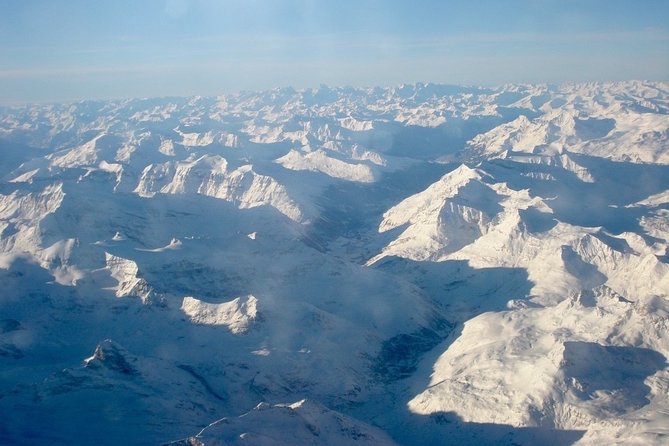
Day 2 moves you into Baltistan with a short flight from Islamabad to Skardu (about 45 minutes), weather permitting. If the skies cooperate, you may catch dramatic views of the Himalaya and Karakoram ranges—and even a chance to see K2 and the Gondogoro La pass from above.
Skardu then becomes your acclimatization-and-prep base. You check into a hotel and spend the day exploring the local bazaar and sightseeing spots like historical forts and lakes. There’s also time for ancient rock inscriptions, including a site tied to an 8th-century Manthal Lord Buddha Rock showing traces of earlier Buddhist monks and pilgrims.
Day 3 adds a classic “slow start with altitude views” rhythm. You walk up toward the remains of Kharpocho Fort (built in the early 1700s) overlooking Skardu and the Indus River. This is where sunrise or sunset photography is easiest, because you’re high above town with a big open view. Later, you head to an organic village for a taste of how crops grow here without chemical shortcuts. You also get a free afternoon, with options like a jeep trip to Satpara Lake or more bazaar time.
Day 4 is your transition from town to trail. You drive along the Indus, plus the Shigar and Braldu rivers, toward the lush Shigar Valley. You’ll sleep first night under the stars in Askoli, described as essentially a single street of wooden houses with irrigated fields of corn, potatoes, and apricot trees. The route then continues to Johla camp for your next night.
What I like here is pacing. You’re not thrown into glacier travel right away. You’re also not stuck in a vehicle all day—there’s hiking even early on, and it helps your body start learning the workload.
Into the Baltoro: Paiju, river crossings, and real glacier footsteps
Day 5 begins early from Johla and takes you toward Paiju. The trail initially runs along the edge of a river before climbing to higher ground. You’ll also negotiate streams, and the itinerary specifically calls out that depending on glacier melt you might have to ford them. That’s where sports sandals or old trainers can become surprisingly useful.
Paiju is described as a green oasis under Paiju Peak (6,611m). From Paiju Camp, you start seeing a bigger picture: the immense Baltoro Glacier, plus granite peaks from groups like Trango and Cathedral. If conditions are clear, K2 may even appear in glimpses from this area. That’s the kind of “maybe” view that keeps people motivated, because it feels like the mountain is playing with you.
Day 6 pushes deeper onto the glacier itself. After an early start from Paiju, you walk to the snout of Baltoro Glacier, view meltwater pouring out of the ice, and then climb up onto the glacier’s back. At this stage, the ice is covered by rubble and rocks, and the going can be tough. The route still follows a trail used by many expeditions, but it’s not a stroll—you’re walking over glacier swells where stones underfoot could have come from high peaks upstream.
Day 7 is a short day but hard work: moraine travel with steady height gain, moving east beside Baltoro Glacier. You pass major features like the ship-like prow of Great Trango and the isolated pillar called Nameless Tower. Then you reach Urdukas, which is praised as a truly awesome spot—big views of Trango Towers to the west and Cathedral Peak ramparts directly opposite. You arrive with time to settle into camp, relax, and just take in the scale.
Urdukas rest day: why climbing high and sleeping low actually works
Day 8 is a planned rest day at Urdukas. This is not random. The trek is set up so that resting at Urdukas supports acclimatization better than resting earlier on the route. Urdukas is described as the last campsite on grassy slopes off the main glacier, with facilities for washing and cleaning.
You’ll still get a pleasant walk behind the campsite through grassy slopes full of alpine flowers. The key idea here is climbing high & sleeping low, which helps your body adjust to altitude without turning the rest day into a second “hard day.”
If you’re the type who wants to hike every hour because you feel guilty sitting still, this is the day to practice restraint. A rest day that’s meaningful can be the difference between feeling steady later, and feeling beaten up before the technical pass.
Concordia and Broad Peak Base Camp: K2 views get chosen, not hoped for
Day 9 goes from Urdukas by moraine edge travel eastwards, with a climb onto the broad back of Baltoro Glacier. The route passes the Yermanandu Glacier, with views that expand to peaks like Muztagh (7,270m), Masherbrum (7,800m), and Gasherbrum IV, plus Concordia ahead.
Day 10 is your trek to Concordia, through scenery some people describe as unmatched. You continue along Baltoro’s swells, pass Mustagh Tower (7,284m), and look toward Gasherbrum IV acting like a beacon. Broad Peak comes into view above a ridge, while K2 tends to stay hidden until key moments. That means your best views often arrive right when you’re around the right bends in the ice and moraine.
Day 11 is where the route makes an intentional move. Instead of camping at Concordia, you camp at Broad Peak Base Camp. The idea is to get a better and amazing K2 view. From this base camp area, you enjoy the marvellous situation of the Karakoram—simple words, huge payoff when the sightline opens.
Day 12 is an early walk to K2 Base Camp. This is the day many people imagine before they even book. You go up to the base camp where climbers have operated, admire K2 from the spot itself, and then return. On the way back, you also get a look back toward Concordia framed by Mitre Peak and Chogolisa.
For me, this is the rare kind of day where the hike is only part of the reward. The bigger part is that the trek gives you a deliberate viewing strategy, not just a random stop.
Upper Baltoro to Gondogoro La: technical travel at 2am
Day 13 shifts away from the main trekking trail onto a far less traveled route along the Upper Baltoro. You trek for several hours toward Chogolisa’s huge bulk, then reach the confluence where the West Vigne Glacier meets the Gondogoro La feeder glacier. It’s a transition day: you’re moving toward the pass, and the terrain changes in feel.
Day 14 is the big one: Gondogoro La crossing. You start before light breaks—around 2am—to reduce rockfall risk on the descent down the Hushe side of the pass. After breakfast in the dining tent, you do crampons and harnesses and set off roped together over the West Vigne Glacier. The itinerary describes black, star-studded night air and slow careful travel, with glacier surfaces illuminated by pools of light from head torches.
This is a tough day, but you’re rewarded with views where all four 8000’ers are visible in one direction (as stated in the route description). On the other side, you look down toward the Hushe Valley.
Days 15 and 16 are both buffer/contingency days built in for weather and delays. If the pass crossing can’t happen on Day 14 due to conditions, you get another chance. If you do get over the pass, you may enjoy rest or exploration, or you can continue down to Hushe for a night.
This buffer structure is one of the real values here. In glacier travel, “the mountain schedule” often wins. Having extra days keeps you from feeling like the plan is fragile.
Dalsangpa and Hushe: the end of the ice, start of the road
Day 17 continues after the pass crossing with a walk that begins easy and then gets onto the glacier route. You pick your way across moraine and ice and then reach the camping site at Dalsangpa, described as field of flowers. You’ll also have a spectacular view of Masherbrum and glacier cascades linked with Masherbrum Pass.
Then the day turns greener in a slow, physical way. You pass yak pastures, reach Shaicho, and later camp at Saitcho (3,350m). The itinerary notes that at this point you’re back to more benign altitudes where trees actually become bigger than you, which is a memorable way to describe the relief of going down.
Day 18 is your last walking day of the trek area: an easy walk to Hushe village. Hushe is described as fairly large, with a warren of alleys and buildings. Houses are traditionally made from rounded river stones, often two storeys, with animal space downstairs and people upstairs. There’s also mention of shops, a school, a hotel, and a trekkers’ campsite.
Then you switch to vehicle life. Vehicles are waiting, and you drive early back through Khapulu Valley into Skardu. This part is praised as faster and smoother because you’re on a paved road following the Indus River.
Day 19 is your long return push to Islamabad. You travel along the Indus River to the Karakoram Highway (KKH), then drive on KKH toward Islamabad. Skardu to Islamabad is listed as about 18 to 20 hours driving, with an option to stay overnight in Chillas.
Finally, Day 20 is the handoff: transfer to the airport for your flight home.
Price and value: what $4,818.35 gets you (and what to double-check)
At $4,818.35 per person for roughly 20 days, this isn’t cheap. But it’s also not just “a guide and good luck.” The package includes private transportation and a lot of meals: dinner on 18 days, breakfast on 18 days, and lunch on 17 days. You’ll also have accommodation that’s a mix of camping and hotels, and you’ll travel with a guide and crew focused on safe operations across the trek.
One major thing you should verify: the route includes a flight from Islamabad to Skardu, but the listed included items only explicitly call out private transportation and meals. So when you book, confirm whether the domestic flight is included in the final price or handled separately.
Also, travel insurance is not included, and the highlight is blunt about it: get it before your trip. For a trek that includes a technical pass day at night and potential delay buffers, insurance is not optional thinking.
The other value piece is the safety-heavy approach. In the feedback shared here, the consistently strong praise centers on organization from the start (including smooth airport pickup), supportive staff, and excellent food. That combination matters because on this kind of trek, your morale runs on two things: dependable logistics and food that keeps coming.
Who should book this trek, and who should pause first
This trek is best for you if you want a fully guided, private setup. You’ll be with your guide the entire time, plus a crew, and you’re not building your own plan day by day. You’ll also like structured acclimatization, including the Urdukas rest day and the way the route climbs high then lets you sleep lower.
You should pause if you know you hate uncertainty. Weather and rockfall risk drive the crossing timing, and the plan includes buffer days because the mountain doesn’t care about calendars.
You’ll also want to be comfortable with a long travel day at the end. The Skardu to Islamabad drive is 18–20 hours. If you’re someone who needs to be able to quietly recover after hard days, plan your last night and your next flight with extra care.
Should you book? My decision guide
If your dream includes K2 Base Camp plus Gondogoro La, and you’re willing to follow a safety-minded schedule, this is a strong option. The route chooses camps and viewpoints on purpose (like Broad Peak Base Camp for K2 viewing), and it builds in weather buffers instead of pretending everything will be perfect.
If your budget allows it and you can get proper travel insurance, this trek reads like good value for a private, guided, high-altitude operation: meals are handled, logistics are handled, and the hard part is the mountain, not the planning.
FAQ
Where does the K2 and Gondogoro La trek start and end?
The trek begins and ends in Islamabad. You start with pickup/transfer in Islamabad, and on the final day you’re transferred to the airport for your flight back home.
Do I get pickup and private transportation?
Yes. Pickup is offered, and the experience includes private transportation to and from the trek.
What kind of lodging and meals are included?
Accommodation is a mix of camping and hotels. Meals are widely included: dinner is included for 18 days, breakfast for 18 days, and lunch for 17 days.
Is travel insurance included?
No. Travel insurance is not included, and you’re advised to get it before your trip.
What about the Gondogoro La crossing if weather is bad?
The experience requires good weather. The plan also includes buffer days (Day 15 and Day 16) to give another chance if conditions prevent the crossing on the main attempt.
How long is the return drive from Skardu to Islamabad?
Skardu to Islamabad is listed as about 18 to 20 hours driving. There is an option to stay overnight in Chillas.
Is this a private tour for my group only?
Yes. It’s listed as a private tour/activity, so only your group participates. You also receive confirmation at booking time.