REVIEW · ISLAMABAD
K2 Base Camp & GONDOGORO LA TREK
Book on Viator →Operated by Visit in Pakistan Treks, Tours and Expeditions · Bookable on Viator
K2 and Gondogoro La are not small adventures. This 18-day trek stacks major Karakoram icons—Baltoro Glacier scenery, the Gondogoro Pass crossing, and that front-row feeling at K2 Base Camp. Two things I really like: the way the route builds altitude step-by-step, and the focus on strong guide support with a small maximum group size. One possible drawback: you’re in real high-altitude terrain for many days, so you’ll want to take the pacing and acclimatization seriously, not casually.
The trip also feels well managed from the start. You get a meet-and-greet in Islamabad, help with transfers, and a pre-trek briefing once you reach Skardu so you can confirm your gear and safety basics. If you prefer total freedom and no structure, this isn’t that kind of trek. You’re following a real expedition-style plan, guided and scheduled by design.
In This Review
- Quick hits: what makes this trek click
- From Islamabad to Skardu: airport welcome and first high-mountain hits
- Skardu to Askole by jeep: starting where the road stops
- First climbs: from Askole to Jhola and Paiyu’s acclimatization rhythm
- Baltoro Glacier days: Trango Towers to Concordia’s 360-degree payoff
- K2 Base Camp day: the moment you finally see what the trek is for
- Gondogoro La and Gondogoro Pass crossing: altitude plus exposed effort
- Descent through Laila Peak country to Hushe Valley
- Logistics, guide support, and the small-group advantage
- Price and value for $2,600
- Who should book this trek (and who should pause)
- Should you book this K2 Base Camp & Gondogoro La trek?
- FAQ
- How long is the K2 Base Camp & Gondogoro La trek?
- What is included in the tour price?
- Are flights and trekking permits included?
- Does the tour include pickup or transfers in Islamabad?
- How many people are in the group?
- Is personal insurance included?
- What is the cancellation policy?
Quick hits: what makes this trek click
- Small group limit (up to 16) means you get more attention on route days, especially when altitude or weather gets real.
- English and Spanish live guiding helps if you want clear explanations, not guesswork.
- Baltoro Glacier to Concordia is the classic power move, with Trango Towers and K2/Broad Peak views lining up day after day.
- Gondogoro La High Camp sets you up for the next day’s 5,585m pass crossing with an acclimatization night.
- Three-meals-a-day on trekking days removes a lot of daily uncertainty when you’re burning calories.
- Mr. Nabi is specifically praised for staying with the group and handling logistics and navigation smoothly.
From Islamabad to Skardu: airport welcome and first high-mountain hits
Your journey starts in Islamabad with a practical welcome. You get greeted at Islamabad International Airport, then transferred to your hotel for check-in and downtime. This matters because after long flights, your body needs sleep and your brain needs a plan. Day 1 also includes time for a quick culture stop at the Pakistan Monument Museum (about 40 minutes), where you’ll get an overview of Pakistan and its cultures.
Day 2 is where the mountains start talking. You drive along the Karakoram Highway toward Chilas, with a high pass stop at Babusar Top (4,173m). Even if you’re not hiking yet, you feel the altitude with those long views over peaks, glaciers, and valleys. The road itself is part of the experience here, not just a transfer.
On Day 3, you’ll reach the Nanga Parbat viewpoint for a close look at the so-called Killer Mountain (8,126m). The plan also includes a stop at the Indus–Gilgit confluence area, where major mountain ranges converge, which is a neat reminder that this whole region is built for big geography. Then you continue on to Skardu, the traditional base town for getting ready for the K2 trek.
You can also read our reviews of more tours and experiences in Islamabad.
Skardu to Askole by jeep: starting where the road stops
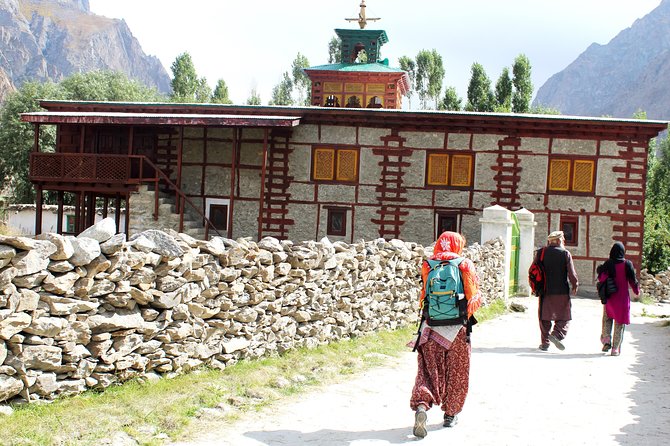
In Skardu, you’ll have time for a proper pre-trek setup. After arriving by midday, the day includes lunch with mountain views and a pre-trek briefing covering itinerary, safety protocols, and essential trek details. You’re also expected to make sure your gear is ready here, which is useful because the next days are about steady effort, not last-minute fixes.
Then comes the classic transition day: the jeep ride from Skardu to Askole (around 3,050m), the last village before the K2 Base Camp trek. This isn’t gentle. The route through the valleys and remote areas gives you a sense of isolation before the real hiking starts. It also helps you mentally switch gears. One minute you’re dealing with roads and towns; the next you’re in a place that feels like the trek begins right out the door.
First climbs: from Askole to Jhola and Paiyu’s acclimatization rhythm
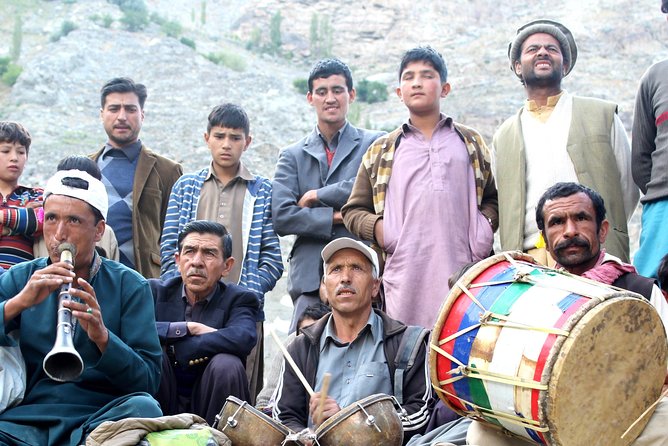
Day 5 is your hiking start, moving from Askole toward Jhola Camp (about 3,200m). The trek runs roughly 5–6 hours and follows the Braldu Valley with river-side stretches and a mix of rocky terrain, grassy meadows, and steep mountain slopes. You’re not just collecting views here. This first segment teaches your body how the altitude feels on uneven ground.
Day 6 continues to Paiyu Camp (around 3,450m), also 5–6 hours. You keep following the Braldu Valley, with alpine meadows and clear streams showing up as the terrain becomes more remote. It’s challenging, but the payoff is constant mountain scenery and a feeling that the trek is tightening into the Karakoram’s main act.
Day 7 is a rest/acclimatization day at Paiyu. I really like days like this on high-altitude itineraries because they reduce the odds of rushing your physiology. You’ll hydrate, do short walks around camp, and use the time to prepare for what comes next toward the Baltoro Glacier. If you treat that day like a free day without any pacing, altitude will teach you a lesson.
Baltoro Glacier days: Trango Towers to Concordia’s 360-degree payoff
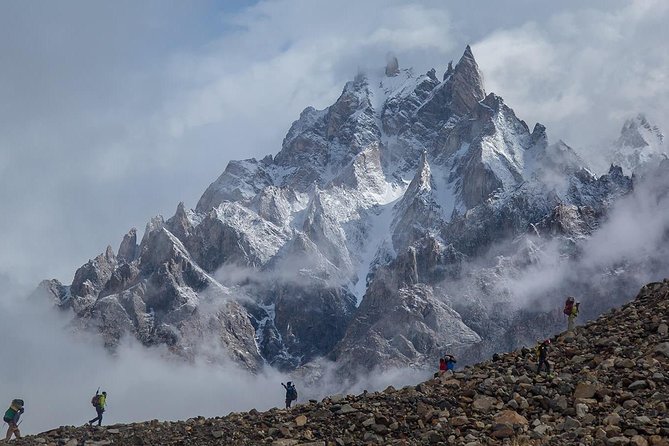
Days 8 through 11 are the heart of the Baltoro Glacier experience, and they’re stacked with big visual moments.
Day 8 takes you from Paiyu to Khoburtse (about 3,800m) over 5–6 hours. You start encountering the lateral moraine of the Baltoro Glacier, and the glacier becomes a constant presence—jagged ice formations, glacial streams, and debris fields shaping what you see. As you progress, the Trango Towers appear, rising dramatically above the ice. This is one of those views where photos won’t fully explain the scale.
Day 9 is Khoburtse to Urdukas (about 4,050m). Again around 5–6 hours, walking across moraine, glacial streams, and meadows while the glacier dominates the setting. Urdukas is known for its sunrise and sunset over the Trango Cathedrals, with those sharp granite spires catching light in a way that feels almost theatrical. When you’re this high, the sky timing matters.
Day 10 goes from Urdukas to Goro II (about 4,300m), roughly 5–6 hours. The terrain keeps its expedition feel—moraines, streams, and larger ice formations—while the views keep widening out.
Day 11 is Goro II to Concordia (about 4,600m), another 5–6 hour push. Concordia is often described as a throne-room style viewpoint, and for good reason: it’s a 360-degree view area over major peaks. You get the defining silhouettes of K2 (8,611m), Broad Peak (8,047m), and the Gasherbrums nearby.
This stretch also offers you a practical lesson. You’ll learn how to move efficiently day after day: steady pace, smart rest, and attention to how you feel before you keep going.
K2 Base Camp day: the moment you finally see what the trek is for
Day 12 is the goal many people come for: the trek from Concordia to K2 Base Camp, listed around 5,050m–5,135m depending on the reference point in the route notes. The hike takes roughly 5–6 hours, following the Godwin-Austen Glacier and bringing you close to K2’s massive ice face.
This is where the whole expedition clicks. Up until now, you’ve been moving through a system of glaciers and valleys, but K2 Base Camp makes it personal and physical in a single day. After spending time at base camp, you return to Concordia for the night, which keeps you from rushing downhill too fast.
Then you’re ready for the next transition: not just another view day, but a change in type of high-altitude challenge—Gondogoro La and the pass crossing.
Gondogoro La and Gondogoro Pass crossing: altitude plus exposed effort
Day 13 focuses on getting to Gondogoro La High Camp. The route notes move from Ali Camp (about 4,900m) toward Gondogoro La High Camp, with a 5–6 hour trek through rocky terrain, moraines, and glacial meadows. This part is challenging because altitude increases and the ground gets rougher. You’re not going for comfort. You’re building the best chance for the next day.
Day 13 ends with high camp resting and preparation. The value of this night is straight-forward: acclimatization and mental readiness before crossing a 5,585m pass.
Day 14 is the highlight day: the Gondogoro Pass summit/crossing. You start early from Gondogoro La High Camp to reach the pass viewpoint, with panoramic sights including K2, Broad Peak, Gasherbrum I, II, and IV, and Masherbrum. After the pass, you descend toward Khespang in about 4–5 hours, mostly downhill through rocky and alpine terrain.
If you only take one takeaway from this section, make it this: the pass day isn’t just about height. It’s about timing, careful footwork, and listening to your body from the first steps.
Descent through Laila Peak country to Hushe Valley
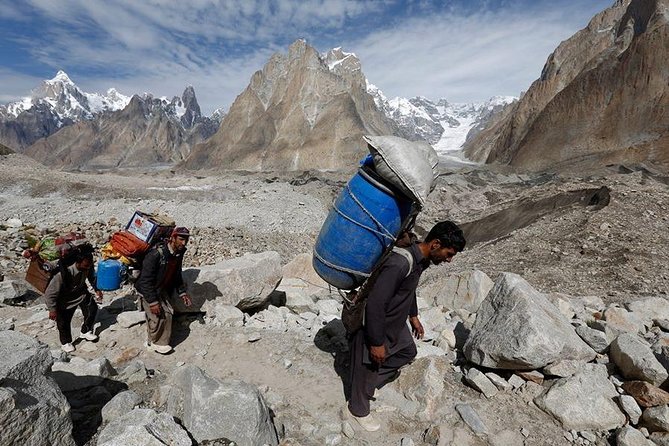
After conquering the pass, the trek pivots into a different mood: long descents and shifting scenery.
Day 15 takes you from Khespang to Saicho (around 3,200m) in about 6–7 hours. You pass by Laila Peak Base Camp, which is at the foot of the sharp, pyramid-like Laila Peak (around 6,096m). The trail runs through alpine meadows and rocky paths, and you’ll feel the terrain relax compared to glacier-adjacent days.
Day 16 continues the downhill energy toward Hushe Valley. You trek from Saicho to Hushe in roughly 4–5 hours through green fields, alpine meadows, and small villages, with views of peaks like Masherbrum and K6 mentioned in the route notes. Then you drive to Skardu (about 4–5 hours), taking you back toward towns and roads.
Day 17 and 18 complete the loop. The route includes a drive back toward either Chilas or Naran (depending on your chosen route) with major scenic highlights along the Karakoram Highway and Indus Valley. Finally, you return to Islamabad for departure from Islamabad International Airport.
Logistics, guide support, and the small-group advantage
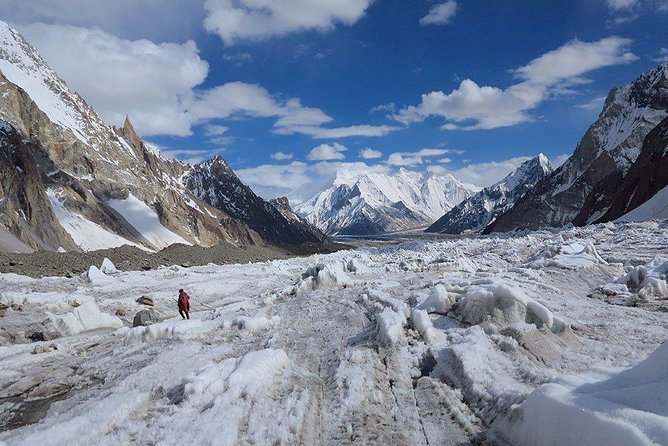
This is a guided trek with expedition-style structure. You’ll travel with a live English and Spanish speaking guide, and the group size tops out at 16 travelers. That matters for two reasons: first, it improves pacing control in a place where moving carefully is non-negotiable. Second, it makes it easier to get explanations when altitude and weather start demanding your full attention.
The reviews specifically praise Mr. Nabi for professional navigation and for staying with the group throughout the trek. That kind of continuous on-the-ground support is exactly what you want when the route is remote and the days feel long.
On trekking days, the plan includes three-times-a-day meals. That’s not just convenience. At altitude, you want fewer decisions and more consistency in fueling.
Price and value for $2,600
For $2,600, you’re not just paying for a view. You’re paying for a full expedition framework: transportation between key trek points (Skardu–Askole–Hushe–Skardu is listed), experienced guided support, and meals on trek days. You’re also getting pre-trek guidance in Skardu and airport meet-and-greet handling in Islamabad.
The big value check is what’s not included. The route notes list:
- Gilgit Baltistan Adventure and CKNP trekking permits
- Personal insurance and any heli rescue (heli rescue can be arranged on a paid request, but it’s not part of the base price)
- All staff gratuity
- Domestic and international air tickets
So the real cost equation is: the $2,600 covers a lot of on-the-ground work, but you’ll still need to budget for permits, your own travel insurance, and your flights. If you already live close enough to handle flights efficiently, the trip tends to feel more like an expedition bundle. If not, air tickets and permits can noticeably add to the final total.
Who should book this trek (and who should pause)
This is best for people with moderate physical fitness who are comfortable with long hiking days, altitude exposure, and basic expedition conditions. The route includes trekking days with 5–7 hour efforts on many days and a high pass crossing at 5,585m, plus a high camp night for acclimatization.
You should consider a different option if you want a gentler itinerary, minimal altitude exposure, or fully predictable daily comfort. Even with good planning, high-altitude trekking has ups and downs that aren’t easy to negotiate.
On the other hand, if you like a clear progression from town logistics to real glacier trekking to a pass crossing and then a rewarding descent, this plan makes a lot of sense.
Should you book this K2 Base Camp & Gondogoro La trek?
If your dream includes K2 Base Camp and you also want the extra challenge and payoff of Gondogoro La, I’d say yes—this is a strong match. The route logic is good: altitude building, a rest day at Paiyu, time at high camp before the pass, then a downhill return that doesn’t end the adventure abruptly.
Just go in with your eyes open. It’s remote, it’s high, and it’s designed for effort. If you handle that well, the payoff is the kind of mountain experience you won’t easily replace: Trango Towers from the Baltoro Glacier corridor, the 360-degree peak theater at Concordia, and the pass day views that put K2 and multiple Gasherbrums in the same big picture.
FAQ
How long is the K2 Base Camp & Gondogoro La trek?
The trek is listed as 18 days approximately.
What is included in the tour price?
Included items listed are transport between Skardu–Askole–Hushe–Skardu, a live English and Spanish speaking guide, and trekking days with three-times-a-day meals.
Are flights and trekking permits included?
No. The route notes say domestic and international air tickets are not included, and Gilgit Baltistan Adventure and CKNP trekking permit are also not included.
Does the tour include pickup or transfers in Islamabad?
Yes. Pickup is offered, and the itinerary includes airport meet-and-greet with a transfer to your hotel in Islamabad.
How many people are in the group?
The tour has a maximum of 16 travelers.
Is personal insurance included?
No. Personal insurance is not included, and heli rescue is only noted as something that can be facilitated on a paid request.
What is the cancellation policy?
Free cancellation is offered if you cancel up to 24 hours in advance for a full refund. If you cancel less than 24 hours before the start time, the amount paid will not be refunded.