REVIEW · ARUSHA
8-Day Small-group Lemosho Kilimanjaro Summit Trekking
Book on Viator →Operated by Climb Kili · Bookable on Viator
Kilimanjaro, but with room to breathe. This 8-day Lemosho trek from Arusha takes you through big changes in altitude and scenery, starting on the western side at the Londorossi gate and building toward summit night with time to acclimatize to low oxygen.
I especially like the way this trip feels all-inclusive once you’re on the mountain: camping equipment, fees, and meals are included, plus you get round-trip transfers from your Arusha hotel. The other thing I like is the pacing built into the route, with an extra full day on the Shira plateau and acclimatization work that sets you up for the steep parts later.
One possible drawback: summit night is serious. You’ll start around midnight and tackle one of the steepest non-technical stretches, on scree and at high altitude, before reaching Stella Point at sunrise and then Uhuru Peak.
In This Review
- Quick Hits You’ll Actually Care About
- Getting Started at Arusha and the Londorossi Gate Check-In
- Day 1 Through Day 2: From Rain Forest to Shira’s High Desert Views
- A Full Shira Plateau Day (Day 3) Toward Kibo and Moir Camp
- Lava Tower Acclimatization, Senecio Forest, and Barranco Wall (Day 4)
- Barranco Valley, Karanga Valley, and the Arctic-Feeling Transition (Day 5)
- Kosovo Camp on an Exposed Ridge: The Pause Before Summit Day (Day 6)
- Midnight Summit Day: Stella Point Sunrise and the Uhuru Peak Hour (Day 7)
- Mweka Gate Walk-Off (Day 8) and Why the Descent Still Counts
- Price and Value for an 8-Day Small-Group Summit Attempt
- Who This Trek Fits Best, and Who Should Think Hard
- Should You Book Climb Kili’s 8-Day Lemosho Trek?
- FAQ
- Where is this Kilimanjaro trek based?
- What route does the trek follow?
- How many days is the trek?
- What time does the experience start?
- Is pickup included from Arusha hotels?
- How big is the group?
- What’s included in the trek besides the guide?
- Does the itinerary include the summit day at night?
- How soon will I get confirmation after booking?
- Is there free cancellation?
Quick Hits You’ll Actually Care About
- Small-group size (max 15) keeps the experience tight and makes it easier to get guidance when you need it
- All camping gear, meals, and fees included reduces decision fatigue once you’re in Tanzania
- Lemosho route pacing spreads altitude pressure across multiple days, not one giant push
- Lava Tower and Arrow Glacier acclimatization gives you a structured way to adjust before Barranco and Karanga
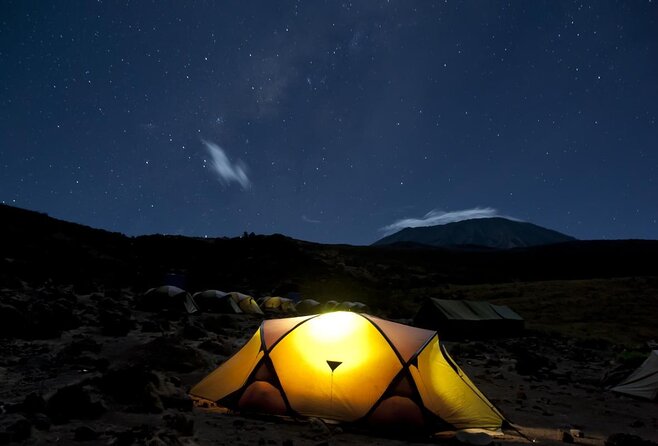
- Kosovo Camp prep on an exposed ridge forces smart timing so you’re ready before dark
- Midnight summit strategy targets sunrise from Stella Point, then continues to Uhuru Peak
Getting Started at Arusha and the Londorossi Gate Check-In
Your trip begins in Arusha, with pickup offered and round-trip transfers from your Arusha hotel. The on-the-ground start time is 8:00 am, so plan for an early start mindset even before you lace up your boots.
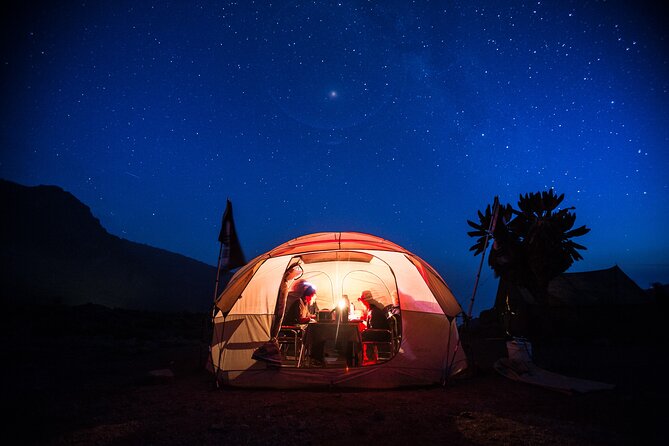
On Day 1, the action starts at the Londorossi gate on Kilimanjaro’s western side. You’ll walk for about 3 to 4 hours through montane forest, moving gently upward until camp is set for you. A nice practical detail here is that you arrive at camp to find tents up and your personal belongings placed inside, which keeps the first day from turning into a logistics project.
Day 1 ends at Mti Mkubwa camp, a rainforest setting that gives you the contrast you’ll miss later. It’s greener, cooler, and more sheltered than the high-altitude days ahead. That matters because it sets expectations: the mountain will change dramatically, and you’ll be walking through those changes day by day.
You can also read our reviews of more tours and experiences in Arusha.
Day 1 Through Day 2: From Rain Forest to Shira’s High Desert Views
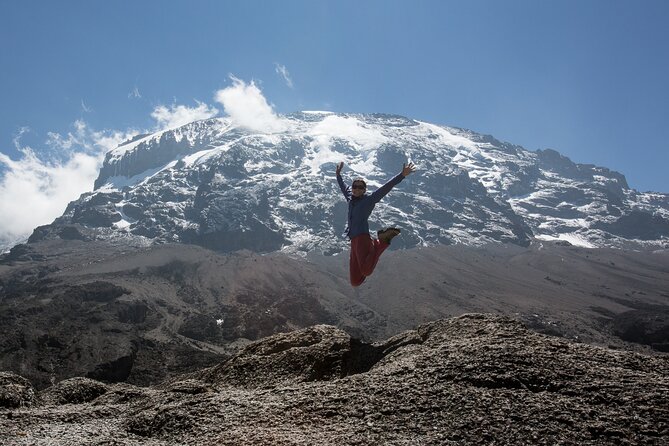
By Day 2, the trail leaves the forest and climbs you into open country—tall grasses, heather, volcanic rock, and that lichen-bearded look you only really see at altitude. The walk runs about 5 to 6 hours, and you’ll feel it shift from lush to dry as you climb.
This is the day that often changes how you think about Kilimanjaro. The route follows the Shira ridge, a high altitude desert plateau where the first bigger views of Kilimanjaro open on the horizon. You go from walking in shade and trees to walking in wide-open air, with fewer distractions and more focus on your breathing and steady pace.
One drawback to note: because you’re moving out of the forest, you can also feel exposed to sun and wind. Even though the day doesn’t sound like the longest, the altitude jump can still feel big. The benefit is that the scenery keeps moving, so your eyes stay busy even when your legs slow down.
A Full Shira Plateau Day (Day 3) Toward Kibo and Moir Camp
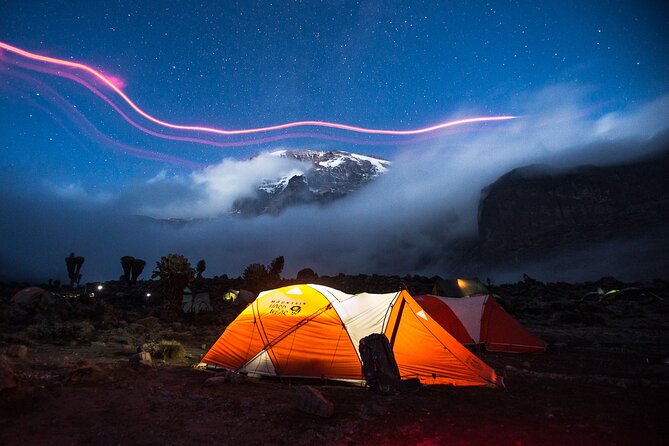
Day 3 is your extended Shira plateau day. It runs about 5 to 7 hours, and it’s built for exploring rather than rushing. You’ll trek east toward Kibo’s glaciated peak, which is the Kilimanjaro sight that most people picture before they ever step foot in Tanzania.
You also get an option to visit the ancient collapsed Shira cone. It’s one of those choices that can make your trek feel more personal: do you stay focused on walking, or do you add a bit of volcanic-geology wandering?
You finish at Moir Camp, described as being in a huge gorge at the end of a dormant lava flow. This is where the mountain starts to feel both dramatic and slightly surreal—like you’re walking on an older planet’s timeline. Camps like this also help you mentally prepare for later stages, because the terrain cues you that the route is pushing upward.
Potential catch: this day can feel like it has a lot of time on your feet. If you tend to go out too hard early, this is the day where you’ll want to keep your effort calm. The route is designed to help, but your pacing still drives how well you feel.
Lava Tower Acclimatization, Senecio Forest, and Barranco Wall (Day 4)
Day 4 is one of the more important days because it mixes acclimatization with a full change of scenery. You’ll take a trek toward the Lava Tower area (around 15,000 feet / 4,500 m), and after that you continue toward the Arrow Glacier.
Then comes a big part of what makes the route feel well planned: you rest at the tower, and then you descend through the senecio forest to Barranco Camp. The walk includes waterfall country before you reach camp, and the result is a nice emotional arc. You go from cold high terrain to a more sheltered, green zone, so your body gets a break from the harshest conditions.
Barranco Camp sits with the Barranco wall towering nearby. You’ll often find clouds moving through the Barranco Valley breeze, which can be a comfort on a long day or just a reason to watch the sky and slow down.
Trade-off: descending into Barranco can be tough on knees, especially if you take it too fast. The day is designed to help your altitude readiness, but it still asks your legs to work. Keep the effort steady, because the next day gets more adventurous.
Barranco Valley, Karanga Valley, and the Arctic-Feeling Transition (Day 5)
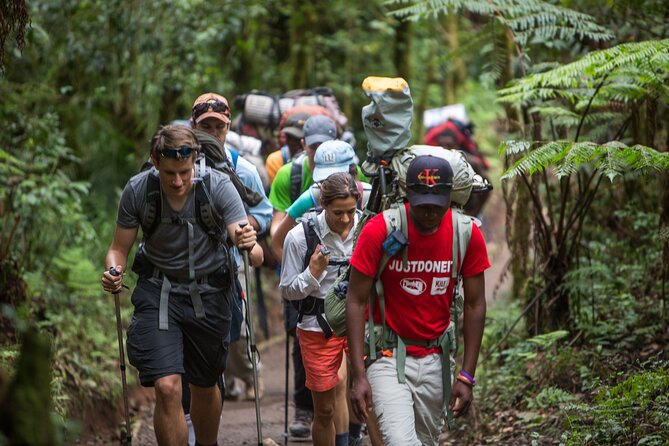
Day 5 goes to work on the Barranco Valley and then up the Barranco wall. The trail is described as an adventurous stretch that ushers you into the arctic zone of Kilimanjaro. That wording matters: you’ll likely feel the temperature drop and the air get drier as you go.
After Barranco, you continue on the South Circuit path through Karanga Valley. The day runs about 4 to 5 hours and ends at Karanga Camp.
Why this day is valuable: it’s where your trek shifts from acclimatization climbing to summit preparation terrain. You’re still moving in a structured way, not just grinding upward. But you’re also learning how your body handles colder, thinner-air hiking.
A practical consideration: the arctic-zone feeling means you’ll want to pay attention to timing. In cold conditions, small mistakes become big fast. If you’re the type to rush, this is the day you’ll want to stay disciplined.
Kosovo Camp on an Exposed Ridge: The Pause Before Summit Day (Day 6)
Day 6 is intentionally slower. You hike to Kosovo Camp (around 16,000 feet / 4,876 m), about 5 to 6 hours. The route passes Barafu Camp, giving you excellent views of Kibo and Mawenzi peaks along the way.
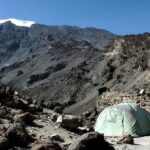
Kosovo Camp is on an exposed ridge. That detail is more than description. It’s a reminder that the mountain can change quickly when there’s less shelter, especially around camp time. The itinerary specifically notes that you need to familiarize yourself with the terrain before dark.
This day is when you shift from walking work to summit-day readiness. You’ll acclimatize, rest, relax, and do summit prep. Even if you’re mentally ready, your body still needs a quiet reset before the midnight push.
If there’s one place you want to keep your nerves calm, it’s here. Kosovo’s exposure can make people feel more vulnerable, even when everything is fine. The route’s structure gives you a staging ground where you can focus without the added stress of a late-day scramble.
Midnight Summit Day: Stella Point Sunrise and the Uhuru Peak Hour (Day 7)
This is the day. Day 7 starts at midnight for a summit attempt. The itinerary describes the route section as one of the steepest on Kilimanjaro’s non-technical paths. Translation: you’re working hard on fatigue and oxygen deprivation at the same time.
The climb to Stella Point runs about 6 to 7 hours. It’s planned for sunrise from Stella Point, and you’ll hike on scree while ascending toward the crater rim. The route travels between the Rebmann and Ratzel glaciers, and that detail helps you understand you’re moving through the high crater region, not just walking a normal ridge trail.
Once you reach Stella Point, the summit is close by. The itinerary says Uhuru Peak is about an additional hour from there. After you reach the highest point in Africa, you descend to Mweka Camp for dinner and celebration.
This day is physically and mentally challenging. Even when the pace is controlled, the mental load can be huge because of how long you’re in the cold, how repetitive the step feels on scree, and how far away the light can seem until sunrise.
Support matters. In past experiences with Climb Kili teams, people have praised guides such as Amani and Herment Mosha for being safety-focused and encouraging, and guides like Raymond and Steve for keeping attention on how you feel, meal timing, start times, and breaks. That kind of guidance is exactly what you want on a night like this.
Mweka Gate Walk-Off (Day 8) and Why the Descent Still Counts
Day 8 is the walk to Mweka gate for reflection, then transfer back to your hotel. The route shows a morning hike of about 3 to 4 hours, covering from Mweka Camp down to the gate level (around 5,400 feet / 1,645 m).
After several days of high-altitude effort, Day 8 can feel like a slow exhale. You’ve got the wind and tired legs, but the pressure of the climb is gone. The itinerary also notes that your vehicle is waiting, bringing you back for a shower at your hotel, which is a simple reward that feels huge after camp life.
Why the end matters: finishing well is part of summiting. You don’t just want to reach Uhuru Peak; you want to get down safely and land back in comfort. A trek that organizes the wrap-up well helps you enjoy that last day instead of worrying about logistics.
Price and Value for an 8-Day Small-Group Summit Attempt
At $2,895 per person, this is not a cheap adventure. But it also isn’t just you paying for a route line on a map. The value shows up in the items the itinerary says are included: camping equipment, fees, and meals, plus round-trip transfers from your Arusha hotel.
You’re also buying time. The 8-day schedule includes multiple acclimatization moments, including Shira plateau time and the Lava Tower day, plus a planned slow day to Kosovo before summit night. Shorter treks can be tempting, but altitude is the real boss on Kilimanjaro. Here, the structure leans toward giving you more chances to adjust before you face the steepest parts.
Small-group operation is another value factor. With a maximum of 15 travelers, you’re less likely to feel like a number. That can matter when the mountain gets tough and you need clear communication, steady pacing, and quick support.
In terms of what you should compare when shopping around, look for these three things: whether gear and meals are included, whether park fees are included, and whether transfers are included. When those basics are covered, the trip feels more predictable and less stressful.
Who This Trek Fits Best, and Who Should Think Hard
This trek is said to be suitable for both beginner and advanced climbers, but it also notes that travelers should have a strong physical fitness level. In other words: don’t confuse experience level with readiness. You don’t need technical climbing skills here, but you do need the endurance to handle long days and cold high altitude.
This route fits you if:
- You want a small group and more attention from your guide
- You like the idea of route planning that includes acclimatization days, not just summit-chasing
- You want an all-inclusive mountain setup with meals and camping equipment handled
You might think twice if:
- You’re likely to struggle with steep, cold, scree-heavy hiking at summit night
- You prefer hiking where days feel consistently easy. This trek has a clear hard day, then hard transitions afterward
A good mindset for this trek is patience. The itinerary repeatedly mixes walking with adaptation—forest to plateau, climb to rest, ridge to descent. That’s not an accident. It’s how this mountain is meant to be respected.
Should You Book Climb Kili’s 8-Day Lemosho Trek?
If you’re aiming for the classic Kilimanjaro experience with a route that gives you real acclimatization space, I’d put this on your shortlist. The biggest reason is the combination: small-group support plus multiple high-altitude conditioning days leading into a well-timed summit attempt for sunrise.
Before you book, be honest with yourself about the summit night effort and cold. If you can commit to steady pacing and you’re in good physical shape, this plan is built to support you through it.
If you want an experience where the logistics are handled—camp setup, meals, fees, and the Arusha hotel transfers—this trek matches that idea. For many people, that is what turns Kilimanjaro from a stressful project into a memorable achievement.
FAQ
Where is this Kilimanjaro trek based?
The trek is located in Tanzania, with the experience starting from Arusha.
What route does the trek follow?
It follows the Lemosho route to reach the summit.
How many days is the trek?
The itinerary is 8 days (approx.).
What time does the experience start?
The meeting point start time is 8:00 am.
Is pickup included from Arusha hotels?
Yes. Round-trip transfers from your Arusha hotel are included, and pickup is offered.
How big is the group?
The maximum group size is 15 travelers.
What’s included in the trek besides the guide?
All camping equipment, fees, and meals are included.
Does the itinerary include the summit day at night?
Yes. Day 7 includes a midnight start to hike to Stella Point for sunrise and continue to Uhuru Peak.
How soon will I get confirmation after booking?
Confirmation is received within 48 hours of booking, subject to availability.
Is there free cancellation?
Yes. Free cancellation is available if you cancel up to 24 hours in advance for a full refund. If you cancel less than 24 hours before the start time, it is not refunded.