REVIEW · KATHMANDU
Private Multi Day Nepal Poon Hill Trekking Tour
Book on Viator →Operated by EncountersNepal.com · Bookable on Viator
Poon Hill hits fast, even on a baby trek. This private, multi-day walk puts you under the massive Annapurna range while you pass terraced farms, pine forests, and Gurung and Magar villages, then saves the best reward for early morning. You start with a drive into Pokhara valley, then hike up toward Ghorepani and finally to the viewpoint at Poon Hill.
I love the hassle-free logistics: you get a professional guide plus round-trip transfers, and the walking days are paced for you instead of for a big group timetable. I also love the all-inclusive food and lodge nights, which means you can focus on breathing, walking, and watching the mountains change with the light.
The one trade-off is that it is still a real climb, and the early wake-up for sunrise can mean cold air and tired legs.
In This Review
- Key things that make this Poon Hill trek worth your time
- Kathmandu to Pokhara: your day starts before your legs do
- The walking days: rivers, farms, and the Annapurna rhythm
- Tikhedhunga to Ghorepani: when the trail turns from warm to cool
- Poon Hill sunrise: the viewpoint at 3,190 meters
- From Poon Hill to Ghandruk: views plus real village life
- Ghandruk to Pokhara via Birethanti: the long descent day
- Guide and logistics: why people remember this tour
- Food, lodging, and what is actually included
- What the $900 price covers, and when it feels like a win
- Who this Poon Hill trek suits best
- Quick practical notes before you lock it in
- Should you book this private Poon Hill trek?
- FAQ
- What time does the tour start?
- Is pickup and hotel drop-off included?
- Are meals and accommodation included?
- What’s included in the price besides the trek?
- What is the minimum age to join?
- Do I need to provide passport details?
- Is a porter or flights included?
Key things that make this Poon Hill trek worth your time
- Private guide, private group so you can set a realistic pace and ask questions as you go
- All meals and lodge accommodation included across the full trek, so your budget stays steadier
- Ghorepani overnight before Poon Hill gives you a proper base for the dawn hike
- Rhododendron and forest trails on the climb to the 3,190-meter viewpoint
- Culture on the path through Gurung and Magar farm villages, plus Tibetan-origin communities with Buddhist culture and Hindu mix
- Organization that runs smoothly, with guides like Buddhi and Thakur Dahal praised for professionalism and patience
Kathmandu to Pokhara: your day starts before your legs do
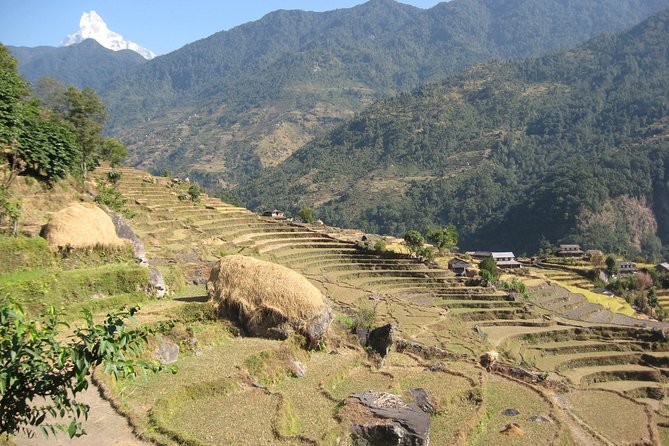
Your tour kicks off at 6:00 am, with a start point that’s near public transportation. From there, you’ll head from Kathmandu toward Pokhara, riding along the Baglung–Beni / Pokhara highway and passing areas with grand views of the Annapurna Himalayan range. Even before you hike, the scenery is doing its job.
This first day sets the tone. It’s not just transit; it’s your warm-up for what’s coming—wide valley views, mountain silhouettes in changing light, and the sense that you’re moving toward something special. If you’re the type who gets anxious about planning, this is where the “private and easy” part starts to matter.
You can also read our reviews of more tours and experiences in Kathmandu.



The walking days: rivers, farms, and the Annapurna rhythm
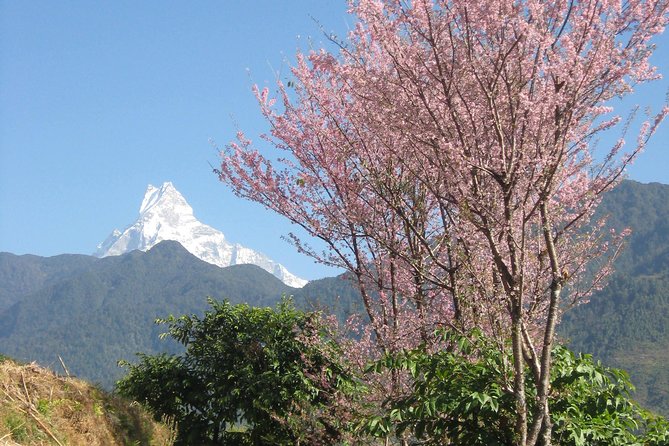
The trek follows a classic sense of Nepal hiking: you climb gradually through different climate zones, then you crest toward the viewpoints. You start from Nayapul / Bhirethati and work your way along the Modi River, fed by glaciers from the Annapurnas. That detail matters because it hints at why the trail feels alive—water, greenery, and seasonal variation.
You’ll pass through terraced farm country and traditional villages, including communities linked with Gurung and Magar heritage. You also get exposure to Tibetan-origin Poon tribe traditions, with Buddhist culture and a blend of Hindu practices. This is one of the underrated parts of Poon Hill treks: you’re not only chasing views, you’re watching how people live in the shadow of big mountains.
Expect a mix of gentle uphill stretches and “okay, now we’re climbing” segments. That’s why people call it a baby trek in tone, not in effort. It’s manageable if you’re reasonably fit and you keep your pace steady, but it still asks for good trekking habits: slow steps, regular breaks, and layers that handle temperature swings.
Tikhedhunga to Ghorepani: when the trail turns from warm to cool
As you move from Tikhedhunga (about 1,577 m) up toward Ghorepani (about 2,855 m), the air shifts. The route heads through warm-temperature zones with mild conditions at lower elevations, then gradually turns cooler as you climb higher.
A key moment on this climb is the village area around Ulleri, reached via stone steps. This is the part where your legs start talking back. The good news is that the steps tend to be broken up by rests, and the private guide setup means you can stop before you feel wrecked instead of only when the group catches up.
Higher up, the trail moves through an enchanting forested section with pines and oaks, and the vegetation changes as you enter an alpine feel. That shift is more than pretty scenery. It changes how the trail sounds underfoot, how the air feels on your skin, and even how you experience the climb—less humid, cooler, and often quieter.
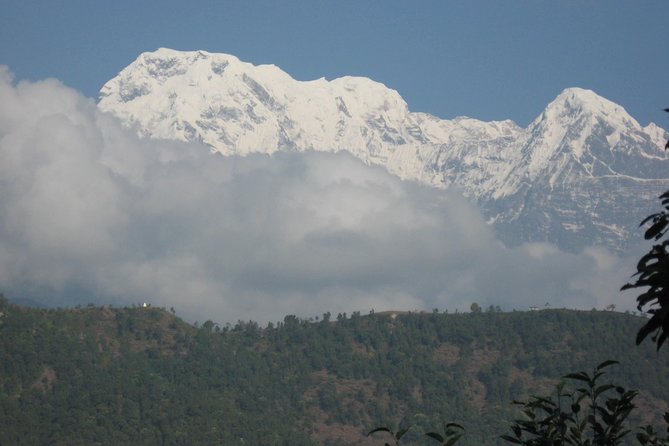
When you reach Ghorepani, you’ll do an overnight at a lodge. You’re high enough here (around 2,874 meters) to start seeing big-name peaks in the distance, including Dhaulagiri, Nilgiris, and Annapurna South on clear days.
Poon Hill sunrise: the viewpoint at 3,190 meters
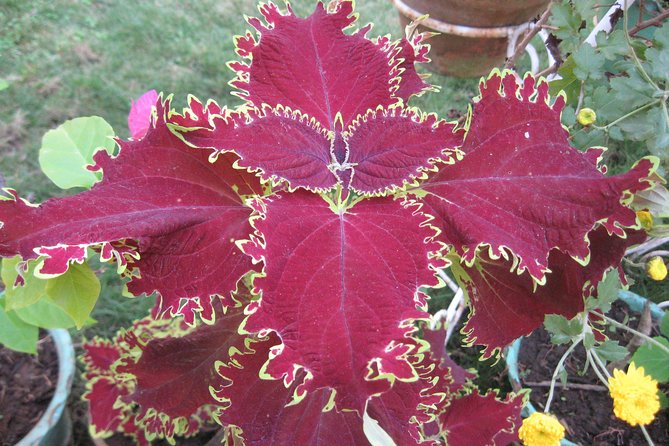
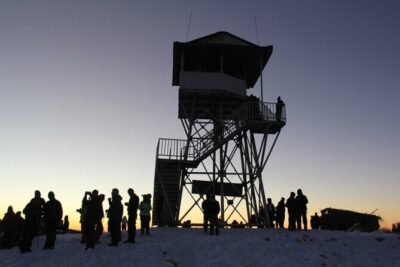
The main event is the early hike to Poon Hill, at about 3,190 m. You start in the early morning and walk through a forested area with rhododendron along the route. This is where the trek earns its reputation. You’re working, yes, but you’re doing it on a trail that feels alive with morning light.
Once you reach Poon Hill, the payoff is sunrise over the Himalaya. Clear conditions matter a lot here, and the good part is that the experience provider notes the trek requires good weather. If conditions are poor, you’ll be offered a different date or a full refund, which is important to know before you plan other flights or connections.
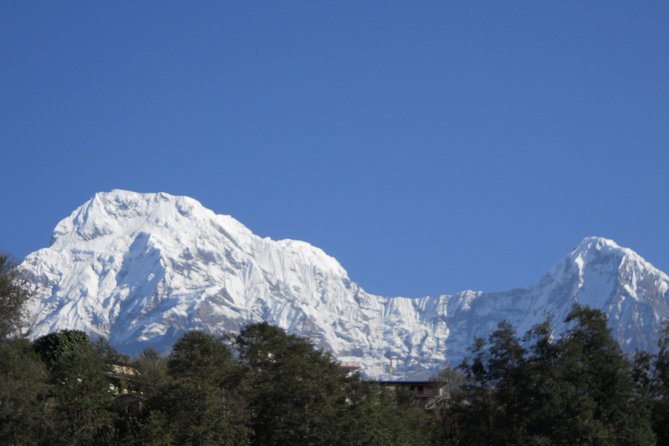
From the viewpoint, you can see a wide range of peaks, including Annapurna I (8,091 m), Annapurna South (7,219 m), Gangapurna (7,455 m), and Annapurna III (7,555 m). Machhapuchhre (6,997 m) is often mentioned in the view lineup too, and it’s the kind of peak hikers love because it looks distinctive even from far away.
This sunrise segment is also where the guides get extra credit. In past experiences with this operator, guides such as Thakur Dahal were praised as patient and professional, which is exactly what you want when you’re cold, sleepy, and trying to time your steps and your camera shots.
From Poon Hill to Ghandruk: views plus real village life
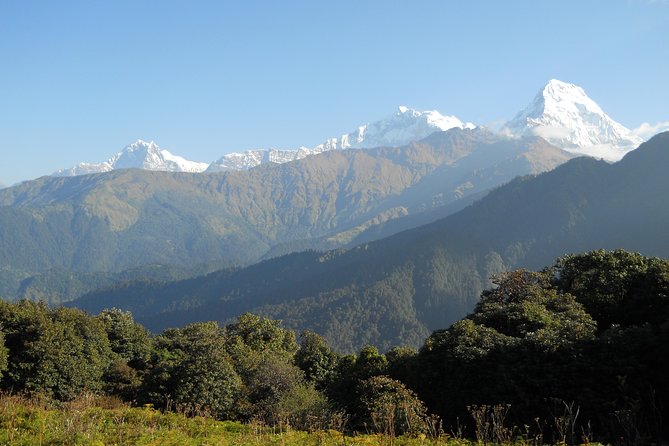
After the morning viewpoint, you head onward to Ghandruk (around 1,960 m). This part of the day is about moving from high-drama sunrise into a more village-centered rhythm.
Ghandruk is known for being a place where you feel the human side of the mountains. You’re not just looking up at peaks; you’re walking through terraces and settlements where the altitude isn’t an abstract idea. The guide helps connect the cultural dots as you pass through these communities, and that makes the time between viewpoints feel more meaningful.
If you’re the kind of traveler who likes to understand what you’re seeing, this is when the private format pays off. You can slow down for stories, ask about local life, and keep a pace that doesn’t leave you sprinting just to meet a timetable.




Ghandruk to Pokhara via Birethanti: the long descent day
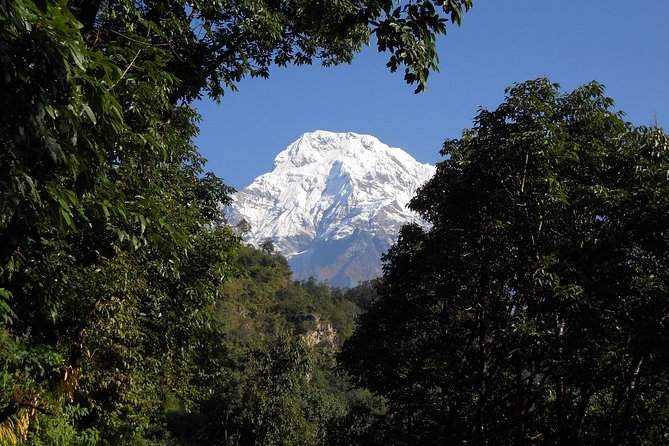
On the next day, you head from Ghandruk down toward Pokhara via Birethanti (around 1,040 m). Descents are their own kind of work. Even when the grade eases, your body has to manage repeated step-down impacts, especially if you go too fast.
This is a good day to drink consistently, take knee-friendly steps, and use the guidance you have on hand. A private guide is helpful because they can judge how you’re feeling and adjust breaks without making you feel pressured.
By the end of the hike day, you’re back in the Pokhara area and shifting from trekking mode to travel mode. From there, you finish with a ride back to Kathmandu the following day.
Guide and logistics: why people remember this tour
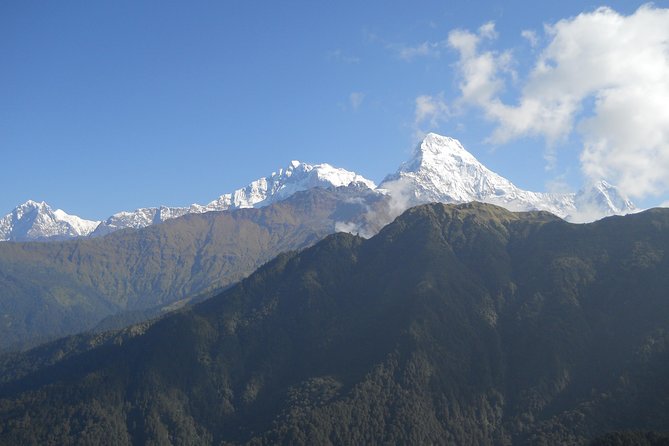
What stands out most from feedback on this trek isn’t just the views. It’s the way the whole thing runs.
The organization and logistics get high marks for being smooth, and the guide support gets singled out too. One guest specifically mentioned being supported with a lot of professionalism during the stay, with a guide named Buddhi described as benevolent and creating a calm atmosphere during the trek. Another guest highlighted Thakur Dahal as patient and professional.
That matters because Poon Hill is popular. When things are tight—late starts, unclear meeting points, or mismatched pacing—the experience can feel stressful. Here, the private setup and included transfers reduce those friction points. It’s not about being flashy; it’s about keeping the trek feeling steady from start to finish.
Food, lodging, and what is actually included
This is an all-in-one trekking package for your core expenses. You’ll have breakfast, lunch, and dinner, plus coffee and/or tea. You’ll also have 6 nights accommodation arranged as part of the trek, with stays in lodges along the route.
National park fees and local taxes are included, along with “all taxes, fees and handling charges,” which helps you avoid surprise add-ons later. You also get a professional guide and round-trip private transfer by bus, plus hotel drop-off (selected hotels only).
What’s not included is also useful to know. You’ll need to plan for drinks and alcoholic drinks if you want them. Souvenir photos are available to purchase. Trekking gear is not included, so you’ll want your own shoes, layers, and daypack. A porter is not included, which means if you’re carrying heavier items, you’ll need to plan how you’ll manage weight.
If you prefer to travel hands-free, you might feel better traveling with lighter personal gear. The trekking is short in number of days, but the walking still adds up, and your body will care what you carry.
What the $900 price covers, and when it feels like a win
At $900 per person, this trek isn’t a budget “everyone gets shuffled into a group” deal. You’re paying for a private tour plus a professional guide, lodge nights, meals, and private transport.
It feels like good value if you want:
- fewer planning headaches (you’re not matching buses and trailheads on your own),
- consistent meals and lodging without juggling your spending each day,
- a flexible pace suited to your fitness and comfort level,
- and a calmer experience that’s easier to manage if you’re traveling solo or with family.
It may feel less attractive if you already love independent travel and you’re happy to set up logistics yourself, or if you plan to use minimal guide support and do most planning in advance.
Either way, check what kind of comfort you want. This is a lodge-based trek, not a hotel-based luxury trip, so your expectation should be “comfortable and practical,” not “5-star.”
Who this Poon Hill trek suits best
This tour is a strong fit for hikers who want a classic route with big morning rewards, but who don’t want to spend their vacation doing logistics.
I think it’s especially good for:
- first-time Nepal hikers who want guidance and pacing,
- travelers who want cultural context as they walk through Gurung and Magar areas,
- couples or small groups who like privacy,
- and anyone who values a calm, organized experience.
Minimum age is 9, and children must be accompanied by an adult. Most travelers can participate, but you still need to be realistic about altitude and the physical effort of a multi-day climb.
Dress code is listed as smart casual, which makes sense for travel days and lodge life. On hiking days, you’ll still want proper trekking layers and footwear. Keep it practical and you’ll be happiest.
Quick practical notes before you lock it in
You’ll need to provide passport name, number, expiry, and country at booking for all participants. Start time is 6:00 am, so plan your sleep and packing around that.
Also note that the experience provider mentions it may be operated by a multi-lingual guide, so you might not get the exact same language support every time. If language matters, you’ll want to ask ahead.
And yes, the trek requires good weather. That affects sunrise conditions and the overall experience, which is why the plan includes a fallback if weather disrupts things.
Should you book this private Poon Hill trek?
Book it if you want an organized, private trek where your biggest job is showing up and walking. The mix of Ghorepani overnight plus the early sunrise hike is the core reason to do Poon Hill, and this package does a good job removing the usual stress—transport, meals, lodge stays, and guide support are handled for you.
Don’t book it if you’re set on carrying everything yourself, you’re chasing ultra-low costs, or you hate early mornings and chilly starts. Even with a private guide, the sunrise timing is part of the deal.
If you’re hoping for a smooth trek with professional guidance, calm logistics, and the kind of mountain views that make everyone quiet for a minute, this is a very solid choice.
FAQ
What time does the tour start?
The start time is 6:00 am.
Is pickup and hotel drop-off included?
Pickup is offered, and hotel drop-off is included for selected hotels.
Are meals and accommodation included?
Yes. You get breakfast, lunch, dinner, and 6 nights accommodation arranged as part of the trek.
What’s included in the price besides the trek?
The package includes a professional guide, private tour, round-trip private transfers by bus, coffee and/or tea, national park fees, and all taxes/fees/handling charges.
What is the minimum age to join?
The minimum age is 9, and children must be accompanied by an adult.
Do I need to provide passport details?
Yes. You must provide passport name, number, expiry, and country at booking for all participants.
Is a porter or flights included?
A porter is not included, and domestic flights are not included.