REVIEW · MHAMID
3-day trek – In the shade of palm trees
Book on Viator →Operated by L'oiseau du désert · Bookable on Viator
Palm shade in the Sahara sounds almost fake. This 3-day trek from M’Hamid El Ghizlane gives you that contrast fast, with a walk under palm trees plus nights under a huge starry sky with a desert bird team of camel drivers, guides, and cooks.
I really like the human side of it: you spend time at Marabout Sidi Naji, tied to the Nouajis, and you follow paths where herds and nomads have moved for generations. I also like the included food and bivouac gear, so you’re not stuck figuring out meals and basics while you’re trying to enjoy the desert.
One thing to plan around: this trek asks for moderate fitness, and you’ll need to bring your own sleeping bag since it’s not included.
In This Review
- Key things that make this trek worth your time
- Walking from M’Hamid into the Palm Grove Shade
- Marabout Sidi Naji: tribe ancestry, firelight, and night sky
- Bertham dunes and the clues left by nomads
- Ostriches, herds, and how Day 2 keeps the pace realistic
- Hamada stone desert on the return: fossils and the story of wells
- Price and logistics: what you pay for, and what you still bring
- Who this trek is best for (and who should think twice)
- Packing for a 3-day bivouac without adding stress
- Should you book this shaded-palm Sahara trek?
- FAQ
- What time does the trek start?
- How long is the trek?
- Is it private or shared with other groups?
- Where does it start and end?
- What’s included in the price?
- Do I need to bring a sleeping bag?
- Do I need an admission ticket for the stops?
- What is the cancellation policy?
Key things that make this trek worth your time
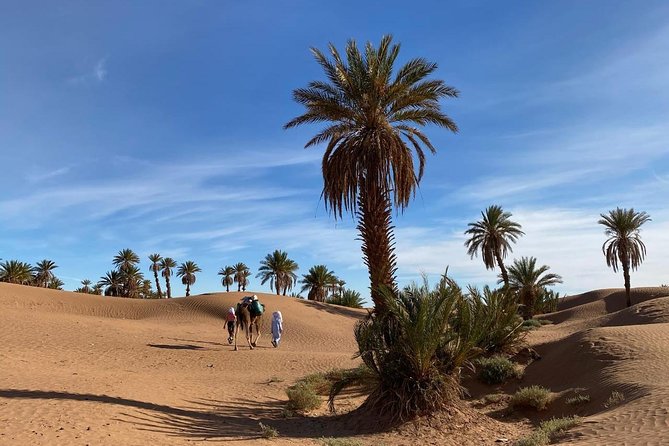
- Palm grove start in M’Hamid El Ghizlane with a shaded meal early on
- Marabout Sidi Naji overnight with an evening around the fire
- Bertham dunes on Day 2 where you can spot old traces of nomads and herds
- Bivouac near ostrich plains where flocks are still kept
- Hamada stone desert on the way back with possible fossils or treasures
- Desert Bird team guidance (camel drivers, guides, and cooks) plus a small, private-group feel
Walking from M’Hamid into the Palm Grove Shade
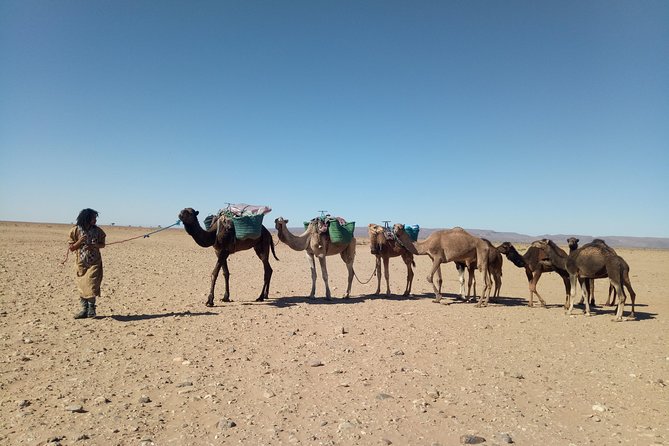
Your day starts at 8:00 am in M’Hamid, and the caravan heads out from M’Hamid El Ghizlane. The first change of scenery is the point: you cross the palm grove near the village, not just open desert. It’s a great warm-up, both physically and mentally, because the shade makes the early walking feel more manageable.
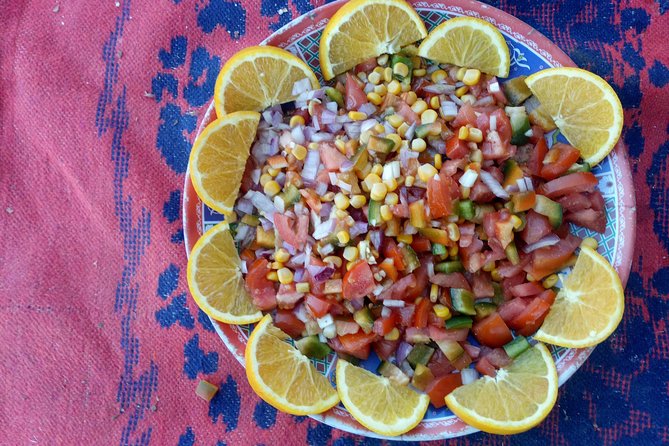
Right after you begin, you stop for a meal in the palm trees’ shade. That early break matters. It sets a slower rhythm for the rest of the trek, and it helps you adjust to desert conditions without feeling like you’re racing the landscape.
This trek is private, meaning it’s just your group with the desert bird team. That usually leads to more relaxed conversations and a better chance to ask questions, especially about local traditions and how life works out here.
You can also read our reviews of more tours and experiences in MHamid.
Marabout Sidi Naji: tribe ancestry, firelight, and night sky
On Day 1, after the palm grove, the walk continues toward Marabout Sidi Naji, described as a sanctuary for the ancestor of the Nouajis tribe. You’re not just hiking dunes for photos. You’re moving through places that carry meaning for people who call this part of the Sahara home.
By late day, the team sets up the bivouac at the sanctuary for your overnight. You spend the evening around the fire under a sky full of stars. In this kind of setting, it’s easy to feel how night changes everything out in the desert—sound fades, the air cools, and the group naturally slows down.
From the guide side, the tone sounds intentionally welcoming. In past experiences, names like Hassan and Bachir (and other team members such as Bakar, Ibrahim, and Mohammed) have been singled out for friendly guidance. That matters because desert travel can feel intimidating on paper. A calm, cheerful team helps you feel safe and cared for without turning the experience into a performance.
Bertham dunes and the clues left by nomads
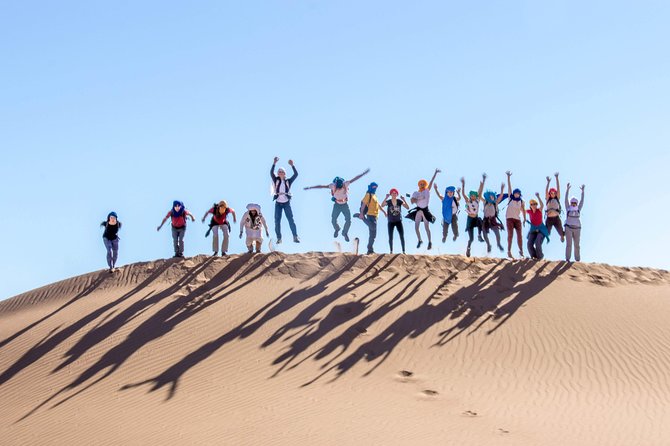
Day 2 shifts from palms to dunes. You head to the magnificent dunes of Bertham, where you can see traces of nomads and their herds from earlier times. It’s not just a view stop; it’s more like following the faint handwriting of past routes.
What I like about this approach is that it makes the desert feel lived-in, even when it looks empty from a distance. Instead of treating the Sahara as a backdrop, you’re paying attention to how animals and people used this space.
The overnight bivouac brings you near the plains of ostriches, where nomads still keep their flocks. That’s another useful contrast: you’re seeing both history and something ongoing. You get the sense that the Sahara isn’t frozen in time—it’s a working environment.
Ostriches, herds, and how Day 2 keeps the pace realistic
Day 2 also includes breakfast, so you start the morning with real energy instead of starting cold and tired. Since meals are included across the days, you’re less likely to spend time worrying about timing, food runs, or improvising in remote areas.
This day is also where the trek’s “moderate fitness” label becomes real in your legs. If you’re used to daily walks, you’ll likely settle into it. If you’re coming from a long travel day or you hate heat, you’ll want to pace yourself and let the guide’s rhythm set yours.
The goal here isn’t speed. It’s motion with enough stops—plus enough comfort at the bivouacs—that you can actually enjoy the desert’s feel. That’s how people end up making desert friends, too. Several experiences mention forming quick bonds around camp, especially with guides who talk, laugh, and explain what you’re seeing.
Hamada stone desert on the return: fossils and the story of wells
On Day 3, you return to M’Hamid through the hamada, a stone desert. The hamada matters because it changes the ground under your feet. Instead of soft dunes, you move across rockier terrain where the desert looks tougher and older.
It’s also where you might find fossils or other treasures. That phrasing is important: it’s a chance, not a promise. Still, the fact that fossils are possible makes the trek feel more than just scenery. You’re walking through a place where time shows up in physical evidence.
You also stop at wells, which are described as real meeting places in the desert. That’s one of those details that stays with me. Wells aren’t just functional—they’re social nodes. In places where water is precious, gathering points shape communities, routes, and daily life.
After the well stop, you say goodbye to the caravan and head back. The experience ends back at the meeting point, so you’re not left scrambling to figure out transport at the end of a long trek.
Price and logistics: what you pay for, and what you still bring
The price is $424.09 per person for about three days. For many people, that price feels high until you look at what’s included: the trek covers your eating and sleeping equipment, plus all fees and taxes. On top of that, you get 3 lunches, 2 breakfasts, and 2 dinners. That’s a big part of the real value, because it removes the “desert math” problem where you’re trying to calculate food and timing while far from services.
Also, pickup is offered, which helps if you’re arriving from elsewhere in Morocco. The tour uses a mobile ticket, which tends to make check-in smoother. You’re near public transportation too, so you’re not totally isolated even before you start the trek.
What’s not included is just as important:
- Sleeping bag (you bring your own)
- Private transportation (you arrange how you get to the start)
If you only pack what you’re told you must carry, it’s easier to enjoy the trek without feeling weighed down. But you should also plan for cold at night, because in desert conditions temperatures can drop, especially during bivouacs. Since your sleeping bag is on you, don’t treat that part lightly.
Who this trek is best for (and who should think twice)
This trek works best if you want a tradition-and-people desert experience, not only a sand-and-sunset photo mission. The route includes meaningful stops like Marabout Sidi Naji, plus areas connected to nomad herds and daily desert movement.
It also fits well if you want a guided experience that feels friendly and family-like. Multiple accounts describe the guides as warm and genuinely helpful, plus the sense that the team is organized enough to keep the experience easy for first-timers. If you’re traveling with friends or as a couple, you’re also likely to enjoy the shared camp vibe—firelight, conversation, and that slow desert pace.
If you hate physical effort or you’re not comfortable with a few days of walking, this might feel like too much. The moderate fitness requirement is clear. If you’re unsure, ask yourself one question: can you handle a full day of walking without needing constant breaks? If not, you might prefer a shorter or less active option.
Packing for a 3-day bivouac without adding stress
Because you’re bringing a sleeping bag, that’s your big packing decision. Get one that works for cooler night temperatures where you’ll be sleeping outdoors. If you’ve never slept outside in the desert, it’s worth taking that seriously.
Footwear is another practical item. In past experiences, people mention purchases adapted to desert life, including a cheche and sandals, so the idea is to dress for sun, dust, and walking comfort. If you don’t already have desert-suitable items, you’ll likely appreciate having help getting them before or during the trip.
Beyond that, keep your packing simple. Your focus is walking, conversation, and the night sky—not hauling a suitcase into the Sahara.
Should you book this shaded-palm Sahara trek?
Book it if you want your Sahara experience to start with palm shade, include culturally meaningful stops like Marabout Sidi Naji, and end with the return route through hamada stones and well stops. You’ll also get solid value for the money because meals and key equipment are handled for you.
Don’t book it if you’re looking for a totally effortless walk or if you don’t want to take responsibility for your own sleeping bag. Also, if you dream of a weeks-long trek, three days will feel like a quick taste. But for many first-timers, that’s the sweet spot: enough time to feel the desert, not so long that the whole experience becomes logistics.
Overall, this trek seems built around a simple idea: you leave knowing the desert as a place shaped by people, herds, wells, and traditions—one calm day at a time.
FAQ
What time does the trek start?
The meeting time is 8:00 am in M’Hamid, Morocco.
How long is the trek?
It lasts 3 days (approximately).
Is it private or shared with other groups?
It’s a private tour/activity, so only your group participates.
Where does it start and end?
It starts in M’Hamid, Morocco and ends back at the same meeting point.
What’s included in the price?
Included are eating and sleeping equipment, all fees and taxes, 3 lunches, 2 breakfasts, and 2 dinners.
Do I need to bring a sleeping bag?
Yes. A sleeping bag is not included, so you’ll need to bring your own.
Do I need an admission ticket for the stops?
The information lists Admission Ticket Free for each day’s stop.
What is the cancellation policy?
You can cancel up to 6 days in advance for a full refund. Cancel 2–6 days before for a 50% refund. If you cancel less than 2 days before, you won’t receive a refund. Changes under 6 days (and under 2 days for partial/full policy timing) aren’t accepted, based on local time cut-offs.
If you want, tell me when you’re traveling (rough month is fine) and whether you’re coming in from Marrakech or staying closer to M’Hamid, and I’ll help you think through what timing and packing will feel easiest.