REVIEW · MHAMID
Morocco desert trek dromedary Mhamid dunes
Book on Viator →Operated by travel to desert · Bookable on Viator
Camelback nights in the Sahara feel unreal. This M’Hamid desert trek gives you a full rhythm of Sahara time: afternoon riding, a sunset break, then an early morning sunrise and return by late morning.
What I love most is the mix of big desert visuals with human scale. You’re not just looking at immense dunes and hammada (rocky desert), you may also meet Berber nomadic families depending on the season and where they are moving.
One thing to consider: this experience depends on good weather, and you should expect a real ride on a dromedary, not a gentle sightseeing stroll.
In This Review
- Key things that make this Sahara trek work
- Two Days in M’Hamid: The Desert Pace You’re Really Paying For
- From M’Hamid to the Sahara: What the Ride Actually Feels Like
- Hammada, Tamarisks, and Dunes: Scenes You Won’t Get From a Day Trip
- Nomadic Life on the Route: The Part That Depends on the Season
- Sunset in the Dunes: Why This Trip Builds Toward Golden Hour
- Dinner, Overnight Accommodation, and the Comfort Factor
- Sunrise and Outdoor Breakfast: The Morning That Finishes the Story
- Price and Logistics: Is $112 Good Value?
- Who This Camel Trek Suits Best (and Who Should Rethink It)
- Should You Book This M’Hamid Desert Camel Trek?
- FAQ
- How long is the Morocco desert camel trek from M’Hamid?
- When does the experience start and when do I return to M’Hamid?
- What’s included in the price?
- Is this a private tour?
- Does it require good weather?
- What is the cancellation policy?
Key things that make this Sahara trek work
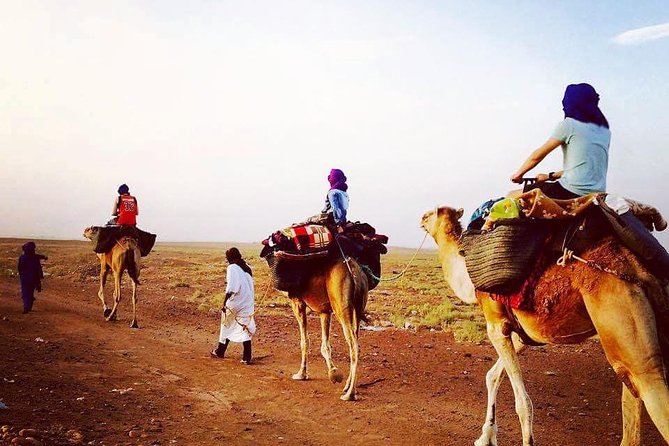
- Afternoon start for sunset timing: you get the day’s light shift without rushing.
- Camelback through hammada and tamarisks: you’re riding across more than just sand.
- Nomadic life you might actually meet: the chance to see real desert routines varies by season.
- Camp dinner + overnight stay included: you’re not scrambling for logistics after the ride.
- Sunrise with outdoor breakfast: the morning isn’t just early; it’s built into the experience.
- A private group setup: your group stays together with only your party.
Two Days in M’Hamid: The Desert Pace You’re Really Paying For
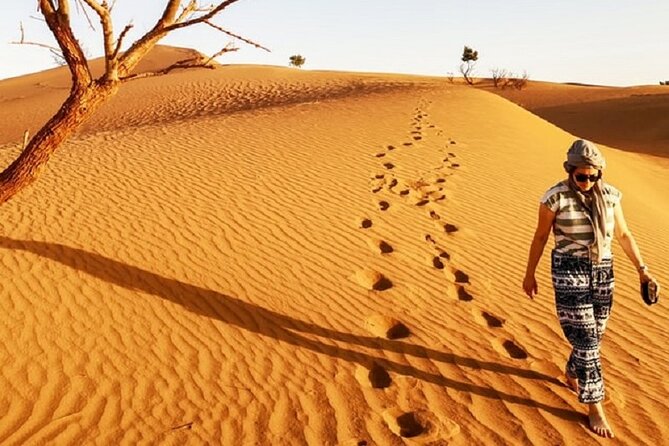
This is the kind of Morocco desert trek that feels simple on paper: two days, one camel route, one camp night. But the value comes from the pacing. You start in the afternoon, ride into the Sahara’s open space, and build toward golden-hour moments rather than spending the first hours staring at a vehicle schedule.
You also get an experience that’s structured around the desert’s own clock. Sunset isn’t tacked on at the end. Sunrise is the next morning’s centerpiece, followed by breakfast outdoors before you head back to M’Hamid (arrival expected around 10:00 am). That timing matters, because it turns the trek into a story, not a checklist.
The price—about $112 for a private-style, all-in desert night with meals—makes sense when you factor in what’s included: dinner, overnight accommodation, breakfast, and coffee/tea. In the desert, food and lodging are not “extras.” They are the core of the whole experience.
You can also read our reviews of more tours and experiences in MHamid.
From M’Hamid to the Sahara: What the Ride Actually Feels Like
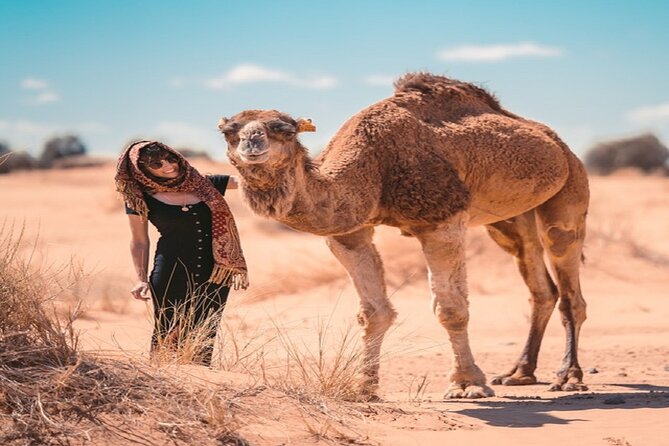
The trek begins in the afternoon with you on a dromedary. That ride is the main activity, and it changes how you experience the terrain. Instead of moving quickly past views, you move slowly enough to notice details: the stark hammada terrain, patches where tamarisks grow, and then the long push toward sand dunes.
This is where you’ll feel the advantage of a trek that’s built for the desert, not just transportation. Camel riding forces a quieter pace. You’re up close to how the desert looks from ground level—rock textures, the way paths form, and the gradual shift in the horizon as the dunes get taller.
Your guide also plays a big role here. Reviews mention hosts like Abdoul taking care with details, and another response name, Abderrahmane, appears as the team member guiding guests through the experience. That attention is what makes the ride feel smooth and safe, especially when you’re moving through a wide-open area where you’re fully dependent on the group.
Hammada, Tamarisks, and Dunes: Scenes You Won’t Get From a Day Trip
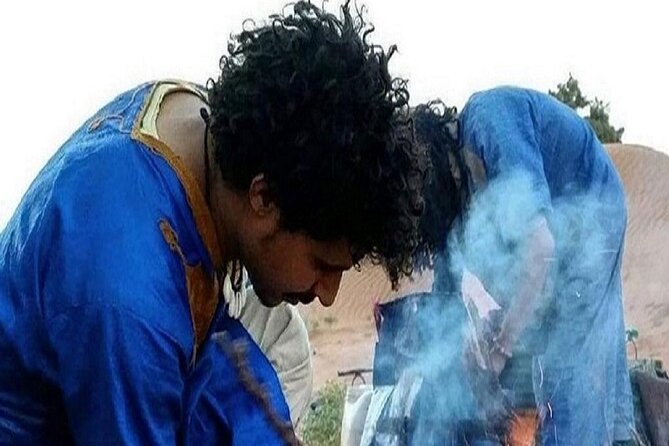
A lot of desert outings compress everything into a single day. This one stretches the time, so you see more of the Sahara’s mix of surfaces.
You’ll likely pass through areas described as hammada, which are rocky, stony stretches that don’t look like classic sand dunes at first glance. That contrast is a big part of what makes the trek feel real. You’re not just walking around in one texture; you’re crossing different desert zones.
Then you move into the dune zone—those immense sand dunes that create huge, clean lines at sunset. Even if you’ve seen Sahara photos before, the scale hits differently when you’re riding toward it and standing close enough to feel how the sand changes under your feet.
And those tamarisks matter more than they sound. Trees like these break up the emptiness visually and create small pockets of life in the desert. When you see them during the ride, the scenery becomes less like a single postcard and more like a place with layers.
Nomadic Life on the Route: The Part That Depends on the Season
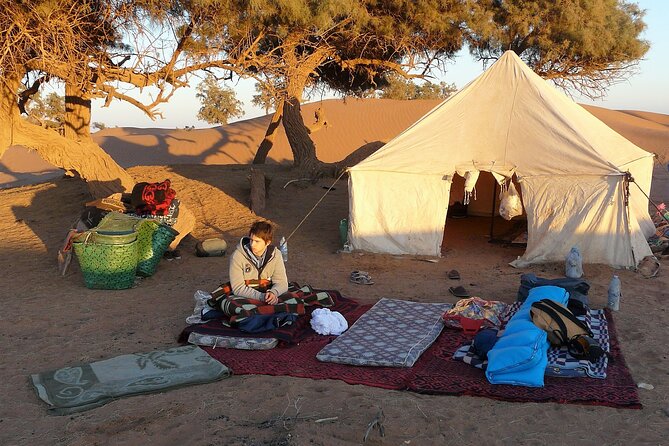
One of the most interesting promises here is also the most realistic: depending on the season and where nomads are moving, you may meet Berber nomadic families and see desert life firsthand.
This is valuable for two reasons. First, it gives the Sahara a human dimension—how people actually live where the environment sets the rules. Second, it reminds you that the desert isn’t empty. It’s used, worked, and understood by people who know the rhythms of it.
Of course, there’s no guarantee. The experience itself is transparent about this: it depends on the movement of nomadic families at the time you go. If you book with the expectation of meeting someone specific at a specific moment, you might feel disappointed. If you go with the mindset of being open to what the season offers, it can be one of the highlights.
Sunset in the Dunes: Why This Trip Builds Toward Golden Hour
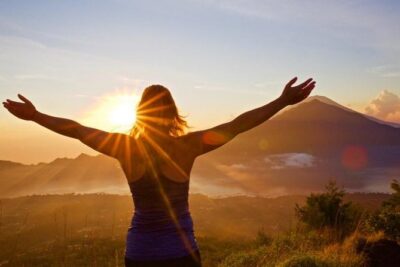
Later in the first day, you’ll enjoy a picturesque sunset. This is more than a scenic stop. It’s a built-in moment that changes the entire feel of the Sahara.
When you’re already out there—after riding and moving away from the village—you don’t experience sunset as a quick photo break. You experience it as a shift in mood and light across the dunes. The horizon softens. Shadows stretch. The whole setting goes quiet.
Some evenings also include camp atmosphere beyond just dinner. One review describes an ending around a campfire with music from the host and crew. That kind of warmth matters in the desert, because it adds a sense of welcome after a long day on camelback.


Dinner, Overnight Accommodation, and the Comfort Factor
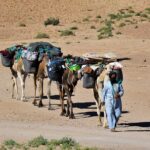
What you’re paying for here isn’t just “time in the dunes.” It’s the night sorted.
The trek includes:
- Dinner
- Overnight accommodation
- Coffee and/or tea
That means your first night is handled inside the experience. You’re not hunting for meals or deciding where to sleep after sunset. For many people, that’s a major reason to pick a guided desert trek in the first place.
One detail that comes through in reviews: there can be touches that make the night feel special, like fresh camel milk being served as part of the experience. It’s not listed as a guaranteed item in the basic info, so treat it as something you might be offered rather than a promise. But it’s a great example of the kind of local hospitality that tends to make these treks memorable.
Also, because this is described as a private tour/activity where only your group participates, you’re not stuck in a chaotic mix with strangers. That can make a big difference when you’re trying to relax, eat, and settle after a day outdoors.
Sunrise and Outdoor Breakfast: The Morning That Finishes the Story
The next morning starts with a truly desert-style moment: watch an unforgettable sunrise.
Then comes the meal that ties the experience together: breakfast served outdoors. Eating outside in the desert changes how food feels. It’s not just breakfast; it’s part of the atmosphere. You’re warm from the morning activity, and you’re watching the light return to a place that felt empty hours earlier.
This is also why the timing works. You don’t ride all day, sleep, then scramble for breakfast and leave immediately. The morning is structured. You get a real climax—sunrise—then the practical finish: returning to the village of M’Hamid, expected around 10:00 am.
If you like mornings that feel like a moment, not a routine, you’ll appreciate this part.
Price and Logistics: Is $112 Good Value?
At around $112 for about two days, you’re getting a package that includes the heavy costs: meal(s), overnight stay, and guiding through the desert with camel riding.
To judge value, I’d look at what’s included versus what’s usually left for you to figure out:
- Dinner and overnight accommodation are included.
- Breakfast is included.
- Coffee/tea are included.
- Pickup is offered (so you’re not necessarily dealing with all transport yourself).
- It’s set up as a private activity for your group.
Not included is tip, which is standard for guided experiences.
The biggest “logistics win” is that the trek is organized around the desert’s daily rhythm. Many cheaper options cut corners by skipping a real night experience or by turning sunrise into a quick, optional add-on. Here, sunrise and outdoor breakfast are part of the core plan.
One more thing: confirmation is received at booking time, and it’s a mobile ticket. That matters on travel days when you want less paperwork and fewer stress points.
Who This Camel Trek Suits Best (and Who Should Rethink It)
This trek is a good fit if you want:
- A real two-day desert experience rather than a one-day dash
- Camel riding as the main point, not a quick add-on
- Sunset and sunrise as planned moments
- A private setting for your group
A family example in the available feedback mentions kids around ages 14, 13, and 11 having the camel trek and night in camp as a highlight. That suggests it can work for families with older kids—assuming everyone is comfortable with the ride and the outdoor timing.
Where it may not fit as well:
- If you hate early mornings, sunrise stops will be a tough sell.
- If weather changes your plans, the experience can be affected because it requires good weather.
Should You Book This M’Hamid Desert Camel Trek?
Yes, you should book if you want a Sahara experience that’s built around the day’s light and an overnight night in the desert. The sunset + sunrise + outdoor breakfast structure is the real draw, and the included dinner and overnight make the price feel fair.
I’d book it with the right mindset: this is not “comfort city travel.” It’s a guided desert ride with outdoor meals, wide-open scenery, and a strong focus on being present in the Sahara.
If you’re hoping for guaranteed nomadic encounters, temper expectations. The chance to meet Berber nomadic families depends on the season and movement patterns. But if you like surprises that come from real desert life, that uncertainty can be part of the fun.
FAQ
How long is the Morocco desert camel trek from M’Hamid?
It’s approximately 2 days.
When does the experience start and when do I return to M’Hamid?
It starts in the afternoon. Return to the village of M’Hamid is expected around 10:00 am the next day.
What’s included in the price?
The tour includes dinner, overnight accommodation, breakfast, and coffee and/or tea.
Is this a private tour?
Yes. It’s a private tour/activity, and only your group will participate.
Does it require good weather?
Yes. The experience requires good weather. If it’s canceled due to poor weather, you’ll be offered a different date or a full refund.
What is the cancellation policy?
You can cancel for a full refund up to 24 hours before the experience’s start time. If you cancel less than 24 hours before, the amount you paid will not be refunded.