REVIEW · MHAMID
2-day trek – In the footsteps of beetles
Book on Viator →Operated by L'oiseau du désert · Bookable on Viator
Follow the desert on foot—then watch it change. This 2-day trek from M’Hamid El Ghizlane has you walking beside a dromedary caravan, following animal tracks and the green plants adapted to the Sahara edge, not just dunes. I like the guided, well-run setup and the chance to meet a team that often includes guides such as Bachir.
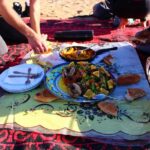
My other favorite part is the night by the fire: a bivouac toward the plain of ostriches with a proper meal and warm, caring hosting. I also like how the experience feels attentive and secure, with cooks like Baccarat turning dinner into something people remember.
Keep in mind this is on-foot travel with a moderate fitness level required, and a sleeping bag isn’t included. Plan for cooler desert nights and pack smart.
In This Review
- Key highlights you’ll actually care about
- Following the Sahara’s beetle trail: what this trek really is
- Day 1: M’Hamid El Ghizlane to the Bertham dunes on foot
- Day 1 camp: the ostriches plain bivouac and the fire vigil
- Day 2: breakfast, the Mazwrya caravan stop, and heading back
- The team matters: why organization and kindness are part of the value
- What’s included (and what you’ll need to plan around)
- Included in the price
- Not included
- Price and value: is $319.52 per person a good deal?
- Logistics that can save you stress on arrival
- Who this trek fits (and who should think twice)
- Should you book this 2-day trek in the footsteps of beetles?
- FAQ
- Where does the trek start and where does it end?
- What time does the experience start?
- How long is the trek?
- Is pickup available?
- What’s included in the price?
- Do I need to bring a sleeping bag?
- What fitness level do I need?
- Is this a private tour?
- What’s the cancellation policy?
Key highlights you’ll actually care about
- On-foot desert walking from M’Hamid El Ghizlane, not just riding in a vehicle
- Bivouac under the stars with a night vigil around the fire
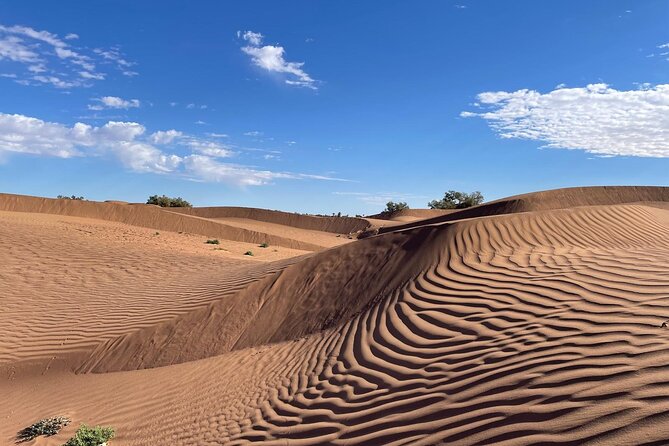
- Bertham dunes and nomad-era living tied to dromedary herds
- Mazwrya caravan meeting place connected to older Timbuktu trade routes
- Meals and sleeping/bivouac equipment included, but not a sleeping bag
Following the Sahara’s beetle trail: what this trek really is
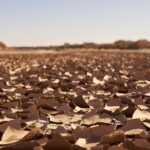
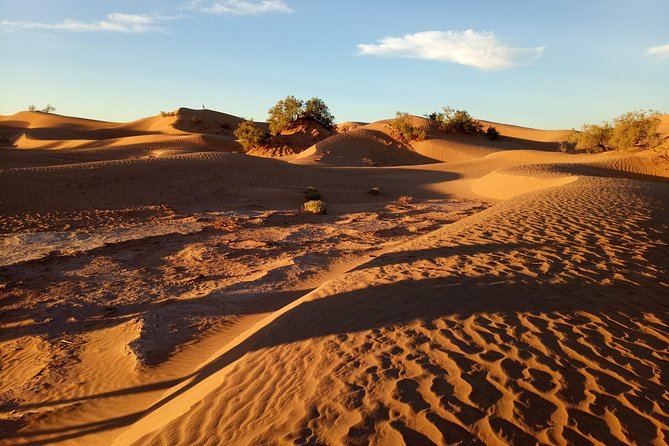
The title is called In the footsteps of beetles, and the vibe matches: this is about noticing what the desert life looks like when you slow down. You’re moving through the edge of the Sahara, where the dunes meet a greener, more plant-filled world than you might expect.
What I like here is that the trip isn’t just about reaching a viewpoint. It’s about learning how life moves through this region—through animals’ pathways, through old caravan stops, and through a nomadic way of eating and sleeping outdoors.
And yes, you’re still in the Sahara. You’ll see the dunes up close. But you’ll also understand the desert as a system, where plants have adapted and animals know the routes.
You can also read our reviews of more tours and experiences in MHamid.
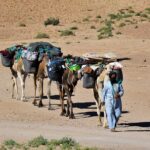
Day 1: M’Hamid El Ghizlane to the Bertham dunes on foot
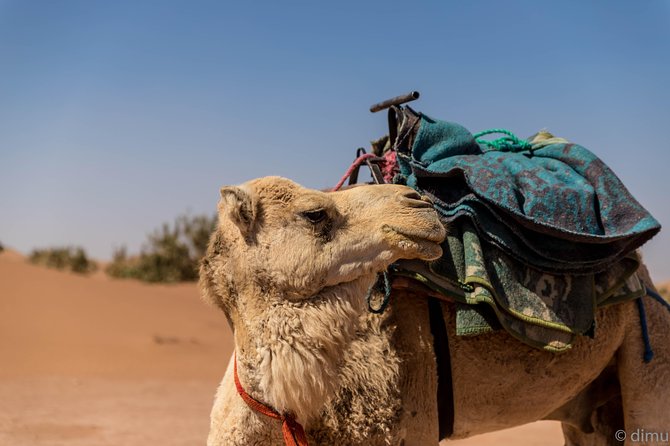
Your morning starts back in M’Hamid. The experience begins at 8:00 am, and you leave in the morning on foot. You’ll go with the caravan of dromedaries and the desert team—camel drivers, guides, and cooks all part of the moving group.
Then comes the main walking stretch: heading to the dunes of Bertham. This area matters because it’s tied to where nomads once lived with herds of dromedaries. The walk doesn’t feel like a checklist photo stop. It feels like you’re stepping into a route that people used for practical reasons—water, grazing, and movement with their animals.
What to expect on the walking
- It’s walking with real desert conditions. Heat, sand texture, and wind can change your pace fast.
- The tour is listed for people with a moderate physical fitness level—so if you can handle a couple of hours of steady hiking, you’re in the right zone.
Possible drawback to plan for
If you’re hoping for an easy stroll, this isn’t that. You’ll want good footwear and a calm attitude about sand and shifting footing.
Day 1 camp: the ostriches plain bivouac and the fire vigil
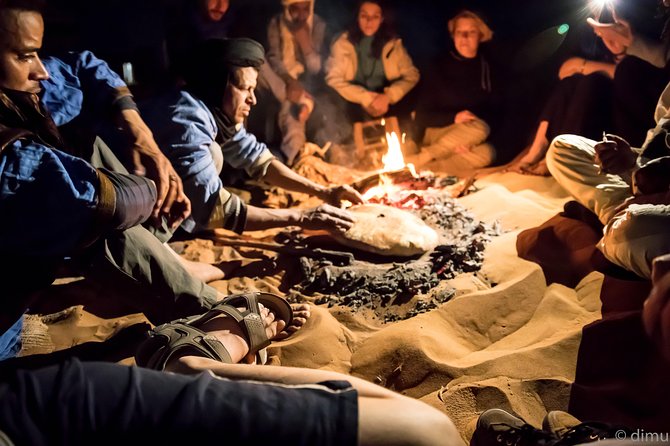
Later, you install the bivouac toward the plain of the ostriches. That phrase alone is a good clue: this is open desert space, the kind where the horizon matters and the night gets big fast.
Then the evening shifts into something more human than scenic. You’ll be part of a vigil around the fire, under a starry night sky. This is where the trip tends to land emotionally for most people.
The best part is the tone of the camp. The experience is repeatedly described as warm, respectful, and well handled. People talk about songs and chants around the fire and about feeling genuinely looked after. That’s not just friendliness—it’s also practical. A good team keeps the group together, watches the comfort levels, and makes sure the night runs smoothly.
Important gear note
You’re provided with eating and sleeping equipment. But you still need to bring or arrange a sleeping bag, since it’s explicitly not included. If you only pack for daytime heat, you’ll feel it at night.
Day 2: breakfast, the Mazwrya caravan stop, and heading back
After a good breakfast, you set out again on foot. The destination on day two is Mazwrya, described as a meeting place for caravans coming from Timbuktu not long ago.
That detail matters. It turns your walk into more than scenery. You’re retracing a human network of movement—people coming and going, trading, resting, and coordinating routes. Even if your trek is short, that historical layer gives weight to the landscape in a grounded way.
After reaching the breakaway point at midday, there’s a lunch, then it’s time to take direction back toward M’Hamid. The description also mentions taking leave of the caravan after this “beautiful breakaway,” which tells you the day is paced to give you a real pause, not just a rushed start-to-finish sprint.
The team matters: why organization and kindness are part of the value
This trek is built around a team system: camel drivers for the caravan, guides for navigation and group care, and cooks for meals and camp setup. That’s not a bonus feature. It’s the engine that makes a short desert trip feel safe, smooth, and memorable.
Names that show up around this style of experience include Hassan, Bachir, Mohammed, Zacky, Bakar, and the cook Baccarat. You may meet one or more of these people, depending on the date and staffing.
And what people praise most is not just charisma—it’s the basics done well:
- Top organization (the day flows, timing makes sense)
- Security (you don’t feel lost or uncertain)
- Benevolence and warmth (you’re treated like a real person, not a transaction)
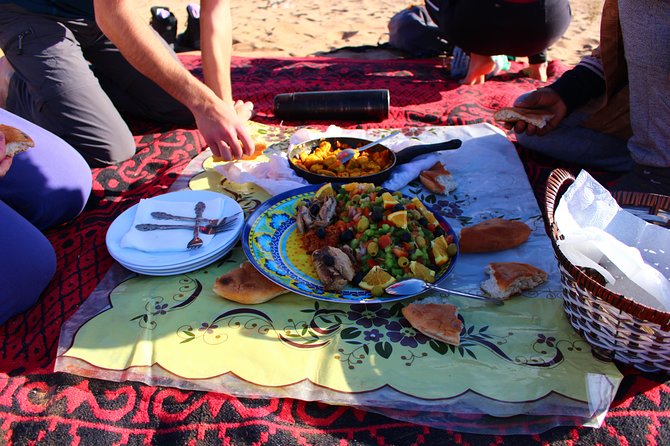
- Great meals (camp cooking is a highlight, especially dinner)
If you’re doing your first Sahara trek, this kind of team can make the difference between a “scenic outing” and a “I want to remember this forever” trip.
What’s included (and what you’ll need to plan around)
Here’s where the real-world value shows up.
Included in the price
- Breakfast
- Lunch (2)
- Dinner (2)
- All fees and taxes
- Eating and sleeping equipment
Not included
- Private transportation
- Sleeping bag
This means the cost covers your core desert time—food and the camp setup gear. But you still need to handle two common gaps:
- How you reach the start in M’Hamid (pickup is offered, but private transportation isn’t included as a standard line item)
- Your sleeping bag, so you stay comfortable through the night
My practical tip: pack a light layer for nighttime, even if you’re thinking about desert heat in the day.
Price and value: is $319.52 per person a good deal?
At $319.52 per person for about 2 days, the deal is strongest when you factor in what’s included: two days of meals plus camp equipment. Many cheaper “desert experiences” lure you in with a lower base price, then hit you later for food, guide support, or camp setup.
Here, you’re paying for:
- On-foot trekking
- A staffed camel caravan environment
- Camp cooking and outdoor meals
- The equipment used for eating and sleeping setup
The two things that add cost or planning are also straightforward:
- You might pay for transport to the meeting point unless pickup arrangements work for you
- You must bring/arrange a sleeping bag
So the value check is simple: if you want an organized, human-run desert camp with food and camp equipment included, this price is pretty reasonable. If you already have everything (including a sleeping bag and easy transport), the experience becomes even better value.
Logistics that can save you stress on arrival
A few details from the tour setup can help you avoid last-minute surprises.
- Pickup is offered: if you’re staying somewhere near enough to coordinate pickup, ask about the plan before you go.
- Mobile ticket: you’ll have a digital ticket for entry/use.
- Private tour/activity: it’s only your group. That matters because desert pace is easier to manage when everyone’s in the same rhythm.
- Near public transportation: if you’re not getting pickup, you may still be able to reach the start more easily.
Also, the experience starts at 8:00 am. Don’t plan a late breakfast that morning unless you like rushing.
Who this trek fits (and who should think twice)
This trek fits best if you want a desert experience that’s social, structured, and outdoorsy—but not extreme.
You’ll likely love it if you:
- Prefer walking in the desert over sitting in a vehicle all day
- Want a short trip that still includes fire, stargazing, and camp meals
- Value a team that feels caring and secure (this is what stands out repeatedly)
- Are traveling solo, with friends, or in a small group and want a private experience
You might want to rethink it if you:
- Need a very low-effort trip. The experience requires moderate physical fitness
- Don’t have a sleeping bag and don’t want to arrange one
- Hate cold nights outdoors. Even with equipment provided, sleeping bag comfort is a big factor
Should you book this 2-day trek in the footsteps of beetles?
If your goal is a short, well-run Sahara adventure with real camp life—walking, a bivouac, fire nights, and a team that takes care of you—this is an easy yes. The strongest points are the camp atmosphere and the way the trek is organized: the combination of security, warmth, and meals makes the desert feel welcoming rather than intimidating.
Before you book, do two quick checks:
- Are you comfortable with moderate walking on sand?
- Can you handle night comfort by bringing a sleeping bag?
If those are yes, you’re set for a memorable two days in the Sahara’s “green edge” world—where the desert isn’t empty. It’s alive.
FAQ
Where does the trek start and where does it end?
The trek starts in M’Hamid, Morocco and ends back at the same meeting point.
What time does the experience start?
The start time is 8:00 am.
How long is the trek?
It’s a 2-day trek (approx.).
Is pickup available?
Pickup is offered, but private transportation is listed as not included.
What’s included in the price?
The experience includes breakfast, lunch (2), dinner (2), all fees and taxes, and eating and sleeping equipment.
Do I need to bring a sleeping bag?
Yes. A sleeping bag is not included.
What fitness level do I need?
You should have a moderate physical fitness level.
Is this a private tour?
Yes. It’s listed as a private tour/activity, so only your group participates.
What’s the cancellation policy?
You can cancel up to 6 days in advance for a full refund. Canceling 2–6 days before the start gives a 50% refund. Canceling less than 2 days before the start isn’t refundable.