REVIEW · MHAMID
6 days trekking To The heart of Desert
Book on Viator →Operated by Desertbrise Travel · Bookable on Viator
The dunes steal your watch and your stress. This 6-day Sahara trek runs on sunrise and sunset timing, with a camel caravan handling luggage while you walk and pause in real desert quiet. I love the built-in culture stops on the way from Marrakech, especially Ait Benhaddou, and I love the way the days are paced around the sun instead of forcing you to rush. The main drawback is that you do need a moderate fitness level for 3 to 5 hours of daily walking on sand and mixed ground.
Day one starts early and you’ll cross the High Atlas via the Tichka Pass, with Berber villages and kasbahs along the drive. If you want a “soft adventure” where comfort comes from good guiding, camel support, and planned breaks, this fits. If you want a purely relaxing desert cruise with no walking, you may feel the trek part.
In This Review
- Key highlights to know before you go
- Marrakech to the High Atlas: setting the tone before M’Hamid
- A first taste of Saharan life: M’Hamid, palm grove tea, and Sidi Naji
- Erg Zahar day: mixed ground, a hard-working schedule, and sunset rewards
- Across Lahdybat and the Draa Valley: tamarisk roads and wild-camel country
- Trek back to M’Hamid: a shower, a quieter pace, and wrapping up day five
- The ride back to Marrakech: one last Atlas horizon
- Why the DesertBrise team matters on a trek like this
- Price and value: what $999.74 really buys you
- What to pack, and how to pace yourself with the sun
- Who this trek suits best (and who should think twice)
- Should you book this 6-day heart of the desert trek?
- FAQ
- How long is the trek?
- Where does it start, and what time?
- Is it a private tour?
- How much walking should I expect?
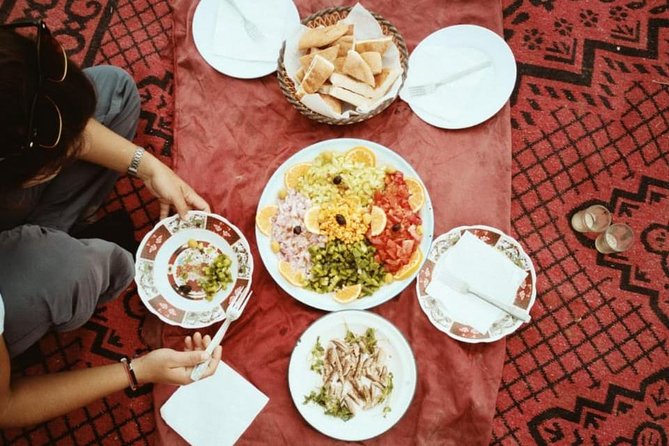
- What meals are included?
- What’s included in the price?
- What is not included?
- Can I cancel for a full refund?
Key highlights to know before you go
- Erg Zahar timing: dune riding near sunset and big views toward the Algerian border
- Sidi Naji sanctuary stop: a spiritual place tied to local oral tradition
- Ait Benhaddou en route: UNESCO kasbah that also shows up in Hollywood-era fame
- Camel caravan logistics: your luggage rides while you focus on walking the sand
- Tamarisk-shade breaks: tea and lunches planned around heat and rest
- Well-run team: Khalil as manager plus guides like Abdo, Ali, and Mohamed (depending on your group)
Marrakech to the High Atlas: setting the tone before M’Hamid
You begin in Marrakech early in the day, meeting at Hôtel Restaurant Café de France near Jemaa el-Fna, with an 8:00 am start. The drive climbs through the High Atlas Mountains by way of Tichka Pass (2260 m), Morocco’s highest road pass, where the views open up fast and the roads feel like they were designed for panoramic stops.
Along the way, you pass Berber villages and stop at kasbahs, including Tamnougalte and the big one: Ait Benhaddou. This UNESCO site is a 16th-century kasbah with a look that’s instantly recognizable even if you’ve never been there. It’s also known as a famous filming location, so it has that extra layer of “wait, I’ve seen this on screen” energy.
Then the route moves into the Draa river valley, famous for palm-lined stretches and the date-growing region around Zagora. After that, you continue to the desert gate and reach M’Hamid, where dinner and your first night happen in a nomadic-style camp setup. Day one is the ramp-up: you’re not in the dunes yet, but you’re already feeling the shift from city rhythm to desert rhythm.
You can also read our reviews of more tours and experiences in MHamid.
A first taste of Saharan life: M’Hamid, palm grove tea, and Sidi Naji
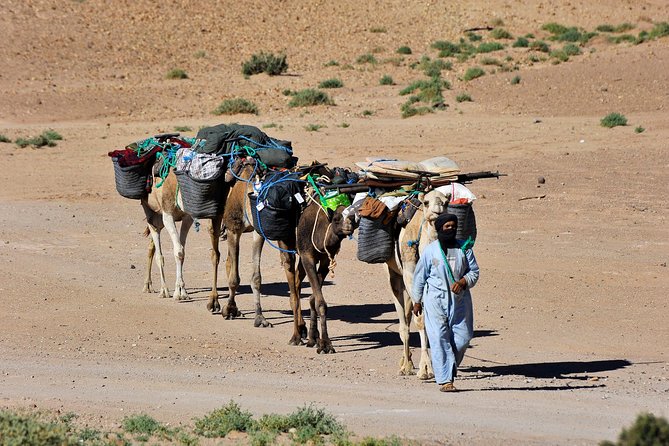
After breakfast in camp, your day shifts from driving to walking in a very straightforward way. From M’Hamid, you head on foot with a guide and the camel caravan behind you, which matters because it keeps your effort focused on the trail instead of hauling your own gear.
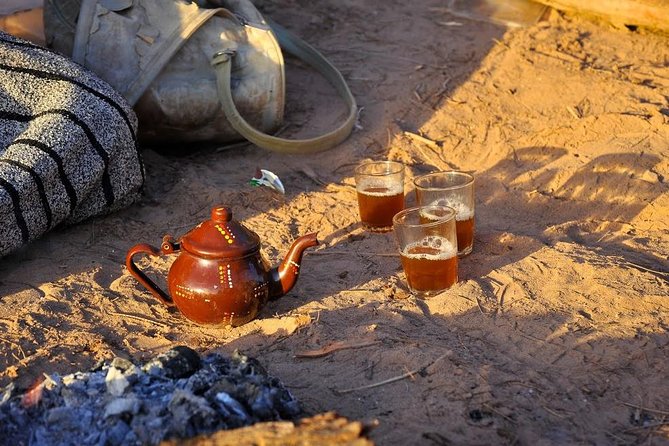
Your first movement is toward a palm grove, where you get tea and lunch served in the shade of tamaris trees. That shade break is more than comfortable; it’s also a reminder that this trek runs on sun timing. You’re not just “walking until tired,” you’re moving with the day.
Later, you head to the sanctuary of Sidi Naji. Local oral tradition says this marabout lived there, along with 18 grandfathers, which gives the stop a meaningful, place-based feeling rather than treating it like a random sightseeing stop. You finish by setting a bivouac at the foot of the dunes, where the night air and quiet do most of the entertainment for you.
If you like travel that’s part nature and part human stories, this is one of the days that clicks. It’s also a good day to pay attention to what shoes and clothing feel best, because the next day’s sand gets more intense.
Erg Zahar day: mixed ground, a hard-working schedule, and sunset rewards
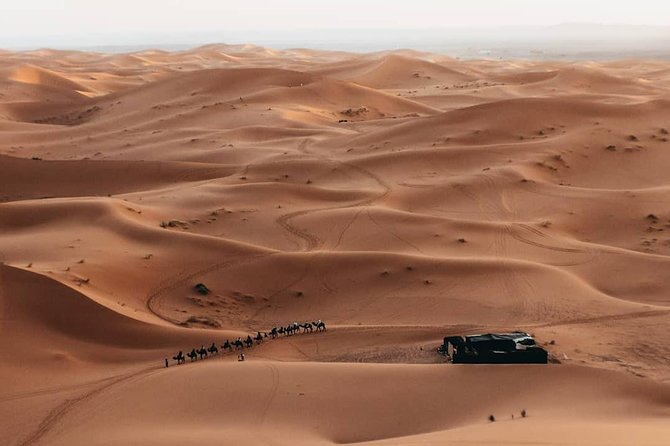
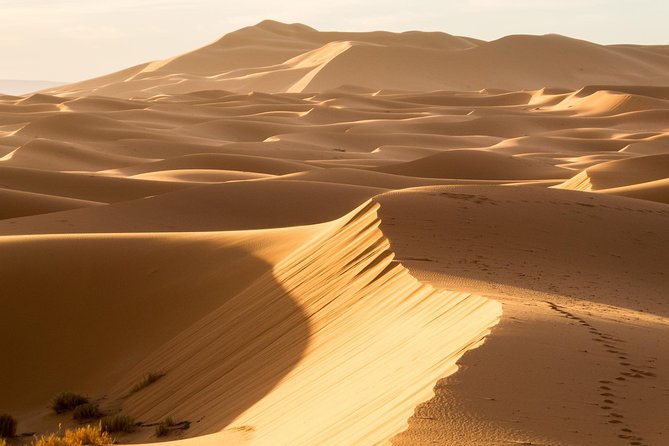
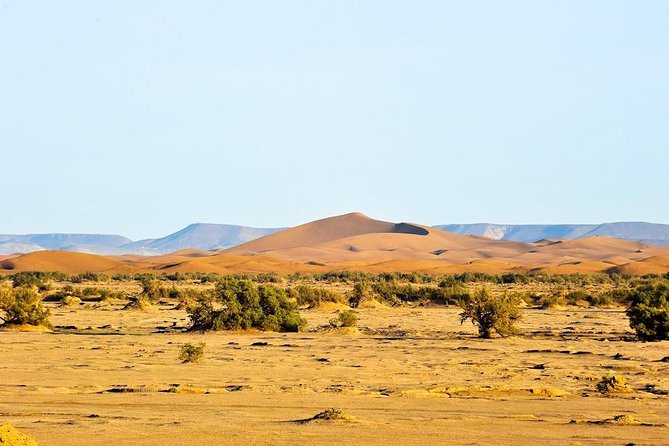
This is the day the desert starts to feel big in a way you can’t fake. You leave the holy place and head toward Erg Zahar, described as the third biggest dune in the M’Hamid desert. The walk is about 4 hours total, split into 2 hours in the morning and 2 hours in the evening.
The terrain is a mix of plateau and sand, so this is where good shoes stop being a suggestion. You’ll want footwear that grips and doesn’t collapse when the ground turns soft, because that mix can wear you out faster than you expect.
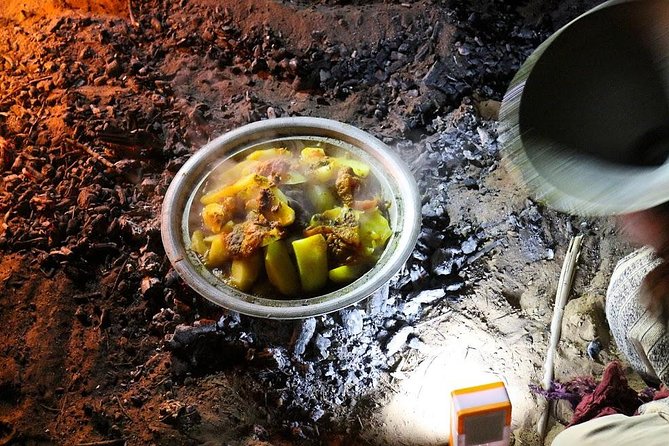
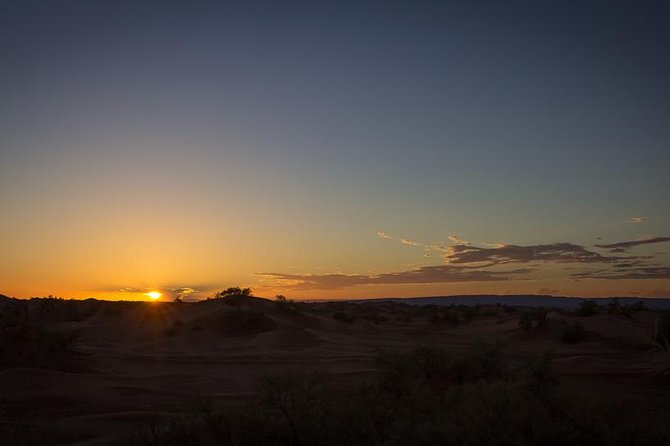
Around midday, lunch and a rest happen under tamaris shade, then you continue to reach the camp area in the erg. One of the most memorable moments here is the combination of dune time and planned timing: you’ll ride the dune for sunset, with views that can include the Algerian border. This is also the day where you get hands-on desert food moments, including making sandbread and tajin.
What I like about this day is that it balances effort with payoff. You don’t walk nonstop for hours; you get the rhythm—movement, break, nap, then another push. If you’re someone who gets cranky without a schedule, you’ll probably appreciate how structured it is.
Across Lahdybat and the Draa Valley: tamarisk roads and wild-camel country
The morning after Erg Zahar keeps the pacing steady. You head across to Kraat jamal, crossing through Lahdybat, with lunch served along the way. The route here is described as a road with tamarisk trees, so you’re not just surrounded by sand—there’s also this scrubby green shade network that can make the trek feel less harsh.
Then you cross into the Draa Valley and move toward what becomes your last night in the desert. One of the more striking details here is that you’ll stay in a place described as full of wild camels. Whether you see them clearly or only notice them occasionally, the setting alone helps the trip feel less like a theme park and more like you’re in a living desert environment.
This day also helps you mentally adjust. After Erg Zahar, the desert might feel like it’s all dunes, all the time. But this section reminds you it’s a whole region: roads, valleys, trees, and animals, not just a sea of sand.
Trek back to M’Hamid: a shower, a quieter pace, and wrapping up day five
Day five turns the page from “going deeper” to “coming back.” With the morning breeze, you start walking back toward M’Hamid, with about 3 hours on foot before reaching camp.
Once you arrive, you get the kind of comfort that makes desert treks worth it: there’s time to shower, then lunch, and then you spend the night again in M’Hamid. That night is important because it’s not just sleep—it’s the decompression phase. You’re likely tired, dusted off, and ready for regular human rhythms again, even if it’s still camp life.
This is also a good time to reflect on what you learned by walking the dunes. The trek doesn’t just show you desert scenery; it teaches you how quickly your body adapts to a slower pace when the day is structured. When you stop moving with urgency, everything gets calmer.
The ride back to Marrakech: one last Atlas horizon
Early on day six, you depart for Marrakech and retrace much of the northbound drive route. The journey feels long on the clock—about 15 hours—but it’s familiar from the way day one climbs and bends through the mountains.
You should expect to arrive late afternoon back at your Marrakech end point, returning to the same general meeting area. The desert part of your brain might still be running on sunrise timing, so arriving into city noise can feel a bit like a culture shock. That’s normal. The trip is built so you leave the desert, not so you bolt out of it.
Why the DesertBrise team matters on a trek like this
The strongest praise across experiences like this usually lands on one thing: organization. Here, the operational side seems to be handled by Khalil, described as friendly and efficient as manager, and you may also work with guides such as Abdo, Ali, and Mohamed.
On a multi-day trek, good management isn’t just nice—it affects everything: when you eat, when you rest, how the camel caravan keeps moving with you, and how smoothly you set up camp at night. When the group is small and the plan is steady, you feel safer and you’re more likely to enjoy the desert instead of thinking about logistics every hour.
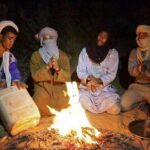
You also get genuine cultural texture around the camps. In the experience you’ll likely encounter camp moments that include stories and music around the fire, which is where the trek becomes more than just dunes and steps. That human warmth is often the difference between a pretty trip and a life-in-your-head memory.
Price and value: what $999.74 really buys you
At $999.74 per person for roughly 6 days, this is not a budget day trip. But desert treks rarely are, because you’re paying for transportation time, guiding, and the camel-and-camp system that runs the whole show.
Here’s the value picture in practical terms:
- 5 nights accommodation across camp and desert bivouac nights
- Driver/guide support throughout the Morocco-to-desert-to-Marrakech route
- Meals that are mostly handled: breakfast (6), lunch (5), dinner (6)
- Bottled water, plus coffee and/or tea
- Local taxes included
- Private tour feel: only your group participates
What’s not included is food and drinks beyond what the package covers, so you’ll want to budget for extras. Still, with meals built in across most days, you’re not constantly hunting for snacks during the walking hours.
If you hate spending your trip energy coordinating people and moving parts, this package style can feel like good value. You’re buying time, calm, and a working team rather than just transportation to a desert viewpoint.
What to pack, and how to pace yourself with the sun
The trek is described as living according to the rhythm and intensity of the sun, which means your best strategy is to pack and dress for quick changes and steady effort. The walking schedule includes longer sand sections, so focus on comfort and grip. The day toward Erg Zahar explicitly involves mixed plateau and sand, so sturdy footwear is a must, not a maybe.
Plan your mindset too. You’ll get structured walking chunks, shade lunches under tamaris, and planned camp nights—so you don’t need to try to turn this into a personal endurance contest. If you show up ready to move, rest, and repeat, the whole trip feels smoother.
Also, bring practical desert common sense: protect your head and skin, and keep hydration in mind, especially since you’re out in open conditions while walking and traveling. The trek includes bottled water, but you’ll still want to use it wisely.
Finally, pack for dust. Sahara travel tends to get sandy in ways that don’t care about your itinerary. A small towel or cloth for wiping off can make evenings more comfortable.
Who this trek suits best (and who should think twice)
This is a solid fit if you want a moderate fitness desert hike with structure. The daily walking is described as roughly 3 to 5 hours, and the pacing is designed around sun timing and rest stops like shade lunches under tamaris.
It’s also a good choice for people who want camel assistance without feeling like they’re doing the entire desert on a vehicle. The trek’s signature is walking with luggage handled by the camel caravan, so you get effort and authenticity without the burden.
If you’re looking for a fully flat, easy stroll, think twice. Sand and mixed ground mean your legs work, especially on the Erg Zahar day. And if you dislike camp life or prefer constant indoor comfort, the bivouacs and nomadic camp nights may feel like too much.
Should you book this 6-day heart of the desert trek?
I’d book it if you want a desert trip with real rhythm: sunrise and sunset moments, a walk that’s structured instead of chaotic, and a team that seems to run tight. I also like that you don’t skip the route culture—Ait Benhaddou and the Atlas drive help you build meaning before you hit the dunes.
I’d hesitate if walking on sand isn’t your thing, or if you want zero-camp, zero-adventure travel. This is desert hiking with camel support, not a lounge vacation.
If you’re happy to trade schedules, screens, and city noise for silence, stories, and dunes that control the light, this one makes sense.
FAQ
How long is the trek?
It lasts about 6 days, with travel between Marrakech and M’Hamid plus 5 nights of accommodation/camping during the desert portion.
Where does it start, and what time?
It starts at Hôtel Restaurant Café de France near Jemaa el-Fna in Marrakech at 8:00 am.
Is it a private tour?
Yes. It’s described as a private tour/activity, so only your group participates.
How much walking should I expect?
You should plan for a moderate fitness level and roughly 3 to 5 hours of walking per day, depending on the day’s terrain and timing.
What meals are included?
Breakfast is included for 6 days, lunch for 5 days, and dinner for 6 days.
What’s included in the price?
The package includes 5 nights accommodation, a driver/guide, local taxes, bottled water, coffee and/or tea, and the meals (breakfast, lunch, dinner) listed in the itinerary.
What is not included?
Food and drinks beyond what’s included in the package are not included.
Can I cancel for a full refund?
Free cancellation is available up to 24 hours in advance for a full refund. If you cancel less than 24 hours before the start time, the amount you paid will not be refunded.