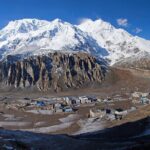
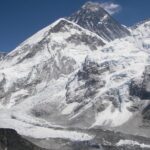
Manaslu Circuit is for people who want fewer crowds. This circular trek takes you from humid lowland terrace farms up into a cold, Tibetan-border world, with big suspension-bridge moments and that famous push to Larkya La Pass. It’s a remote-feeling trek with Buddhist culture along the way and glacier views that can look unreal on clear days.
Two things I really like: the mix of culture and scenery is constant, not random stops on a map, and the trek is set up with active acclimatization so you’re not just grinding uphill every day. From past groups, guides such as KP, Dilman, and Pemba stand out for pacing and problem-solving when altitude or weather gets tricky.
One possible drawback: this is a physically demanding trek. Even with acclimatization and a supportive team, you’re walking long days, dealing with rough tracks, and crossing a high pass where bad weather can make conditions serious.
In This Review
- Key highlights you’ll actually feel on the trek
- Manaslu Circuit: isolation, culture, and Himalayan scale
- Price and logistics: what $1,081 covers and what you’ll still plan for
- Day 1 Soti Khola: start-day transit and why it sets the tone
- Days 2–3 along the Bhuri Gandaki: sal forests, villages, and bridge-crossing nerves
- Day 4 Phillim checkpost and the Buddhist-feeling trail into Sirdibas
- Day 5 Namrung: landslide zones and a small-world detail that makes it human
- Day 6 Lho: mani walls, Tibetan dress influence, and views of Manaslu
- Days 7–8 Samagaun and Manaslu Base Camp: shorter walking, big mental payoff
- Days 9–10 Samdo: yak-country views and a border look (without crossing)
- Day 12 Larkya La Pass: the highest moment, plus weather realism
- The final days down: rough tracks, rhododendron forests, and Karche
- Guides and pacing: why the best part may be who walks beside you
- Who should book this Manaslu Circuit trek?
- Should you book it or not?
- FAQ
- How long is the Manaslu Circuit Trek?
- Where does the trip start and end?
- What is the highest point on the trek?
- Is pickup from Kathmandu included?
- Are meals included in the tour price?
- Do I need to bring a porter?
- Is free cancellation available?
Key highlights you’ll actually feel on the trek
- Restricted-area drama, without the chaos: permit checks at Phillim make it feel properly off-limits.
- The Bhuri Gandaki gorge vibe: icy turquoise water, falls, and bridges along the river.
- Suspension bridges plus careful footing: multiple crossings, and on some river edges you’ll need to stay on the safe side.
- Real acclimatization rhythm: rest is active, with options at Manaslu Base Camp and Samdo.
- Larkya La Pass timing matters: start early so you’re across before afternoon weather shifts.
- Guide quality shows on hard days: multiple guides (like KP and Dilman) are praised for altitude support and flexibility.
Manaslu Circuit: isolation, culture, and Himalayan scale
The Manaslu Circuit has a different personality than the more famous Annapurna route. Here, the trail still feels like a working corridor between villages. You’ll hike through terrace fields at the start, then slowly leave agriculture behind and move into yak-grazing country and stone-and-flag landscapes shaped by Tibetan influence.
What makes it especially compelling is how the trek keeps switching gears. One day you’re walking river bends past forests and waterfalls. The next you’re moving through villages with mani walls and prayer flags. Then you climb toward Larkya La Pass and the world turns crisp, spare, and glacier-bright.
If you like your mountains with breathing room—fewer trekkers, more silence between villages—Manaslu delivers. And if you love cultural details, it doesn’t feel like a side quest. Buddhist traditions show up as you drop and climb around gompas, prayer flags, and marked sacred river spots.
You can also read our reviews of more tours and experiences in Kathmandu.
Price and logistics: what $1,081 covers and what you’ll still plan for
At $1,081 per person for a roughly 14-day trip, you’re paying for a lot more than walking days. This price includes private transportation, all fees and taxes, and all the meals listed for 14 days (breakfast, lunch, and dinner). That matters because high-altitude trekking can get expensive fast once you’re buying food repeatedly in small villages.
You also get practical comforts for the start and finish: pickup is offered, plus mobile ticket access, which typically means fewer paper hassles once you’re in Kathmandu. You’ll also have transport options when you return—local jeep/bus combos or private jeep.
Two things to be ready for:
- Kathmandu hotel isn’t included, so budget for at least the night(s) you need in the city.
- Porter isn’t included, so you’ll need to decide if you’re carrying everything yourself. The terrain is demanding enough that many people prefer a porter to keep their pack light.
Value-wise, the deal makes the most sense if you’re the kind of trekker who wants everything running smoothly in the background—permits, logistics, meals—so you can focus on your pace and acclimatization.
Day 1 Soti Khola: start-day transit and why it sets the tone
Most people feel yesterday’s travel in their legs even if they’re excited for the trek. The route to the trail start (Soti Khola) can involve a long, dusty, bumpy drive, with options like bus or bus/jeep combos, plus private jeep for more control and comfort.
A key practical point: if you’re using shared options, lunch and toilet breaks tend to happen along the highway. With a private jeep, you can be more flexible about timing, which can help if you want to arrive calmer instead of stressed.
When the trekking actually begins, you’ll likely notice that the pace feels more real once you’re walking—less jolt, more rhythm. It’s a good day to mentally switch from city mode to trail mode.
Days 2–3 along the Bhuri Gandaki: sal forests, villages, and bridge-crossing nerves
On the way from Machhakhola to Jagat, the trek starts to feel wild. The roads behind you turn into narrow trail sections that hug rivers and cliffs. You pass through sal forests, along river paths, and near waterfalls—plus you’ll likely see mule trains moving goods between settlements.
Machhakhola feels like a classic early-circuit reality: rocky trail edges, narrow paths, and the sense that you’re stepping into a working landscape. There’s also a strong cultural moment at Nyali Khola. Locals and others pray to river and mountain deities, right there where the trail follows the river. It’s brief, but it gives you context for how seriously people take safety in the mountains.
A safety tip that matters: when you reach the rocky edge at Nyali Khola, stand on the hillside side, not toward the drop side, especially when traffic like mule trains comes through. That’s not the time to multitask with photos.
Day 3 continues by the Bhuri Gandaki on a twisting river trail. You cross the river by suspension bridges and then move onward. In forested sections, there’s a chance for monkeys and langurs. And when you reach Jagat, you’ll feel a shift: this is where you’re entering the Manaslu restricted area zone.
Day 4 Phillim checkpost and the Buddhist-feeling trail into Sirdibas
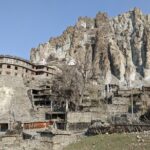
After Jagat, the route leans heavier into Buddhist atmosphere. You’ll spot prayer flags fluttering as you descend toward Sirdibas, and you can find gompas there. That’s not just decoration. It’s part of how people mark sacred space and travel through it with respect.
At Phillim, there’s a checkpost where your permit is inspected before you continue along the western bank. For many people, this is one of those moments that makes Manaslu feel legitimate—not just “off the beaten path” as a marketing line, but properly controlled and protected as a trekking region.
The walking stays tied to the river, but the feel changes again. You’ll see uniquely water-formed boulders and move through rhododendron and pine forests. Your day ends with a teahouse night in Pewa, where the meal rhythm is classic: dinner like dal bhat and a chance to rest before higher country.
Day 5 Namrung: landslide zones and a small-world detail that makes it human
Day 5 brings a different challenge: a landslide zone. This is the kind of section where your guide’s instructions become more important than your personal “I’ve got this” attitude. Slow down, watch your footing, and follow the safe line. In mountain travel, one careful step saves you from a whole week of regret.
The good news is that it doesn’t feel purely grim. You may see more monkeys, which can break up the tension. And when you reach Namrung, you get a reminder that this trek is not only scenery—it’s community life.
One of the most memorable practical touches here is how some places are upgrading quietly. Namrung includes a local business that returned from Hong Kong to build a hotel and restaurant, with good coffee and wifi. It’s not why you come, but it’s a nice signal of how real life continues even far from big cities.
Day 6 Lho: mani walls, Tibetan dress influence, and views of Manaslu
From Namrung to Lho, the trail starts to feel more Tibetan in vibe. You’ll pass mani walls, and you’ll see Tibetan Buddhism influence in daily village life. People may even wear traditional Tibetan dress, and that visual change helps you understand you’re getting closer to a different cultural borderland.
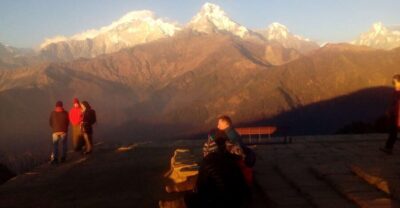
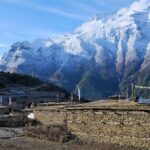
The walking through lush terraces and forests—fir, oak, rhododendron—gives you a break from “rocks and altitude anxiety.” But then the views sharpen again. Staying in Lho means you can look out on Manaslu (8,163m) and Manaslu North (7,157m). It’s the kind of panorama that makes you understand why people train months for this.
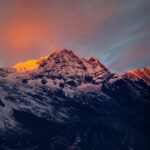
If you’re the type who loves photos, this is a good night to take them slowly. Light changes quickly at altitude, and the mountains can look different hour to hour.
Days 7–8 Samagaun and Manaslu Base Camp: shorter walking, big mental payoff
Day 7 into Samagaun is shorter as altitude ramps up. The morning includes strong Mt Manaslu views before you transition into yak pastures. You’ll pass through pine forests and a moss gully, and then arrive in Samagaun, the principal village of the Nubri people.
Samagaun has a noticeable “bigger village” feel for this trek: a large gompa, shops, a health post, a heliport, and even telephone/wifi access. That combination can feel like a lifeline if you’re not used to how remote it gets.
Day 8 is your main acclimatization day around Manaslu Base Camp. You’ll stay active rather than sitting still. Options can include hikes to Pungyen Gompa (east of the Nubri Valley), Manaslu Base Camp itself (about 4,400m), or Birendra Tal (lake). You typically have about a two-hour hike option, and you’ll eat packed lunch along the way.
A key practical idea: acclimatization here isn’t about doing nothing. It’s about moving slowly, hydrating, and giving your body time to adjust while still feeling like you did something productive.
Days 9–10 Samdo: yak-country views and a border look (without crossing)
Samdo is high-country flavor: broad valleys, yak pastures, and a sense of space. Day 9 includes time around this settlement and options like exploring nearby villages or hiking up to Samdo Peak where you can see the route toward Larkya La Pass and on to Tibet.
Day 10 is another acclimatization rhythm. You might go to viewpoints toward the Tibetan border. The trek doesn’t include actually crossing, but you may see yak caravans passing and you’ll likely scan the sky and ridgelines for wildlife. Blue sheep, pica’s, and marmots are possible.
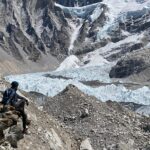
Glacier views are also part of the day. Looking south, you might see Samdo Glacier and a huge serac near the top. This is one of those days where the scenery makes your next step feel easier because you can finally see where you’re headed.
Day 12 Larkya La Pass: the highest moment, plus weather realism
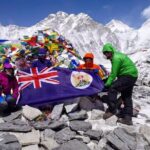
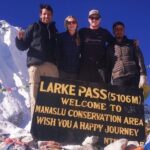
This is the day you plan your energy for. You cross Larkya La Pass at about 5,160–5,167m, and crampons may be needed, especially when conditions are snowy or icy. Bad weather can turn this into a serious challenge, so you don’t treat it like a casual summit walk.
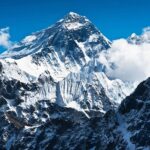
Timing matters. The plan is to get up early and cross before afternoon weather moves in. From the pass, the views open behind and ahead—huge glacial cirques and a dramatic view of the Annapurna range. You can see Himlung, Kang Guru, and Annapurna II, with Annapurna II towering above the other peaks in the region.
After the pass, you walk downhill for around three hours, passing huge icefalls and glacial terrain. You can also spot Pongkar Tal between the Pongkar and Salpudanda Glaciers. Then you end the day overnight in Bimthang, which gives you a calmer base before the final descent.
The final days down: rough tracks, rhododendron forests, and Karche
Day 13 moves you away from the high-pass world. You trek downhill through lush forests and rhododendron bushes. You stop for lunch in Karche Village, after crossing Dudh Khola.
This day also comes with practical warning signs: there are spots where you can see evidence of glacier floods, and the track can get rough. That’s when good pacing and attention help more than speed. Slow down, keep stable footing, and let the terrain guide your stride.
As you go lower, the valley becomes more alive again: you’ll pass agriculture and fields, and the trek starts feeling more like a normal human place. Day 14 returns you to Kathmandu by jeep or bus, so you trade altitude air for city noise.
Guides and pacing: why the best part may be who walks beside you
A Manaslu Circuit trek is never only about views. It’s also about how you move when your legs get tired and your breath turns shallow. That’s where the guide makes a difference.
In past groups, guides like KP are praised for being attentive and adapting on the fly to maximize weather windows. Dilman is specifically mentioned for support when altitude issues happen. Pemba gets credit for calm pacing that still gives you time for photos, while Sajan stands out for professionalism plus humor and cultural context. Narayan is noted for flexibility too, including adding a side trip and adjusting the plan to reach the pass earlier for better conditions.
Even the porters get called out: in multiple experiences they’re described as strong and playful, often nicknamed like little brothers. That kind of team energy matters more than people expect. When you’re tired, morale is a real piece of equipment.
So if you’re choosing this trek because you want comfort and predictability in a hard environment, focus on the human side: clear instructions, good pacing, and the ability to adjust when weather changes.
Who should book this Manaslu Circuit trek?
You’ll love it if:
- You’re physically fit and okay with long hiking days.
- You want a route that feels remote and culturally grounded, not a crowded stampede.
- You care about Buddhist landmarks and local village life as much as you care about peaks.
- You want real acclimatization built into the schedule, with activity choices at key points.
You might want to think twice if you’re looking for a short, low-stress trek, or if you dislike high-altitude crossings where crampons might be required.
This trek is a great fit for first-time Nepal trekkers who want a guided, structured approach. It also suits experienced hikers who want a challenging route with fewer crowds and more authenticity.
Should you book it or not?
If your goal is isolation plus big mountain reward, this is a strong choice. The trek’s value comes from how it’s put together: private transport, all listed meals, permit support, and a pacing system that includes acclimatization days you can actually feel in your body.
But don’t romanticize it. This is still a high-altitude circuit with real rough sections, including a landslide area and a serious pass day where conditions matter. If you’re prepared to walk steadily, follow instructions closely, and treat weather as part of the plan, you’ll be glad you booked.
FAQ
How long is the Manaslu Circuit Trek?
The trek runs about 14 days (approx.).
Where does the trip start and end?
It starts in Kathmandu (at Tribhuvan Airport) and ends back in Kathmandu.
What is the highest point on the trek?
The highest point is Larkya La Pass, around 5,160–5,167m.
Is pickup from Kathmandu included?
Yes, pickup is offered.
Are meals included in the tour price?
Yes. Breakfast (14), Lunch (14), and Dinner (14) are included.
Do I need to bring a porter?
A porter is not included, so you’ll need to plan on whether you carry your own load.
Is free cancellation available?
Yes, you can cancel for free up to 24 hours in advance of the experience start time for a full refund.