REVIEW · CHIANG RAI
One Day Trekking Chiang Rai Jungle Adventure and Bamboo Cooking
Book on Viator →Operated by ParnTrek · Bookable on Viator
A jungle day in Chiang Rai, built around food and people. This one-hour-tilt of a schedule is actually what makes it fun: village visits (Lisu, Chinese, and Akha-Lahu communities) plus walking through tea plantations, then finishing with a bamboo cooking lunch in a calm setting. I especially like that the day isn’t just scenery. You get hands-on with cooking using bamboo from the forest, and you’ll see daily life up close through short, village-based interactions.
The standout I’d point you to is the human side—when guides are on their game, the day turns from a checklist into something memorable. In at least one account, a guide named Jimmy led the trek and brought in local children’s games during village stops, which adds a real rhythm to the visits. The one consideration is practical and worth respecting: there’s at least one negative note about pickup and communication, so you’ll want to be proactive about confirming meeting details before you head out.
In This Review
- Key highlights at a glance
- What This Chiang Rai Jungle Day Feels Like
- Meeting at 9:00: Pickup Timing and How the Day Flows
- Village Walks: Lisu, Chinese, and Akha-Lahu Communities
- Tea Plantations and the Road to the Waterfall
- The Bamboo Cooking Lunch: Forest Bamboo, Real Food, Real Skills
- Group Size, Guide Energy, and ParnTrek’s Pace
- Price and Value for About $57.26
- Packing Tips for a 8–9 Hour Walk Day
- Should You Book This Chiang Rai Bamboo Adventure?
- FAQ
- FAQ
- How long is the Chiang Rai jungle trekking and bamboo cooking experience?
- What time does the tour start and when is pickup?
- Where does the itinerary begin?
- What does the bamboo cooking lunch include?
- Are transportation and tickets included?
- Which villages are visited during the trek?
- Is this tour physically demanding?
- Is the tour dependent on weather?
Key highlights at a glance
- Bamboo lunch in the jungle: Learn to cook with bamboo sourced from the forest and eat what you help make.
- Village stops across multiple communities: Lisu village, Chinese village, and Akha-Lahu/Lahu-area community visits.
- Tea plantation walking: A fragrant stretch through fresh tea leaves before the cooler waterfall break.
- Waterfall time for a reset: A chance to relax after hours of walking.
- Small group size: Up to 20 people, which generally keeps things from feeling too crowded.
- Pickup offered: A morning pickup window starting around 09:00–09:30.
What This Chiang Rai Jungle Day Feels Like
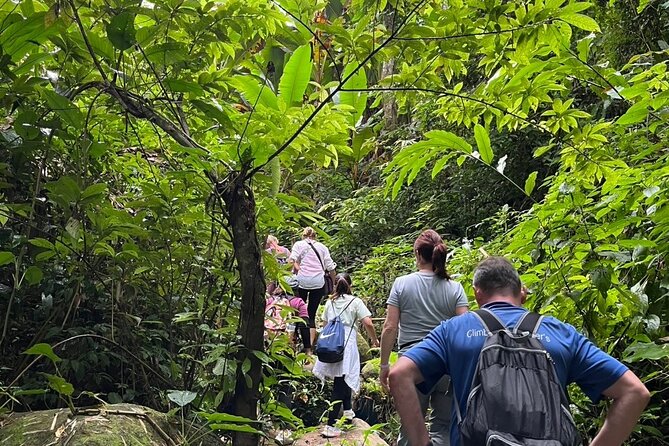
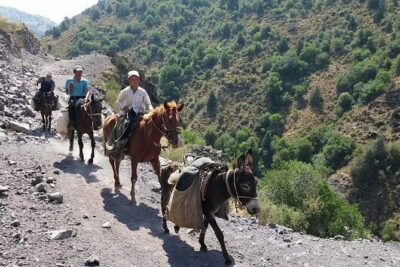
Think of this as a full-day walk with a clear storyline: morning culture, midday cooking, afternoon nature. The pace is built for people with at least moderate fitness, since you’re on trails and moving for roughly 8–9 hours. That’s not a complaint—it just means you should plan your energy like it’s a hike, not a museum.
What I like most is the balance. You’re not only doing nature. You’re also doing human culture in small segments—Lisu village first, then Chinese village, then Akha-Lahu-related community time—so the day has variety. And because the cooking portion is the anchor, you’re doing something active, not just watching.
You can also read our reviews of more tours and experiences in Chiang Rai.
Meeting at 9:00: Pickup Timing and How the Day Flows
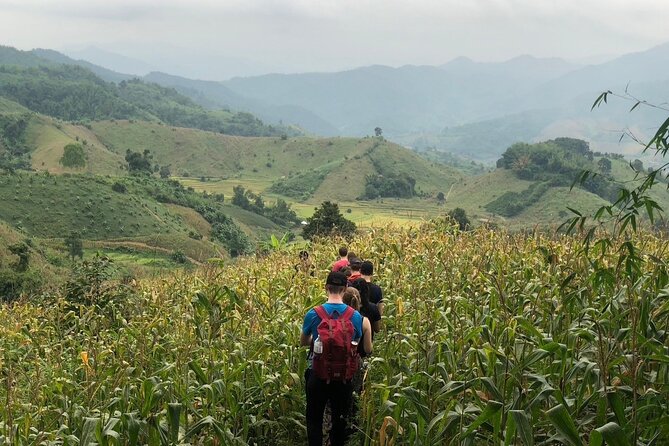
The day starts in the morning, with pickup typically between 09:00 and 09:30. That matters because it shifts your thinking. If you arrive too late, you’re likely to miss the first village segment and the tea plantation walk that builds momentum into the day.
Transportation is part of the plan, with shuttle service included, and the experience is run by ParnTrek. You’ll also get a mobile ticket, which is helpful if you’re trying to keep everything in one place.
One real-world tip from a trip-planning perspective: treat communication as your job, not just the operator’s job. If your pickup details seem unclear, confirm them the day before and save screenshots or message proof. There’s at least one case where the operator didn’t respond, and that’s the kind of failure you don’t want to gamble on.
Village Walks: Lisu, Chinese, and Akha-Lahu Communities
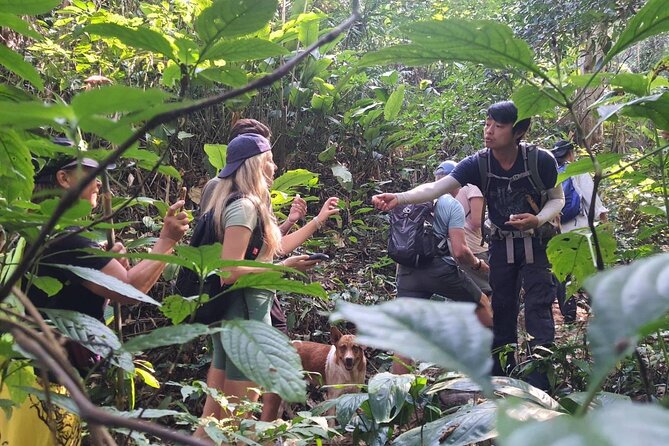
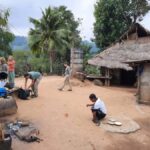
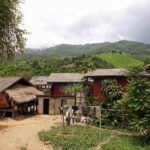
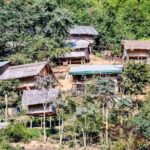
Village time is the cultural core of this outing. The itinerary moves through several communities—Lisu village, then a Chinese village, and then the Akha-Lahu villages. You should expect a series of short visits rather than a single long hangout, so the most you’ll gain is perspective, not a deep, overnight-level understanding.
Here’s what makes this structure work for you: you’re seeing multiple cultural threads in a single day, and your brain doesn’t get bored because the scenery and social setting changes at each stop. In one highlight account, the guide named Jimmy also introduced traditional children’s games during village time. That kind of detail can turn a quick stop into something you remember, because it’s playful and local, not staged.
A consideration: since these are lived-in communities, be ready to be respectful and low-impact. Keep your voice down, follow your guide’s lead, and don’t assume you’re there to take control of the experience.
Tea Plantations and the Road to the Waterfall
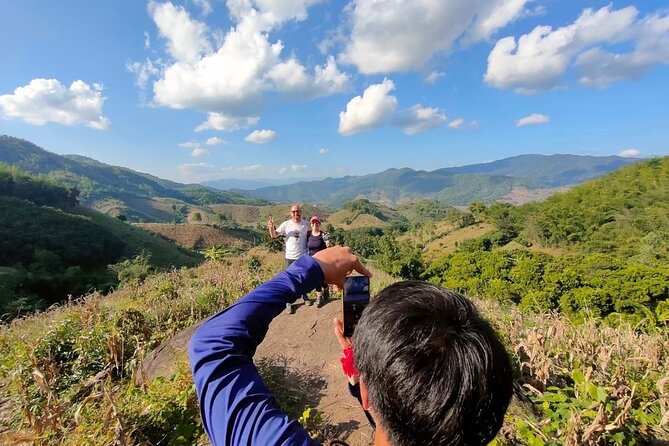
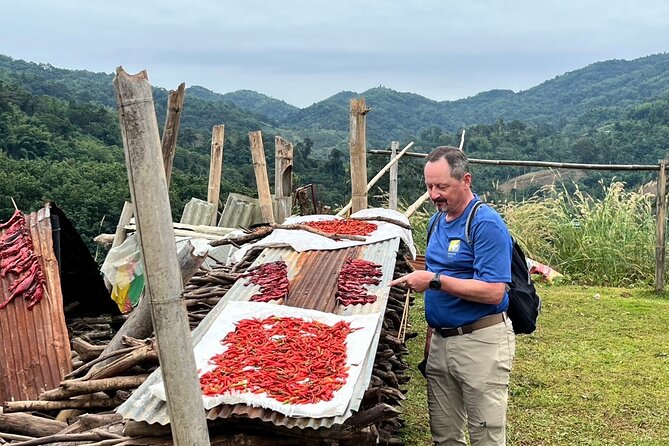
After the first village and the Chinese village segment, the day turns green and aromatic. You’ll walk through tea plantations, and the tour description specifically calls out the fresh smell of tea leaves. Even if the scent is stronger on some days than others, the point is consistent: you get a different kind of environment—more open, more breathing room, and a slower change from village bustle into countryside quiet.
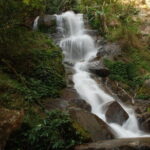
Then comes the waterfall stop, where you can relax in crystal-clear water (as described) after the walking stretches. This is your chance to cool down, rinse off sweat, and reset for the rest of the day.
If you’re the kind of traveler who hates being rushed, this is where you’ll feel most at ease. Waterfall time tends to be a natural slowdown, because you’ll want to pause, look, and take short breaks.
The Bamboo Cooking Lunch: Forest Bamboo, Real Food, Real Skills
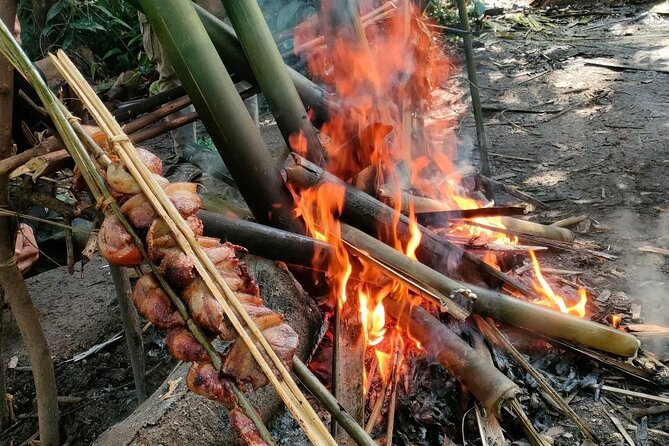
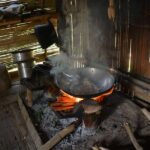
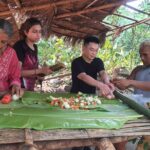
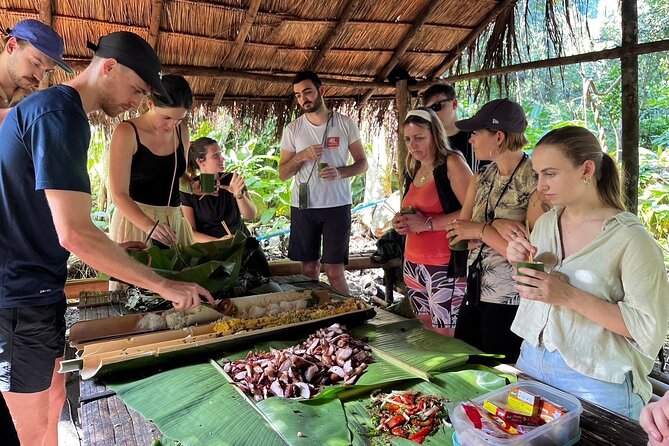
The lunch is the reason many people choose this tour, and I agree. You’re not just eating in the forest—you’re learning to make traditional local dishes using bamboo. The bamboo comes from the jungle/forest area, and the cooking happens as part of the experience, not as a separate restaurant stop.
Why this matters for you: bamboo cooking teaches technique, not just taste. You learn how bamboo can function in cooking and how it ties into local ingredients and methods. That hands-on element also makes the day feel complete. By the time you sit down to eat, you’ve invested time into the meal, so it tastes more meaningful.
This is also where the day’s calm setting does its work. You get a quiet pause after village walking and tea-plantation walking. In practical terms, you’ll likely be hungry, and that hunger will make lunch feel like a reward rather than a break you barely notice.
What you should know: coffee/tea isn’t included, and alcoholic beverages aren’t included. So if you care about a specific drink, bring the mindset that this is mainly a water + lunch kind of stop. Bottled water is included, though.

Group Size, Guide Energy, and ParnTrek’s Pace
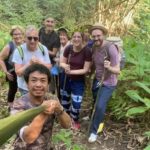
This is capped at a maximum of 20 travelers, which is big enough to meet other people, but small enough to avoid the chaos that can happen on larger group hikes. In a walking tour, group size affects everything: how often you stop, how long it takes to regroup, and how smoothly village visits move.
Guide quality is the difference between a day that feels like transportation with stops and a day that feels like learning. One of the best notes includes Jimmy, described as unique, and his role went beyond giving instructions. He helped make village time playful with traditional children’s games. That’s not something you can guarantee on every day, but it tells you what to look for: a guide who pays attention to how people experience culture, not only where you walk next.
As for the pacing: the whole outing lasts about 8–9 hours. That’s long enough to feel like a real trek, but short enough that you won’t lose an entire day to travel logistics. Just be honest with yourself—if you’re only comfortable with easy strolls, this might feel like too much walking.
Price and Value for About $57.26
At $57.26 per person, the big question is value: what do you actually get for that money?
You get:
- Lunch bamboo lunch (the main anchor)
- Private transportation / shuttle service
- Bottled water
- A day that combines multi-community village visits, tea plantation walking, and a waterfall break
What you don’t get:
- Snacks
- Coffee and/or tea
- Alcohol
For most travelers, the bamboo cooking lunch is the value engine. If you were paying for a cooking experience plus a guided trek plus transport separately, you’d likely spend more. The price also reflects that the day is guided and structured, not self-guided wandering.
Is it a bargain? It can be, especially because it’s a single-day package. But the experience quality depends on smooth pickup and clear communication. If pickup coordination goes wrong, that’s not just annoying—it can ruin the whole schedule. That’s why your best move is to confirm details early.
Packing Tips for a 8–9 Hour Walk Day
You’ll want to pack for a full walking day with a jungle feel: uneven ground, sun shifts, and a waterfall where you might get splashed.
Here’s the simple checklist mindset:
- Wear comfortable shoes with grip. This isn’t a footwear-flexibility tour.
- Bring a light layer for when it cools off near water.
- Expect you’ll sweat. Water is included, but you’ll still feel the hike.
- Bring a small snack of your own if you think you’ll need it. The tour doesn’t include snacks.
- If you’re sensitive to sun, plan for it. There’s walking through tea plantations and village paths, and the day is long.
Also, don’t forget that you’re likely eating lunch partway through the trek. So you don’t want gear that takes forever to manage. Keep things easy to access.
Should You Book This Chiang Rai Bamboo Adventure?
If you want a day that combines culture, nature, and hands-on food, this is a strong option. The bamboo lunch is a real differentiator, and the village route (Lisu, Chinese, and Akha-Lahu) gives you variety in one schedule. The chance of a guide like Jimmy, who brings the experience to life with local-style activities, is exactly the kind of detail that makes a trek memorable rather than forgettable.
But if you’re the type who hates uncertainty around pickup, take the communication note seriously. Confirm your pickup details early, keep your ticket handy on your phone, and be ready to act fast if anything seems off.
Best fit:
- You like active days and can handle walking for 8–9 hours
- You want more than scenery—you want food and community interaction
- You’re open to a morning start around 09:00–09:30
FAQ
FAQ
How long is the Chiang Rai jungle trekking and bamboo cooking experience?
It lasts about 8 to 9 hours.
What time does the tour start and when is pickup?
The start time is 9:00 am, and pickup is offered in the 09:00–09:30 a.m. window.
Where does the itinerary begin?
The first stop listed is Pha Soet.
What does the bamboo cooking lunch include?
You’ll have lunch and learn how to make traditional local dishes using bamboo from the forest. Bottled water is also included.
Are transportation and tickets included?
Yes. Private transportation/shuttle service is included, and you’ll receive a mobile ticket.
Which villages are visited during the trek?
You’ll visit a Lisu village, a Chinese village, and Akha-Lahu villages.
Is this tour physically demanding?
It’s described as requiring moderate physical fitness.
Is the tour dependent on weather?
Yes. It requires good weather, and if it’s canceled due to poor weather, you’ll be offered a different date or a full refund.