REVIEW · TASHKENT
3-Day Chimgan Trekking Tour
Book on Viator →Operated by Nuratau Travel · Bookable on Viator
Tents, passes, petroglyphs in three days. This Chimgan trekking tour turns a long weekend into a real Tian Shan hiking experience, with tent camping, trained local support, and daily routes that climb and drop through mountain valleys near Ugam Chatkal National Park. I love that you’re not just walking for exercise; you’re also getting a guided path to viewpoints and cultural stops, including Stone Age-era petroglyphs.
What I like most is the way it handles the practical stuff: you get door-to-door transfers, an English-speaking mountain guide, and horse/donkey help to move camp gear so your main pack stays sane (there’s a 13kg max luggage limit for what you bring). The possible downside: it’s rated for moderate fitness, and Day 2 is a long uphill day—so if you hate steep climbs, you’ll feel it.
In This Review
- Key Highlights You’ll Care About
- Tashkent To Chimgan: What This Trek Feels Like
- How the Trek Is Set Up: Camping, Meals, and Real Support
- Day 1: Melovoy Pass (1796m) Up Toward Takhta-Jaylov (2000m)
- Day 2: Beldersay Valley, Chetkumbel Pass (1800m), and the Petroglyph Stop (2400m)
- Day 3: Nurekata Valley Down to Shuldak (1050m) and the Ride Back
- Price and Value: Is $370 a Good Deal?
- Practical Packing That Actually Works on This Route
- Who Should Book This Chimgan Trek (And Who Might Not)
- Should You Book This Chimgan Trekking Tour?
- FAQ
- FAQ
- What’s the duration of the Chimgan trekking tour?
- Where does the tour start in Tashkent?
- What’s included with the camping setup?
- Do I need to carry all my luggage?
- How many meals are included each day?
- What kind of fitness level does the tour require?
- Is there an English-speaking guide?
- Do I get a refund if I cancel?
Key Highlights You’ll Care About
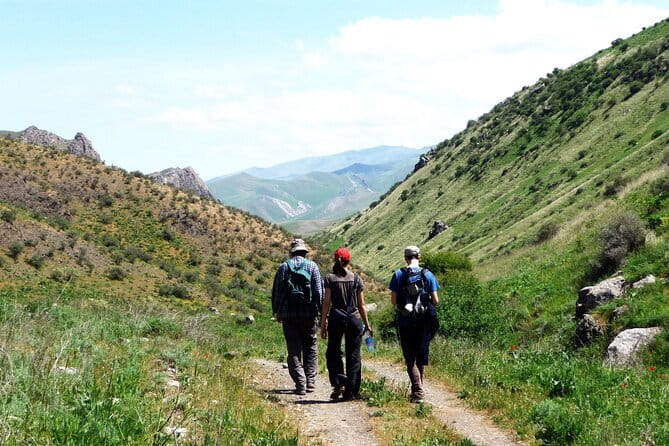
- Ugam Chatkal National Park access with a guided route that goes beyond the highway viewpoints
- Petroglyph stop at about 2400m, the highest point in the three-day trek
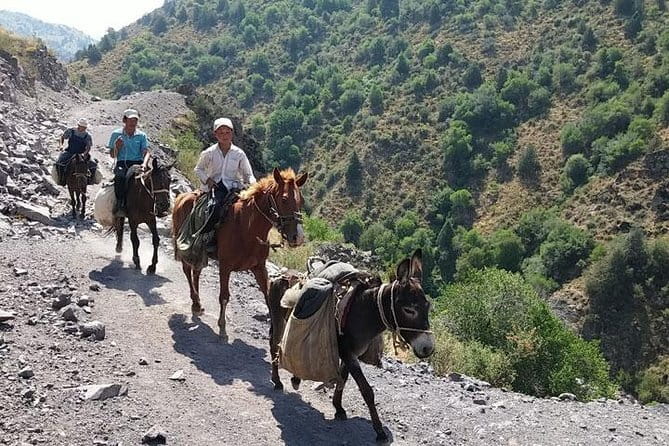
- Porter-style luggage help using horses/donkeys and handlers (so you pack smarter)
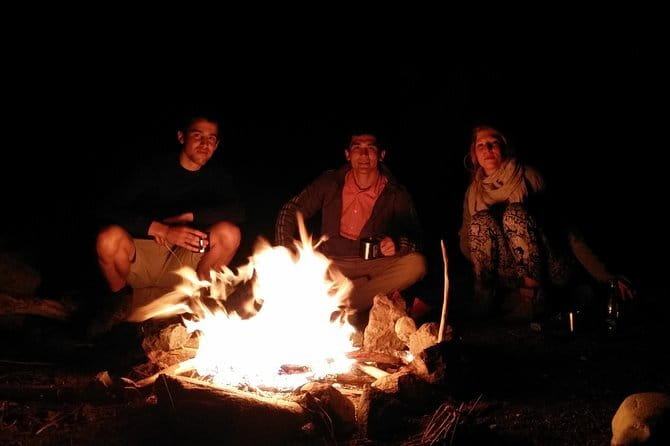
- Tent camping comfort in two-person tents with sleeping bags and mattresses
- Three cooked meals a day using a gas stove setup and camp tableware
- Route flexibility for safety: your guide can adjust the plan with bad weather or safety issues
Tashkent To Chimgan: What This Trek Feels Like
This trek is built for people who want mountains without going full survival-mode. You start the day in Tashkent and transfer to the Chimgan area (about 98km, roughly 1.5–2 hours). Then you’ll spend three days moving through the Tian Shan on foot, sleeping in a two-person tent, and eating full meals—breakfast, lunch, and dinner—prepared for the group.
If you’ve hiked forests and hills, you’ll spot the difference fast. In the mountains, the effort doesn’t just come from distance. It comes from altitude and the way trails snake up and down passes. One review note that resonated: even though this is “mid-altitude,” it can feel challenging if you’re new to mountain walking, especially on the longer climb day. The good news is that the tour is structured around moderate fitness, and you’re not carrying every last thing yourself.
You’ll also get a sense of Central Asia beyond cities. The route runs through areas with diverse flora and fauna, plus a cultural stop tied to Stone Age-era petroglyphs. That combination—scenery plus a human story—makes the days feel longer in the best way, like you’re learning something while you walk.
How the Trek Is Set Up: Camping, Meals, and Real Support
The tour includes camping equipment: two-person tents, sleeping bags, and mattresses. It also includes the camp kitchen setup: a gas stove, plus tableware for cooking and eating. You’re not relying on a thermos and snacks; you’re getting proper meals, which matters on a three-day trek where energy management is everything.
Then there’s the “less obvious” help: luggage transport. Your company moves the food, kitchen, and camping gear by horses/donkeys with handlers, while you carry what you need for the day. You’re told the maximum allowed luggage weight is 13kg per person. That’s your cue to pack light—bring layers you can wear and remove, not a closet.
On top of that, you’re traveling with an English-speaking mountain guide who is also a group leader and company representative. They can change routes due to known safety issues or bad weather. That’s not a “nice to have” detail—it’s how this stays a safe, enjoyable mountain experience instead of a stubborn one.
Day 1: Melovoy Pass (1796m) Up Toward Takhta-Jaylov (2000m)
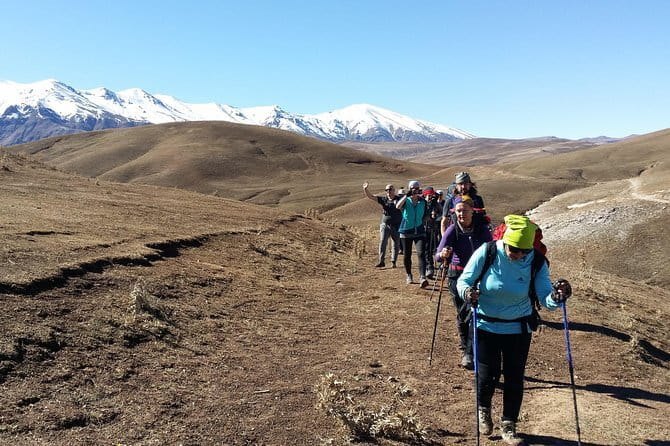
Day 1 starts with a transfer from Tashkent to Chimgan Resort. After you reach the trail area, you begin at Melovoy (1796m) and hike up to Takhta-Jaylov saddle (2000m). From the saddle, the route descends toward the Marble River area.
This is the day that sets your rhythm. The elevation gain isn’t huge compared to later days, but it’s enough to get your legs and lungs warmed up. Think of Day 1 as your “learn how the trail talks to your body” day—how quickly you need to pace, how often you drink, and how often you adjust layers.
What’s attractive here is that it’s not just climbing to climb. Saddles and river areas tend to open up sightlines, and you’ll feel that Tian Shan scale starting to show. If you’re coming from the flat calm of a city, this first day gives you a taste without overwhelming you.
A small consideration: because Day 1 is only about 4 hours of trekking time, you may feel tempted to push hard. I wouldn’t. Save your energy for Day 2, which is the long haul.
Day 2: Beldersay Valley, Chetkumbel Pass (1800m), and the Petroglyph Stop (2400m)
Day 2 is the heart of the trip. You start ascending from the Beldersay valley via Chetkumbel pass (1800m), heading toward Kubmel pass (2550m). Along the way, you stop at a petroglyph site at around 2400m—and the tour notes that this is the highest point in the three days.
This is a great design for a cultural-and-physical day. You’re working on your endurance, then you pause in a place that turns the landscape from just scenery into a story of human presence long ago. Stone Age-era petroglyphs are not a quick photo-op; they’re the kind of thing you’ll remember because they make you slow down.
Also, the length matters. Day 2 is listed at about 8 hours trekking time. That’s where moderate fitness becomes real fitness. If you walk regularly and can handle a sustained uphill, you’ll be fine. If you only do short hill walks, you’ll feel it—but you still have a guide, a supported group setup, and a route that’s clearly planned for a multi-day trek.
One more practical note tied to what people said after the trip: having a helpful guide and a supportive luggage team makes a big difference on long days. When the animals and handlers are moving gear smoothly, you can focus on walking instead of thinking about your pack.
Day 3: Nurekata Valley Down to Shuldak (1050m) and the Ride Back
Day 3 starts with continuation downhill in the Nurekata valley. You move until you reach the junction of the Nurekata and Aksakata rivers, then continue toward the village of Shuldak (1050m). At Shuldak, you meet the driver and head back to Tashkent.
This is the decompression day. After the steep work of Day 2, downhill walking can feel easier mentally, but it’s tough on knees and feet if you rush it. I’d plan to take your time, especially on rocky or uneven sections you might not expect.
The river junction element is a satisfying way to end. It signals that you’re not just moving through random trail segments—you’re following a real drainage system from higher passes down toward settlement areas. Then you drop back to about 1050m, which feels like a reset after a mountain day.
The trekking time is listed at about 7 hours, so it’s not a super-short “victory lap.” But it’s a strong finish because you get closure: you reach the village, you transition from walking to driving, and you end back where you started.
Price and Value: Is $370 a Good Deal?
At $370 per person, this trek is priced in the category of a supported, guided multi-day hike with camping gear and transfers. What makes it feel fair is the full package: you get an English-speaking mountain guide, tent and sleeping setup, meals, bottled water, a first aid kit, and ground transfers. On top of that, luggage transportation by animal handlers can be a big cost driver you’d otherwise pay for separately.
You’re also not doing it as a solo adventure. It’s described as a private tour/activity, meaning only your group participates. That tends to improve the experience quality: less time waiting, more consistent pacing, and fewer awkward group dynamics.
One more value point: the tour notes group discounts and offers a mobile ticket, and the experience provider includes police registration for the trekking duration. That’s not “fun,” but it’s part of how trips run smoothly in regions where documentation matters.
If you’re weighing this against cheaper hikes that don’t include meals, camping gear, or transfers, the math usually tilts toward this option. You’re paying to reduce friction so you can focus on the walk and the mountain time.
Practical Packing That Actually Works on This Route
The tour recommends a few items for spring and autumn use: warm clothing, a head-dress like a cap, sunglasses, sunblock, and a flashlight. That’s not overkill. Even if Tashkent feels warm some days, the mountains can cool down fast as you gain elevation and then spend hours outdoors.
For trekking shoes: don’t treat this like a light day walk. Bring shoes you trust on uneven ground. And since you’re limited to 13kg max luggage weight (with the rest of the camping gear moved for you), keep your personal load focused: layers, rain protection if you have it, water strategy, and a small repair kit if you like to be ready.
A backpack matters here. You’ll carry day items while the heavy camp gear is moved by donkey/horse support. Aim for a backpack that’s comfortable on uphill and easy to tighten when you’re tired.
Finally, plan for moderate fitness and plan for cold at night. The tent camping gear is included, but you still need to wear layers you can sleep in comfortably.
Who Should Book This Chimgan Trek (And Who Might Not)

Book it if you want a structured multi-day Tian Shan hike with real support, not just a point-to-point walk. You’ll like it if you can handle a long day on a climb—especially Day 2 at about 8 hours—plus some descending.
You’ll likely love it if you enjoy two things at once:
- mountain walking with changing elevation
- a cultural stop, like the petroglyph site around 2400m
Skip or reconsider if you’re looking for something easy and mostly flat. The route includes passes (like Kubmel pass listed up to 2550m) and long walking hours, which can feel tough if you’re new to mountains.
Also, if you hate the idea of tent camping, you might feel uncomfortable. This isn’t glamping; it’s real outdoors camping with included gear.
Should You Book This Chimgan Trekking Tour?
I’d tell you to book if you want your time in Uzbekistan to include mountains that feel like a place, not a checklist. The combination of guided hikes, petroglyphs, comfortable tent camping, and luggage support makes the experience practical. And the strong overall rating signals that people feel the challenge matches the planning.
If you’re unsure, use this rule of thumb: if you can walk for several hours uphill at a steady pace and you’re okay camping outdoors, this is a smart choice. If you want gentle walking with minimal physical effort, you’ll probably find it too demanding—especially on Day 2.
FAQ
FAQ
What’s the duration of the Chimgan trekking tour?
The tour runs for about 3 days.
Where does the tour start in Tashkent?
You meet at Taraqqiyot ko’chasi 45 in Tashkent, with a 9:00 am start time.
What’s included with the camping setup?
Camping equipment is included, including two-person tents, sleeping bags, and mattresses.
Do I need to carry all my luggage?
No. Food, kitchen, and camping equipment are transported by horses or donkeys with handlers. The maximum allowed personal luggage weight is 13kg per person.
How many meals are included each day?
The tour includes three meals per day while trekking: breakfast (2), lunch (3), and dinner (2).
What kind of fitness level does the tour require?
The trek is described as suitable for moderate fitness levels, with mid-altitude hiking.
Is there an English-speaking guide?
Yes. The tour includes an English-speaking mountain guide.
Do I get a refund if I cancel?
Free cancellation is offered. You can cancel up to 24 hours in advance for a full refund.