REVIEW · DJERBA
Desert tours and adventurous camel trekking through the Sahara
Book on Viator →Operated by Wüstentour - Tunesien - Douz - Kameltrekking · Bookable on Viator
Sand here gets inside your head.
This Sahara camel trekking from Djerba trades phone buzz for fine-sand silence, big dune horizons, and evenings with a Bedouin campfire that feel genuinely lived-in. I especially like how the route threads together desert time with real stops like Douz and Matmata’s cave dwellings, so you get more than just a trek. The other thing I like: the practical, people-first organization, including responsive guides such as Mounir, who has a track record of friendly, multi-language help.
There is one catch to weigh carefully: some past travelers felt the price and performance ratio was off compared with other desert tours, even after factoring in the crew’s effort. If you’re trying to stretch your budget, do some side-by-side checking before you lock in.
In This Review
- Key highlights at a glance
- Entering the Sahara: from Matmata to the Erg Oriental
- Your first night under stars: tents, calm, and real desert timing
- Camel trekking days in the dunes: what the middle of the route feels like
- Bedouin meals and campfire music: the human side of the dunes
- Douz, the Gate of the Desert: souks, dates, and a reset day
- Back to Matmata: troglodyte houses and a quieter kind of history
- Crossing by ferry to Djerba: a 20-minute pause from the mainland
- Getting around and what “private” means in real life
- Price and value: $1,110.18 per person for an 8-day trek
- Who should book this Sahara camel trekking from Djerba
- Should you book? My straight answer
- FAQ
- How long is the desert and camel trekking experience?
- Where does the tour start and end?
- Is pickup included?
- Is this a private tour?
- What fitness level do I need?
- Does the tour include access to tickets on a mobile format?
- What if the weather is poor?
- Is there vegetarian food available?
Key highlights at a glance
- Bedouin campfire evenings with traditional, home-cooked meals after dune days
- Camel trekking with dromedaries plus hiking through the dunes on foot
- Douz (Gate of the Desert) city center time and traditional souks
- Matmata troglodyte houses for a Berber life snapshot in cave dwellings
- Off-road 4×4 transfer between the Bedouin camp area and Douz
- Private tour setup, meaning it’s just your group
Entering the Sahara: from Matmata to the Erg Oriental
This trip starts with the kind of planning that makes the desert work, not just look good in photos. You begin from Djerba, then head toward Matmata, a name many people associate with cave life in Tunisia. Even early in the journey, you’re moving with an understanding that the day isn’t only about driving. It’s about setting the tone: slower time, less signal, more sky.
From there, the route leads toward the Erg Oriental, the wide dune sea stretching across parts of the region. What matters for you isn’t geography trivia. It’s the feeling that hits when you leave the last hints of roads behind and start getting that Sahara silence. You’ll drive about 90 minutes directly into the desert where the Bedouin team and dromedaries are waiting. That handoff is important: it means you’re not wandering around trying to figure things out. Someone’s guiding the transition.
Practical reality: desert days come with uneven effort. You’ll walk and/or ride over sand, and you’ll want to dress smart for wind and sun. If you’re expecting an easy stroll in a resort setting, you’ll be disappointed. If you like walking with purpose and earning your sunset, you’ll be happy.
Your first night under stars: tents, calm, and real desert timing
On the first desert night, the camp is set up and you’re given the option to sleep outdoors under the stars. That sounds romantic, but it’s also a genuine part of why this kind of trekking works. When tents go up and the lights go down, you feel the scale of the place fast.
The trip is built around the rhythm of dune travel: move during the day, then transition to evening with people and food. Reviews consistently highlight that evenings aren’t just a quick stop. You’ll have unforgettable Bedouin time around the campfire, with traditional home-cooked dishes served as part of the experience, not as an afterthought.
One note for comfort: fine sand behaves differently than other sand. It gets everywhere if you’re not careful. You’ll want to bring basic protection habits—sun protection, something to manage dust on windy moments, and a willingness to accept that you’re going to feel sand in your day at some level.
Camel trekking days in the dunes: what the middle of the route feels like
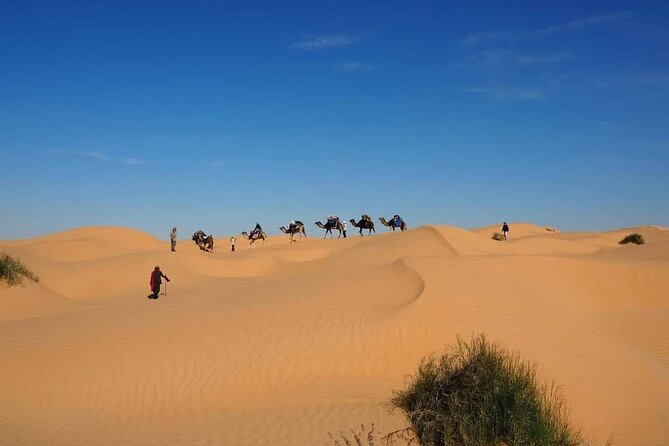
Days two through six are built as a series of dune stops—El Hedan, La Ghuezza, Hashiat Erramal, Thuall Erbaier, and Bir Abdhull—with hiking and camel time woven into the overall flow. The key value here is pacing. You’re not doing one dramatic “camel ride” and then immediately returning to a vehicle. You’re in the dunes long enough that you start reading them like terrain, not like scenery.
Here’s what tends to matter most for your enjoyment on days like these:
- How often you’re on camelback vs. on foot
- Whether you get breaks from the heat and wind
- How quickly you settle into the slower tempo
The trip description promises “wonderful hikes through the dunes on foot or on camel back,” and the overall tone matches what desert trekkers look for: not constant rushing, but movement with breathing space. Past feedback also points to how much attention the Bedouin crew gives to making the nights and daily rhythm feel cared for, not just scheduled.
Potential drawback: the itinerary is ambitious, and that can mean long, shifting days. Desert travel isn’t smooth like paved-road sightseeing. If your idea of a perfect day is predictable and minimal physical stress, I’d consider your fitness carefully—this experience calls for moderate physical fitness.
Bedouin meals and campfire music: the human side of the dunes
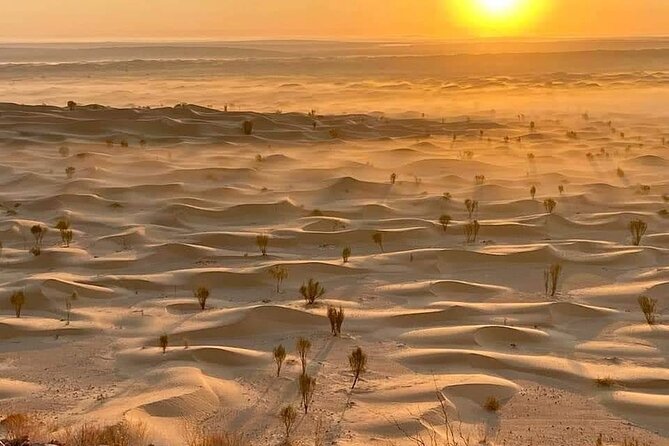
In a good Sahara trek, the best moments often happen after you stop moving. For this one, that means evenings around the campfire with the Bedouin team—plus traditional, home-cooked food. People highlight the fire-time atmosphere as a core memory-maker, not a box to tick.
Also worth knowing for planning: there is evidence the organizers take dietary needs seriously enough to try. One review explicitly mentions that the team had something for vegetarians, and that matters because desert trips often get vague on food beyond “good” or “plenty.”
If you have dietary restrictions beyond vegetarian, you should still communicate early. The data here only confirms vegetarian consideration, not special diets like gluten-free or allergies.
The biggest intangible benefit: you get a break from digital life. The description frames it as a “digital detox” and a return to essentials. Whether or not you call it detox, the effect is real: fewer interruptions, more wind, more stars, more time spent feeling small under an enormous sky.
Douz, the Gate of the Desert: souks, dates, and a reset day
On day seven, you leave the Bedouin camp area around 9:00 a.m. and continue toward Douz in a 4×4 off-road vehicle. That matters because it keeps the transition from “deep desert” to “town” from feeling jarring. You still move through sand-country, but you’re gradually reconnecting with civilization.
Douz is known as the Gate of the Desert and a major crossing point toward the Sahara. You’ll visit the city center and traditional souks, and you also get time tied to what Douz is famous for: high-quality dates. Even if you don’t buy anything, this stop helps you anchor the desert. It’s where you can picture the trade routes and the everyday economy that surrounds all that sand.
What I like about this timing (and what you’ll likely appreciate): you don’t rush to town immediately. You finish your dune days first, then get a more normal human rhythm—walking streets, looking through market stalls, and catching an easier sense of time.
One consideration: this part may feel like a “cool down” day, but it’s not a full rest day. Plan to stay engaged and accept that you’re still on the move.
Back to Matmata: troglodyte houses and a quieter kind of history
After Douz, the route heads back toward Matmata. You visit the troglodyte houses—the cave dwellings associated with Berber life. You can visit one cave home to see what the life setup looks like. Importantly, the owners are part of the experience, and questions and photos are welcome with them.
This isn’t the same kind of “performance” you sometimes get at tourist attractions. The value is in the fact that you’re meeting people connected to the living space rather than only viewing artifacts behind glass.
Practical tip if you care about respectful photography: go slow, ask first, and be mindful about where you point your camera inside someone’s home space. Even if the tour says photos are welcome, good manners still pay off.
Crossing by ferry to Djerba: a 20-minute pause from the mainland
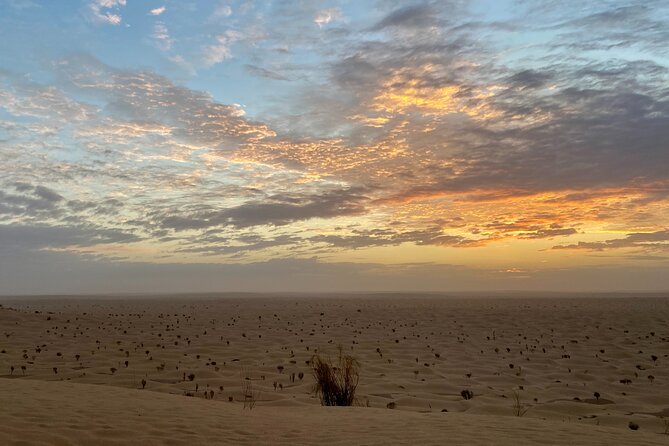
Later in the day, you continue toward Djerba using a ferry crossing that takes about 20 minutes. You’re leaving the mainland for the island, and the description frames Djerba as a place with olive groves and a Mediterranean feel—turquoise-blue sea and sandy beaches, with a lighter, more vacation-like atmosphere than the dunes.
This ferry moment is more than transportation. It’s a mental reset. After days of sand and sky, the water sightline changes your mood fast. You’ll likely feel your body relax a bit too, because you’re not walking on dunes at that moment.
Getting around and what “private” means in real life
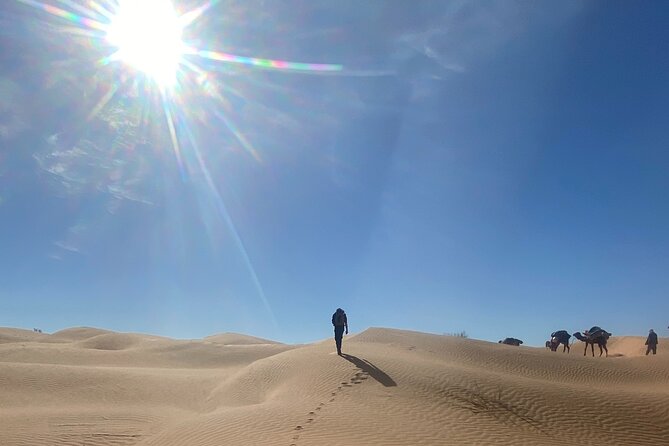
This is listed as a private tour/activity, meaning only your group participates. That typically translates to fewer time-pressure headaches: you’re not stuck waiting for unrelated strangers, and your guide can adapt pacing to your group.
You can also expect pickup offered from Djerba and a day-eight end point back at the meeting point, with a transfer to the airport depending on flight time. The “mobile ticket” note is simple but useful: it reduces friction in the pre-trip stage.
Transportation details you’ll feel:
- Off-road 4×4 segments during transitions
- Long drives tied to reaching dune zones
- A short ferry break for crossing
If you don’t like vehicles, you should know that desert travel is vehicle-heavy compared with pure hiking trips. The good part is that the vehicle segments are usually doing a job: moving you to the next meaningful area, not wasting time.
Price and value: $1,110.18 per person for an 8-day trek
This is the part where you should do the honest math for your own travel style.
At $1,110.18 per person for an 8-day desert experience, you’re paying for:
- Multi-day desert routing through Erg Oriental areas
- Camel trekking and dune hiking time
- Bedouin camp setup and campfire evenings
- Transfers including 4×4 off-road and a ferry
- Included meals (with a specific nod to vegetarian consideration)
Now, the balanced view: multiple reviews rate this around 3.9, and at least a couple of comments call out price and performance disproportionate. One reviewer specifically says they found better services elsewhere for about 400 euros less, and another encourages you to compare providers before booking.
So how do you decide if this price feels fair to you?
Here’s a practical approach:
- If you value a proven, friendly, multi-language guide like Mounir and a strong Bedouin crew atmosphere, you may see the cost as paying for quality and care.
- If your priority is max desert time for the least money, you should compare other Sahara trek options carefully. Some alternatives may include similar routes but at different price tiers.
- Ask what is truly included in your package beyond the basics (meals quality, how many camp nights, time spent on camelback vs. foot). The itinerary structure here suggests a full desert rhythm, but the exact balance can vary.
In other words: the trip can be worth it if it matches your “desert experience priorities.” It’s not automatically the best deal for everyone.
Who should book this Sahara camel trekking from Djerba
I think this experience fits best if you want a classic Sahara rhythm:
- Camel trekking + dune hiking
- Multiple Bedouin campfire evenings
- A desert focus with meaningful context stops like Douz and Matmata
It also suits people who like to be looked after without feeling like they’re on a cattle line. Reviews mention strong organization, good communication before arrival, and an effort to deliver a unique experience—especially when guided by someone like Mounir.
Who might hesitate:
- If you’re extremely budget-focused, compare prices closely.
- If you need low physical demand, take the moderate fitness requirement seriously.
- If you’re a woman traveling alone, there’s at least one review raising concern about suitability. That doesn’t mean it’s unsafe, but it does mean you should ask pointed questions about how the experience supports solo travelers and what the day-to-day setup looks like.
Should you book? My straight answer
Book it if you want a Sahara camel trekking that isn’t only about motion, but about atmosphere—silence, stars, campfire evenings, and the human touch of a Bedouin crew. If Douz souks and Matmata’s cave homes are the kind of stops that make your trip feel more complete, this route makes sense.
Don’t book on autopilot if budget value is your top concern. The pricing drew criticism for being expensive compared with other operators, even by a noticeable amount. In that case, compare at least one or two other desert providers and focus on the same checklist: how many dune days, how much time on camelback, meal quality, and guide/crew consistency.
If you want, tell me your travel month and whether you prefer more camel time or more on-foot hiking, and I’ll help you judge how well this trip matches your style.
FAQ
How long is the desert and camel trekking experience?
The tour is listed as 8 days approximately.
Where does the tour start and end?
It starts in Djerba, Tunisia and ends back at the meeting point (with a transfer to the airport depending on flight time).
Is pickup included?
Yes. Pickup offered is included.
Is this a private tour?
Yes. It’s described as a private tour/activity, meaning only your group participates.
What fitness level do I need?
The experience asks for moderate physical fitness.
Does the tour include access to tickets on a mobile format?
Yes. It includes a mobile ticket, and confirmation is received at booking time.
What if the weather is poor?
The experience requires good weather. If it’s canceled due to poor weather, you’ll be offered a different date or a full refund.
Is there vegetarian food available?
The provided information includes that the crew thought of something for vegetarians.