REVIEW · POKHARA
6 Night 7 Days ABC Trek
Book on Viator →Operated by Swissa Adventure Travel & Treks · Bookable on Viator
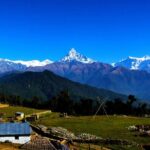
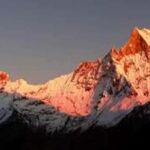
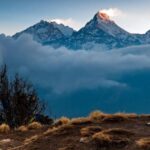
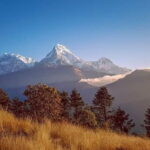
Annapurna Base Camp feels close, then surprises you. This ABC Trek follows the Annapurna Sanctuary route, with big-deal mountain views built in from day one to the final high point, including Machhapuchchhre (Fishtail) and the wider Annapurna wall.
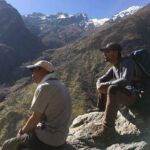
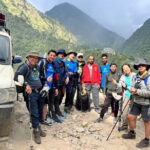
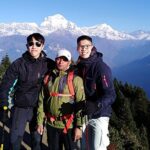
What I love most is the way the trek feels handled by real people, not just a checklist. Guides such as Karna, Jaya, and Lila are described as calm, attentive, and very on-top of the route, and there are even small comfort touches like fruit prepared each night as a post-dinner snack.
The main thing to consider is the physical and weather side: you’ll hike several long days and reach 4130m, so you need moderate fitness and good conditions, because the experience requires good weather.
In This Review
- Key things to know before you go
- ABC Trek in the Annapurna Sanctuary: why these views matter
- Getting started in Pokhara with Swissa Adventure Travel & Treks
- Day 1: Pokhara to Nayapul, then the climb to Ghandruk
- Day 2: Ghandruk to Chhomrong (2170m) and the steady momentum
- Day 3: Chhomrong to Bambo, then to Dobhan (2600m)
- Day 4: Dobhan to Deurali to MBC (3700m), the climb that sets up Day 5
- Day 5: MBC to ABC (4130m) and back toward Himalaya (2920m)
- Day 6: Himalaya to Chhomrong to Jhinu Danda (1780m) for the long reset
- Day 7: Jhinu Danda to Siwai by jeep, or trek onward to Nayapul
- Price and value: what $580 buys you on an ABC Trek
- Who this ABC Trek suits best (and who should rethink it)
- Should you book this 6 Night 7 Days ABC Trek with Swissa Adventure Travel & Treks?
- FAQ
- Where does the ABC Trek start in Pokhara?
- How long is the trek?
- What is the highest point on this route?
- What are the main walking stages on the itinerary?
- Is this a private tour?
- What fitness level do you need?
- How do you get back to Pokhara on Day 7?
- Does the trek depend on weather?
- What is the cancellation policy for a full refund?
- Who will be your guide on the trek?
Key things to know before you go

- Annapurna Sanctuary focus: designed around classic views of Annapurna I and the Fishtail profile of Machhapuchchhre
- Village + forest mix: Gurung and Magar villages plus rhododendron, bamboo, and alpine forest walking
- Big altitude steps: you steadily build from around 2,170m up to 3,700m at MBC, then to 4,130m at ABC
- High-day structure: Day 5 is the payoff day (ABC) followed by a descent back toward lower altitude
- Guides that manage the whole vibe: route confidence, check-ins on how you’re doing, and flexible pacing
- Two return options on Day 7: jeep-style return from Siwai or an extra hike segment back toward Nayapul
ABC Trek in the Annapurna Sanctuary: why these views matter
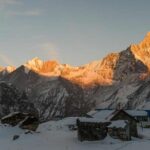
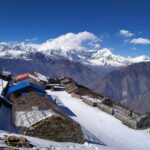
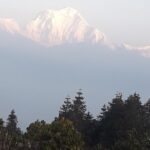
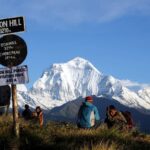
The ABC Trek is famous because it does something rare: it turns the Annapurna region into a close-up experience, not just a far-away skyline. The route runs through the heart of the Annapurna Himalaya, so you’re repeatedly framed by peaks as you climb—Hiunchuli (6434m), Annapurna South (7219m), Annapurna I (8091m), Gangapurna (7454m), Annapurna III (7555m), and Machhapuchchhre (6997m).
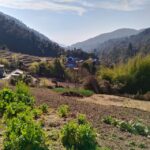
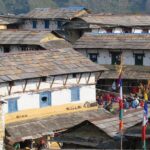
Even better, the scenery isn’t just rock and snow. You pass through charming Gurung and Magar villages, then shift into forest walking with rhododendron, bamboo, and alpine trees. That matters because it changes the feel of the hike: you get breathing room on calmer days, and the walk stays interesting when your legs are doing the real work.
Also, ABC is not the very highest point of the mountains you’ll see. You reach 4130m on trek, which means you still get dramatic, near-camp views without the kind of technical altitude push you’d see on a full summit expedition. It’s a sweet spot for many hikers who want the Annapurna spectacle with a manageable climbing profile.
You can also read our reviews of more tours and experiences in Pokhara.
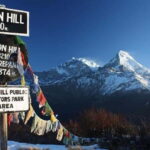
Getting started in Pokhara with Swissa Adventure Travel & Treks

Your trip kicks off in Pokhara, Lakeside-6, at Swissa Adventure Travel & Treks (the start and ticket redemption point are the same). That’s practical because Lakeside is where you can easily find transport, food, and a calm place to prep before hiking day begins.
You’re also dealing with a private setup, so your group is the only one on the activity. In plain terms: the pace and planning can be more tailored to your team, and you’re not fighting the friction that comes with a big, mixed crowd.
There’s a start-window listed (7:15 AM to 7:45 PM), and you’ll want to treat that as your reminder to be ready early. On trekking days, time matters more than it seems—because the hike times are real (often 4–6 hours of walking), and starting late can turn a normal day into a rushed one.
Day 1: Pokhara to Nayapul, then the climb to Ghandruk

Day 1 starts with a drive from Pokhara to Nayapul (about 2 hours), then you walk up to Ghandruk for around 5 hours. This is a classic way to begin: you ease into the trek with a short transfer, then your first hiking day gives you the satisfying sense of progress right away.
Ghandruk is special on this route because it’s a village stop you can feel in your bones. It’s not a random waypoint. You’ll be walking out of the lowland rhythm and into a more mountain-focused world, and that first day gives you time to settle into the altitude without making it a brutal all-at-once push.
The one drawback on Day 1: 5 hours of hiking is still 5 hours. Even if you’re excited, keep your effort controlled early, especially if you’re arriving in Nepal only recently.
Day 2: Ghandruk to Chhomrong (2170m) and the steady momentum

On Day 2 you continue with Ghandruk to Chhomrong, taking about 4–5 hours and reaching around 2170m. By this point, you’ll likely feel the rhythm: sustained walking, occasional stops to reset your breathing, and the quiet concentration that comes with altitude.
Chhomrong is an important altitude marker on this route. It’s where you can start to notice the mountains more clearly from multiple angles, and the valley-to-slope transitions become obvious underfoot. For me, that’s one of the reasons this itinerary works: it builds your sense of where you are, instead of jumping you around.
What to watch on Day 2 is simple: don’t overpay with effort. When you feel good, it’s tempting to hike hard. But the route is designed to keep increasing over several days, and you’ll want your legs for later segments.
Day 3: Chhomrong to Bambo, then to Dobhan (2600m)

Day 3 moves you from Chhomrong to Bambo and onward to Dobhan at about 2600m. The walking time isn’t stated as a single number here, but the pattern is clear: you’re climbing through forested stretches and reaching a higher base for Day 4.
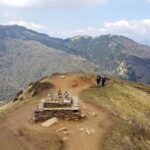
Bamboo and rhododendron show up as part of the character of this route, and you can feel that difference from village days. Forest walking tends to be psychologically easier because the scenery gives you something to focus on besides sheer elevation. Also, the tree cover can help with sun exposure—another small factor that adds up over a 7-day trek.
The consideration on Day 3 is that you’re still building altitude. Even when the forest makes the trek feel gentler, the air gets less forgiving as you rise.
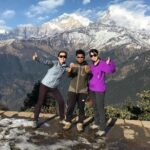
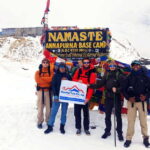
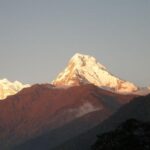
Day 4: Dobhan to Deurali to MBC (3700m), the climb that sets up Day 5

Day 4 is a bigger step: Dobhan to Deurali to MBC at about 3700m, with roughly 5–6 hours of walking. This is where your itinerary starts to feel serious, because MBC isn’t a casual stopping point. It’s a staging area for the high point day.
Deurali is also part of why this trek feels like a guided route, not just a straight line on a map. You’re moving through changing zones—village-to-forest-to-higher alpine feel—so you’re constantly updating what your body needs. Water, pacing, and rest stops matter more here than on lower days.
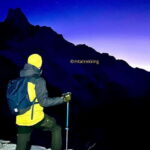
Practical tip for this day: keep your effort steady and let your breathing lead. You’re not racing the calendar. The whole design of the trip gives you a high payoff later, so Day 4 is about setting up a good Day 5, not proving anything on Day 4.
Day 5: MBC to ABC (4130m) and back toward Himalaya (2920m)

This is the day you’ll remember: MBC to ABC at 4130m. After reaching Annapurna Base Camp, the plan shifts into descent and relocation, taking you back via Deurali to the Himalaya area at around 2920m.
The value of this structure is that it balances altitude reward with recovery. Instead of leaving you stuck at the highest altitude for too long, the itinerary builds in a move down afterward. That’s a smart design for comfort and energy, because you’ll already have used a lot of focus to get to ABC.
What makes ABC special isn’t just height. It’s the way the Annapurna panorama sits around you when you finally arrive. Since this route is built around the Annapurna Sanctuary idea, you’re not wandering blindly at the end—you’ve been climbing through the same region’s “story” for days. The peaks you see in the broader region start to make sense as you stand at 4130m and look out.
The main drawback on Day 5 is also the biggest challenge day: the top requires effort. Even if the walking time is what you expected, the air at 4130m can slow you down. Go gently, take your breaks, and treat the summit moment as the point, not the speed.
Day 6: Himalaya to Chhomrong to Jhinu Danda (1780m) for the long reset
Day 6 goes Himalaya to Chhomrong to Jhinu Danda (about 1780m). This is a recovery-in-motion day. You’ll still be hiking, but the altitude drop helps your body feel more normal again after the Day 5 push.
Chhomrong appears again here, which is useful. It means you’re not simply moving forward without anchors. You revisit a known section of the route, and that can make the day feel more manageable.
Jhinu Danda is your end point for the night, and it sets you up for Day 7’s return logistics. Even if you don’t feel like you’re in a full sightseeing mood, the practical value matters: you finish Day 6 closer to the exit.
Day 7: Jhinu Danda to Siwai by jeep, or trek onward to Nayapul
Day 7 offers two return paths, and I like that you’re not forced into one option. From Jhinu Danda to Siwai, you can return to Pokhara by jeep (zeep) in about 4 hours. If you prefer more walking, you can instead trek Siwai to Nayapul (around 5 hours) and then drive back to Pokhara for about 2 hours.
This is more than a convenience switch. It’s about energy management. If you still feel solid, the extra hike can feel satisfying because it keeps you moving on your own terms. If you’re tired in a very normal way after 6 nights and a real altitude experience, the jeep option is the smart move.
Either way, your activity ends back at the meeting point in Pokhara, so you don’t have to solve transport puzzles at the finish line.
Price and value: what $580 buys you on an ABC Trek
At $580 for a 6-night, 7-day private ABC Trek, the best way to judge value is by what the trek is designed to include: a guided, paced experience on a route where conditions and altitude matter.
You get route continuity across the whole Annapurna Sanctuary arc—from the first drive to Nayapul, through village and forest days, to MBC and ABC at 4130m, then a structured descent. You also get a return plan that connects you back to Pokhara without forcing you to figure out the system mid-trip.
The biggest value signal from past experiences is how much the guide role matters in real life. Guides like Karna, Jaya, and Lila are described as attentive and calm, and they don’t just know the route—they check in on you and help adjust the experience. That kind of support is exactly what you want on a trek where you can’t control the altitude, and you can only control your pace.
There’s also mention of sherpas helping with gear pickup before the trek, which suggests there’s some practical support around preparation and readiness. If you’re traveling with limited time to organize gear, that kind of help can be a real cost-saver in stress, not just money.
What I can’t confirm from the info you provided is a full item-by-item inclusion list (like exactly what’s covered beyond the described transfers). So when you book, I’d ask what’s included for the full $580, then compare to what you’d have to arrange yourself for permits, lodging, meals, and any equipment.
Who this ABC Trek suits best (and who should rethink it)
This trek is a good fit if you want a classic Annapurna Base Camp experience with a guided, private feel. You should also have moderate physical fitness, because the walk schedule includes multiple days with 4–6 hours of hiking.
It’s especially suitable if you like structure but still want pacing that’s shaped to your group. The guide style described in past experiences—patient, reassuring, and flexible about planning—matches the reality of trekking: you’ll have good energy days and slower breathing days.
You might reconsider if you hate long hikes, you’re currently dealing with health issues sensitive to altitude, or you’re traveling in a window where weather reliability is low. The trek requires good weather, and that isn’t a small detail on a route that climbs to 4,130m.
Should you book this 6 Night 7 Days ABC Trek with Swissa Adventure Travel & Treks?
If you want one of the classic Annapurna experiences—Annapurna Sanctuary trekking to ABC at 4130m—with private guiding and a plan that balances climb and descent, I think this is a solid booking. The value comes from the full arc of the route plus the practical support from calm, route-smart guides like Karna, Jaya, and Lila, and the itinerary’s built-in recovery after the high point.
Book it if your fitness matches the walking rhythm and you can travel when weather is likely to cooperate. I wouldn’t book it if you’re hoping for a short, easy hike with minimal altitude effects. This is a real trek with real mountain rewards.
FAQ
Where does the ABC Trek start in Pokhara?
The start and ticket redemption point is Swissa Adventure Travel & Treks, Lakeside-6, Pokhara 33700, Nepal.
How long is the trek?
It’s a 6 night and 7 days ABC Trek, with an approximate duration of 7 days.
What is the highest point on this route?
The itinerary lists Annapurna Base Camp at about 4130 m.
What are the main walking stages on the itinerary?
You’ll hike from Nayapul to Ghandruk (about 5 hours), Ghandruk to Chhomrong (about 4–5 hours), then toward Bambo and Dobhan, continue up to MBC (about 5–6 hours), and climb from MBC to ABC before descending toward Himalaya, then onward to Chhomrong and Jhinu Danda, and finally return to Siwai and Pokhara.
Is this a private tour?
Yes. It’s described as a private tour/activity, with only your group participating.
What fitness level do you need?
The trip is listed for travelers with moderate physical fitness.
How do you get back to Pokhara on Day 7?
You return by jeep/zeep from Siwai to Pokhara (about 4 hours). There is also an alternate option to trek Siwai to Nayapul (about 5 hours) and then drive back to Pokhara (about 2 hours).
Does the trek depend on weather?
Yes. The experience requires good weather, and if it’s canceled due to poor weather, you’ll be offered a different date or a full refund.
What is the cancellation policy for a full refund?
You can cancel up to 24 hours in advance for a full refund. If you cancel less than 24 hours before the start time, the amount paid is not refunded.
Who will be your guide on the trek?
The trek is led by a guide, and past experiences include guides such as Karna, Jaya, and Lila.