REVIEW · NICOLOSI
Mount Etna: Central Crater (3,340 meters) with Jeep and Trek
Book on GetYourGuide →Operated by ETNA TOURING DI PIETRO LA ROSA · Bookable on GetYourGuide
High on Etna, you’re face-to-face with real geology.
This Central Crater Jeep and Trek on Sicily’s Mount Etna pairs a 4×4 climb to 2,930m with an on-foot summit push led by volcanology guides (you may hear names like Daniele or Mario leading the way, depending on the day). I especially like that the focus stays on what’s happening now: gases, fumaroles, and the active crater zone—less museum talk, more science in motion. Small group limits to 10 also means you get a better shot at moving together at altitude.
What I like most is the combination: equipment handled (helmets, trekking shoes, poles, wind jackets) and a guided hike that’s paced for the group. One thing to consider: you won’t be guaranteed to walk every last meter to a specific summit feature if conditions are changed for safety, and the overall timing is fast and physical near the top—so plan for cold wind and real trekking, even with help from the guide.
In This Review
- Key Highlights You’ll Actually Notice
- Why Mount Etna’s Central Crater Trek Feels Different at 3,000m+
- Meet at Piano Provenzana: Gear, Group Size, and the Pace
- The 4×4 Drive to 2,930m: Faster Access, Real Mountain Air
- Trekking to the Central Crater: Lava Flows, Gas, and a Guide Who Reads the Mountain
- Four Active Craters: South-East, Bocca Nuova, North-East, Central
- Views Over Sicily (and the Aeolian Islands If Weather Plays Nice)
- What to Pack for Etna’s Subzero Wind and Sulfur Smell
- Price and Logistics: Is $59 Good Value?
- Who Should Book This Etna Jeep and Trek?
- Should You Book It?
- FAQ
- How long is the Mount Etna Central Crater Jeep and Trek?
- Where do I meet for the tour?
- What’s included in the price for $59?
- Do I pay extra for the 4×4 jeep?
- What craters will I see?
- What language is the live tour guide?
- What should I bring?
- Is this tour suitable for children or older adults?
Key Highlights You’ll Actually Notice
- 4×4 starts the day at 2,930m, so you spend your energy on the crater trek, not long climbs from sea level.
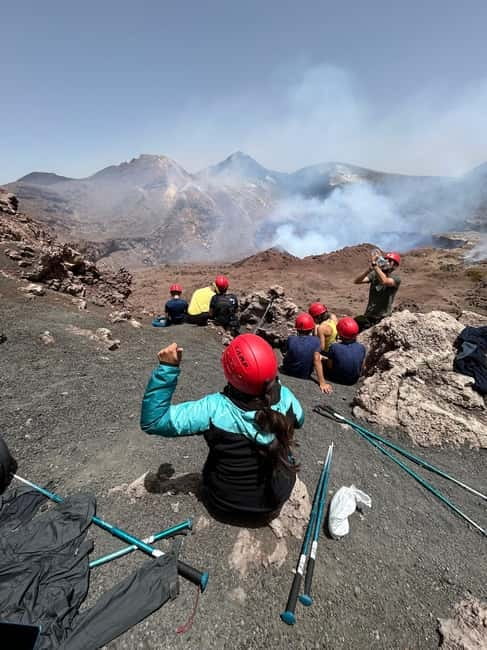
- Volcanologist-led walking with explanations geared to what you can see at the moment (smoke, gases, fumaroles).
- Targeting four active craters: South-East, Bocca Nuova, North-East, and Central.
- Subzero summit conditions are real: I’d treat warm layers and gloves as non-optional, not optional.
- Group pacing matters: guides adjust speed for fitness and altitude comfort.
- Central Crater access can shift depending on activity and closures, but the tour still centers on the active zone.
Why Mount Etna’s Central Crater Trek Feels Different at 3,000m+
Mount Etna is the kind of place where “views” are only half the story. Yes, you’ll see sweeping Sicily from high up. But the main event is getting close enough to understand what an active volcano looks and sounds like when it’s not quiet on your timeline.
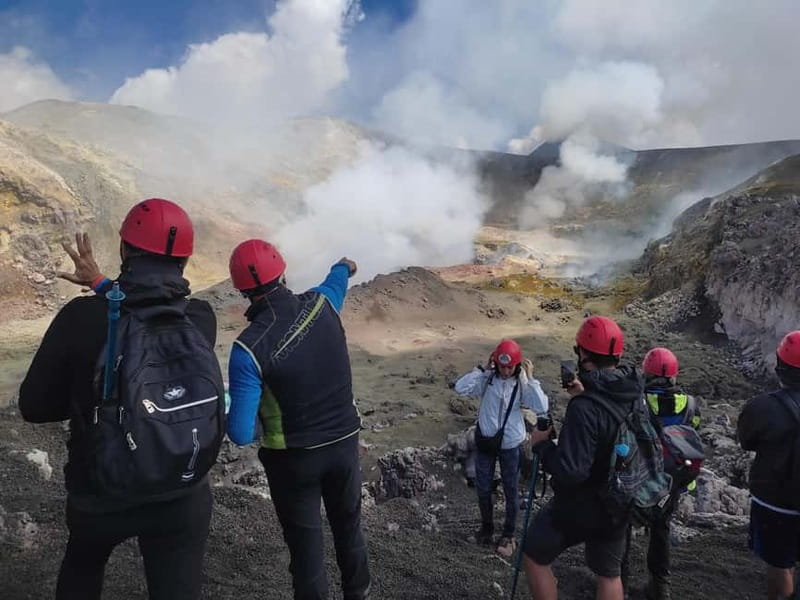
This tour is built around that reality. You don’t just stand at a safe viewpoint. You drive up, then walk through old lava terrain and pass volcanic “landmarks” like volcanic bombs and rock debris from past eruptions. Then you’re guided to the crater area with volcanology-focused commentary—gas emissions, fumaroles, and the active craters (South-East, Bocca Nuova, North-East, and Central) you’re aiming to observe.
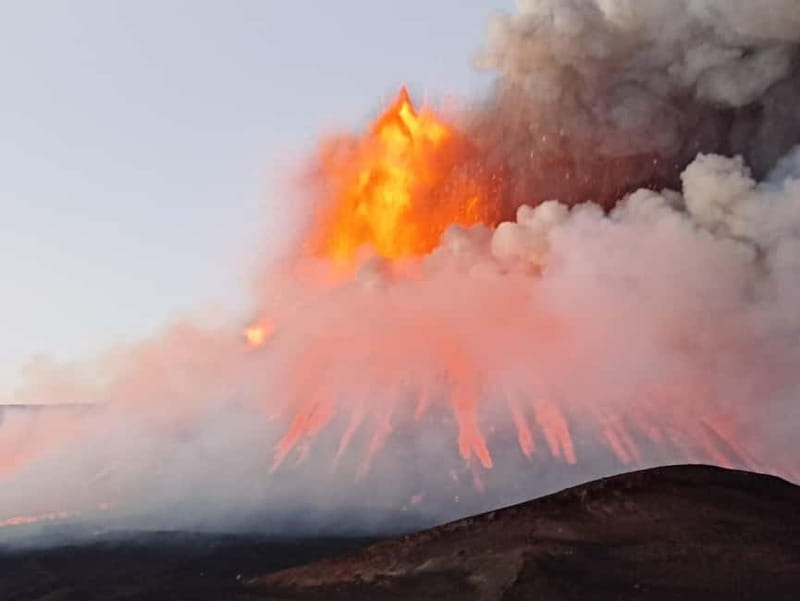
And about the famous red lava expectation: this is where you set your expectations right. Even in good conditions, you’re not going to assume you’ll see red, flowing lava. In practice, what you’re likely to notice is smoke, sulfur smell, and volcanic activity patterns. That’s not a downgrade. It’s the more common, more instructive version of Etna.
You can also read our reviews of more tours and experiences in Nicolosi.
Meet at Piano Provenzana: Gear, Group Size, and the Pace
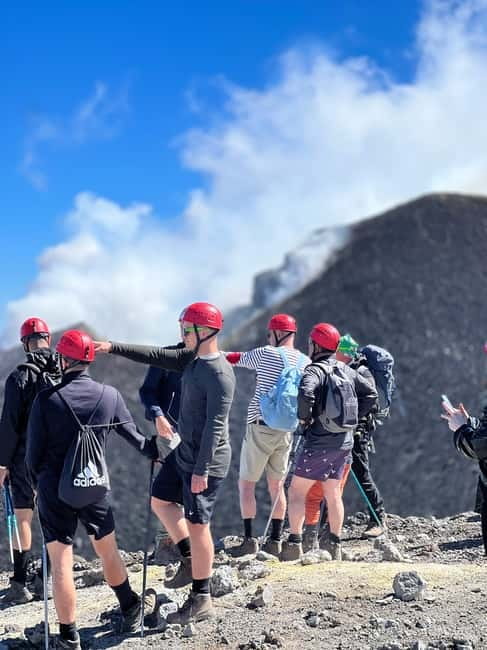
Your day begins at Piano Provenzana Etna Nord (the meeting point). Plan for a meet-and-go structure rather than a long, slow warm-up. After you check in, you receive trekking equipment: helmets, trekking shoes, trekking poles, and wind jackets.
The group is intentionally small—up to 10 participants—and that changes the feel of the experience. In a small group, the guide can adjust pace, stop for photos without losing the whole line, and handle small issues fast. One review highlighted that when a person felt unwell (mountain sickness), the guides managed the situation quickly while keeping the group together. That’s the practical value of a smaller group at altitude.
Also, understand the pace. Near the summit zone, walking becomes harder, especially in wind. Even with support from poles and guided pacing, the hike to the highest crater area includes a tougher segment—often the last stretch. It’s not a “walk in the park” day. It’s a focused alpine-style trek with guided stops.
Practical tip: If you’re unsure about your fitness for altitude hiking, be honest with your guide at the start. Guides adjust walking speed based on the group’s energy and comfort.
The 4×4 Drive to 2,930m: Faster Access, Real Mountain Air
First comes the 4×4/SUV drive, about 40 minutes, up to around 2,930 meters. This is where the tour earns its “value for time” reputation. You’re not wasting half the day doing gradual uphill switching from parking lot to trailhead.
The tradeoff is that you still need to be ready for a quick transition to alpine conditions. Once you’re higher up, temperatures can drop fast and wind can get aggressive. If you’ve only experienced Etna from lower elevations, you’ll feel the difference immediately.
You’ll also get the first taste of the volcanic setting from the vehicle—rocky ground, volcanic debris, and that unmistakable high-altitude dryness. Then the car stops, the equipment is set, and the real trekking starts.
Trekking to the Central Crater: Lava Flows, Gas, and a Guide Who Reads the Mountain
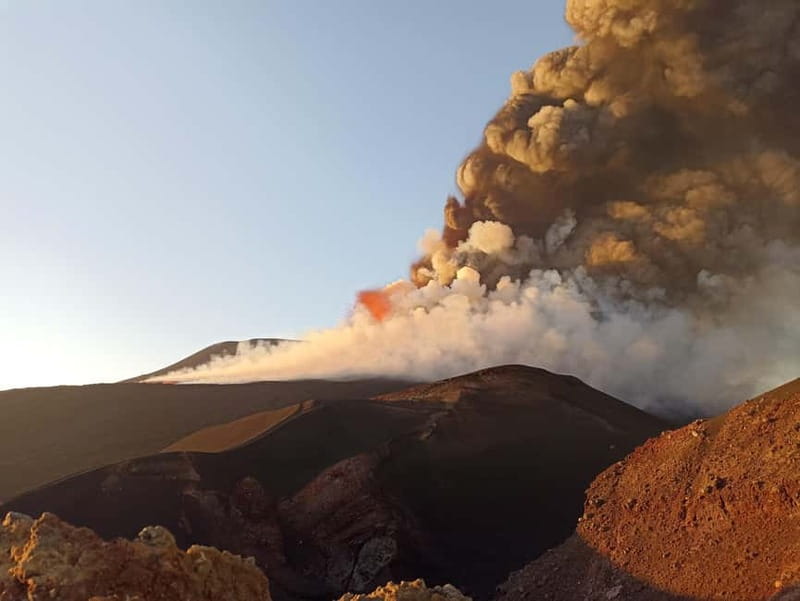
The trek portion begins once you reach about 2,930m, and you’ll work your way toward Central Crater in the 3,300–3,350m zone. The schedule you’re working with is roughly 100 minutes on foot, then another 100 minutes on foot after your main crater time.
Along the way, the route runs over lava flows from past eruptions. That means the ground is not just “trail.” It’s volcanic terrain—sometimes stable, sometimes uneven, and often textured in a way that makes your footing work a bit harder than you’d expect.
You’ll also see remnants of past activity:
- volcanic bombs
- volcanic waste and debris
These aren’t there just for drama. They help explain the volcano’s behavior over time: how material erupts, how it settles, and how the mountain reshapes itself between active phases.
When you reach the crater area, the guided component becomes the key. At the top you’ll aim to see signs of activity like gas emissions and fumaroles. Guides also explain what you’re looking at—so you’re not just staring at rocks and steam guessing what it means.
Reality check from experience-style notes: the wind can be icy and strong, and the air can smell like sulfur. One of the most repeated practical tips from the reviews is to use the footwear provided and to add warm layers like a hat and gloves. The tour gives wind protection, but it doesn’t replace winter gear if you run cold.
Four Active Craters: South-East, Bocca Nuova, North-East, Central
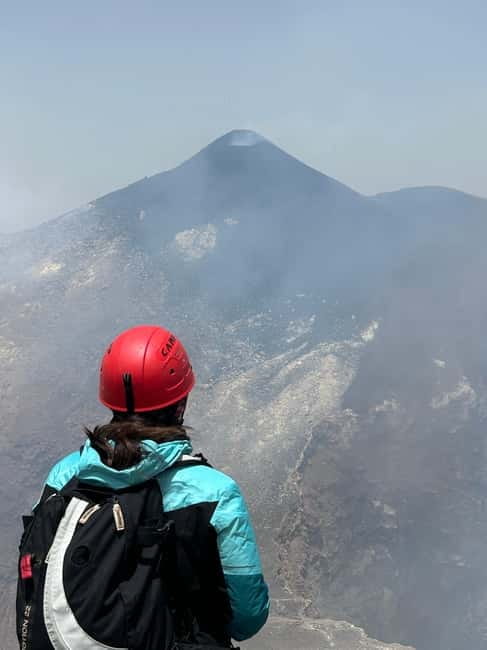
This is the tour’s headline: you’re aiming to see four active craters—South-East, Bocca Nuova, North-East, and Central. Getting all of them in one trip depends on conditions and safety rules, but the intent is clear: you’re moving within the active zone, not just skimming around the edges.
What makes this part special is how you’re learning by comparison. Each crater has its own behavior patterns and activity signs. Even if you can’t identify every crater perfectly from a single angle, the guide can connect what you’re observing (smoke direction, gas intensity, ground features) to the crater activity in that moment.
One review noted a day where the North crater was included as an extra when allowed. Another said the Central Crater was closed on that specific day. That’s the honest side of a living volcano: access can change with eruptive activity and conditions.
So when you book, do yourself a favor and treat the four-crater promise as a target, not a guarantee. The more consistent win is the combination of:
- guided explanation by volcanology-focused leaders
- walking in the active crater approach zone
- seeing gas and fumarole activity when conditions allow
Views Over Sicily (and the Aeolian Islands If Weather Plays Nice)
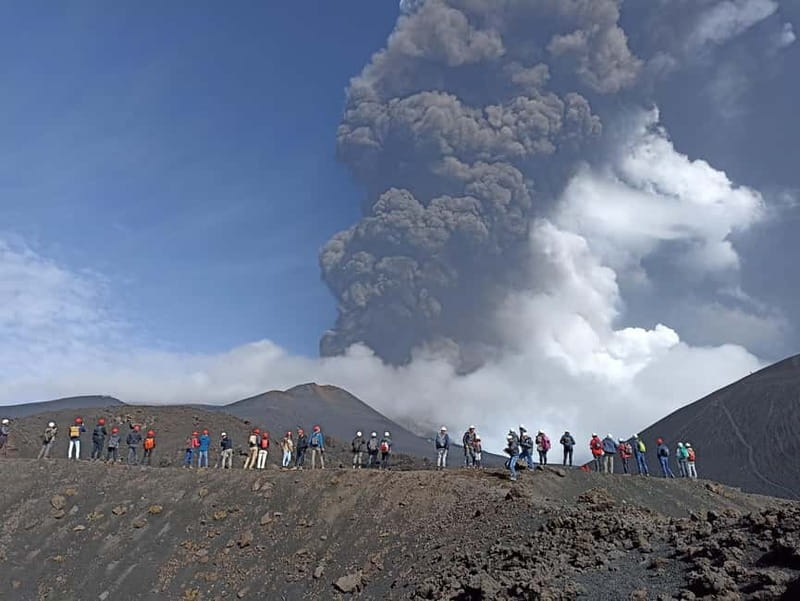
Once you’re up high, you’re also getting a panoramic viewpoint of Sicily. The tour includes a break time / photo stop / guided visit around the crater zone, and later you return down toward the jeep pickup.
If the weather cooperates, you may also see the coast and even the Aeolian Islands. The key word there is if. Etna weather can turn quickly, with visibility dropping when wind and cloud roll in.
The best way to enjoy the views is to stop treating them as a single “moment.” Instead, use the times at breaks to look around slowly. The terrain is constantly reminding you where the volcanic forces are shaping what you see—from crater placement to the way old flows spread out.
What to Pack for Etna’s Subzero Wind and Sulfur Smell
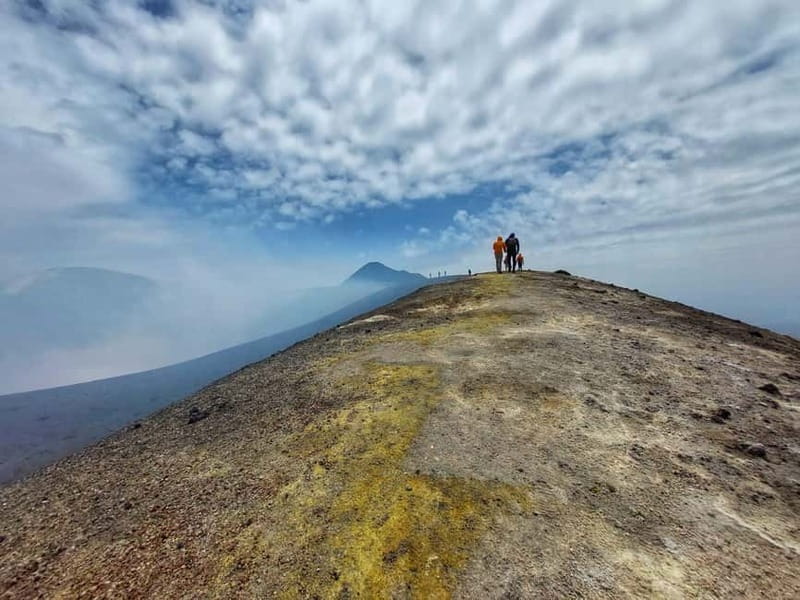
This is a high-altitude trek where temperatures can be below zero at the top. Even if you’re arriving in comfortable Sicilian weather, plan for sudden cold.
The tour includes key gear (wind jacket, poles, trekking shoes, helmet). But you still need personal basics:
- Sunglasses
- Long pants
- Food and drinks (packed lunch isn’t included, see below)
- Comfortable clothes for layering
I’d also add a practical “don’t regret it later” list based on what helped people on the ground:
- a warm hat and gloves (wind at the summit is the issue)
- sunscreen and lip balm (cold + sun can both bite)
One review recommended SPF specifically. That’s easy to miss when your mind thinks cold weather means no sun. Etna doesn’t care about your assumptions.
Also: bring a small amount of snacks. The schedule includes a lunch break, but you’re responsible for what you eat unless you’ve arranged your own food.
Price and Logistics: Is $59 Good Value?
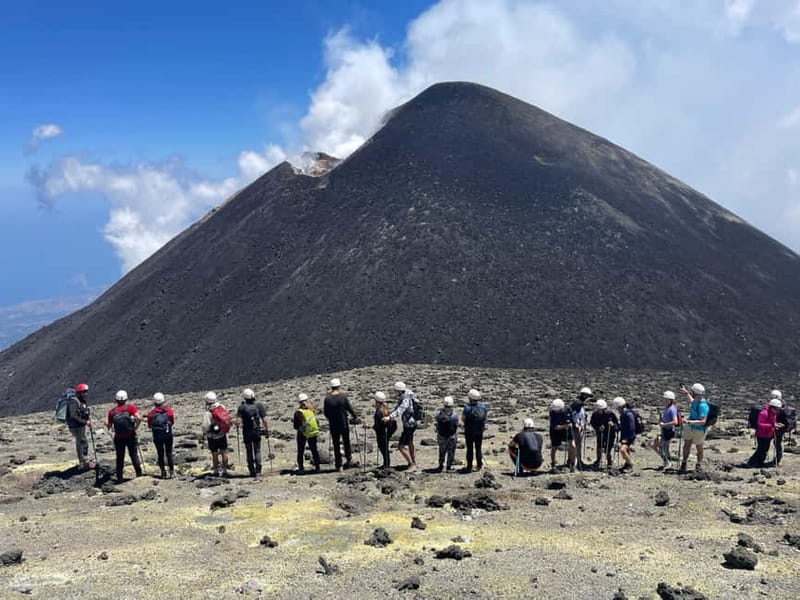
At $59 per person for about 5.5 hours, the price sounds straightforward. The value part is what’s inside that number.
Included:
- helmet, trekking shoes, trekking poles, wind jackets
- trekking with an alpine and volcanological guide
- equipment-based access time that’s focused on the crater zone
Not included:
- the 4×4 jeep round-trip ticket, paid on site
- lunch / packed lunch (you bring your own)
So you should think of the $59 as paying for the guided trek plus the gear package. The jeep adds an on-site cost you’ll want to plan for, and it’s worth factoring in before you compare prices with other Etna tours.
Where this becomes a good deal for many people is simple: you get the specialist guide and the crater-focused hike structure without having to rent or source winter trekking footwear and wind gear yourself. That’s real money saved if you’re already traveling light.
Also, there’s a “skip the line” aspect through a separate entrance. It’s not a life-changing feature, but when you’re paying for limited time at high altitude, fewer delays help.
Who Should Book This Etna Jeep and Trek?
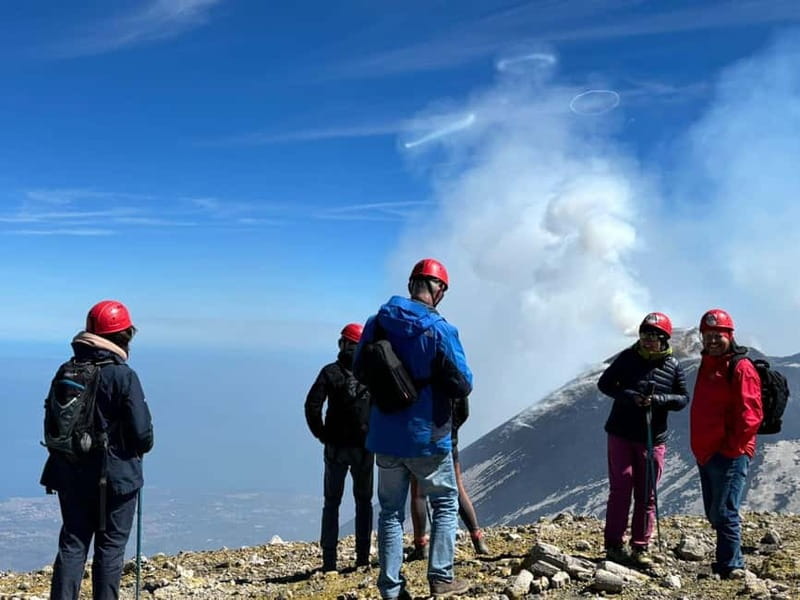
This tour is a strong match if you want a guided, crater-focused Etna experience rather than a long bus ride and a quick stop.
It’s especially good for:
- People who like hikes with a clear purpose and stops for explanations
- Anyone who wants volcanology guidance to make sense of active crater features
- Travelers who appreciate small group dynamics (and a guide who can manage pace)
It’s not a match if you:
- have mobility impairments or require a wheelchair
- have heart problems
- have respiratory issues
- are over 75, or have a low fitness level
- are bringing children under 8
That “not suitable” list matters here because altitude + wind + uneven lava terrain are not gentle. Even if you’re physically active, you’ll still be dealing with cold and exposure.
Should You Book It?
If you want a volcano day with real walking, real crater-zone context, and a volcanology guide who helps you read what’s happening, I think this is a very fair bet.
Book it if:
- you’re comfortable hiking at altitude and in cold wind
- you want to aim for South-East, Bocca Nuova, North-East, and Central (even if access can shift)
- you’d rather rely on provided gear than scramble to rent shoes and poles
Skip it or consider a gentler option if:
- you’re worried about cold exposure and steep effort near the summit
- you need full accessibility support
- you’re hoping for guaranteed red flowing lava (this is not a guarantee type of experience)
One last tip: treat it like a cold-weather trek, not a casual hike. Dress for wind and bring proper personal layers. Do that, and Mount Etna turns into a day you’ll remember for the right reasons.
FAQ
How long is the Mount Etna Central Crater Jeep and Trek?
The total duration is about 5.5 hours, with a total exclusion time of 5–6 hours.
Where do I meet for the tour?
You meet at Piano Provenzana Etna Nord.
What’s included in the price for $59?
The price includes trekking equipment (helmets, trekking shoes, trekking poles, wind jackets) and trekking with an alpine and volcanological guide.
Do I pay extra for the 4×4 jeep?
Yes. The 4×4 jeep round-trip ticket is not included and must be paid on site.
What craters will I see?
The tour’s goal is to see four active craters: South-East, Bocca Nuova, North-East, and Central.
What language is the live tour guide?
The guide offers live narration in French, English, and Italian.
What should I bring?
Bring sunglasses, comfortable clothes, long pants, food, and drinks. You’ll also want warm clothing for cold conditions.
Is this tour suitable for children or older adults?
It’s not suitable for children under 8 years and it is also not suitable for people over 75 years.