REVIEW · NICOLOSI
Nicolosi: Mount Etna Central Crater Guided Trekking Tour
Book on GetYourGuide →Operated by ETNA TOURING DI PIETRO LA ROSA · Bookable on GetYourGuide
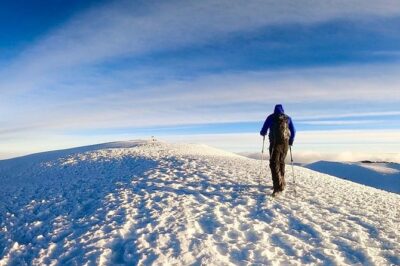
Etna feels like another planet when you’re standing near the central crater. This guided trek takes you from about 1900 m up toward the active summit area around 3345 m, crossing old eruptive cones and lava expanses on a route that’s built for the volcano’s changing conditions. Guides also time the climb so you can pause long enough to smell the sulphur and look out over Sicily, including a clear glimpse toward the Ionian coast.
What I love: the mix of off-road access and real walking. You don’t just ride to a viewpoint—you actually hike through the lava terrain and get that lived-in, working-volcano feeling when fumes and gases rise around you. I also like that they provide serious hike gear on site: helmet, jacket, sticks, boots, and socks, which makes a big difference when weather turns cold at altitude. One drawback to weigh is that the route can shift (wind and ground conditions), so the transport steps—especially cable car vs. alternative options—may not match the exact plan you expect on paper.
If you’re generally fit and steady on uneven ground, this tour hits hard—in the best way. If you’re dealing with vertigo, breathing problems, or heart issues, I’d skip it; the trek is active and the summit area can be intense. Also, while the group is stated as max 10, one booking reported a much larger group size on the day, which can affect pace and how easily you hear the guide.
In This Review
- Key Things I’d Bookmark Before You Go
- Getting to Etna from Catania: pickup that keeps your day sane
- The plan from 1900 m to the central crater near 3345 m
- Equipment and altitude: what the provided gear actually helps with
- Central Crater time: sulphur gases and Ionian coast views
- Ancient eruptive cones and Valle del Bove: where the geology becomes real
- How the pace works on the way up and back down
- Price and what you might still pay for cable car and 4×4
- What to pack: the small stuff that saves the day
- Guides on the mountain: the human factor matters
- Who this Etna crater trek is best for (and who should skip it)
- Should you book the Etna central crater guided trek?
- FAQ
- How long is the Mount Etna central crater guided trekking tour?
- Where do you pick up and drop off in Catania?
- What’s included in the tour price?
- Do I need to buy cable car and jeep tickets?
- What’s the route like once you reach the volcano?
- What should I bring for the hike?
- Is this tour suitable for kids or people with mobility issues?
- Can I cancel and get a refund?
Key Things I’d Bookmark Before You Go
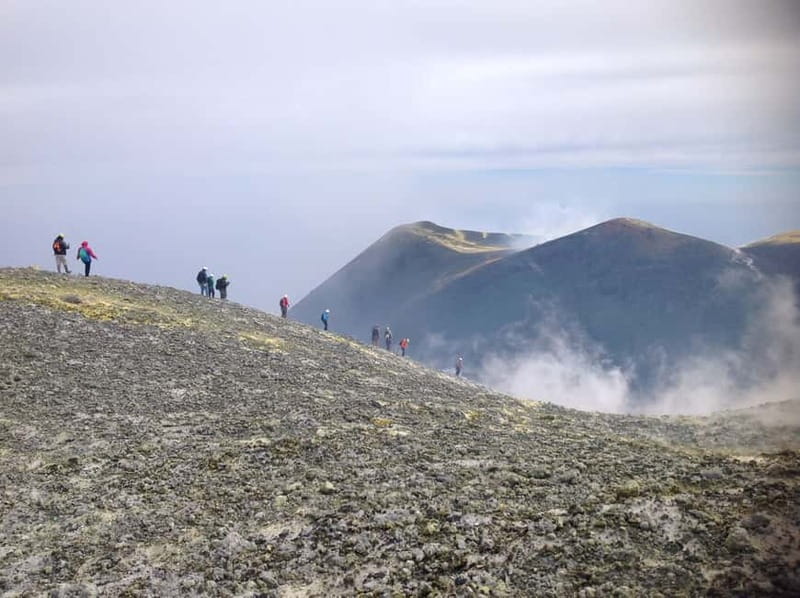
- Southern-slope approach to the central crater (not a casual Etna stroll)
- Gear included on site: boots, socks, helmet, jacket, and trekking poles
- You walk in the active area with sulphur fumes and gas in the air
- Valle del Bove viewpoint plus ancient eruptive cones and broad lava fields
- Transport steps are weather-dependent, so be ready to adapt
Getting to Etna from Catania: pickup that keeps your day sane
The big win here is how you start the day. You’re picked up in Catania with private transfer to the Etna access point. There are multiple city-center meeting spots, and you also get drop-off back in Catania afterward. That saves you from the usual hassle of timing buses, finding trailheads, or trying to solve the “how do we get up there” puzzle on your own.
Duration on the ground is around 5 hours, but the practical reality is that your “Etna day” is mostly about careful timing: cable car and vehicle legs reduce your climb fatigue, while the walking portion is still long enough to feel like a real trek.
Because this is a guided small group (listed as limited to 10), you usually get quicker safety checks and more attention on where to place your feet—important on sharp black rock and lava crust that can be slippery when it’s cold.
You can also read our reviews of more tours and experiences in Nicolosi.
The plan from 1900 m to the central crater near 3345 m
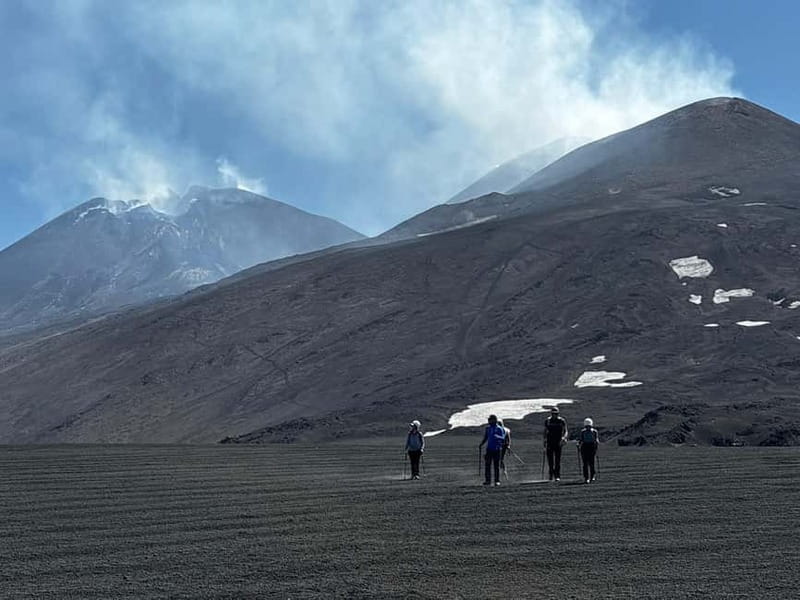
The route follows Etna’s anatomy: you go up from the southern slope in layers, then finish the summit walk on foot. The standard rhythm is:
You start around 1900 m by cable car for about 20 minutes. Then you switch to off-road minibuses (often described as jeep/SUV style legs) for roughly 30 minutes up to a permitted altitude. After that comes the walking phase with the guide.
On foot, you’re moving for about 100 minutes toward the summit area, reaching the Cratere Centrale dell’Etna (central crater). There’s a break with photo time and a guided visit at the crater area. Then the itinerary includes more on-foot time (another 100 minutes), followed by the vehicle legs back down: around 30 minutes by jeep/SUV and 20 minutes by cable car back to 1900 m.
Here’s why that matters for your decision: the “big wow” isn’t just the top view. It’s the entire progression from lower-altitude terrain to the sulphur-heavy summit zone. You’ll feel the change in footing, air, and visibility as you climb, and that makes the crater area hit even harder.
Equipment and altitude: what the provided gear actually helps with
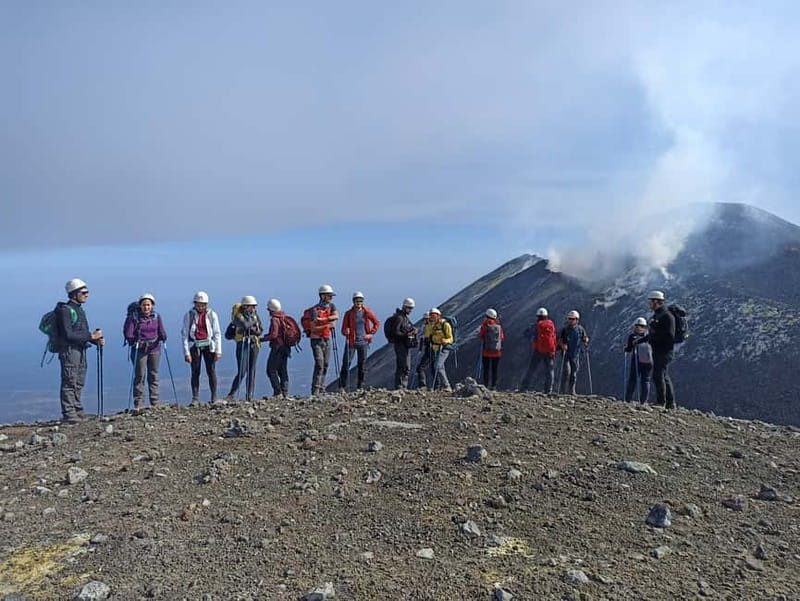
They don’t just hand you a map—they set you up for the hike. On site you get boots, socks, a helmet, a jacket, and trekking sticks. Multiple guides in the reviews were praised for caring about safety and pacing, and the gear coverage is part of that. Boots and poles can be the difference between confident steps and “please don’t slip today.”
Even with provided gear, I’d plan like it’s a mountain hike. Temperatures can be cold near the summit area, and the wind can add bite. One review specifically recommended bringing warm gloves and a mask or scarf to protect yourself from gases. That advice lines up with what you’re going to encounter near the crater: fumes and sulphur smell are part of the experience, not an optional extra.
One more practical note: one booking mentioned a foot injury from the provided footwear. That doesn’t mean the gear is bad; it just means you should think about fit. If you already have comfortable hiking shoes that work for you, consider bringing your own. At minimum, wear the right socks and tell yourself that lava rock doesn’t care about your comfort.
Central Crater time: sulphur gases and Ionian coast views
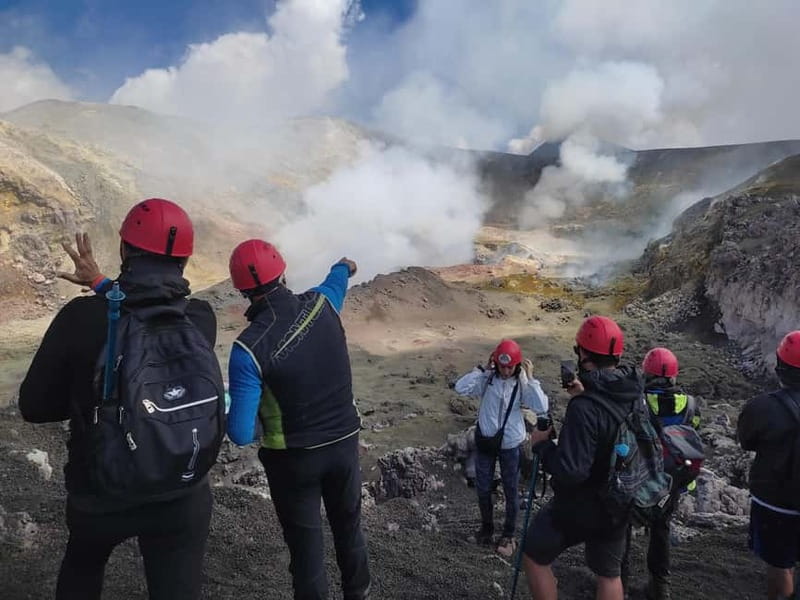
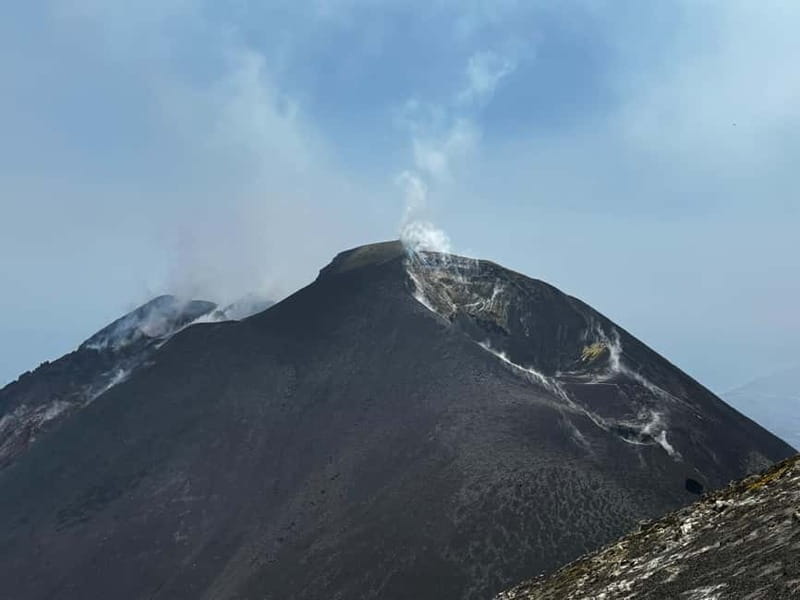
This is the heart of the tour. Once you reach the central crater area around 3345 m, you’re no longer just walking nearby—you’re in the summit zone where the volcano feels active. The route includes the kind of stops that let you look, listen, and breathe through the experience.
What you’ll notice most: fumes, gases, and intense sulphur color in the area around you. Some people expect a “spectator view.” Instead, you’re walking in a living environment. That can be powerful, but it also means you should respect the guide’s timing and instructions.
You also get a scenic payoff: from the top, there’s a splendid panorama toward the Ionian coast and the villages below Etna. Even if visibility isn’t perfect, you’re still getting a sense of Etna’s size—how the slopes fold down into Sicily and how the summit sits like a crown over the region.
A balanced way to think about it: if you’re chasing a postcard photo, this delivers. If you’re sensitive to smells or air quality, come prepared and be honest with yourself about breathing comfort.
Ancient eruptive cones and Valle del Bove: where the geology becomes real
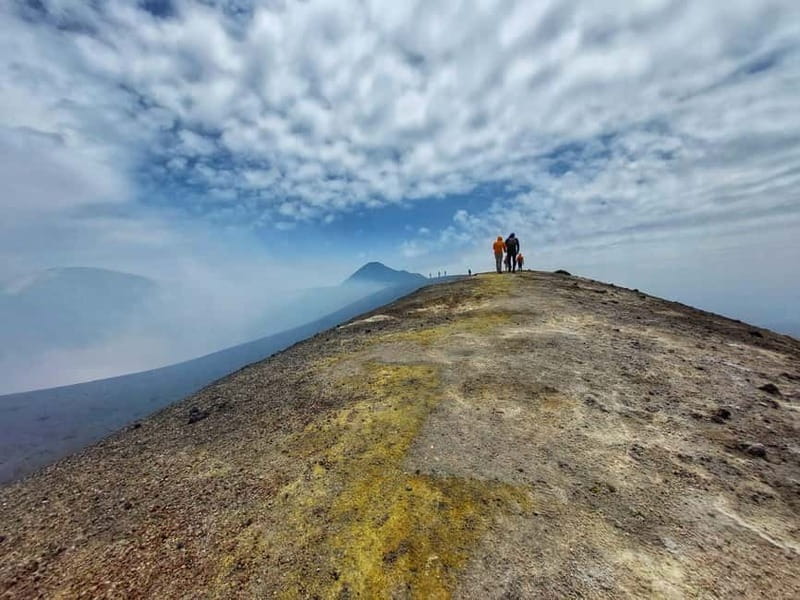
Between the crater moments and the return, you move through other “Etna stories” on the ground. The itinerary includes crossing and visiting ancient eruptive cones and walking across huge lava expanses. This is where the geology stops being a lecture topic and becomes your footing.
The tour also takes you through a panoramic area with views over Valle del Bove—a large depression that’s described as the seat of ancient eruptive cones. In plain terms, it’s a massive bowl-like part of the volcano’s history. From there, you can connect what you see up close (craters, sulphur zones, lava rock) with the bigger pattern: Etna’s repeated building and reshaping.
This part of the trek is valuable for two reasons. First, it breaks up the summit intensity with wide views. Second, it helps you understand that Etna isn’t one single event—it’s repeated eruptions stacked into the terrain you’re walking over.
How the pace works on the way up and back down
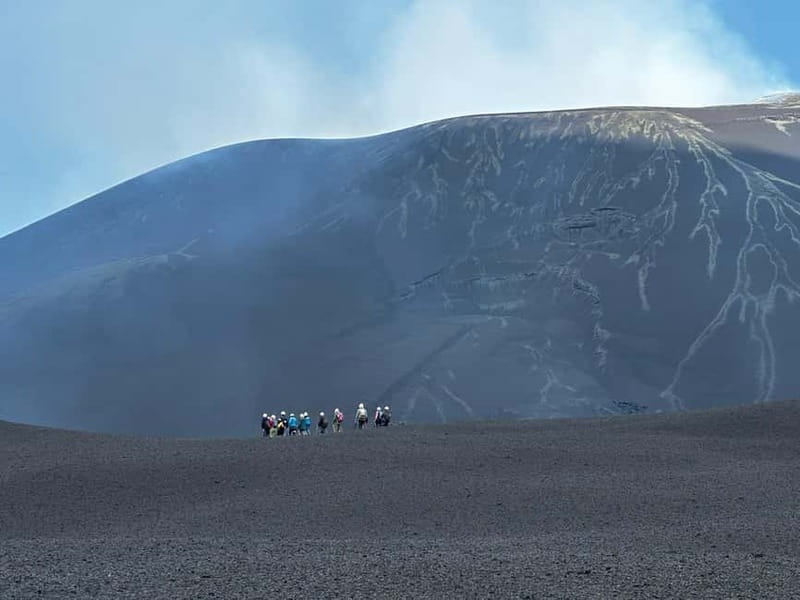
The tour is designed around a steady climb and careful timing for a high-altitude environment. Your meeting time is 9:30 a.m., and the actual start is when everyone is fitted and equipped. Cable car and jeep/SUV legs are short, but they matter: they reduce how long you have to grind uphill on sharp rock.
The walking segments are where you should feel the effort. The tour includes two on-foot stretches of about 100 minutes each (with a crater stop in the middle). Reviews often note that it’s not a leisurely walk, and photos may not be “grab at any time” easy. You’ll have planned photo chances and a break at the crater, but you shouldn’t expect long lounge stops.
A couple of small reality checks from the reviews are useful here:
- Wind can be strong near the top, making it feel colder and harder to stay comfortable.
- If you end up with a larger group than expected, it can be harder to hear instructions and stick together.
If you go in expecting an active pace, you’ll enjoy it more. If you go in expecting a relaxed hike, you might feel rushed.
Price and what you might still pay for cable car and 4×4
The listed price is $104 per person for a 5-hour guided trekking tour with pickup and drop-off from Catania, plus guide and equipment. That’s the “core value”: you’re paying for expert guidance in a hazardous environment and for the gear that reduces your packing stress.
But you do need to plan for additional tickets on the day. The cable car and jeep/SUV round-trip tickets are not included in the price, and you pay on site. Two reviews highlight different extra amounts—one person mentioned €80 for the jeep, while another mentioned about €160 as an extra cost related to the 4×4 leg. So you should budget extra cash or card for those transport tickets when you arrive.
Also keep in mind that the transport sequence can change due to conditions. One booking expected the cable car and didn’t get it, and another traveler said they were asked to buy bus tickets and then climb. That doesn’t mean the experience is “wrong”—it means Etna is in charge.
My advice: treat the base price as the guided, gear-supported hike, and treat the vehicle/cable-car portion as something you settle at check-in based on the conditions that day.
What to pack: the small stuff that saves the day
You’ll have a list of what to bring, and I’d treat these as minimums:
- Packed lunch and drinks (food is not included)
- Long pants
- Daypack
- Sunglasses
- Socks
- Headscarf
Then add what you’ll be grateful for at altitude:
- Warm gloves, especially if you’re going in October to early spring.
- A mask or scarf if you’re sensitive to sulphur gases.
- Your own hiking shoes if you know how provided footwear fits you (one review reported an injury in the provided shoes, so fit matters).
One more practical tip: bring a daypack big enough for layers and a small “just in case” kit. You might get cold when the wind hits at higher altitude, and you won’t want to carry heavy extras in the wrong way.
Guides on the mountain: the human factor matters
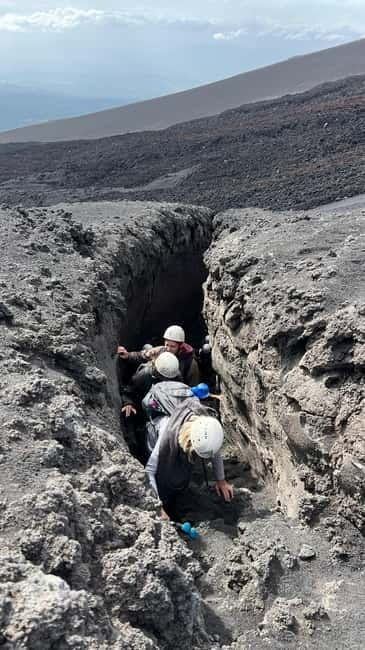
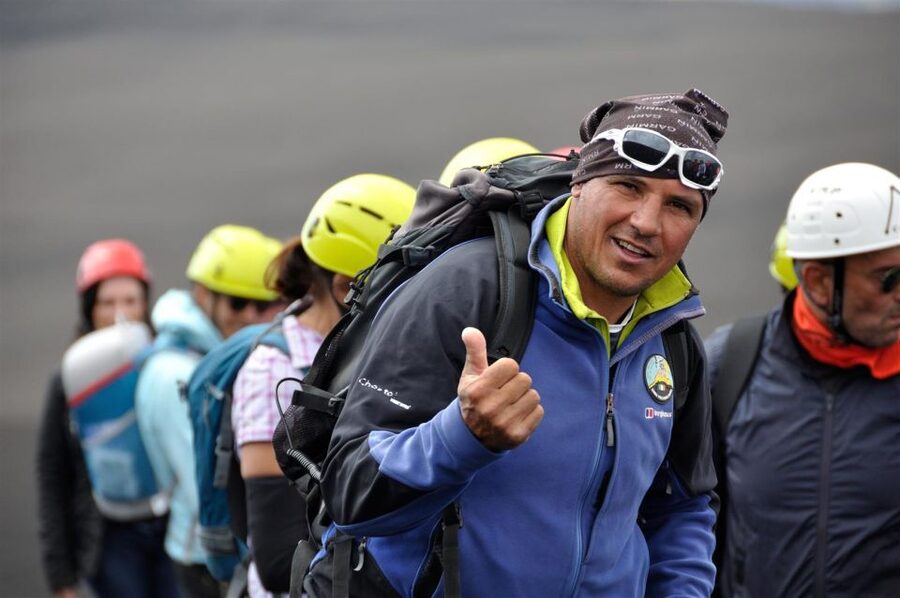
The tour lives or dies by the guide. This operator’s guides were repeatedly praised in the reviews for friendliness and safety awareness, and several names came up more than once: Mario, Pietro, Danielle, and Giuseppe.
What stands out is not only knowledge, but group care—helping people walk on uneven surfaces, setting a pace for the group, and watching footing. One review praised a guide’s caution and explained details about the sulphur patches and the smell near the summit. Another mentioned extra attention that helped someone with a foot issue feel supported enough to continue.
If you’re the kind of traveler who likes lots of technical talk, you should be aware that at least one review wished for more interesting info for people who don’t know much about Etna beforehand. Still, most people seem happy with the way the guide balances explanation with safety and timing.
Who this Etna crater trek is best for (and who should skip it)
This isn’t for everyone. It’s specifically listed as not suitable for:
- Children under 8
- Pregnant women
- People with mobility impairments
- People with heart problems
- People with vertigo
- People with respiratory issues
That’s not them being picky. It’s because the walk involves uneven surfaces, active conditions in the summit area, and a setting that can stress breathing and stamina. If you’ve ever had dizziness on heights, take the vertigo warning seriously.
Who should go? People with a good level of fitness who can handle active hiking, cold wind, and walking on rough ground. One reviewer said it was manageable for them with regular exercise, and another pointed out it was demanding and needed preparation. Plan like it’s active—then it will feel like a win.
Should you book the Etna central crater guided trek?
I’d book it if you want the real Etna experience: active summit zone, sulphur atmosphere, and the kind of geology you can walk across, not just see from a distance. The value is strongest if you appreciate small-group guidance and you like the idea of climbing from 1900 m up to the crater area around 3345 m.
I wouldn’t book it if you’re looking for an easy “views only” tour, because the hike is genuinely active and the timing doesn’t give you endless photo breaks. I also wouldn’t book it if you’re worried about breathing comfort, heights, or uneven footing.
One final decision aid: check that you’re okay paying for cable car and jeep tickets on site and accepting possible transport changes due to wind and ground conditions. If that doesn’t bother you, you’ll likely love what this tour delivers—because it’s Etna, up close, on foot, with the guide keeping you safe.
FAQ
How long is the Mount Etna central crater guided trekking tour?
The total duration is about 5 hours.
Where do you pick up and drop off in Catania?
Pickup and drop-off are included from listed Catania city-center meeting points, with multiple options in the area.
What’s included in the tour price?
You get hotel pickup and drop-off, an alpine/volcanologic guide, and equipment including a helmet, jacket, sticks, boots, and socks.
Do I need to buy cable car and jeep tickets?
Yes. The cable car and jeep/SUV round-trip tickets are not included in the price, and you pay them on site the day of the excursion.
What’s the route like once you reach the volcano?
You start around 1900 m, go up by cable car and jeep/SUV up to a permitted altitude, then hike on foot to the central crater area and return back down the same way.
What should I bring for the hike?
Bring sunglasses, a packed lunch and drinks, long pants, socks, a daypack, and a headscarf.
Is this tour suitable for kids or people with mobility issues?
It’s not suitable for children under 8, pregnant women, people with mobility impairments, people with heart problems, people with vertigo, or people with respiratory issues.
Can I cancel and get a refund?
You can cancel up to 24 hours in advance for a full refund.