REVIEW · NICOLOSI
Mount Etna: Trek to 3000m with cable car and 4×4
Book on GetYourGuide →Operated by Etna Guides · Bookable on GetYourGuide
Etna feels close enough to touch. I love how this tour gets you high fast, then lets you walk right through the evidence—fresh lava textures, crater rims, and even the inside of a lava channel. The Bove Valley viewpoints also pay off, especially when the clouds behave. One catch: this is not a casual stroll. You’re walking several hours on uneven, steep, volcanic ground near 3,000m, so you need a basic hiking level and warm layers.
What really sticks with me is the mix of “wow views” and “how is this even possible” geology. You’ll get to see summit-area features from up high, visit a lateral crater around 2,900m (Barbagallo), and then continue to the last lava area before descending by sandbanks to the cable car. The possible drawback is practical: on cold or foggy days, the walking still happens, but the views can be less dramatic than you hoped.
In This Review
- Key points to know before you go
- Getting up to Etna: where you meet and how the day flows
- Cable car to 2,500m, then 4×4 to 2,800m: why the “jump” is the point
- The on-foot section to 3,000m: summit views, Bove Valley, and Barbagallo crater
- Inside Etna’s “plumbing”: lava channels, vents, and the feeling of recent activity
- Descending: cable car down, sandbank routes, and Bove Valley time
- What gear you get (and what you still must bring)
- Guides and pacing: how the best parts actually happen
- Price and value: the $65 rate plus the €45 onsite tickets
- Who should book this Etna trek to 3,000m—and who should skip it
- Should you book this Mount Etna trek to 3000m with cable car and 4×4?
- FAQ
- How high do you reach on this Mount Etna tour?
- How much of the tour is walking?
- Are the cable car and 4×4 included in the $65 price?
- What equipment is included, and what should I bring?
- What time does the tour start, and where do I meet?
- What languages are the guides?
- Is there a cancellation option if plans change?
Key points to know before you go
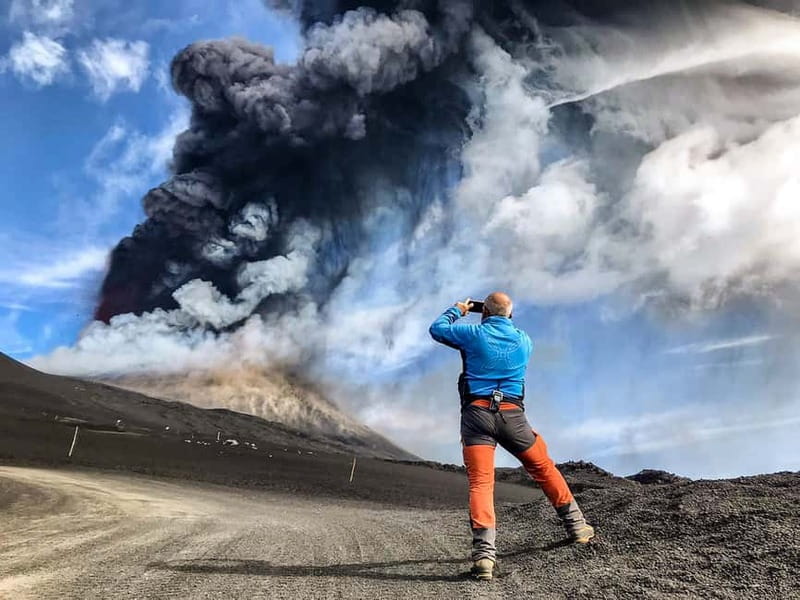
- Fast altitude without a full climb: cable car up to about 2,500m, then 4×4/SUV up to about 2,800m before the real hike starts.
- You still get big “Etna summit” moments: you observe summit craters from the 3,000m excursion route, without committing to the summit-only trek.
- Barbagallo lateral crater + black-sand walking: expect crater edges, loose rock, and that unmistakable black volcanic ground.
- A lava channel visit makes it real: you enter a lava channel and visit an effusive vent tied to the 2002 eruption.
- Guides like Michele, Antonio, Giuseppe, and Gianni run a tight ship: pace, safety, and explanations are built around keeping the group together.
- If the cable car is down, expect changes: you might be driven uphill by vehicle (some days use unimogs/jeeps) to keep the tour on track.
Getting up to Etna: where you meet and how the day flows
This tour starts in the Etna zone around Rifugio Giovanni Sapienza, at the Etna Alpine Guides Excursions shelter next to the Rifugio Sapienza. You should plan to arrive early: the meeting point is 45 minutes before departure, and the schedule offers 9:30 and 10:30 starts.
If you’re coming from Catania by bus (AST), the operator notes they will wait for arrivals coming by bus AST. In plain terms: you want to be on-site early enough to get checked in, fitted with boots and helmet, and grouped up before the vehicles roll.
A useful detail: the tour runs about 5 hours total, with 3–4 hours walking inside that. That walking time matters. Even though the cable car and 4×4 do the heavy lifting to get you high, you still spend meaningful time on crater paths and lava terrain.
You can also read our reviews of more tours and experiences in Nicolosi.
Cable car to 2,500m, then 4×4 to 2,800m: why the “jump” is the point
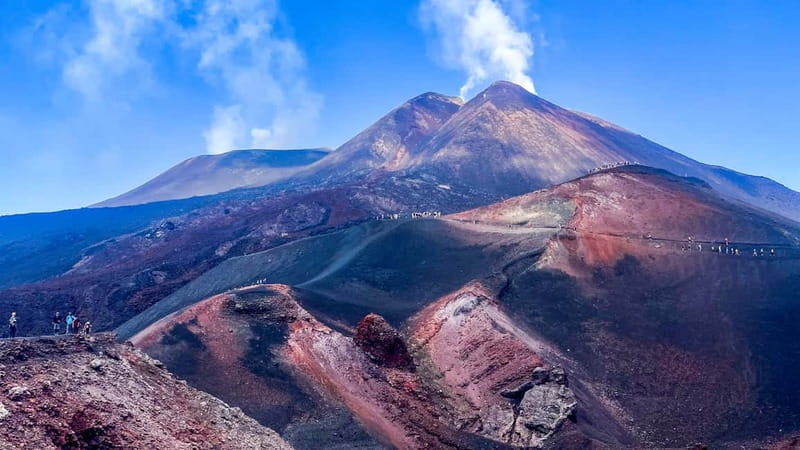
The route is built for altitude and access, not just mileage. First, you take the cable car up for about 20 minutes to roughly 2,500m. Then it’s another short vehicle ride—about 20 minutes—by 4×4/SUV up to around 2,800m.
This is valuable because it changes what “Etna hike” feels like. Instead of spending the whole day gaining height, you get to spend more time at the elevations where you can see the craters and where the volcanic ground really begins to look and behave like Etna’s active terrain.
On some days, the cable car can be unavailable. Some guide-led outings adapt by driving uphill with unimogs/jeeps so you still reach the high start point. That’s not something you should count on, but it’s good to know the day can flex.
The on-foot section to 3,000m: summit views, Bove Valley, and Barbagallo crater
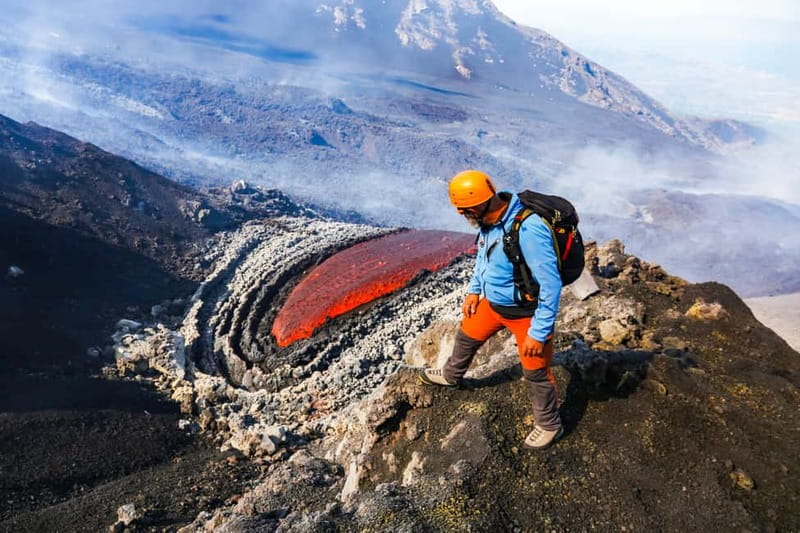
Now for the heart of the experience. From about 2,800m, you start walking toward 3,000m—the area near Torre del Filosofo is specifically mentioned. The guided hiking portion is where you’ll feel the altitude and where the tour earns its “more than a scenic drive” reputation.
Here’s the sequence that helps you understand what you’re actually doing:
- You’ll observe summit craters from up high, as an alternative to going for a summit-only route.
- Then the group stops at a lateral crater around 2,900m, mentioned as Barbagallo.
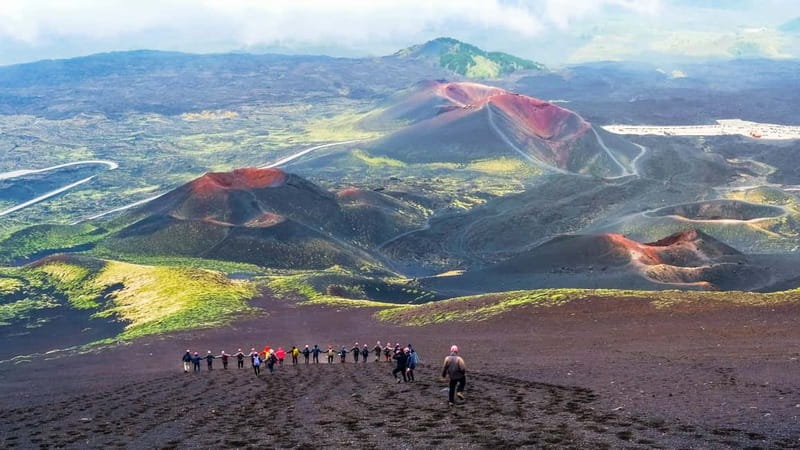
- You’ll continue through the recent lava flow areas and crater terrain, moving across and around black-sand ground.
- You’ll also get moments designed around the Bove Valley—and on clearer weather, views can stretch from the Ionian Riviera across toward the interior.
In practice, expect a mix of crater-edge walking and uneven stretches. Some paths can be steep and gravelly, and you’ll be stepping on loose material that doesn’t always behave like normal trail dirt. Guides often keep a close eye on footing, and they’ll pace breaks so the group can adjust to the altitude.
Inside Etna’s “plumbing”: lava channels, vents, and the feeling of recent activity
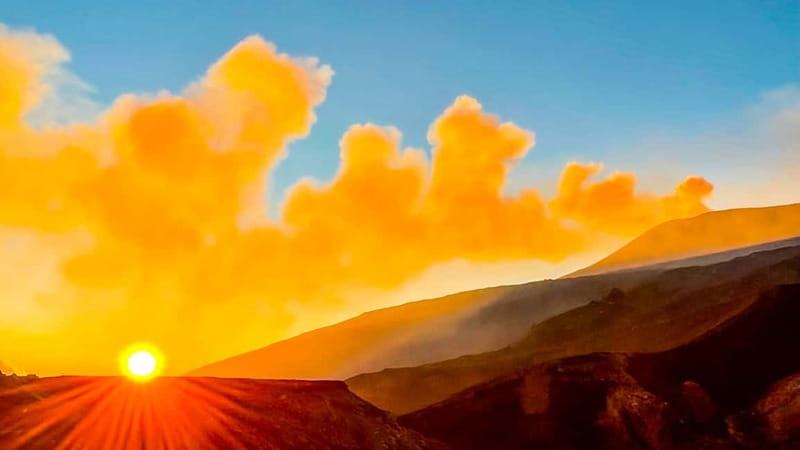
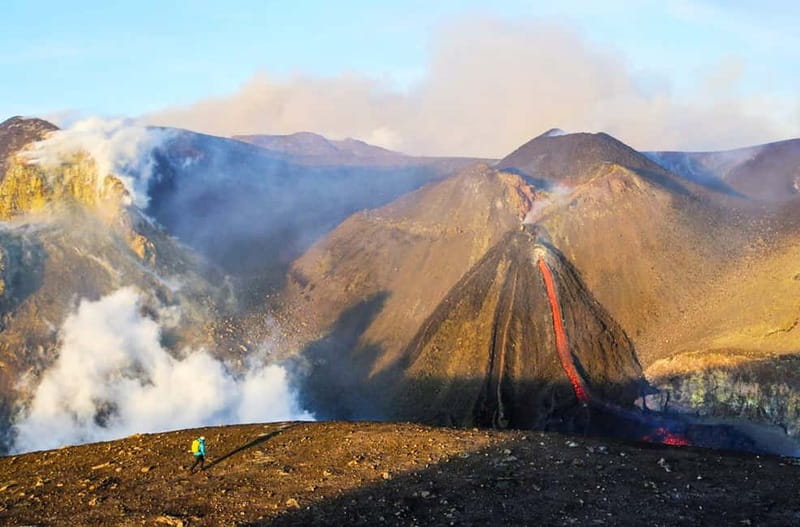
One of the most distinctive parts of this tour is the visit inside a lava channel. Seeing lava rock is one thing. Walking into a channel—where flows once ran like a pipeline—puts you in the story.
You’ll move from the crater/black-sand zone toward the point where you can enter the lava channel and admire the last lava flow in that area. The tour also includes an effusive vent, tied to the 2002 eruption. The details your guide shares can make that stop more than just a cool photo moment.
This is also where the provided safety gear earns its keep. You’ll get:
- Helmets with a disposable under-helmet cover
- Thick socks, sturdy boots, and a backpack
- Kway jackets for wind and spray protection
A practical note: lava terrain and craters can be visually impressive, but the “feel” is still outdoor hiking—loose rocks, wind exposure, and occasional narrow edges. If you’re nervous on steep terrain, tell your guide early. You can often move at the group’s pace with help where needed.
Descending: cable car down, sandbank routes, and Bove Valley time
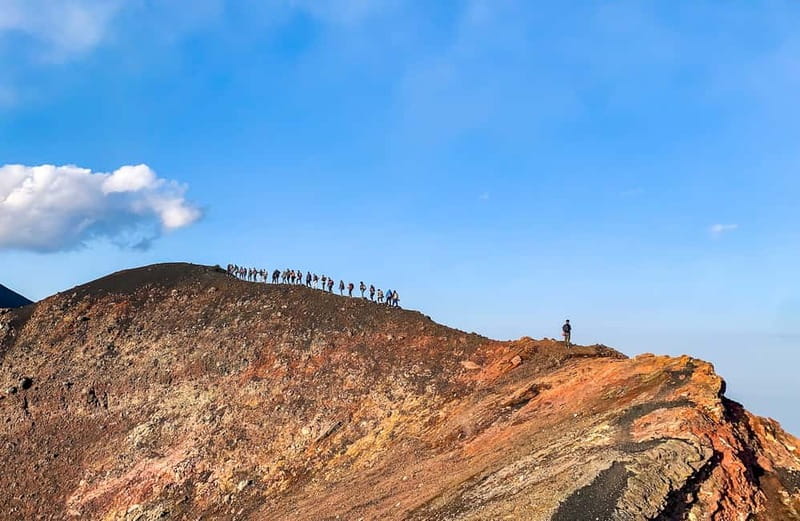
The return is designed to keep you safe and moving. After the lava channel and vent stops, you descend on foot back to the cable car area. The route includes walking along sandbanks, then you end at the cable car station near the mound where you can still look out over the Bove Valley.
Timing can vary. Some days the experience can feel tighter because of weather, vehicle availability, or how quickly the group moves on the return paths. On one outing, people reported finishing the walk portion faster than expected, then meeting the return cutoff for the bus.
If you need to catch a later connection, keep your schedule flexible. This is the one kind of excursion where being late can be stressful, because you’re relying on a coordinated return.
What gear you get (and what you still must bring)
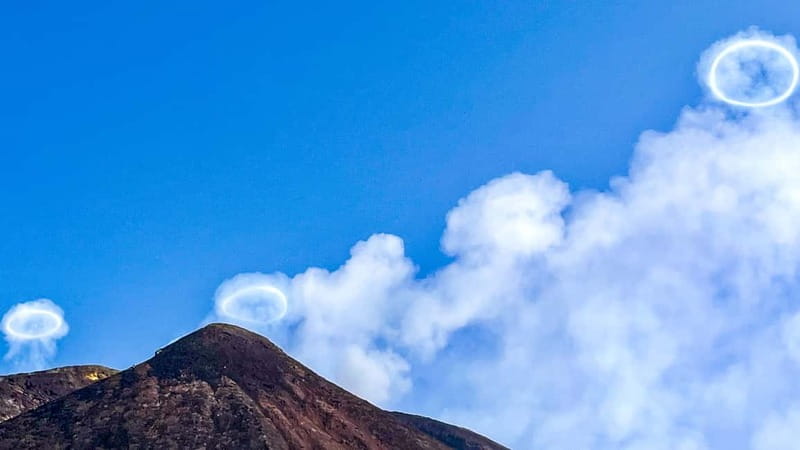
The tour provides a full kit for the volcanic conditions, which is a big part of the value:
- Ankle trekking boots
- Long thick socks
- Helmets + disposable under helmet
- Kway jackets
- Backpacks
- Trekking poles (limited number)
However, the gear isn’t magic. Etna at these elevations can be cold and windy. People consistently recommend coming prepared with warm layers. In real life, your rental jacket might not be enough if you run cold. Also, a few people noted the provided boots can be worn for some trips—so if you’ve got your own good hiking shoes, you may prefer to use them.
What you should bring:
- Sunglasses
- Sunscreen
- Rain gear
- Long pants
Not allowed:
- Shorts
- Baby strollers / baby carriages
If you’re thinking of traveling light: fine. But don’t skip layers. You’ll be moving, then stopping, then feeling altitude wind the moment you’re not working.
Guides and pacing: how the best parts actually happen
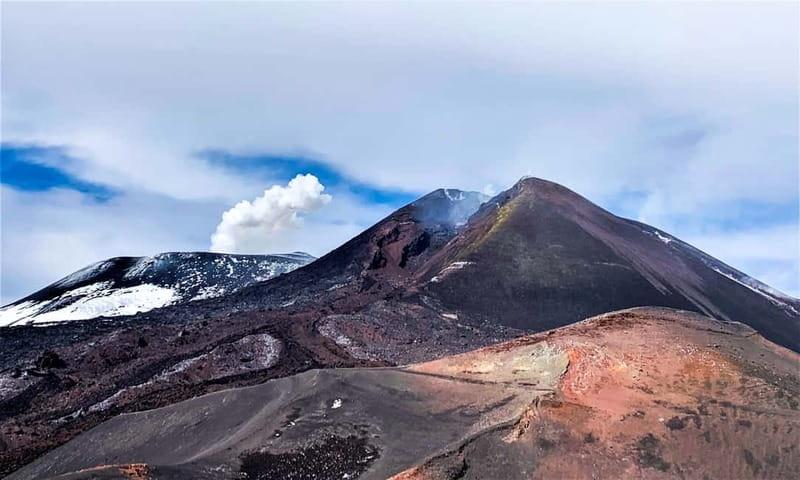
This is one of those tours where the guide makes a huge difference. Across the experience, guides like Michele, Antonio, Giuseppe, Dario, Gianni, and Marco are named for doing more than route logistics. They explain what you’re seeing—craters, lava forms, eruption context—and they keep an eye on safety and group spacing.
Pacing is also part of the “value.” In many outings, pauses are built in so the steep parts and rocky sections don’t feel like a fight from start to finish. One key point from the lived experience: the first stretch up can feel hardest as your body adjusts to thinner air around 2950–3000m.
Also, groups can be fairly large depending on the day. Some outings were under 10, while others were closer to 20–30. When groups are bigger, you’ll want patience at check-in and possibly expect the whole start to run later than the schedule says.
Price and value: the $65 rate plus the €45 onsite tickets
The headline price is $65 per person, and the tour is listed as including the guide and trekking gear. But the cable car and 4×4 tickets cost €45 per person, paid onsite at the meeting point (cash can speed things up).
So your realistic budget looks more like:
- $65 + €45 (plus any snacks or lunch)
Is it worth it? For me, the value comes from three things you can’t replicate easily on your own:
- Access at high altitude: cable car + 4×4 gets you into the zone where you can do a 3,000m-style crater walk without spending the entire day climbing.
- Safety gear and helmets: helmets aren’t always included on hiking tours, and they matter for lava channel areas.
- Guided interpretation: you’re not just walking through rocks; you’re walking with explanations tied to eruptions and volcanic features.
One caution on value: if you’re hoping to use the included boots, check their condition. Some people said the supplied shoes looked older or slippery. If you can, bring your own well-fitting hiking footwear.
Who should book this Etna trek to 3,000m—and who should skip it
This is a good choice if you want an active volcano experience with real walking, but not a full-on summit assault. You’ll love it if:
- You can handle loose rock, gravel, and steep spots
- You don’t mind narrow, high-feeling terrain with careful steps
- You want crater viewpoints plus a lava channel visit
It’s not for everyone. It’s not suitable for:
- Children under 6
- Pregnant women
- People with mobility impairments, wheelchair users, heart problems, respiratory issues, visual impairments, motion sickness
- People over 95
If you’re a first-time hiker, don’t panic, but be honest with yourself. The altitude and early climb can be tough, and the lava ground can be awkward underfoot. The guides can help, but you still need a baseline comfort with hiking.
Should you book this Mount Etna trek to 3000m with cable car and 4×4?
Yes, if you want a “high-altitude Etna day” that includes the most memorable pieces: Barbagallo lateral crater, black-sand walking, and the chance to step into a lava channel tied to real eruption activity. The guide-led structure means you don’t just see Etna—you understand what you’re seeing, and you move safely through the rough parts.
I’d hold off if you’re sensitive to cold, afraid of heights, or you’re expecting an easy nature walk. Also, plan for schedule variability. Start times and vehicle operations can shift depending on conditions, and on foggy or cold days, the views may be less dramatic than you hoped.
If you like active, guided geology—and you pack warm layers—this is one of the stronger ways to experience Europe’s most active volcano.
FAQ
How high do you reach on this Mount Etna tour?
You go up to about 3,000m (near Torre del Filosofo), with a cable car up to about 2,500m, then a 4×4/SUV up to about 2,800m, and the rest on foot.
How much of the tour is walking?
Plan for about 3–4 hours walking during the roughly 5 hours total tour.
Are the cable car and 4×4 included in the $65 price?
No. The cable car and 4×4 tickets are €45 per person, paid onsite at the meeting point in the morning (cash can speed check-in).
What equipment is included, and what should I bring?
Included: boots, long thick socks, helmets (with disposable under-helmet), Kway jackets, backpacks, and limited trekking poles. Bring sunglasses, sunscreen, rain gear, and long pants.
What time does the tour start, and where do I meet?
Departures are at 9:30 and 10:30. The meeting point is inside the Etna Alpine Guides Etna Sud shelter, next to Hotel Rifugio Giovanni Sapienza, and you should arrive about 45 minutes before departure.
What languages are the guides?
The live guides operate in English, French, and Italian.
Is there a cancellation option if plans change?
Yes. You can cancel up to 24 hours in advance for a full refund.